Rate Matching: The Hidden Drain on Preconstruction Teams
Let’s talk about the elephant in the room—rate lookup. If you’ve ever spent hours flipping through a 2,000-page rate book or manually searching for the right labor and material prices, you already know how broken this process is. It’s tedious, error-prone, and downright exhausting.
In fact, on an average estimate, rate lookup can take up to 12 hours. That’s not just wasting time—it’s actively draining your team’s productivity. And if you mess up a rate? It could cost your firm the bid or lead to profit erosion during execution.
Why Manual Rate Matching Fails
Manual methods rely on human memory and judgment. You might pick the wrong rate, miss a critical update, or end up using outdated pricing. Even worse, many rate catalogs are fragmented—RSMeans, CPWD DSR, state DOT indexes, and vendor-specific tables all require separate searches.
Real-World Risks of Manual Rate Matching
- Errors in high-stakes bids: A Midwest construction firm lost a $5 million bid after using outdated labor rates for electrical work. The error wasn’t caught until after submission.
- Time lost to inefficiency: Imagine a team of three estimators spending 36 hours collectively on rate lookups for a single complex bid. That’s 36 hours not spent on refining strategy or improving cost accuracy.
- Fragmented data sources: A general contractor working on a multi-state infrastructure project had to cross-reference four different rate books, leading to confusion and an eventual $100,000 cost overrun due to mismatched material rates.
Why This Problem Compounds Over Time
For firms handling multiple, complex bids, manual rate matching is like a slow leak in a tire—it may not seem catastrophic at first, but over time, it drags down efficiency and profitability. The more specialized the project, the harder it gets. Multi-trade bids, international projects, or contracts requiring custom materials amplify the challenge.
AI to the Rescue: Semantic Rate Matching
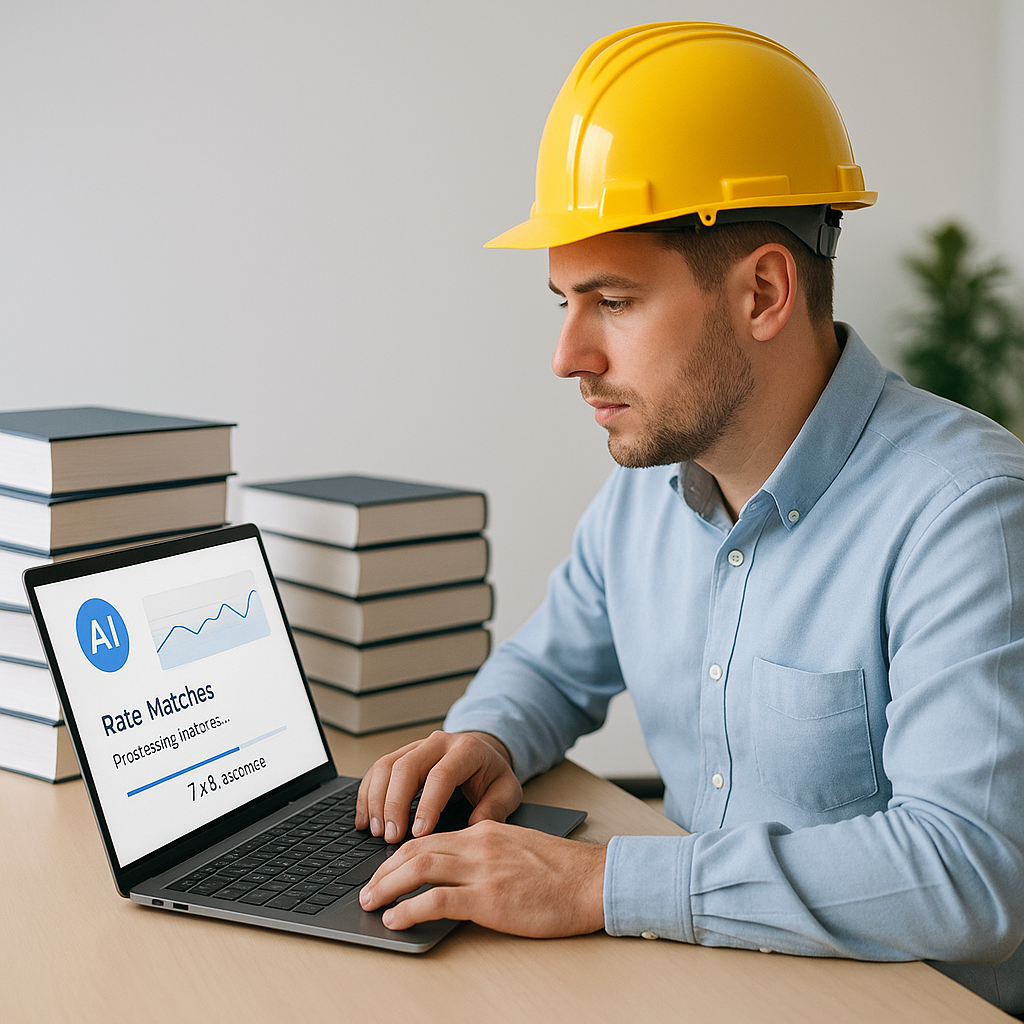
This is where AI shines. Tools like EstimateNext use semantic search across 78,000+ items from catalogs like RSMeans, CPWD DSR, and AECOM Middle East. Instead of manually flipping pages, you can type in a query like “labor rate for installing pre-stressed concrete girders,” and the system returns matches instantly.
How It Works
AI analyzes the context of your query and matches it against its database. If you’ve uploaded custom materials or rates, the system integrates those seamlessly. For example:
-
In a case study by EstimateNext, an estimator working on a $1 billion rail project used AI-powered semantic search to match rates for rail ties, structural steel, and ballast in seconds. The system even flagged discrepancies between vendor pricing, helping the team negotiate better terms.
-
Another example: An MEP subcontractor used AI to process 60 bid packages for a hospital construction project in just 2 weeks—a task that would have taken nearly 2 months manually.
What Sets AI Apart
Unlike keyword-based search, semantic search understands the meaning behind your query. For example, searching “concrete formwork for high-rise buildings” doesn’t just return results for “concrete” or “formwork” but matches the specific combination with regional labor rates and material costs.
Practical Benefits of AI Rate Matching
Here’s what you get when AI handles rate matching:
1. Speed
Hours of manual lookup shrink to seconds. On average, AI tools reduce rate lookup time by up to 95%. That means an 8-hour task can now take just 24 minutes.
2. Accuracy
AI reduces takeoff discrepancies by up to 80% (source: EstimateNext blog). Confidence scoring lets you flag uncertain matches, so you can review them before locking in final rates.
3. Consistency
Custom catalogs ensure your firm’s specific rates are always applied. This eliminates the variability of relying on individual estimators’ judgments.
4. Scalability
Whether you’re bidding on a $500,000 renovation or a $2 billion infrastructure project, AI scales effortlessly. The same system can handle small, single-trade projects and massive, multi-trade bids without breaking down.
Real Impact: Case Study
A general contractor bidding on a high-rise office building used EstimateNext to process rates for over 500 unique line items. The AI system flagged outdated material costs for structural steel, saving the firm $250,000 in potential cost overruns. By completing the bid two days ahead of schedule, they also had extra time to refine their pricing strategy, ultimately winning the project.
The Obvious Objection: “But AI Can’t Think Like an Estimator”
I hear this argument all the time. And yes, AI doesn’t replace your expertise—it amplifies it. You’re still the one making judgment calls, negotiating with subs, and deciding on markup. The AI just handles the grunt work.
Think of it as a junior estimator who never gets tired and gets smarter after every project. In fact, most users report significant accuracy improvements by the third project as the system learns from their inputs and preferences.
When Should You Adopt AI Rate Matching?
1. For Complex, Multi-Trade Bids
If you’re handling projects like high-rises, hospitals, or infrastructure, where multiple trades and materials intersect, AI is a no-brainer. Its ability to cross-reference multiple catalogs saves time and reduces errors.
2. For High Bid Volumes
Smaller firms responding to 30-60 bid packages a year can benefit significantly. For example, MEP subcontractors report slashing quote preparation time from 3 days to 4 hours using EstimateNext’s tools. That’s a 18X speed improvement, allowing teams to respond to more bids and win more work.
3. When Turnaround Speed is Critical
In competitive markets, faster bids often win. AI ensures you’re not bogged down by manual tasks, giving you extra time to refine pricing or improve your proposal’s presentation.
FAQ
Q: How accurate are AI-powered rate matches?
A: Highly accurate, but input data quality matters. Most tools, including EstimateNext, use confidence scoring to flag uncertain matches. You can review and tweak as needed, ensuring human oversight remains part of the process.
Q: Can AI handle multi-market complexity?
A: Yes. Tools like EstimateNext support CSI MasterFormat, CPWD DSR, CESMM3, and other standards. They can adjust for local currencies, tax regimes, and labor rules, making them suitable for both domestic and international projects.
Q: Are AI tools hard to learn?
A: Not at all. Most platforms are designed for ease of use, with intuitive interfaces and training sessions. For example, EstimateNext users typically get up to speed in under two weeks.
Q: What happens if the AI gets a rate wrong?
A: Confidence scoring and manual overrides allow you to validate and correct rates before finalizing. Think of AI as an assistant—it reduces errors but still requires your judgment for final approval.
Q: How do AI tools handle custom vendor rates?
A: You can upload custom catalogs or vendor-specific pricing into most AI systems. These rates are seamlessly integrated into the database, ensuring your bids reflect your unique cost structure.
Decision Framework: Should You Adopt AI Rate Matching?
| Criteria | Manual Rate Matching | AI-Powered Rate Matching |
|---|---|---|
| Time Required | 8-12 hours per bid | Seconds to minutes |
| Accuracy | Prone to human error | Reduces discrepancies by up to 80% |
| Scalability | Limited by team size | Scales effortlessly for any project |
| Cost Overruns | High risk due to errors | Lower risk with confidence scoring |
| Ease of Use | Tedious and repetitive | Intuitive, with learning curve < 2 weeks |
Call to Action
If you’re tired of wasting hours on manual rate lookup, it’s time to try AI-powered estimation. Get started free →