Residential Contractors Are Drowning in Paperwork
Let’s get real. If you're a residential contractor, you’re probably spending more time on spreadsheets and PDF takeoffs than actually bidding on new work or managing projects. A typical contractor spends 10–20 hours per project just gathering quantities from drawings and matching those numbers to rates. That’s not even counting the hours spent updating Excel sheets every time a client asks for a change. Frustrating, right?
And while you’re stuck in this manual grind, your competitors are moving faster. They’re submitting more bids, winning more work, and growing while you fight with RSMeans tables or state-specific SORs. If this sounds familiar, you’re not alone. Most residential contractors I talk to face the same problem.
The good news? AI-powered estimation tools can cut this wasted time down by 90% or more. Yes, really. Let’s break down how.
Manual Takeoffs: The 40-Hour Problem
One of the biggest time sinks for residential contractors is quantity takeoff. If you’re working off PDF drawings, you're likely using Bluebeam or just eyeballing measurements by hand. On average, a simple 2,000-square-foot residential project with 20 pages of drawings takes about 40 hours to measure and document quantities.
Why so long? Because every line, area, and count has to be measured manually. Then, it all has to be double-checked. Miss a few key measurements, and your entire bid could be off by tens of thousands of dollars. Not ideal.
Example: The Labor Cost of Manual Takeoffs
Let’s say your hourly rate is $50. Spending 40 hours on manual takeoffs costs you $2,000 in labor for each project. Over 10 projects, that’s $20,000 sunk into just measuring and documenting—not even winning the work yet. For smaller contractors, that kind of inefficiency can make or break your bottom line.
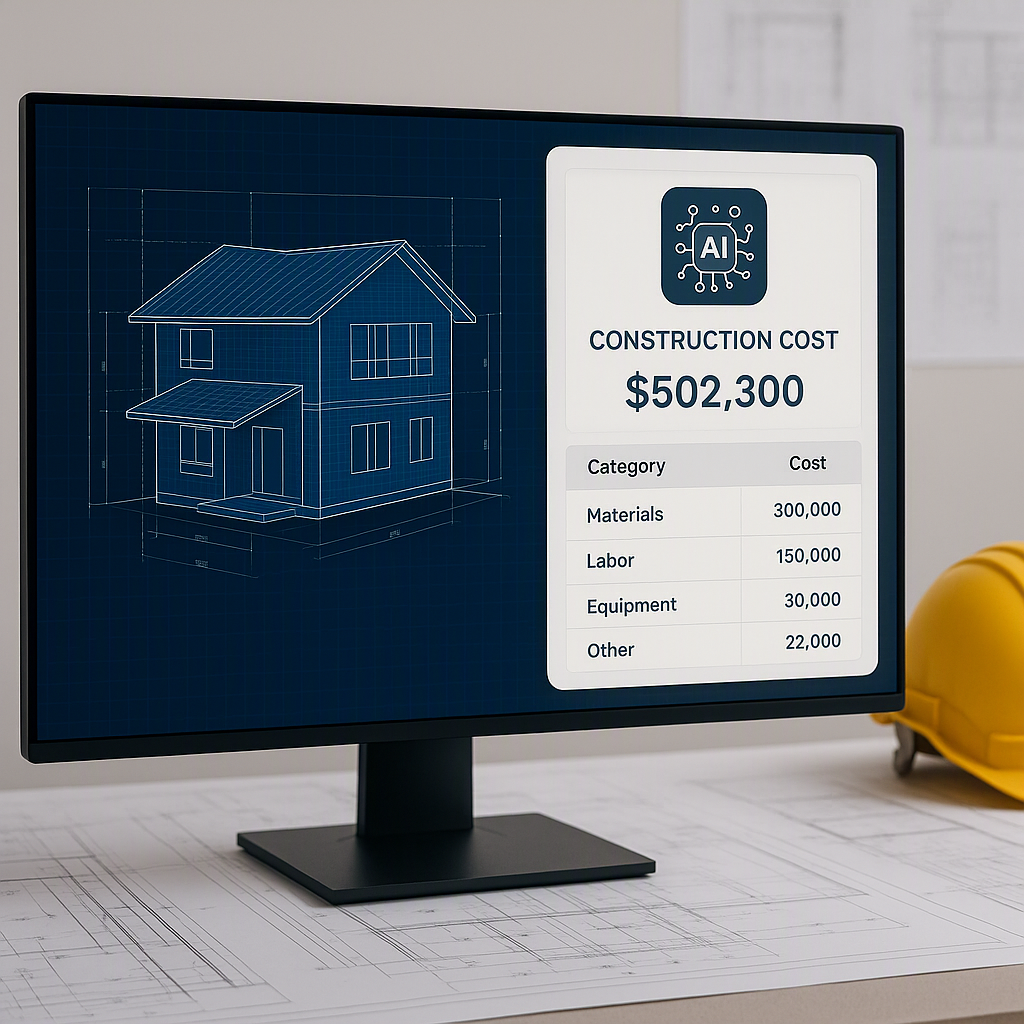
AI tools like EstimateNext solve this by automating the takeoff process. Upload a set of drawings, and the tool extracts quantities like square footage, wall lengths, and even door/window counts in minutes. For example, a 10-page drawing set that would normally take 10 hours to measure can be processed in under 10 minutes. That’s 60X faster.
Case Study: Speed Wins Projects
Consider a residential contractor in Atlanta, GA, who adopted AI-powered takeoff tools last year. Before implementing AI, they struggled with bid deadlines and often missed opportunities due to slow manual processes. After transitioning to AI, they reduced their average takeoff time from 12 hours to just 45 minutes per project. As a result, they submitted 25% more bids and increased their win rate by 18% in six months.
The Rate Lookup Nightmare
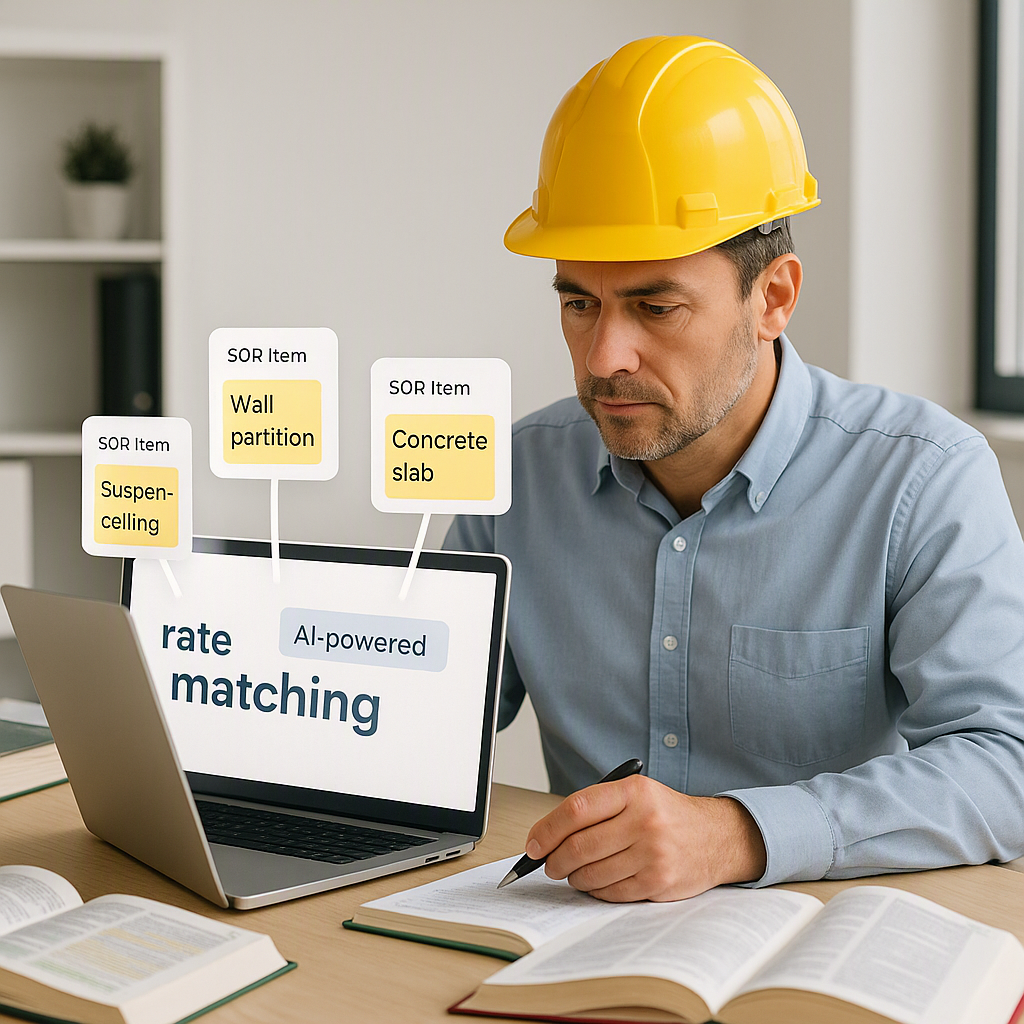
Once you’ve got your quantities, the next step is pricing them. This is where many residential contractors hit a wall. If you’re using RSMeans or a state-specific SOR (schedule of rates), you know how painful it is to flip through those PDFs or navigate clunky online tools. Finding the right rate for something as simple as “concrete slab, 4-inch thickness” can take 20 minutes. Multiply that by 50–100 line items in a typical BOQ, and you’re looking at 8–10 hours just to match rates.
Actionable Step: Automating Rate Matching
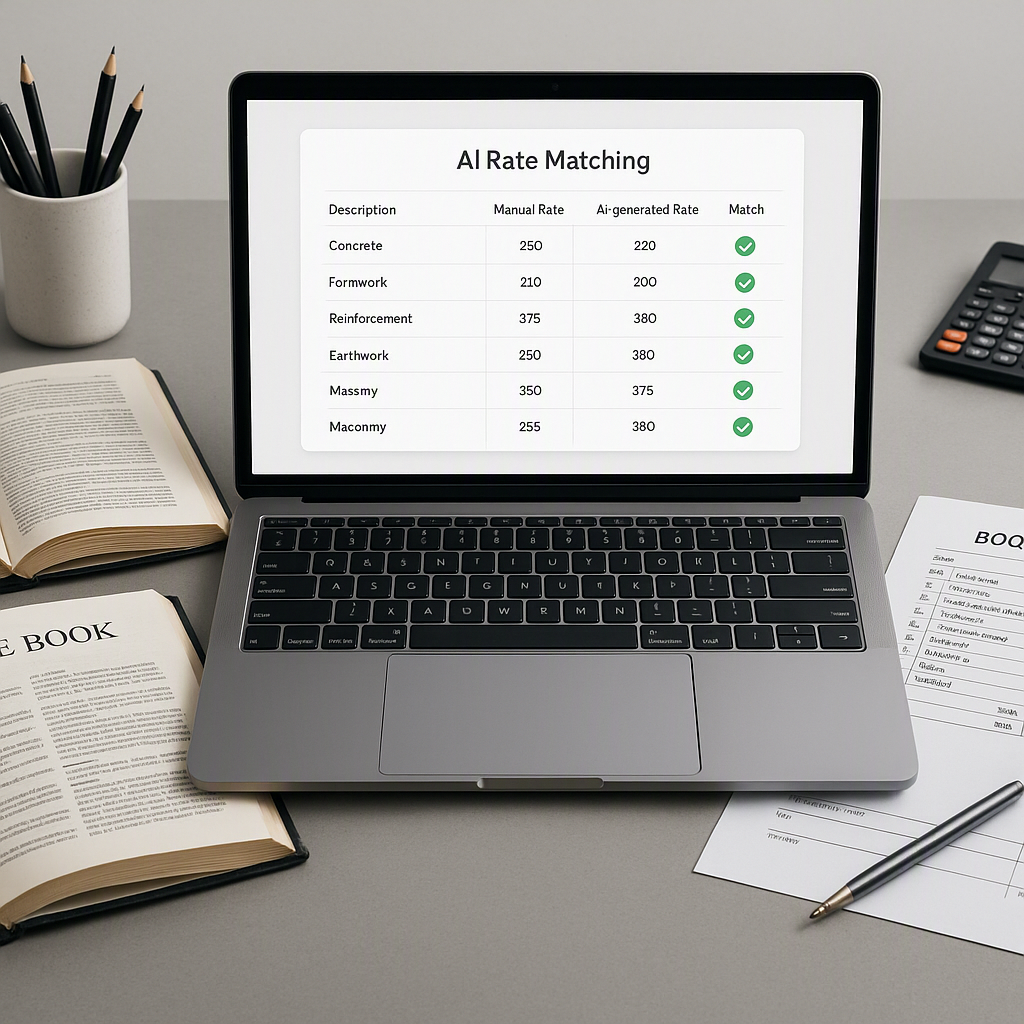
AI estimation tools like EstimateNext use semantic search to eliminate this bottleneck. Instead of manually scrolling through PDFs, you type “concrete slab 4-inch” into the search bar. The AI pulls up relevant rates from a database of 78,000+ items in seconds. Need to adjust for inflation or regional pricing? Done automatically.
Real-World Data: RSMeans vs. AI Tools
- RSMeans Annual Cost: $5,000–$8,000
- EstimateNext Cost: $39/month ($468 annually)
- Time Savings: EstimateNext reduces rate lookup time by over 90%, meaning an 8-hour task now takes less than 30 minutes.
This comparison makes it clear: AI-powered tools deliver far better ROI for residential contractors.
What-If Scenarios Without the Headache
Clients love asking “What if?” questions. What if we switch from ceramic tiles to hardwood? What if we add a second bathroom? These changes can derail your workflow because every tweak means revisiting your Excel sheets, recalculating costs, and cross-checking everything again.
Example: Handling Client Changes Manually
Imagine a client asks you to replace ceramic tiles with hardwood on a 1,500-square-foot floor. Manually, you’d have to update the area measurement, look up the new rate for hardwood, adjust labor costs, and recalculate the total. If you’re dealing with 5–10 client changes on every project, this repetitive process eats up hours.
With AI-powered estimation, those “What if?” scenarios become painless. For example, EstimateNext lets you update one line item (e.g., tiles to hardwood), and it automatically adjusts your entire estimate in real time. No rebuilding spreadsheets. No manual errors. Just instant answers.
Real-World Impact: A Case Study
A small residential contractor in Dallas, TX, recently adopted AI estimation tools. Before, they were spending 12–15 hours per project on takeoffs and rate matching. With AI, that dropped to 2 hours total. Over the course of a year, they saved 400+ hours. That’s 50 full working days.
But the bigger impact was on their win rate. By cutting their bid turnaround time from 3 days to under 24 hours, they were able to respond to 30% more bid requests. That led to 5 additional project wins worth $1.2M in revenue.
Decision Framework: Should You Adopt AI Tools?
| Factor | Manual Process | AI-Powered Tools |
|---|---|---|
| Time per Takeoff | 10–40 hours | 10–60 minutes |
| Cost per Year | $20K+ (labor) | $468 (EstimateNext) |
| Bid Turnaround Time | 2–3 days | <24 hours |
| Accuracy | Moderate | High |
| ROI Potential | Low | High |
If you’re spending more than 10 hours per project on takeoffs and rate matching, it’s time to seriously consider AI-powered tools.
If you're dealing with slow takeoffs, endless rate lookups, and manual spreadsheet headaches, EstimateNext can help. Get started free →