Maryland’s $4B Key Bridge Projects: The Clock Is Ticking
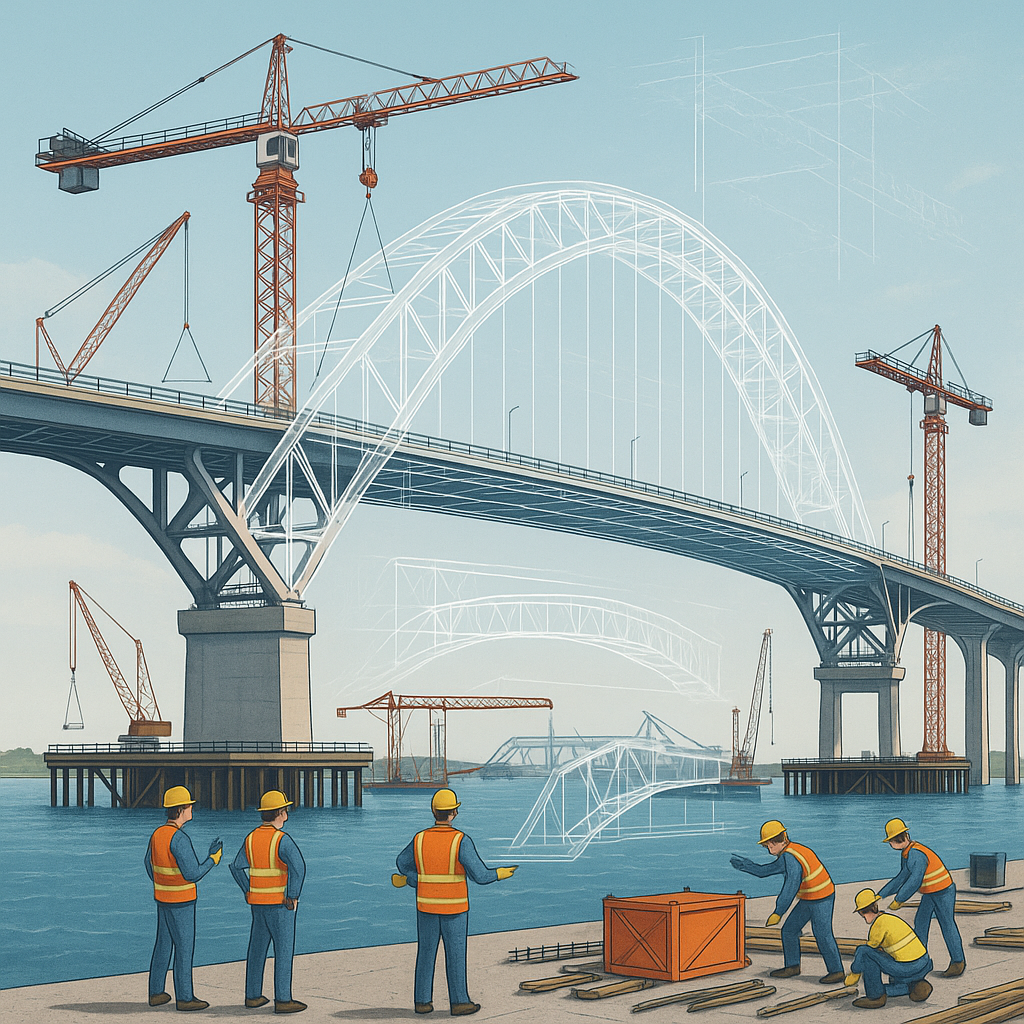
Maryland Transportation Authority (MDTA) has unveiled plans for $4 billion worth of contracts tied to the reconstruction of the Key Bridge. This ambitious undertaking includes roadway expansions, structural upgrades, and designs that will bolster seismic resilience. General contractors (GCs) are already preparing bids for what promises to be one of the state’s most competitive infrastructure projects.
But here’s the catch: these bids demand precision and speed. MDTA has a history of tight deadlines and complex scopes in its RFPs (Request for Proposals). For GCs aiming to win contracts, inefficiencies like manual bid leveling can be deal-breakers. Let’s explore why sub bid leveling is a critical piece of this puzzle.
The Problem No One Wants to Talk About: Sub Bid Chaos
Picture this: You’re a GC bidding on one of MDTA’s upcoming contracts. You’ve received seven subcontractor quotes for a single trade—plumbing, for instance. One sub’s quote includes materials but no labor. Another bundles labor and equipment but omits key scope items. Three others provide unclear or incomplete pricing. Now, it’s your job to normalize these bids—line by line—to ensure apples-to-apples comparisons.
Sounds straightforward, right? It’s not.
Manual sub bid leveling can consume hours for just one trade. Let’s break it down:
- Time Intensive: Normalizing seven quotes can easily take six hours or more.
- Error-Prone: Human errors, like missing scope discrepancies, can create costly mistakes.
- Repetitive: Multiply this process across five trades, and you’re burning through 30 hours—or nearly an entire workweek—before you even finalize your bid.
The stakes are high. Miss the bid deadline, and you’re out of the race. Submit a bid based on poorly leveled quotes, and you risk underestimating your costs or pricing yourself out of contention. This inefficiency creates unnecessary risks that most contractors can’t afford.
Smarter Sub Bid Leveling: A Practical Fix
Manual sub bid leveling may be the industry standard, but tools like EstimateNext are changing the game. With its AI-powered sub bid leveling feature, EstimateNext normalizes scope across multiple quotes in minutes—not hours. Here’s how it works:
- Upload Sub Quotes: Drop PDF or Excel files directly into the platform.
- AI Scope Matching: The tool parses each quote, identifying included and omitted scope items.
- Ranking: Bids are ranked (e.g., L1, L2, L3) based on completeness, compliance, and cost.
- Final Review: The system generates a normalized comparison report and flags anomalies, allowing your team to make informed decisions.
Instead of spending six hours manually comparing bids, you’re done in 30 minutes. Plus, every adjustment is tracked for transparency, creating an audit trail that safeguards your bid process.
Case Study: A $25M Regional Highway Project
A mid-sized GC used EstimateNext for sub bid leveling during a $25M highway expansion project. The team received 10 subcontractor quotes for electrical work, with wildly varying scope inclusions. Using manual methods, leveling these bids would have taken 12 hours. By using EstimateNext, they completed the process in just 45 minutes, flagged discrepancies in 3 quotes, and avoided underestimating costs by over $200,000. This time savings allowed them to meet a tight RFP deadline and ultimately win the contract.
Why This Matters for the Key Bridge Contracts
Large infrastructure projects like Maryland’s Key Bridge reconstruction come with unique challenges. These multi-trade undertakings require coordination across dozens of subcontractors. The sub bid leveling process can make or break your proposal.
Imagine MDTA releases a $500M contract for bridge decking and associated MEP (Mechanical, Electrical, Plumbing) systems. As a GC, you’re estimating for HVAC, plumbing, and electrical subs. If you can’t normalize bids fast enough, here’s what could happen:
- Missed Deadlines: MDTA isn’t known for granting extensions. Late submissions are instant disqualifications.
- Scope Blind Spots: Missing scope items in your final bid could lead to unbudgeted costs, ultimately bankrupting your project.
- Lost Opportunities: Competitors who automate their workflows will outpace you, submitting more accurate bids faster.
Automating sub bid leveling isn’t just about speed—it’s about minimizing errors, boosting transparency, and freeing up time for higher-value tasks like refining your markup strategy or addressing RFP technical requirements.
Example: The I-95 Corridor Expansion
During the $300M I-95 Corridor expansion, one GC automated their sub bid leveling process using AI tools. They reduced leveling time from 40 hours to 8 hours across multiple trades, enabling them to submit a bid 48 hours ahead of the deadline. Their proactive approach secured the contract, while competitors scrambling to manually level bids missed the deadline entirely.
Real ROI: How GCs Benefit
Let’s break down the numbers:
- Time Savings: Save 5 hours per trade x 5 trades = 25 hours per bid.
- Labor Cost Reduction: At $130/hour for a senior estimator, that’s $3,250 saved per bid.
- Bid Wins: Faster sub bid leveling means more accurate proposals, directly improving your win rate.
For projects as competitive as MDTA’s Key Bridge contracts, these savings aren’t optional—they’re survival tactics.
Comparison Table: Manual vs. Automated Sub Bid Leveling
| Criteria | Manual Leveling | Automated Leveling (EstimateNext) |
|---|---|---|
| Time Required | 6 hours per trade | 30 minutes per trade |
| Error Rate | High (human error) | Low (AI-assisted accuracy) |
| Transparency | Limited audit trails | Full audit trails |
| Cost | $130/hr x hours spent | Fixed software subscription |
| Overall Efficiency | Low | High |
The Bottom Line
Maryland’s $4B Key Bridge contracts represent a massive opportunity for GCs—but only if you bid smarter. Sub bid leveling is a pain point that too many teams overlook until it’s too late. Don’t let manual processes hold you back.
If you're ready to simplify your bidding workflows, EstimateNext can help. Try it free →