Why Bids Like a $100M Water Project Are Changing the Game
Big projects come with big risks. A major contractor’s $100M public water project is a classic example. Water infrastructure isn’t just pipes and pumps—it’s a maze of regulatory requirements, material forecasts, subcontractor bids, and environmental considerations. Miss a detail, and your bid margin disappears faster than water through a sieve.
But here’s the real story: the way bids are calculated is evolving. Gone are the days of flipping through rate books for hours. AI tools like EstimateNext are pushing the boundaries of bid cost engineering, especially for large-scale projects like this.
The Problem Teams Face: Manual Estimation Bottlenecks
Let’s be honest—manual estimation is a nightmare for projects this size. A bid like this likely involved:
1. Takeoffs from Massive Drawing Sets
Water infrastructure projects mean hundreds of pages of plans—water mains, treatment facilities, retention basins. Estimators traditionally measure sections manually, using rulers or CAD tools. For a project like this, imagine tracking thousands of linear feet of pipe, hundreds of cubic yards of concrete, and excavation volumes across dozens of maps. One missed measurement could lead to an underbid or overbuy.
Example: A similar project in Houston saw a $5M overrun because the team underestimated excavation quantities by 20%. Manual errors like these can tank profitability overnight.
2. Rate Lookup for Niche Items
Ever tried finding a rate for a reinforced concrete water tank in RSMeans or CPWD DSR? It’s like searching for a needle in a haystack. Large water infrastructure projects demand rates for specialized items like backflow preventers, custom valves, and polymer linings.
Data Point: According to a study by Dodge Data & Analytics, 67% of contractors report difficulty sourcing accurate rates for niche items, leading to frequent bid revisions.
3. Sub Bid Leveling
Getting apples-to-apples quotes from subcontractors isn’t straightforward. Different subs include different scopes, exclusions, and contingencies. For a $100M bid, the team likely received dozens of quotes for key tasks like pipe installation and treatment facility construction.
Case Study: In 2021, a Florida contractor lost a $90M bid because one subcontractor excluded necessary fittings in their scope. When corrected, their bid was no longer competitive.
How AI Tools Make This Easier
Here’s where AI-powered platforms like EstimateNext come into play. Let’s break it down:
1. Vision AI Takeoff
For a project like this, the team likely dealt with hundreds of drawings. Vision AI can extract quantities—pipe lengths, concrete volumes, excavation areas—in minutes, not weeks. It’s like having a junior estimator who never sleeps.
Actionable Step: Teams can use Vision AI to flag high-risk quantities (e.g., deep excavation zones or large-diameter pipes) for additional review, ensuring accuracy in critical areas.
2. Rate Matching Across Catalogs
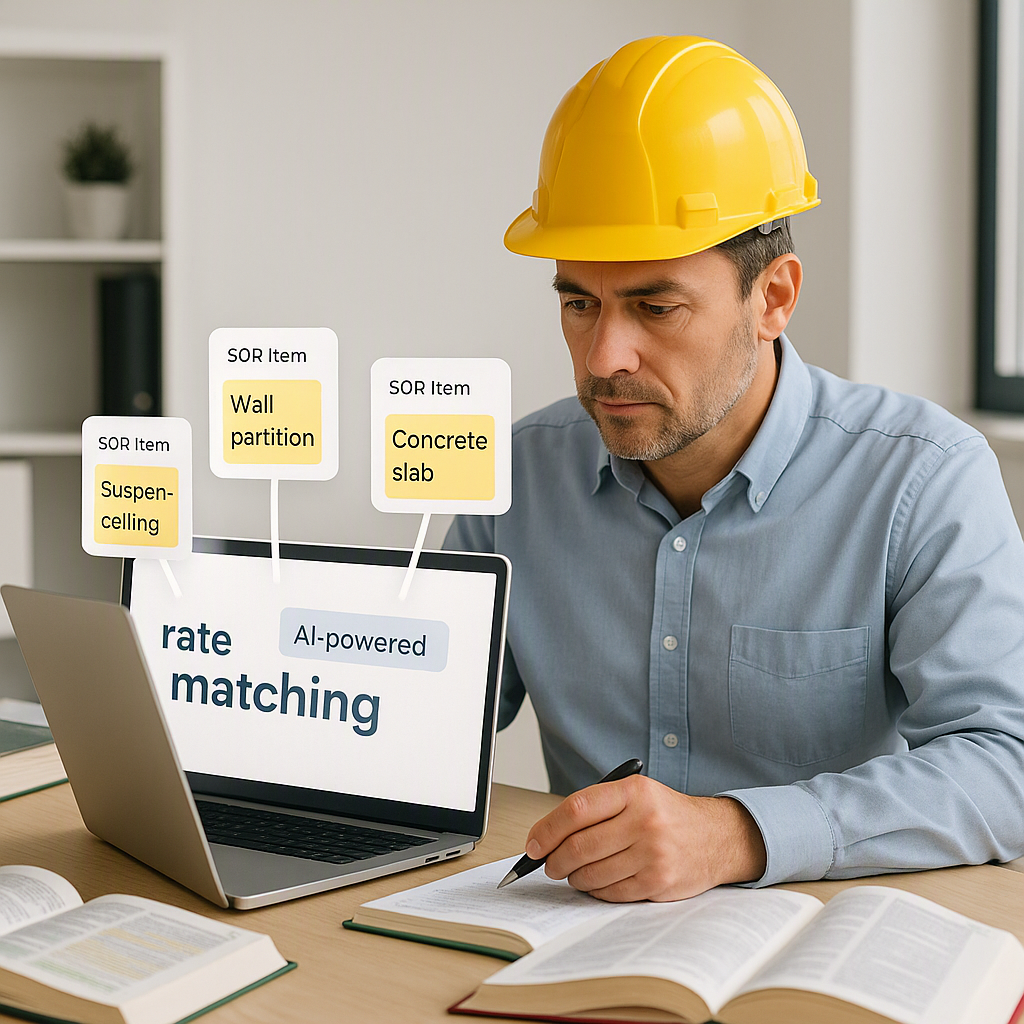
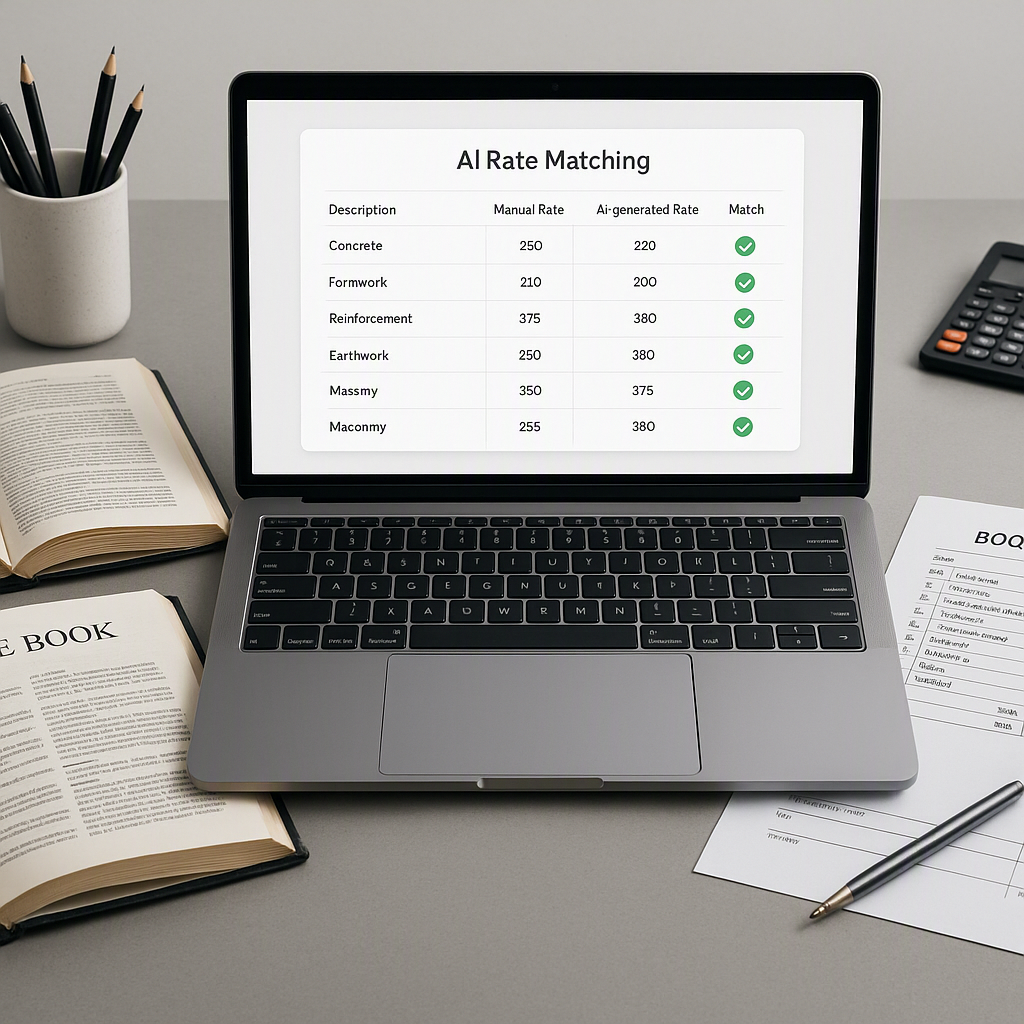
Water infrastructure projects often pull rates from niche catalogs (think CPWD DSR or RSMeans). With 78K+ searchable SOR items, EstimateNext’s semantic search can find the exact rate you need in seconds. No more flipping through PDFs.
Comparison Example: Manual lookup for rates might take 6 hours per estimate, while AI tools cut this down to 10 minutes. If a GC handles 10 iterations, that’s a savings of 60 man-hours—or $7,800 at $130/hour.
3. Sub Bid Normalization
Subcontractor quotes are messy—one includes valves, another doesn’t. EstimateNext’s bid leveling tool automatically aligns scope differences and ranks L1/L2/L3 bids. For a $108M project, this feature alone could save hours of frustration.
Case Study: A California GC reduced subcontractor bid normalization time from 40 hours to 4 using AI tools. The saved time allowed them to fine-tune their bid and win the project.
4. What-If Scenarios
What happens if material costs spike or a subcontractor pulls out? EstimateNext lets teams adjust rates or scope in real-time without rebuilding spreadsheets. On a project this big, agility is everything.
Actionable Tip: Use what-if scenarios to model inflation impacts on materials like ductile iron pipes or PVC fittings, which have seen price volatility in recent years.
Real ROI for GC Teams
Let’s do the math. For a large general contractor, here’s what AI tools could save:
| Task | Manual Hours | AI Hours | Savings ($ at $130/hr) |
|---|---|---|---|
| Takeoff Speed | 100+ | 10 | $11,700 |
| Rate Lookup Efficiency | 60 | 1 | $7,670 |
| Sub Bid Leveling | 30 | 2 | $3,640 |
| Total Savings | 190+ | 13 | $23,010+ |
Key Trends in Bid Cost Engineering
This project reflects broader trends:
1. Speed Matters
Deadlines are tighter, and delays cost millions. Faster tools win bids. AI tools like EstimateNext reduce bid preparation timelines by up to 85%, giving GCs a competitive edge.
2. Accuracy Over Gut Feel
AI tools ensure every rate, quantity, and assumption is backed by data. For example, AI platforms can integrate historical bid data to flag anomalies, ensuring GCs don’t underestimate high-risk items.
3. Scalability
Big infrastructure projects demand tools that can handle complexity without breaking. AI platforms allow teams to scale workflows without hiring additional estimators or analysts.
Call-To-Action
If you’re dealing with large-scale bids like a $100M water project, EstimateNext can help. Get started free →