When’s the Last Time You Enjoyed Flipping Through a 2,000-Page Rate Book?
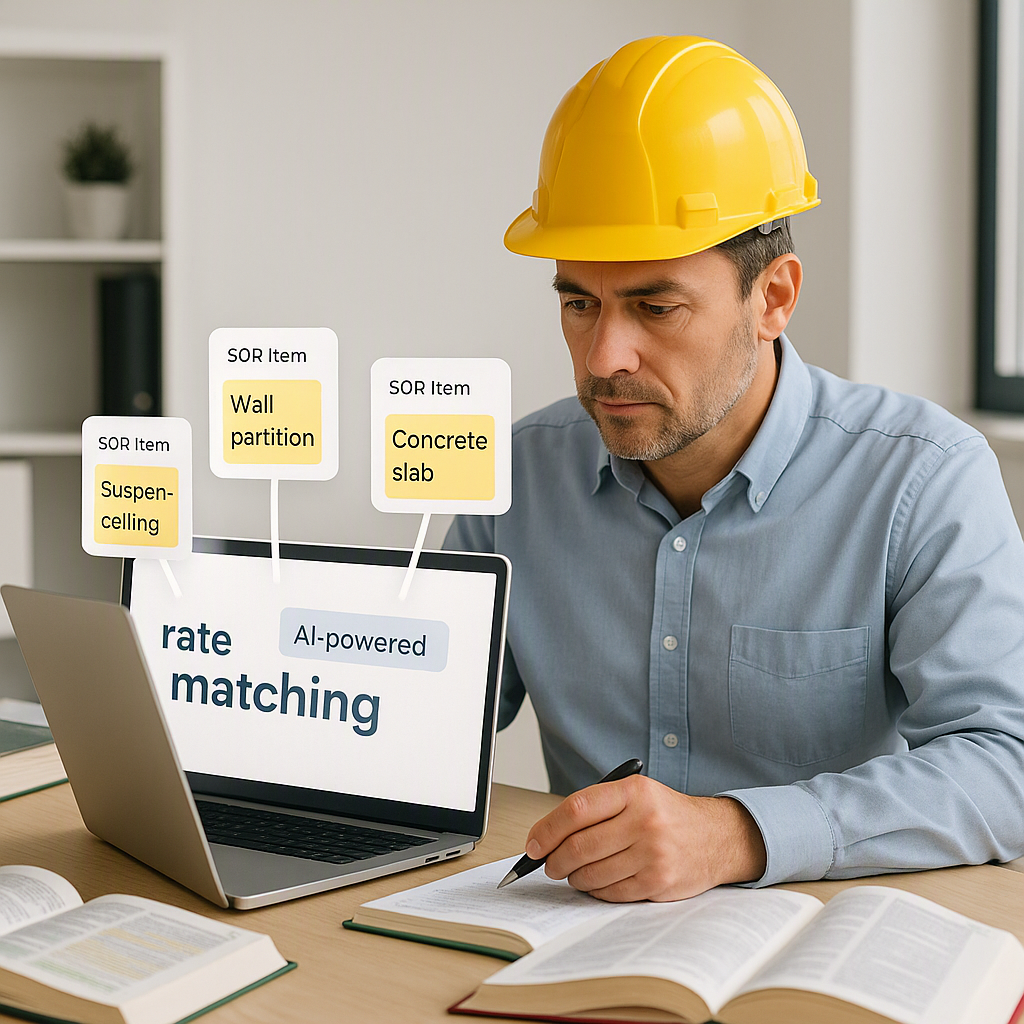
Never, right? Yet that’s the reality for estimators on most construction projects. Matching rates manually is a time sink, and every hour spent hunting for the right rate is an hour not spent refining your bid strategy. If this sounds familiar, you're not alone—and there's a better way.
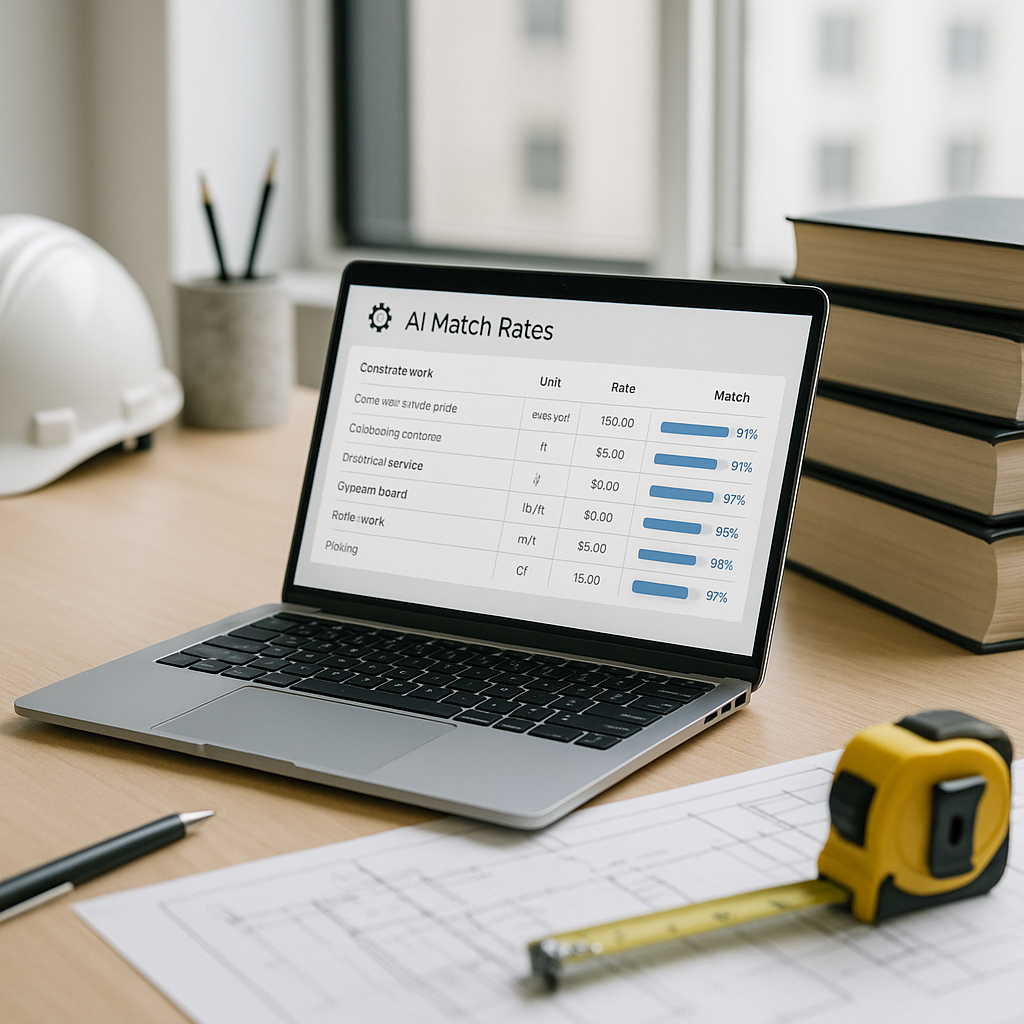
AI-powered rate matching changes that. Tools like EstimateNext aren’t just faster—they’re smarter. Imagine typing “precast concrete panel installation” and getting the exact rate you need in seconds, pulled from a database of 78,000+ SOR (Schedule of Rates) items. No more guessing, no more flipping. Just answers, right when you need them.
Why Manual Rate Matching Is Killing Productivity
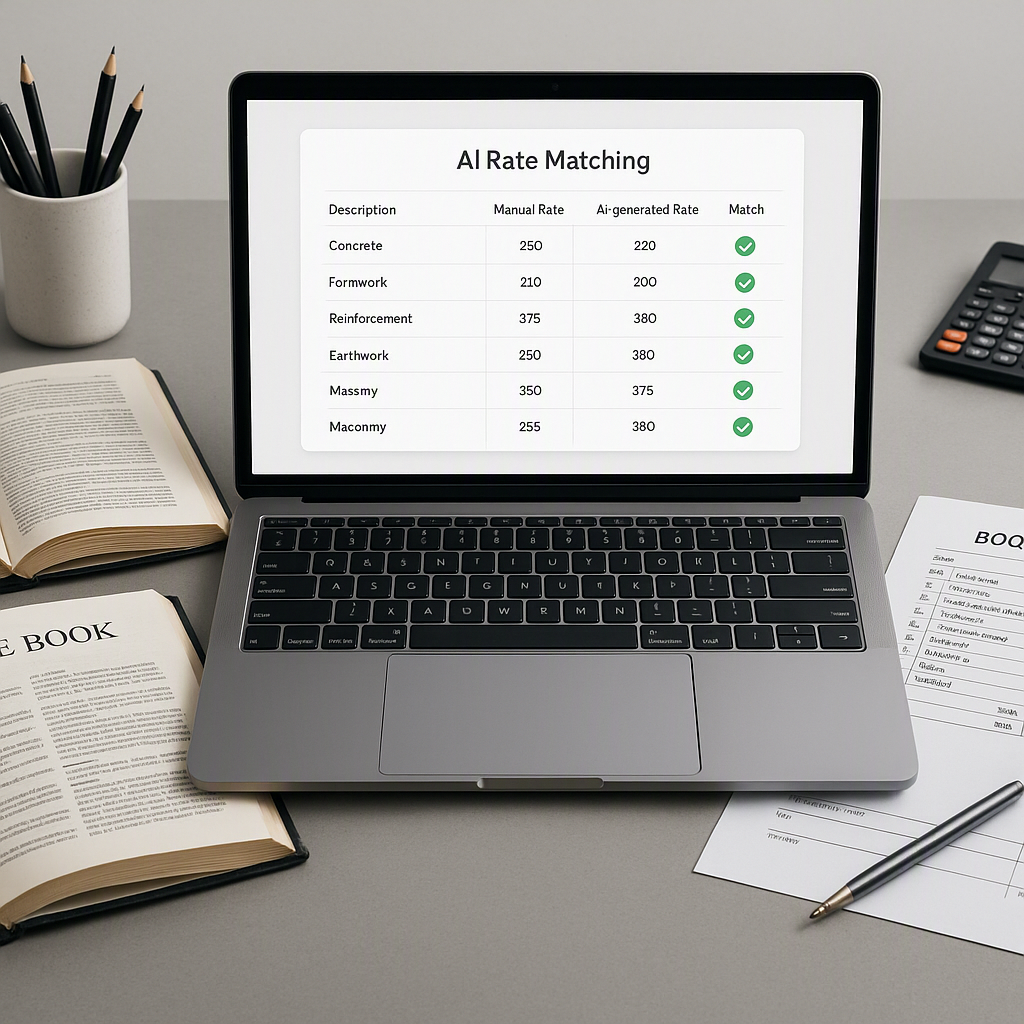
Let’s break it down. On a typical bid, you might spend 4 to 8 hours just on rate lookup. Multiply that by five bids a year, and you’re burning up to 40 hours annually—on something a machine could do better. And it’s not just a time issue. Manual lookups introduce errors. Ever picked a rate from the wrong year? Or misread a line buried in tiny font? It happens. And those errors cost real money.
In one case, a contractor I worked with missed a key inflation adjustment. They ended up underbidding by 12% on a $5 million project. That’s a $600,000 hole in the budget right out of the gate. Painful, but preventable.
Here’s another example: a subcontractor working on a large commercial project selected rates from an outdated catalog due to a typo. The mistake wasn’t caught until after the bid was submitted. The result? They had to eat $150,000 in unanticipated costs when material prices surged. These scenarios are all too common.
Actionable Steps to Avoid Manual Rate Errors:
- Double-check the publication year of the rate book or catalog you’re using.
- Cross-reference rates with recent projects to ensure they reflect current market conditions.
- Use a tool like EstimateNext that performs automatic updates for inflation and location-specific adjustments.
How AI Fixes the Problem
Here’s how AI like EstimateNext tackles rate matching:
-
Semantic Search: Instead of flipping through endless PDF pages or Excel sheets, you type what you need. AI uses natural language processing to understand your query and match it to the most relevant SOR items. For example, typing "steel beam installation" retrieves all relevant rates instantly, even if the catalog uses slightly different terminology like "structural steel erection."
-
Database Breadth: With access to 78,000+ items across 135+ catalogs, you’re covered whether you’re pricing a high-rise in New York or a CPWD project in Delhi. For instance, if you work on infrastructure projects in Australia, the AI can pull rates from the Australian Construction Handbook with region-specific adjustments.
-
Intelligent Filtering: The platform factors in your project location, currency, and even labor rules to suggest the most accurate rates. For example, a subcontractor in the UAE doesn’t need to sift through US DOT rates—they’ll get AECOM Middle East rates instead.
-
Audit Trail: Every rate match comes with a breakdown—material, labor, equipment—so you can see exactly how the number was calculated. Transparency matters, especially when defending your bid. For example, if a client questions a rate, you can show them the exact source and calculation logic behind it.
Real Results: A $1 Billion Rail Project
Need proof? Take the $1 billion rail project highlighted in a recent EstimateNext case study. The team used AI to match rates for everything from structural steel to pre-stressed concrete girders.
The result? What would’ve taken 12 hours manually was done in 15 minutes. That’s an 1,800% speed improvement. And because the rates were pulled directly from DOT-approved catalogs, accuracy wasn’t just an afterthought—it was baked in. The project team also reported saving $87,000 in preconstruction labor costs, which they redirected toward winning additional bids.
The Obvious Objection: “But AI Doesn’t Know My Project”
I hear this a lot. “AI doesn’t understand context. My projects are unique.” Fair point. But here’s the thing: AI doesn’t need to replace your expertise. It’s there to enhance it. Think of it as a supercharged assistant. You still make the judgment calls, negotiate with subs, and decide on markups. The AI just handles the grunt work—like rate matching—so you can focus on strategy.
Real-World Example: A specialty contractor working on a LEED-certified office building used AI for rate matching but customized estimates for sustainability-specific materials. The balance of AI efficiency and human expertise allowed them to submit a winning bid without sacrificing project-specific details.
What About Custom Rates?
Good question. Not every rate is going to come from a standard catalog. Maybe you’re working with specialized materials or niche subcontractors. That’s fine. AI tools like EstimateNext let you upload your own rate catalogs or define custom rates for specific items. So even if your project is one-of-a-kind, the system adapts to you.
For example, one contractor working on a high-tech data center in Silicon Valley used EstimateNext to upload custom rates for cryogenic cooling equipment installation. The AI seamlessly integrated these rates into the overall bid, saving hours of manual calculations.
The ROI is a No-Brainer
Let’s talk numbers. If you’re a GC preconstruction director, you’re probably billing out at $130/hour. Saving 4 to 8 hours per estimate means you’re pocketing $520 to $1,040 in labor savings per bid. Over five bids a year, that’s $2,600 to $5,200 back in your budget.
For MEP subcontractors, the math is even better. By slashing the time needed to respond to bids, you can double your quote volume. Respond to just four extra bids a year, win one, and that could mean an extra $200,000 in revenue.
Here’s a quick comparison:
| Scenario | Manual Rate Matching | AI-Powered Rate Matching |
|---|---|---|
| Time to Match Rates | 4–8 hours per bid | 15–30 minutes per bid |
| Annual Labor Savings | $0 | $2,600–$5,200 |
| Quote Volume | 5 bids/year | 8–10 bids/year |
| Potential Revenue Boost | $0 | $200,000+ |
Why Now Is the Time to Switch
The construction industry is shifting. A 2023 McKinsey report found that early adopters of AI in construction see cost savings of 10-20% per project. That’s not just about cutting hours—it’s about winning more bids, with better margins.
And let’s not forget inflation. Labor and material costs are spiking globally. If you’re still relying on outdated rate books or static spreadsheets, you’re flying blind. AI tools can factor in real-time price changes, regional adjustments, and even tax impacts.
The Bottom Line
Manual rate matching is a relic of the past. AI-powered tools like EstimateNext are faster, smarter, and more accurate. They don’t just save time—they help you win more work, with fewer mistakes.
If you’re dealing with the grind of manual rate matching, EstimateNext can help. Get started free →