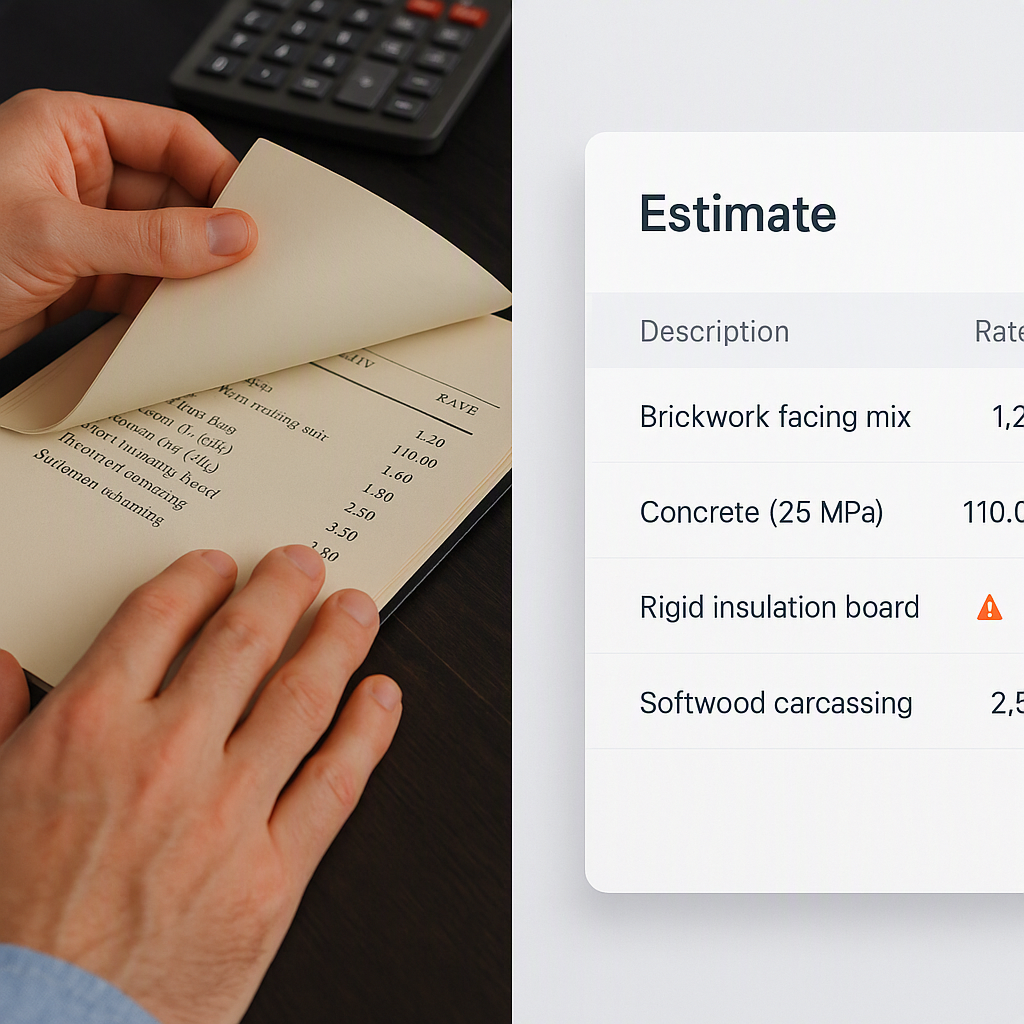
I Used to Think Manual Rate Lookup Was a Necessary Evil
For years, I believed that flipping through rate books was the only way to ensure accuracy in preconstruction estimation. Sure, it was tedious—but accuracy mattered more than speed, right? I’d spend hours with CPWD DSRs or RSMeans catalogs, feeling like the thoroughness justified the time. No shortcuts.
I wasn’t alone. Most estimators I worked with agreed: manual lookup was painful, but it was the cost of doing business. We’d rather spend significant time getting a rate right than risk underpricing a bid and eating the loss later.
But then something changed.
The Thing That Made Me Question Everything
It wasn’t a flashy demo or a conference keynote. It was seeing how AI-powered rate matching tools could streamline the process. Teams could upload a BOQ and have rates matched across thousands of items in a fraction of the time it would take manually.
I couldn’t believe it. How could a machine understand the nuances of rate matching? Wouldn’t it overlook local labor costs or inflation adjustments? As skeptical as I was, the potential was undeniable. The process became faster, the audit trail was solid, and estimators weren’t glued to Excel for days on end.
I started digging deeper.
Why My Old Belief Hung On So Long
Looking back, my reluctance wasn’t about the tool itself. It was about trust. Rate lookup is the backbone of estimation—it’s where accuracy begins. The idea of handing that off to an algorithm felt risky. What if the AI pulled the wrong rate? What if it missed a critical adjustment, like a labor uplift or a material surcharge?
And honestly? There was some pride involved. Manual lookup was grueling, but it felt like real work. You could see the effort in those highlighted PDFs and color-coded Excel sheets. AI, on the other hand, felt… effortless. Could it really be as reliable as human judgment?
What I Do Differently Now
I don’t ditch manual lookup entirely—but I don’t default to it anymore either. Here’s what’s changed:
-
Start with AI, then verify: Tools now handle the first pass. They match rates, flag low-confidence items, and apply inflation profiles automatically. I review the flagged items and make adjustments where needed.
-
Upload custom catalogs: If I’m working with project-specific rates (like a supplier’s custom schedule), I upload them into the platform. The AI integrates these seamlessly, so I’m not flipping through PDFs to price bespoke finishes.
-
Trust the audit trail: AI-powered tools create detailed rate build-ups—material, labor, equipment, overhead, and profit. If there’s a mismatch, I can trace it back step-by-step. That transparency builds confidence.
-
Focus on exceptions: Instead of slogging through every line item, I spend my time where it’s needed—on outlier rates, scope clarifications, and strategic adjustments.
What Being Wrong Cost Me—and What I’m Still Figuring Out
Here’s the painful part: I probably wasted hundreds of hours over the years on manual rate lookup that AI could’ve handled. That’s time I could’ve spent refining bids, negotiating with subs, or analyzing market trends.
But I’m still not sure where the line is. AI gets smarter with feedback, but it’s not perfect. Some edge cases—like regional quirks or niche materials—still demand human oversight. And while early adopters report significant ROI, I’m cautious about over-reliance.
Call to Action
If you're tired of wasting hours on manual rate lookup, consider exploring AI-powered tools to streamline your estimation process.


