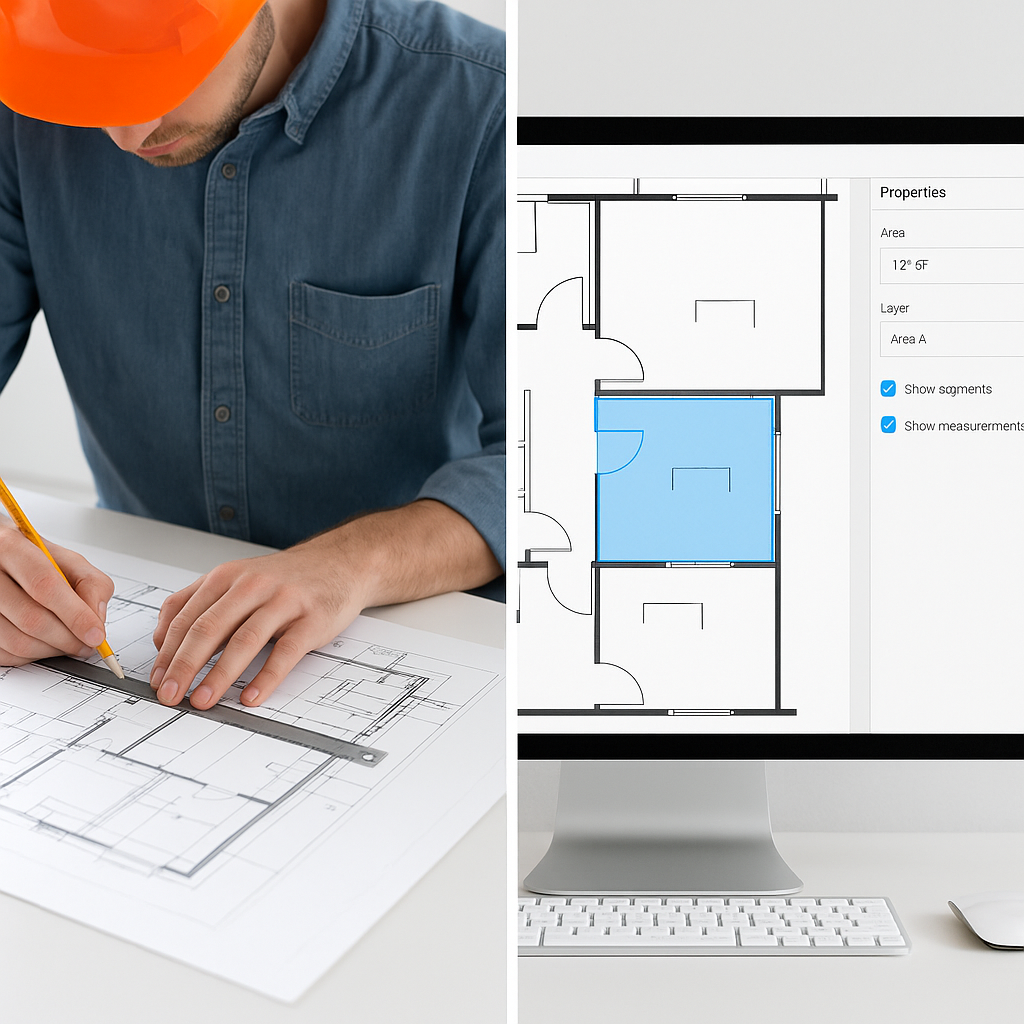
Why Are We Still Doing Manual Takeoffs?
Every estimator knows the drill. You get the drawing set, fire up Bluebeam or a similar tool, and start tracing. Then you go back to the BOQ, manually matching quantities and rates. For a mid-size project, this process eats up 36-40 hours—two full workdays—for just one bid.
It’s 2023. Why are we still spending this much time on something AI can handle in minutes?
Takeoffs are the backbone of preconstruction. If your quantities are wrong, your bid is wrong. But here’s the hard truth: manual takeoffs are slow, error-prone, and frankly, unnecessary. Tools like EstimateNext’s Vision AI extract quantities from PDFs in 10 minutes. Yes, 10 minutes. That’s not a typo.
The Real Cost of Manual Takeoffs
Let’s talk numbers. A general contractor pursuing five GMP bids a year spends roughly 200 hours annually on manual takeoffs. If your team’s hourly rate averages $130, that’s $26,000 just on labor for this one task.
But that’s just the tip of the iceberg. What about the hidden costs? Here are a few you might not have considered:
- Burnout: Estimators spend long hours tracing drawings, which contributes to fatigue and errors. A tired estimator is more likely to miss key details, leading to costly mistakes.
- Missed Opportunities: Spending 200 hours on manual takeoffs means those hours can’t go toward refining bids, exploring new opportunities, or improving relationships with subcontractors.
- Human Error Costs: Studies suggest human error rates in manual estimation can range from 5-10% (source). On a $10 million project, a 5% error could mean a $500,000 shortfall—or worse, overbidding and losing the project altogether.
Opportunity Cost in Real Terms
Imagine what your team could do with 200 extra hours per year. Here’s a breakdown:
| Activity | Hours Saved | Potential ROI |
|---|---|---|
| Submitting 4 additional bids | 120 | Winning just 1 bid could bring $1M+ in revenue |
| Negotiating better subcontractor rates | 40 | Saving 5% on subcontracts adds up significantly |
| Training staff on cost-saving strategies | 40 | Builds long-term efficiency and expertise |
The AI Advantage: Time, Accuracy, and Savings
AI tools don’t just save time; they also reduce errors. According to a 2023 McKinsey report, early adopters of AI in construction estimation see cost savings of 10-20% per project. That’s because AI doesn’t overlook line items or miscalculate quantities.
Here’s an example: One mid-size contractor using Vision AI reported saving 120 hours on a single high-rise project. That’s 15 full workdays—time they reinvested in refining their bid and negotiating subcontractor pricing. The result? They won the project and delivered under budget.
How Vision AI Works
Let me break it down. Vision AI doesn’t just “read” your drawings—it understands them. You upload a PDF, and within minutes, it extracts:
- Room areas
- Wall lengths
- Door and window counts
It even flags low-confidence zones for manual review. Think of it as a junior estimator who works at 10x speed but still asks for help when unsure.
Handling Revisions
Architects love sending updated drawings at the eleventh hour. Revisions are a nightmare for manual workflows, but Vision AI compares revisions automatically, highlighting changes. No more hunting for deltas manually.
For example, a contractor working on an airport expansion project used Vision AI to handle multiple drawing revisions in a single week. The tool flagged changes in wall lengths and additional fixtures, saving the team nearly 12 hours of manual work.
The Skeptic’s Question: Is AI Accurate Enough?
You might be thinking, “Sure, AI is fast, but can it match the accuracy of a seasoned estimator?”
Short answer: Yes, with oversight. AI tools like EstimateNext include confidence scoring and manual overrides. If Vision AI isn’t sure about a specific quantity, it flags it for review. This isn’t about replacing your team—it’s about amplifying their capabilities.
Learning Curve
Plus, the system gets smarter over time. By the third project, most users report significant accuracy improvements. It’s like training a junior estimator, but without the learning curve. One contractor reported a 95% accuracy rate by their fourth project, with only minimal manual adjustments needed.
What If You’re Already Using Bluebeam or Procore?
Good news: AI tools like EstimateNext integrate seamlessly with existing workflows. You can export takeoffs directly into Excel, Procore, or whatever platform you’re using. No need to upend your stack.
Customization Options
Custom rates? No problem. Upload your own catalogs, and the AI will use them for rate matching. This ensures your estimates reflect your actual costs, not generic averages.
For example, a contractor specializing in luxury residential projects uploaded their custom finish carpentry rates into Vision AI. This allowed them to generate highly precise bids tailored to their niche, winning a $5 million project.
Why Speed Is the New Competitive Edge
In today’s market, speed isn’t just nice to have—it’s a necessity. Bid deadlines are tighter than ever, and being late means being out.
Real-World Examples
- MEP Subcontractors: Often have less than 72 hours to respond to bid packages. AI tools cut that turnaround to 4 hours.
- General Contractors: Missing a single bid can cost millions in lost revenue. Being the first to submit a complete, accurate bid isn’t just about winning; it’s about survival.
The Bottom Line: AI Isn’t the Future—It’s the Present
If you’re still relying on manual takeoffs, you’re leaving money and time on the table. AI tools like EstimateNext don’t just make your life easier—they make your bids stronger, faster, and more accurate. It’s not about replacing your team; it’s about giving them the tools to win.


