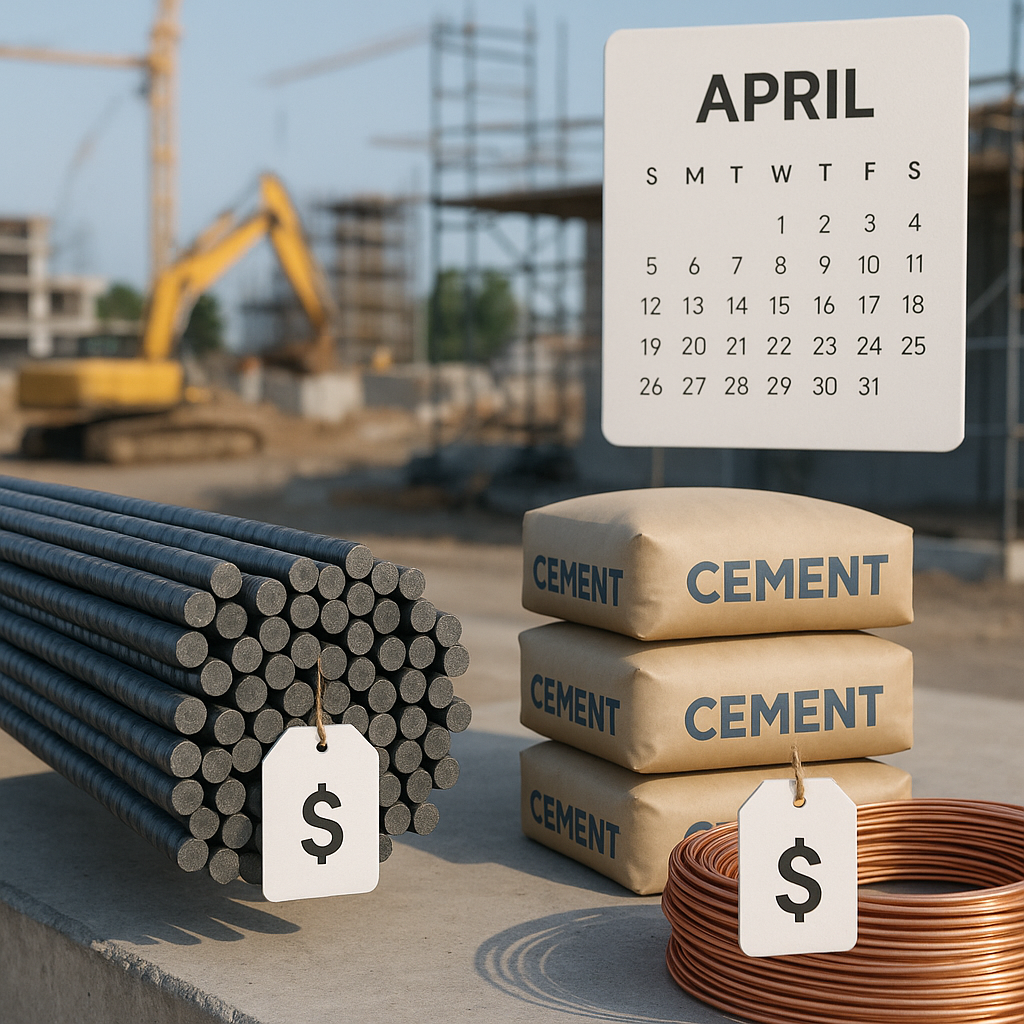
Why April Always Hurts Your Budget
Every estimator knows April is brutal. This year, construction prices rose 6.2%—and that’s just the national average. Depending on your region, it’s probably worse. Why? Three fundamental reasons: materials, labor, and demand. Let’s break these down, add real-world examples, and explore how you can stay ahead.
Material Prices Are Out of Control
April signals the start of construction season. As the spring thaw clears the way, road projects, utility work, and building kickoffs flood the pipeline. Supply chains, still recovering from global disruptions, struggle to keep up. This imbalance drives material costs through the roof.
Steel Prices: A Case Study
Take steel rebar as an example. In April, the price jumped 8% month-over-month, driven by surging demand from infrastructure projects. According to the Steel Market Report, government-funded initiatives like bridge repairs and highway expansions are causing a bottleneck in supply.
But steel isn’t the only culprit. Cement, copper wiring, and even drywall saw price hikes of 5–7% in the same period. For instance, copper wire prices surged due to increased demand for EV infrastructure projects, while cement costs were impacted by higher energy prices globally.
The Cost of Late Bids
Here’s the kicker: submitting late bids can magnify the pain. Let’s say you’ve locked in a bid based on February prices, but by April, your suppliers have adjusted their rates upward. Now, you’re either forced to eat the difference or renegotiate terms mid-project—neither of which helps your margins.
Actionable Tip: Consider using real-time material pricing tools integrated with platforms like RSMeans or EstimateNext. These not only provide updated prices but also let you set alerts for specific material categories.
Labor Costs Aren’t Helping
The labor market remains tight—another April headache. As the construction season heats up, skilled labor becomes harder to find, pushing wages higher.
Wage Growth Data
In April, hourly wages for construction workers increased by 5.1% year-to-date, according to the Bureau of Labor Statistics. The issue is twofold: not only are there fewer skilled workers available, but contractors are also paying a premium to secure reliable crews for summer projects. This often includes overtime pay, travel costs for out-of-town workers, and even signing bonuses.
Case Study: Overtime Costs
A mid-sized contractor in Denver reported paying an additional $72,000 in overtime wages during April alone to meet project deadlines. While the work got done, the added costs slashed their profit margins by 18%.
How to Mitigate Labor Cost Spikes
- Prebook Crews Early: Lock in your labor force by February or March to avoid April’s premium rates.
- Invest in Training: Upskill your existing workforce during the off-season to reduce reliance on external hires.
- Leverage Technology: Tools like Procore and EstimateNext can help project managers optimize scheduling and reduce unnecessary overtime.
Seasonal Demand Spikes
April is bidding season for public projects—think schools, roads, parks, and more. This influx of RFPs creates a bidding frenzy, driving up subcontractor quotes.
Public Projects: The Demand Surge
Data from Dodge Construction Network shows a 12% increase in public project bids during April compared to other months. This makes subcontractors busier, which naturally inflates their prices. General contractors (GCs) often report bids coming back 10–15% higher than expected.
Subcontractor Challenges
If you’re a subcontractor, the pressure is just as intense. A Texas-based MEP subcontractor shared that in April, they responded to 40 bid packages—double their usual monthly volume. To meet demand, they had to streamline their quoting process, focusing only on high-probability opportunities.
Actionable Tip: Use AI-powered bid management tools to prioritize high-value opportunities. These tools can rank bids based on profitability and likelihood of winning.
Breaking the Cycle: Faster Estimation = Smarter Pricing
If April has taught us anything, it’s that speed and accuracy in estimation are critical. The faster you can lock in prices and submit bids, the less vulnerable you are to market fluctuations.
Example: Rate Lookup Delays Cost You Thousands
Consider a $12M office fit-out project. You need to pull rates for 200+ Schedule of Rates (SOR) items, from gypsum board to HVAC ducting. Manually flipping through RSMeans or CPWD DSR manuals might take hours—or even days. By the time you’re done, material prices might have already shifted.
A regional contractor in Gujarat used EstimateNext’s AI matcher to cut rate lookup time from 6 hours to just 15 minutes. This 1,440X improvement allowed them to lock in supplier rates before the April price spike.
AI Can Predict Seasonal Spikes
Another overlooked feature of AI tools is their ability to forecast price trends. For example, EstimateNext’s inflation uplift feature suggests Consumer Price Index (CPI) adjustments based on catalog year, region, and material type. Knowing in advance that steel prices are trending upward or that drywall costs are stabilizing allows you to bake realistic contingencies into your bids.
Faster Turnaround for Subcontractors
Speed is especially crucial for subcontractors. Manually pricing out 30+ bid packages during April’s peak season is a losing game. Tools like EstimateNext’s HVAC rate calculators can cut quote turnaround time from 72 hours to just 4 hours. In one instance, a Texas-based MEP subcontractor responded to 30% more bids and added $1.2M in revenue during April alone.
Comparison Table: Traditional Estimation vs. AI-Driven Estimation
| Feature | Traditional Estimation | AI-Driven Estimation (e.g., EstimateNext) |
|---|---|---|
| Rate Lookup Time | 4–8 hours | 15 minutes |
| Bid Turnaround Time | 72 hours | 4 hours |
| Material Price Forecast | Manual, static data | Real-time, predictive insights |
| Inflation Adjustments | Reactive, guesswork | Proactive, data-backed |
| Subcontractor Management | Time-intensive, manual leveling | AI-powered normalization |
| ROI Potential | Moderate | High |
How to Get Ahead
April doesn’t have to wreck your budget. Faster estimation, early rate locks, and AI-driven forecasts can save both time and money. If you’re tired of chasing fluctuating prices or losing bids, it might be time to embrace smarter tools. EstimateNext can help you get started—try it for free today.


