Why Contractor Markups Vary So Much
Ever wonder why contractor markups range so wildly? One contractor quotes 10%, while another asks for 30%. It’s not random. Markup is a balancing act between covering your costs, ensuring a profit, and staying competitive. Get it wrong, and you’re in trouble. Too high, and you scare off clients. Too low, and you’re working for free—or worse, at a loss.
In this expanded guide, we’ll break down exactly why markups vary so much, how to calculate them effectively, and how to avoid common pitfalls. Plus, we’ll include actionable examples, tools, and answers to frequently asked questions.
The Three Core Drivers of Markup
Markup isn’t a number you pull out of thin air. It’s influenced by three major factors:
1. Direct Costs
Direct costs are the foundation of your bid. These include materials, labor, and equipment. If you don’t account for these accurately, your markup won’t matter.
- Fluctuating Material Prices: Building materials like lumber, steel, and drywall can experience wild price swings. For example, during the COVID-19 pandemic, lumber prices increased by more than 300% at one point. If you didn’t adjust your markup accordingly, you could lose thousands.
- Labor Shortages: In 2022, 62% of contractors reported difficulty finding skilled labor. When labor is scarce, costs rise—whether through higher wages or overtime pay. If you don’t bake this into your markup, you’re at risk of underbidding.
2. Overhead
Overhead includes indirect costs like office rent, administrative salaries, marketing, and insurance. These need to be spread across all your projects.
- Example: If your annual overhead is $120,000 and you complete six projects per year, you need to allocate $20,000 in overhead to each project. Forgetting this step could turn a profitable job into a breakeven—or worse.
3. Profit Margin
Profit margin is what you actually take home. It’s not just about covering costs; it’s about growing your business. Without a healthy margin, you can’t reinvest in tools, training, or marketing.
- Industry Benchmarks: General contractors often aim for a profit margin of 10-15%, while specialty trades like plumbing or HVAC might target 15-20%.
A Real-World Example: The $7,000 Mistake
Let’s break this down with numbers:
You’re bidding on a $100,000 project. Your direct costs are $70,000. Overhead runs 10%, and you want a 15% profit margin. Here’s the math:
- Overhead: $70,000 × 10% = $7,000
- Profit: $70,000 × 15% = $10,500
- Markup: ($7,000 + $10,500) ÷ $70,000 = 25%
Your bid should be $87,500.
Now, what if you confuse markup with margin and only add 15% instead of 25%? Your bid drops to $80,500. That’s $7,000 less than you need to cover overhead and profit. That $7,000 isn’t just a mistake—it’s the difference between staying in business and going broke.
Why Flat Markups Don’t Work
A lot of contractors apply the same markup across the board. Materials? 20%. Labor? 20%. Subcontractors? 20%. Easy, right? Sure. But it’s also wrong.
The Problem with Flat Markups
- Labor-Intensive Projects: Labor costs are unpredictable. Workers get sick, overtime happens, and productivity fluctuates. These projects often require higher markups to account for increased risk.
- Material-Heavy Projects: Material costs are typically more stable, so these projects can often bear a lower markup. However, sudden market shifts (like rising steel tariffs) can still throw you off if you don’t monitor trends.
- Subcontractor Costs: While marking up subcontractors’ work, you need to strike a balance. Go too high, and clients might bypass you to hire subs directly. Go too low, and you’re not properly covering the risk of managing them.
Example: Labor vs. Material Markup
Let’s say you’re building a custom deck:
- Labor costs: $15,000
- Material costs: $10,000
If you apply a flat 20% markup to both, your total markup is $5,000. But what if labor overruns by 20%? That’s an extra $3,000 you didn’t account for, wiping out most of your profit. By applying a higher markup to labor (e.g., 30%) and a lower one to materials (e.g., 15%), you mitigate this risk.
| Cost Type | Flat Markup (20%) | Variable Markup (Labor: 30%, Materials: 15%) |
|---|---|---|
| Labor ($15k) | $3,000 | $4,500 |
| Materials ($10k) | $2,000 | $1,500 |
| Total Markup | $5,000 | $6,000 |
The Role of Market Conditions
Markup isn’t just internal math; it’s also external strategy. If your competitors are consistently underbidding you, it’s tempting to slash your markup to win jobs. But that’s a slippery slope.
Finding Efficiencies Instead of Cutting Prices
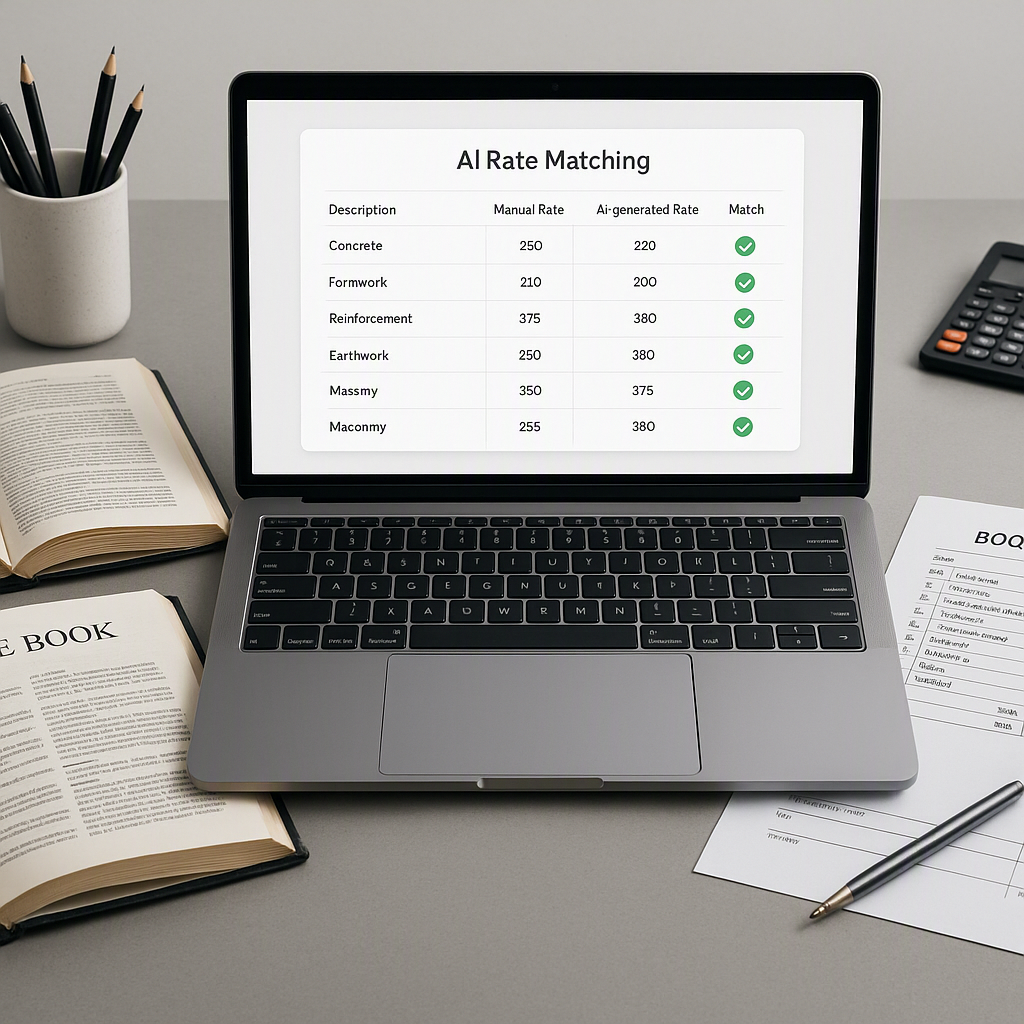
The better approach? Find efficiencies in your process. This is where tools like EstimateNext shine. Their rate-matching AI pulls from 78,000+ Schedule of Rates (SOR) items across 135 catalogs, so you’re not wasting time flipping through outdated PDFs.
- Example: If you’re pricing a CPWD project in India, EstimateNext’s semantic search instantly finds DSR-compliant rates. This saves hours and ensures your bid is competitive without sacrificing profit.
- Case Study: A mid-sized contractor in Chicago used EstimateNext to reduce their estimating time by 30%, allowing them to bid on more projects and win 15% more contracts in one year.
How to Test Your Markup
Still guessing your markup percentage? Stop. Here’s how to test it:
- Pick a Past Project: Use one where you know the final costs and profit.
- Run the Numbers: Calculate your markup based on actual direct and indirect costs.
- Compare to Reality: Did your markup align with your profit goals? If not, adjust.
Tools like EstimateNext make this process even easier by letting you simulate scenarios. You can tweak overhead rates, profit margins, or even inflation factors—and see how it impacts your bid.
Bottom Line
Markup isn’t about slapping on a random percentage. It’s about balancing costs, profit, and competitiveness. Get it wrong, and you’re either out of the running or out of business. Get it right, and you’re not just surviving—you’re thriving.
And if you’re tired of guessing, tools like EstimateNext make it ridiculously easy to get it right. Start your free trial →.
References
: National Association of Home Builders, 2021.: Associated General Contractors of America, 2022 Workforce Survey.: RSMeans Contractor’s Pricing Guide, 2023.: EstimateNext Product Overview.: Case Study: EstimateNext User Results.: Construction Financial Management Association, 2022.