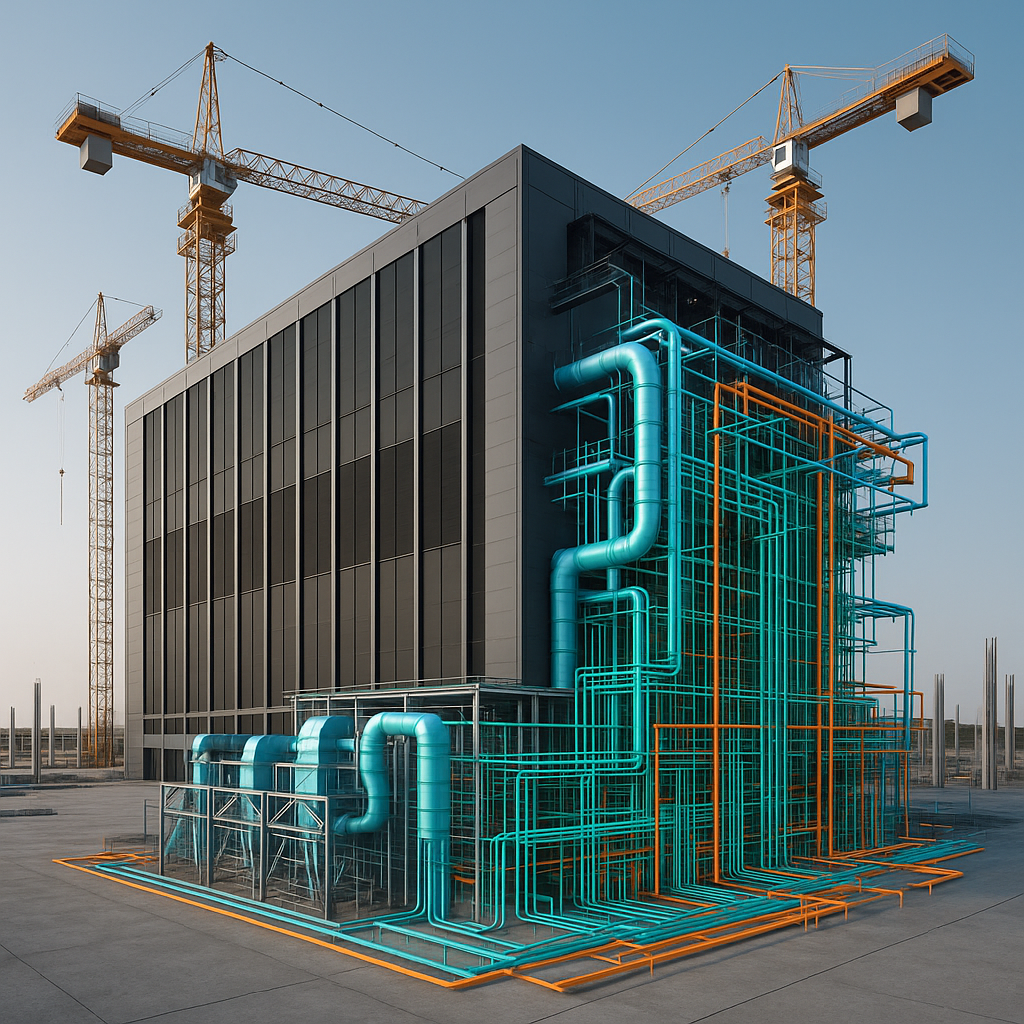
AECOM Bets Big on Data Centers — Should You?
Across the industry, recent earnings calls have had a clear theme: data centers. Federal infrastructure projects are important, sure, but hyperscale data centers? That’s where the money is right now. And it’s not just the big design-build firms. Major national and regional GCs are all chasing the same beast. Why? Simple. Data center construction is forecasted to hit $62 billion globally by 2027, according to Research and Markets.
If you're a GC preconstruction director, this should make you pause. Data centers aren’t just big projects; they’re complex beasts. You’re juggling HVAC specifics, electrical redundancy, and insane uptime guarantees. Not to mention, everything's on a tight timeline because cloud providers like AWS and Microsoft don’t wait.
But here’s the kicker: the opportunities are massive if you can bid fast and bid right.
Why Data Centers Are a Different Game
Unlike traditional office or retail builds, data centers come with unique challenges. These are the big ones:
- Specialist MEP Trades: HVAC and electrical aren’t optional here. Redundancy, cooling systems, and fire suppression require deep expertise. And you’re not just estimating one system—you’re pricing layers of backup.
- Tight Timelines: Hyperscale providers demand speed. A six-month delay could cost millions in lost cloud revenue.
- Bid Complexity: A single bid package might involve 10+ specialist subs. Normalizing bids manually? Six hours you don’t have.
You might be thinking, "Sure, but we’ve handled complex builds before." True. But are you handling them efficiently? That’s the real question.
Where GCs Lose Time (and Money)
Let’s talk numbers. A typical preconstruction team spends 40% of its time on manual tasks. Rate lookups, bid leveling, takeoffs—they all add up. For a data center bid, that’s easily 80+ hours gone before you even submit.
Here’s a common scenario:
- You receive a 200-page BOQ with electrical, HVAC, and fire protection scopes.
- Your team spends 10 hours matching rates to RSMeans or an internal database.
- Sub bids roll in, but they’re apples-to-oranges comparisons. You spend another 6-8 hours normalizing them.
And what happens if the client changes specs mid-bid? Start over. This is where most GCs fall behind.
The AI Advantage in Data Center Bids
This is exactly where AI tools like EstimateNext shine. Let’s break it down using real examples:
1. BOQ Parsing:
Got a BOQ dump in Excel? Instead of manually matching 500 line items to RSMeans, EstimateNext’s BOQ parser does it in minutes. It uses a four-step matching process: tenant history, user catalogs, country-specific rates, and AI fallback. For a recent client, this cut rate matching time by 90%.
2. Sub Bid Leveling:
Normalizing bids from 7 HVAC subs? AI can auto-detect scope gaps, rank L1/L2/L3, and flag exclusions. One GC we worked with saved 6 hours per bid package just on sub leveling. Imagine repeating that efficiency across 10 bids a year.
3. What-If Scenarios:
Data centers are notorious for last-minute changes. Maybe the client upgrades the cooling system spec. In Excel, you’d rebuild the workbook. With EstimateNext, rate changes propagate instantly—with a full audit trail.
4. Specialist Trade Tools:
Need to size a BMS controller or calculate NEC Table 220 demand loads? The platform’s MEP tools handle it. No need to flip through MCAA/NECA reference guides.
The ROI Is Brutal (In a Good Way)
Let’s do the math for a GC preconstruction director:
- Average data center bid: 80 hours of preconstruction labor
- AI-powered tools cut that by 50% (40 hours saved)
- Labor rate: $130/hour
Savings per bid: $5,200. Multiply that by 5-8 bids/year, and you’re looking at $26K-$41K saved annually per estimator.
Now consider this: EstimateNext’s GC plan costs $99/month per seat. That’s $1,188/year. The ROI? 52X.
Why Speed Will Win These Projects
Federal infrastructure projects (thanks, IIJA) are still funding plenty of work. But data centers are a speed game. AWS, Google, and Meta don’t care how perfect your bid is if it’s late. The GCs who win these projects will be the ones who can turn around accurate bids in days, not weeks.
And let’s not forget the long-term game. Once you’ve delivered a data center for one hyperscale client, you’re in their Rolodex. These aren’t one-off projects—they’re pipelines.
Call to Action
If you’re bidding on data centers, speed and accuracy aren’t optional—they’re everything. EstimateNext can cut your bid time by 50% and help you win more projects. Get started free →


