The Brutal Truth About Manual Takeoffs
Let’s be honest. Manual drawing takeoffs are soul-crushing. You’ve got two estimators hunched over PDFs, measuring wall lengths, counting fixtures, and recalibrating scales. It’s slow. It’s tedious. And it eats up 40 hours per bid—two full workdays gone, just like that.
But here’s the kicker: it doesn’t even guarantee accuracy. Miss a measurement or misinterpret a revision, and you’re stuck redoing the work. That’s assuming you even catch the mistake before the bid goes out.
Here’s the harsh reality: manual takeoffs are a bottleneck, especially for firms juggling multiple bids. General contractors and subcontractors alike are feeling the squeeze. According to a Dodge Data report, 70% of contractors say that meeting bid deadlines is one of their top challenges. And when you’re spending nearly half your time on repetitive tasks, something’s got to give.
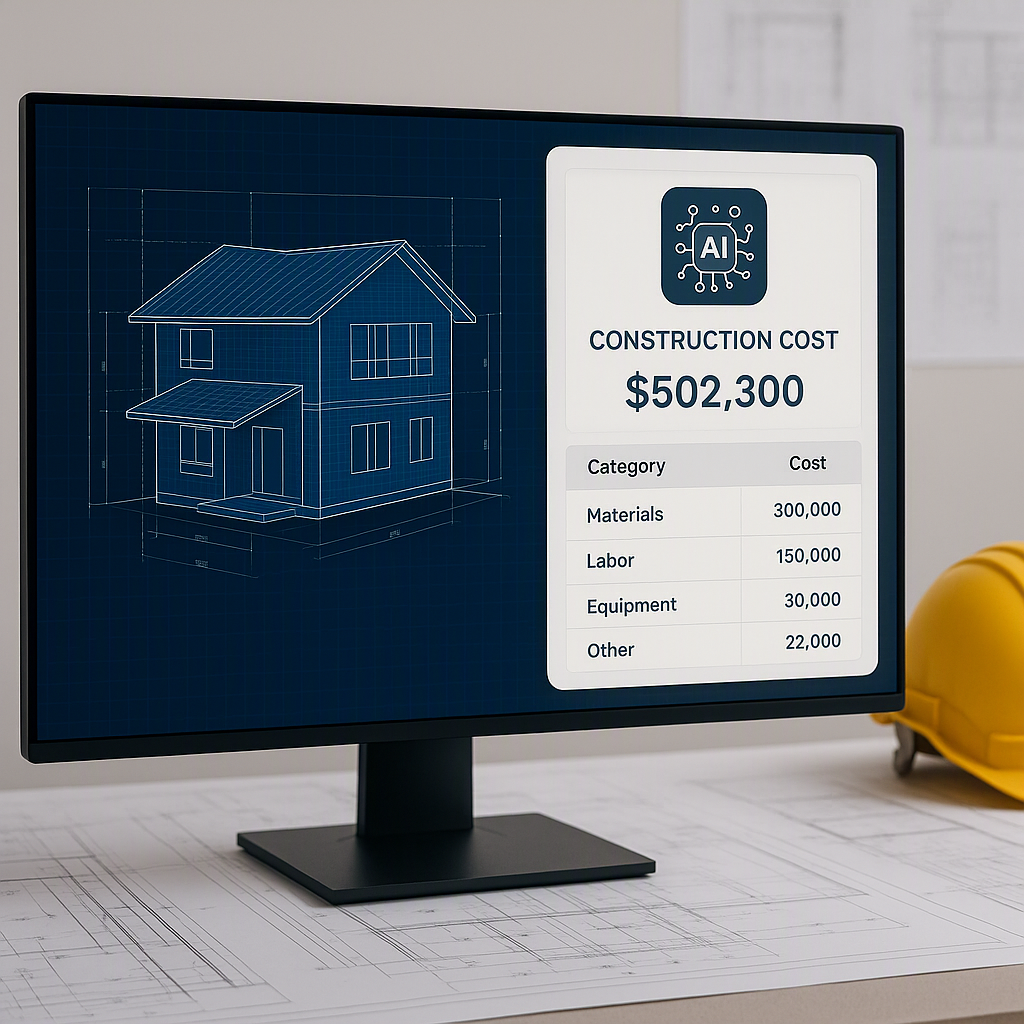
This is where AI-powered tools like EstimateNext’s Vision AI come in. They take what used to be a labor-intensive process and compress it into 10 minutes. Imagine uploading a set of drawings and getting extracted quantities for rooms, walls, and fixtures—all in the time it takes to grab a coffee.
How Vision AI Works
So, how does this magic happen? Vision AI uses advanced pattern recognition and machine learning to read PDF drawings. It identifies elements like room areas, linear dimensions, and counts for doors and windows. Here’s the workflow:
- Upload Your Drawings: Drag and drop your PDF set into the platform. No complicated setup.
- AI Quantity Extraction: Vision AI scans the drawings, extracting quantities in minutes.
- Confidence Scoring: Low-confidence measurements are flagged for manual review, ensuring accuracy.
- Revision Handling: Upload new drawings for side-by-side comparison. The tool highlights changes automatically.
Real-Life Example
Take the case of a mid-sized general contractor bidding on a high-rise project. Traditionally, their team would spend 120 hours—three full weeks—on manual takeoffs. By switching to Vision AI, they completed the entire process in under 10 hours. The time saved didn’t just reduce labor costs; it allowed them to submit a more competitive bid without compromising quality.
Now multiply that by 10 bids a year. That’s over 1,000 hours saved annually—equivalent to hiring a full-time estimator without the overhead.
The Obvious Objection: “But AI Can’t Think Like an Estimator”
You might be thinking, “Sure, AI is fast, but it doesn’t understand the nuances of construction.” And you’re right. AI won’t replace your expertise. It’s not going to decide on markup or negotiate with subs.
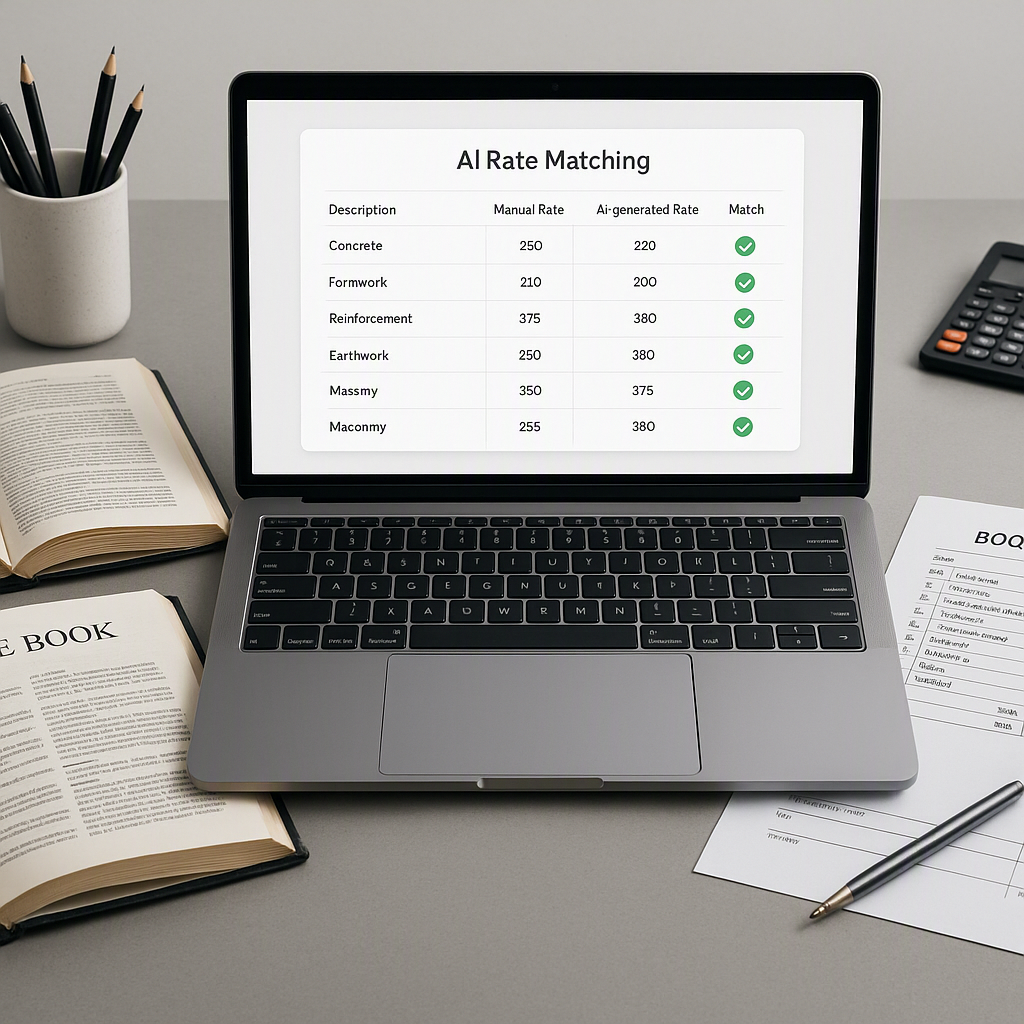
But that’s not the point. The AI handles grunt work—takeoffs, rate matching, and scope comparisons—so you can focus on the high-value tasks. Think of it as having an extra estimator, minus the payroll hit.
Actionable Tip
Pair the AI tool with a junior estimator. While the AI handles 80% of the heavy lifting, the junior staff can review flagged low-confidence areas. This hybrid approach ensures both speed and accuracy while building skills in your team.
Case Study
A civil engineering firm in California found this method particularly effective. They paired Vision AI with two junior estimators on a highway project. The juniors spent just 5 hours reviewing flagged measurements, compared to the 50 hours they would have spent on a full manual takeoff. The firm not only saved time but also empowered its younger staff to contribute meaningfully.
What About Accuracy?
Accuracy is a common concern with AI tools. Can they really match the precision of manual takeoffs?
The answer: mostly, yes. Vision AI reduces takeoff discrepancies by up to 80%, according to real-world users. But human oversight is still essential. Low-confidence areas are flagged for manual review, and you can always override measurements.
Data Backed Results
According to a study by McKinsey, firms that use AI tools for takeoffs report an average reduction in errors of 35% compared to purely manual methods. Additionally, teams using AI tools see a 20% increase in bid acceptance rates, largely due to improved accuracy and faster turnaround times.
Comparison Table
| Feature | Manual Takeoffs | Vision AI Takeoffs |
|---|---|---|
| Time Per Bid | 40 hours | 10 minutes |
| Accuracy | Prone to human error | 80% fewer discrepancies |
| Scalability | Limited by manpower | Unlimited |
| Cost Efficiency | High labor costs | Reduced labor costs |
| Revision Handling | Manual re-checking | Automated comparison |
Why It Matters
Here’s the bigger picture. AI-powered takeoffs don’t just save time—they free up your team to focus on what really matters. More bids. Better subcontractor negotiations. Internal process improvements.
For general contractors juggling multiple GMP pursuits, this is a game-changer. You’re not just saving hours—you’re unlocking capacity. And for subcontractors dealing with tight turnaround times, it’s the difference between hitting deadlines and losing out on bids.
Practical Example
A small electrical subcontractor in Texas used Vision AI to streamline takeoffs for a school renovation project. With only one estimator on staff, meeting bid deadlines was a constant struggle. By adopting AI, they cut their takeoff time by 90% and freed up enough resources to pursue two additional projects that quarter.
The Bottom Line
If manual takeoffs are costing your team time and money, AI-powered tools like EstimateNext can help. Stop wasting 40 hours per bid. Start saving time, reducing errors, and winning more projects. Get started free →