The Problem with Manual BOQ Pricing
Let’s be honest: pricing a Bill of Quantities (BOQ) manually is a slog. You’re staring at a spreadsheet, flipping between PDFs, and second-guessing whether the rate you picked is the best match. On average, it takes 40 hours to complete a detailed BOQ estimate—if you’re lucky. That’s two full days of work for two estimators. And if the architect drops a revision mid-way? Forget about it. You’re back to square one.
In my experience, this isn’t just annoying—it’s costly. Every hour you spend on manual takeoffs or rate lookups is an hour you’re not spending on higher-value tasks, like negotiating with subs or refining your bid strategy. Worse, manual processes are prone to errors. A missed rate or a misapplied inflation factor can blow your margins.
The cost of errors is rarely trivial. A report by Navigant Consulting found that miscalculations in BOQ pricing can lead to an average loss of 5-10% in project profitability. For a $10M project, that’s up to $1M lost due to oversight.
This is where AI-powered tools like EstimateNext come in. They don’t just speed up the process—they fundamentally change how you approach estimation.
10 Minutes vs. 40 Hours: How AI Simplifies BOQ Pricing
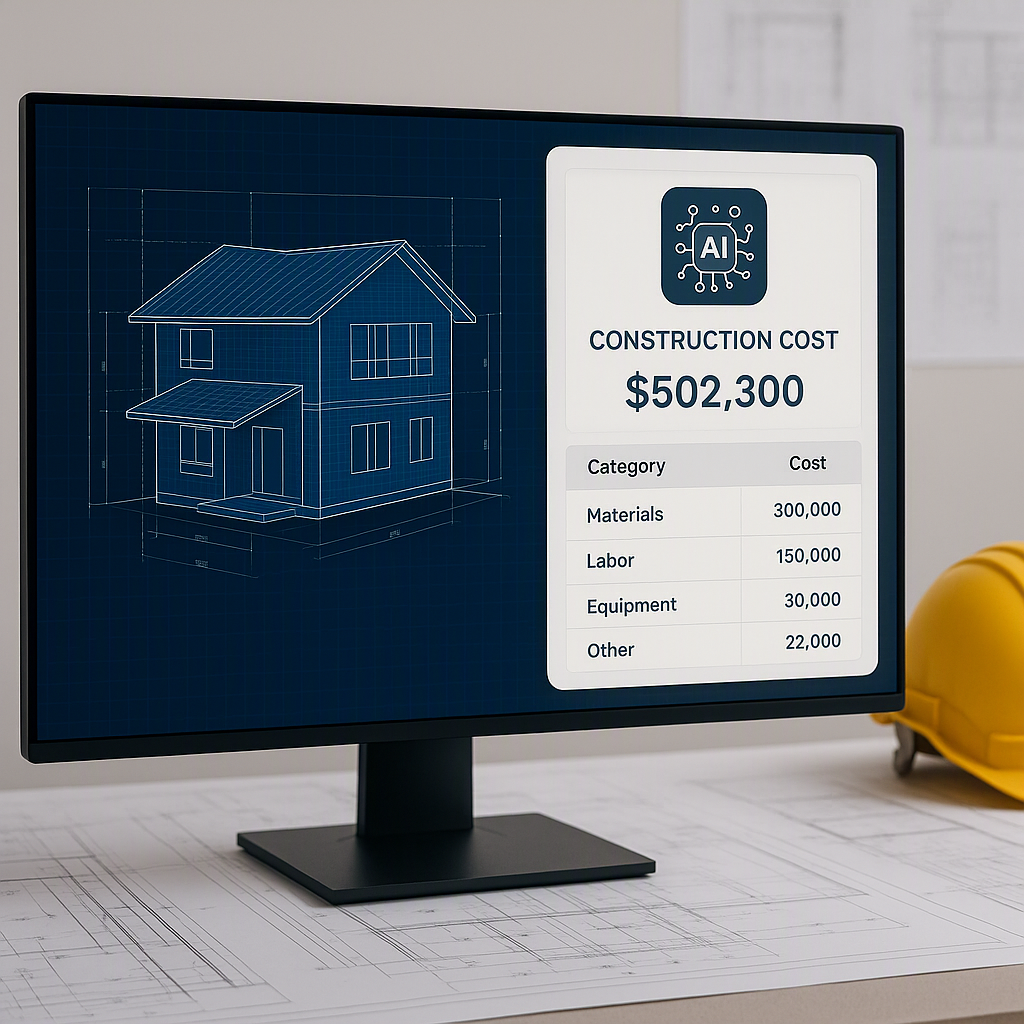
Here’s the pitch: upload your BOQ, and in 10 minutes, you get a fully priced estimate. Sounds too good to be true? It’s not. The secret sauce is in the AI’s ability to parse, match, and calculate rates at a scale and speed no human can match.
Step 1: BOQ Parsing
Say you’ve got a BOQ in Excel. It’s messy—headers merged across cells, incomplete item descriptions, and inconsistent formatting. Normally, you’d spend hours cleaning this up. With EstimateNext, the AI parser automatically detects hierarchies, section headers, and item groupings. It even flags anomalies, so you can fix them before moving forward.
For example, imagine a BOQ for a mid-sized residential project with 500 line items. Instead of manually sorting through merged headers and inconsistent units, the AI does it in seconds, ensuring every item is categorized correctly.
Step 2: Rate Matching
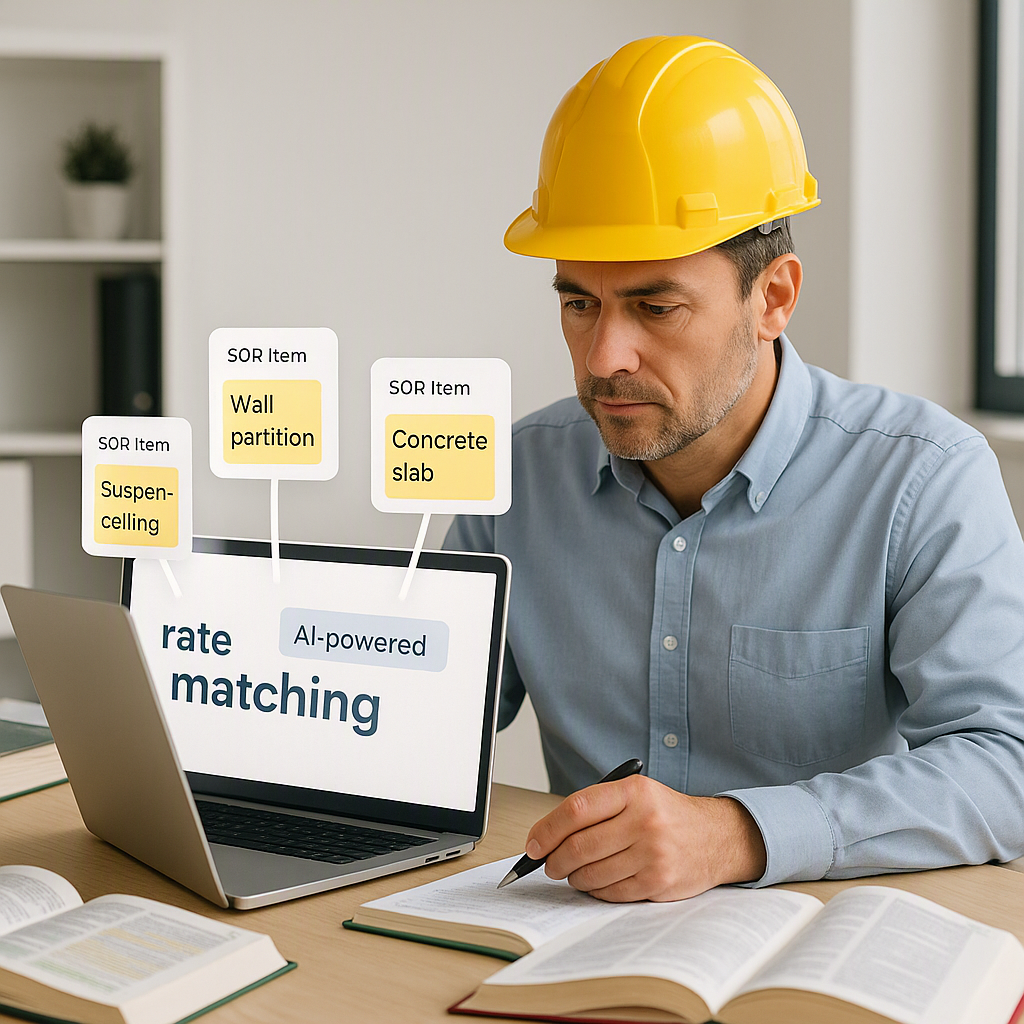
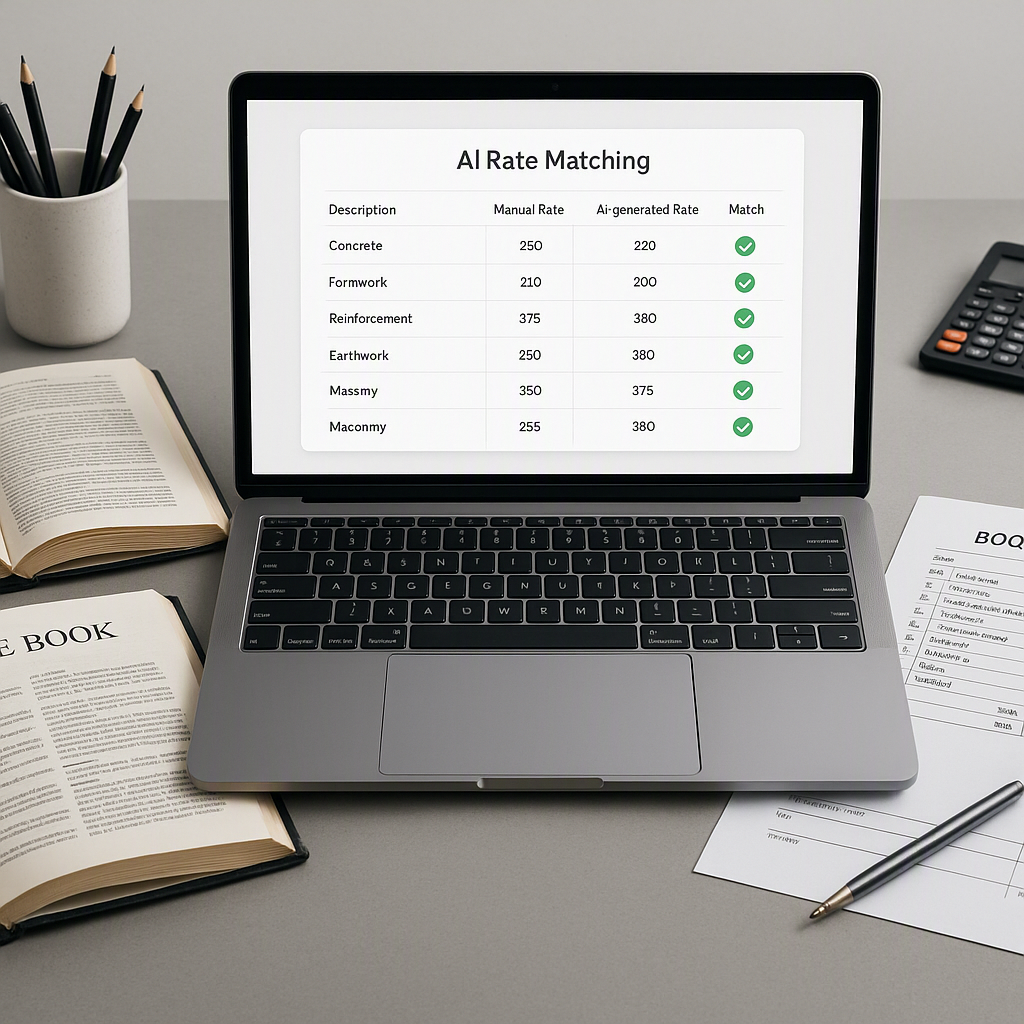
Here’s where the real magic happens. Once the BOQ is parsed, the AI scans a library of 78,000+ Standard Operating Rates (SORs) across 135 catalogs. Using semantic search, it matches your item descriptions with the most relevant rates. For example, need a labor rate for painting 2-coat emulsion on a 12-foot wall? Type it in, and the AI pulls the exact match—along with material and equipment breakdowns.
The tool even considers regional variations. For instance, the cost of labor and materials in Mumbai isn’t the same as in Delhi, and the AI adjusts rates accordingly. This level of localization minimizes guesswork and ensures your estimate reflects real-world conditions.
Step 3: Inflation and Cost Factors
Inflation adjustments are another headache. Did the architect specify CPWD 2022 rates, but you’re bidding in 2024? The AI applies compound inflation uplifts per catalog year, saving you hours of manual recalculation. Configurable cost factors—overhead, profit margin, wastage—are baked into the process.
Take the recent spike in steel prices as an example. Between 2021 and 2023, steel costs rose by 30%. If your BOQ uses outdated rates, your project profitability is at risk. AI tools ensure these adjustments are automatically applied.
Step 4: Instant Output
The final step: outputting the estimate. Whether you need it in CSI MasterFormat, CPWD DSR, or CESMM3, the platform generates professional-grade reports in minutes. No more cobbling together Excel sheets or wrestling with formatting.
Why This Matters (Beyond the Obvious)
You might be thinking, “Sure, it’s fast. But does it actually improve accuracy?”
Short answer: yes. By automating the grunt work, AI eliminates human error in rate matching and calculations. But it doesn’t stop there. Features like confidence scoring highlight low-certainty matches, so you can review and adjust them manually. In other words, AI doesn’t replace your expertise—it amplifies it.
Actionable Benefits:
- Reduce Errors: Missed inflation factors or incorrect unit conversions can derail profitability. AI ensures these calculations are error-free.
- Free Up Resources: If your team spends less time on BOQ pricing, they can focus on negotiating contracts, sourcing materials, or optimizing logistics.
- Stay Competitive: Faster estimates mean you can bid on more projects without increasing headcount.
And let’s talk ROI. According to McKinsey, early adopters of AI in construction see cost savings of 10-20% per project. For a mid-sized GC chasing $200M in annual placements, that’s $20-40M in savings. Even on smaller bids, the time saved easily justifies the subscription cost.
The Obvious Objection: “AI Can’t Think Like an Estimator”
I hear this all the time. And it’s true—AI doesn’t understand the nuances of construction. It won’t decide whether to bid high on a tight schedule or low to win a strategic client. But that’s not the point. AI handles the repetitive, time-consuming tasks, freeing you to focus on the decisions that actually matter.
Think of it as an apprentice, not a replacement. One that works 24/7, never gets tired, and only gets better with feedback.
Case Study: A High-Rise Bid
Still skeptical? Here’s an example. A mid-sized contractor bidding on a $30M high-rise used EstimateNext to price their BOQ. Normally, they’d dedicate two estimators for a week to handle takeoffs and rate matching. With AI, the entire process took 8 hours—freeing up 120 hours of labor.
In their words, “It’s like hiring an extra estimator without the payroll hit.”
Comparison Table: Manual Pricing vs. AI-Assisted Pricing
| Feature | Manual Pricing | AI-Assisted Pricing |
|---|---|---|
| Time Required | 40 hours | 10 minutes |
| Error Rate | High (5-10% of projects) | Low (confidence scoring) |
| Customization | Limited | Full (custom rate catalogs) |
| Inflation Adjustments | Manual | Automatic |
| Output Formats | Time-consuming | Instant (multiple standards) |
The Bottom Line
Manual BOQ pricing is slow, error-prone, and expensive. AI-powered tools like EstimateNext don’t just save time—they make you more competitive. If you’re tired of wasting hours on repetitive tasks, it’s time to upgrade your workflow.