The Pain of Manual Takeoffs (And Why It’s Still Happening)
Let’s face it: manual quantity takeoffs are a nightmare. If you’ve ever spent two full days measuring wall lengths, counting door frames, and tracing room areas on a PDF, you know exactly what I’m talking about. It’s tedious, error-prone, and downright inefficient.
But here’s the kicker—most teams are still doing it. Why? Because the alternatives either cost a fortune (hello, $15K CostX licenses) or require hours of training just to get started. The result? Estimators are stuck wasting 40+ hours per bid, recalculating quantities for every revision, and scrambling to meet deadlines.
Why Manual Takeoffs Persist
Despite the inefficiencies, manual takeoffs remain the default for many construction teams. Here are the key reasons why:
- Cost Barriers: High upfront costs for AI-powered tools discourage smaller firms from adopting them. For instance, enterprise-grade licenses for tools like CostX or On-Screen Takeoff can exceed $10,000 annually, making them out of reach for smaller contractors.
- Learning Curve: Many teams assume AI-powered tools are difficult to learn and implement. Traditional estimators, who may not be tech-savvy, often resist change.
- Fear of Inaccuracy: There’s a perception that manual methods are more reliable because they allow for direct human oversight. Ironically, research shows that manually completed takeoffs have an average error rate of 10-20%. Tools like EstimateNext reduce discrepancies by up to 80%.
AI-Powered Takeoffs: 10 Minutes vs. 40 Hours
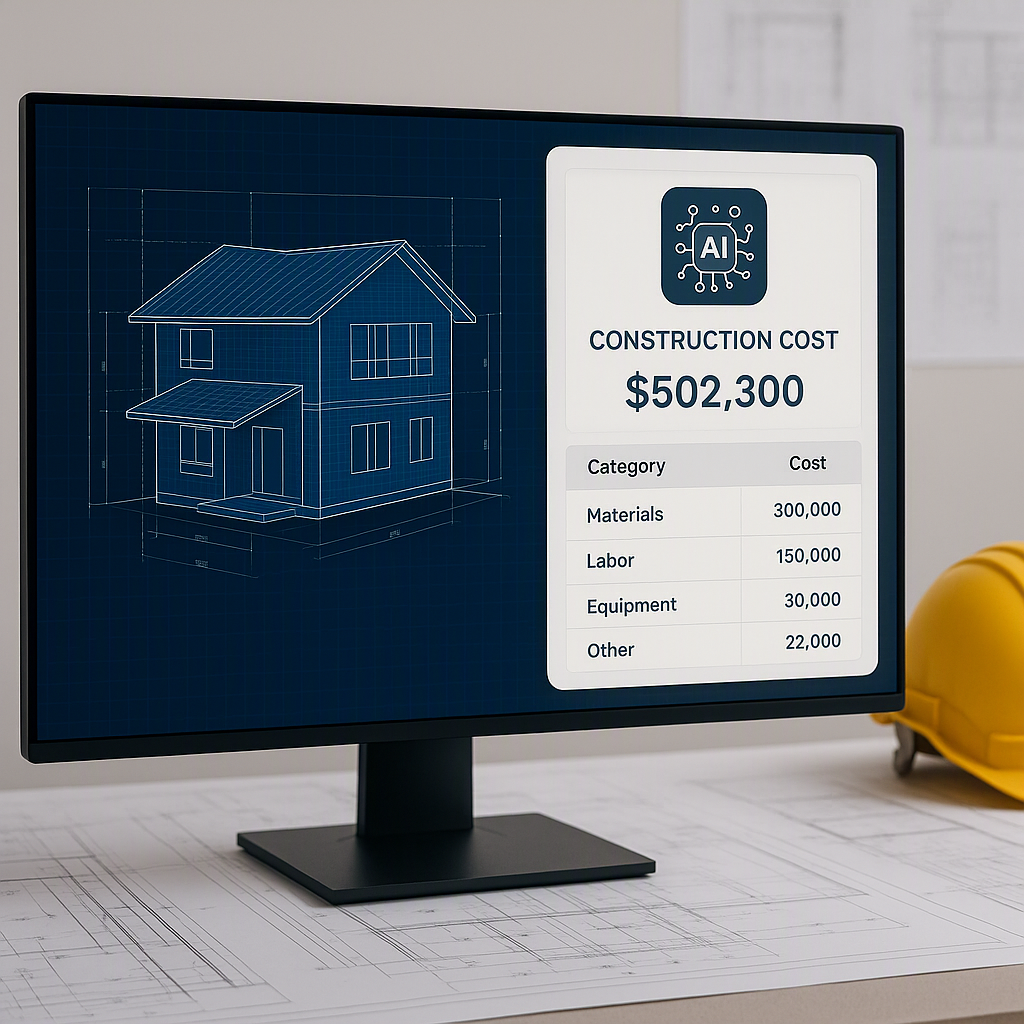
This is where AI steps in. Tools like EstimateNext’s Vision AI can extract quantities from PDF drawings in just 10 minutes. That’s a 10X speed improvement over manual methods.
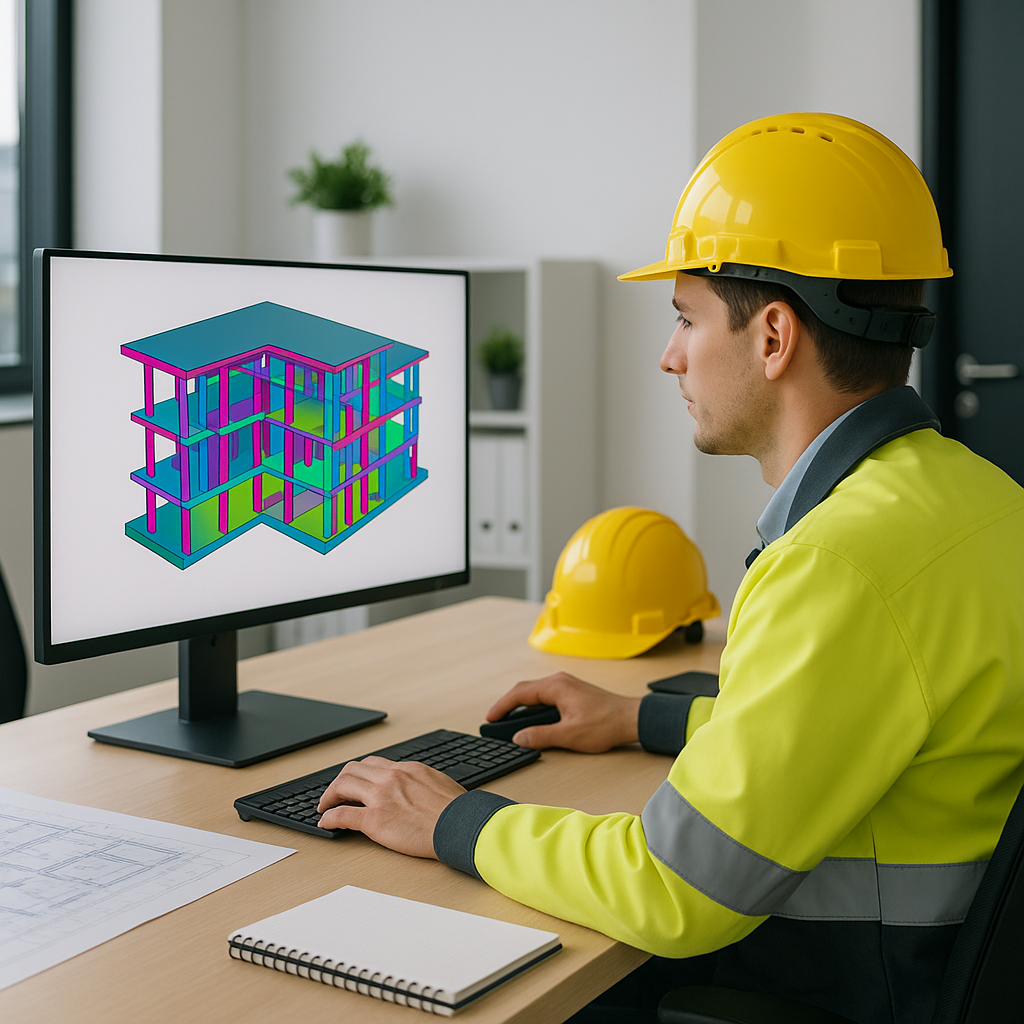
Imagine this: You upload a 50-page drawing set. The system reads the plans, identifies areas, counts fixtures, and calculates quantities for everything from concrete slabs to HVAC ducts. It even flags low-confidence measurements so you can double-check them.
Case Study: High-Rise Project
A mid-sized general contractor tested an AI-powered tool on a bid for a 20-story high-rise project. Traditionally, this would have taken their team two weeks to complete using manual methods. By automating the takeoff process, they finished in just three days, saving over 120 hours of labor. Their feedback? “It’s like hiring a full-time estimator without the overhead.”
For smaller firms, the impact can be even more transformative. A two-person subcontractor team bidding on residential projects reported saving 20 hours per week, which they redirected toward winning more bids.
The Accuracy Question: Is AI Reliable?
You might be thinking, “Sure, AI is fast, but can it really match the accuracy of a seasoned estimator?” Fair question. The answer: mostly, yes. AI tools like EstimateNext are designed to reduce discrepancies by up to 80%. But they’re not perfect. Human oversight is still essential, especially for edge cases like custom materials or unusual assemblies.
How AI Accuracy Compares to Human Takeoffs
| Method | Average Error Rate | Speed (per 50-page plan set) |
|---|---|---|
| Manual Takeoff | 10-20% | 40+ hours |
| AI-Powered Takeoff | 2-5% | 10 minutes |
Why Human Review Still Matters
AI tools don’t operate in a vacuum. Features like confidence scoring allow you to see areas where the system is "uncertain," giving you a chance to review and adjust. For example:
- Low-Confidence Area Detection: The AI might flag a room for manual review if it’s missing dimensions or contains ambiguous symbols.
- Learning Over Time: Corrections you make today help the AI improve for future projects, turning it into a smarter, more reliable tool over time.
Real ROI: Why Speed Matters
Let’s do the math. If your team saves 36 hours per estimate and each estimator bills at $130/hour, that’s $4,680 saved—per project. Multiply that by five GMP pursuits a year, and you’re looking at $23,400 in annual savings. And that’s just labor. Faster takeoffs mean more bids submitted and a higher win rate—potentially millions in incremental revenue.
Subcontractor Example
Consider a mechanical contractor responding to 60 bid packages a year. Manual takeoffs take them 72 hours per bid. By switching to AI-powered tools, they cut this time down to 4 hours per bid—an 18X improvement. This allows them to respond to 50% more bids annually, increasing their chances of winning high-value contracts.
Edge Cases: What AI Can’t Do (Yet)
Now, let’s talk limitations. AI tools struggle with highly customized or incomplete drawings. If your plans are missing dimensions or include unconventional symbols, you’ll need to step in manually. Also, while AI can handle standard catalogs like RSMeans or CPWD DSR, it may require extra setup for niche rate databases.
Examples of Common Edge Cases
- Custom Materials: For instance, estimating for a project using imported, non-standard tiles may require manual intervention.
- Incomplete Drawings: Missing dimensions or mislabeled sections can confuse AI systems.
- Highly Specialized Projects: Projects like stadiums or industrial facilities often involve unique assemblies that current AI tools may not fully understand.
But let’s be honest: even with these limitations, the time savings are undeniable. It’s not about perfection—it’s about progress.
Actionable Steps: How to Get Started
- Pilot a Small Project: Start with a smaller bid to test the system’s accuracy and ease of use.
- Train Your Team: Pair junior estimators with AI tools to free up senior staff for high-value tasks.
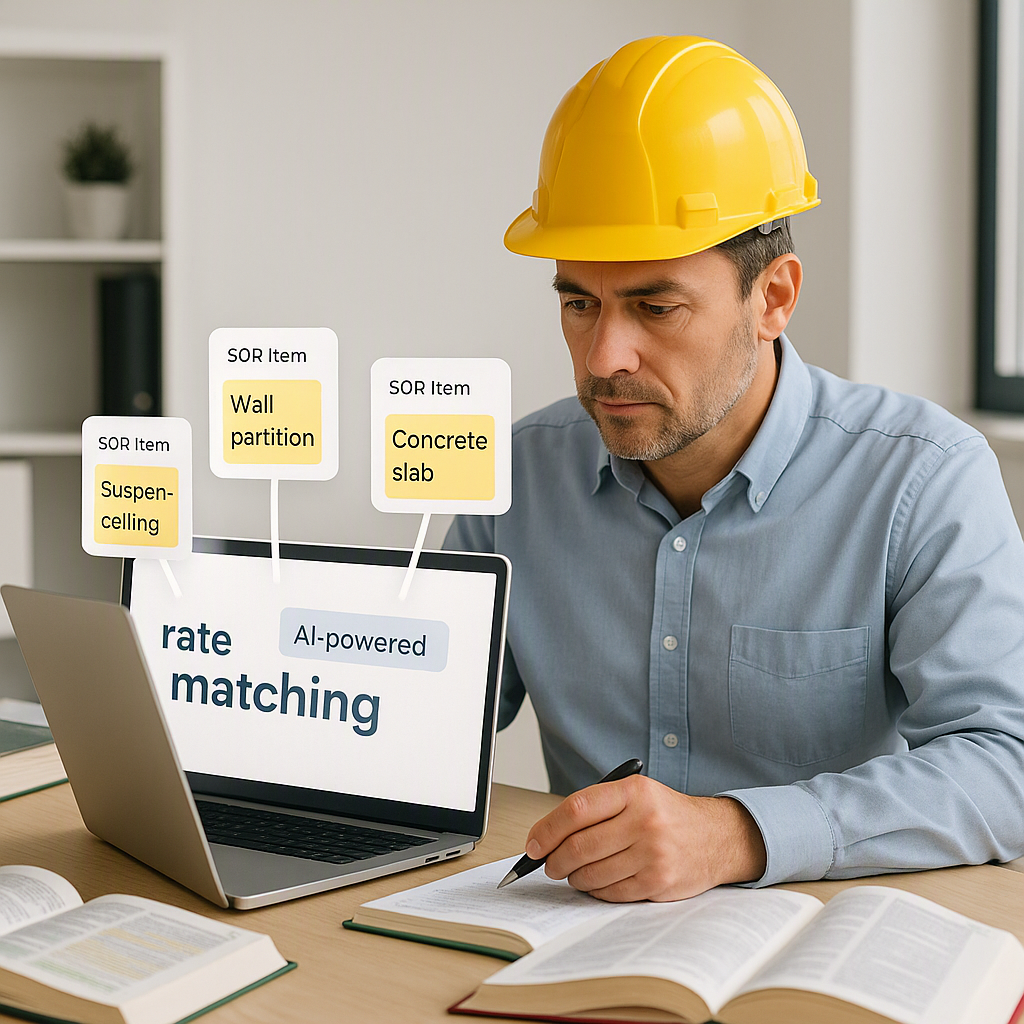
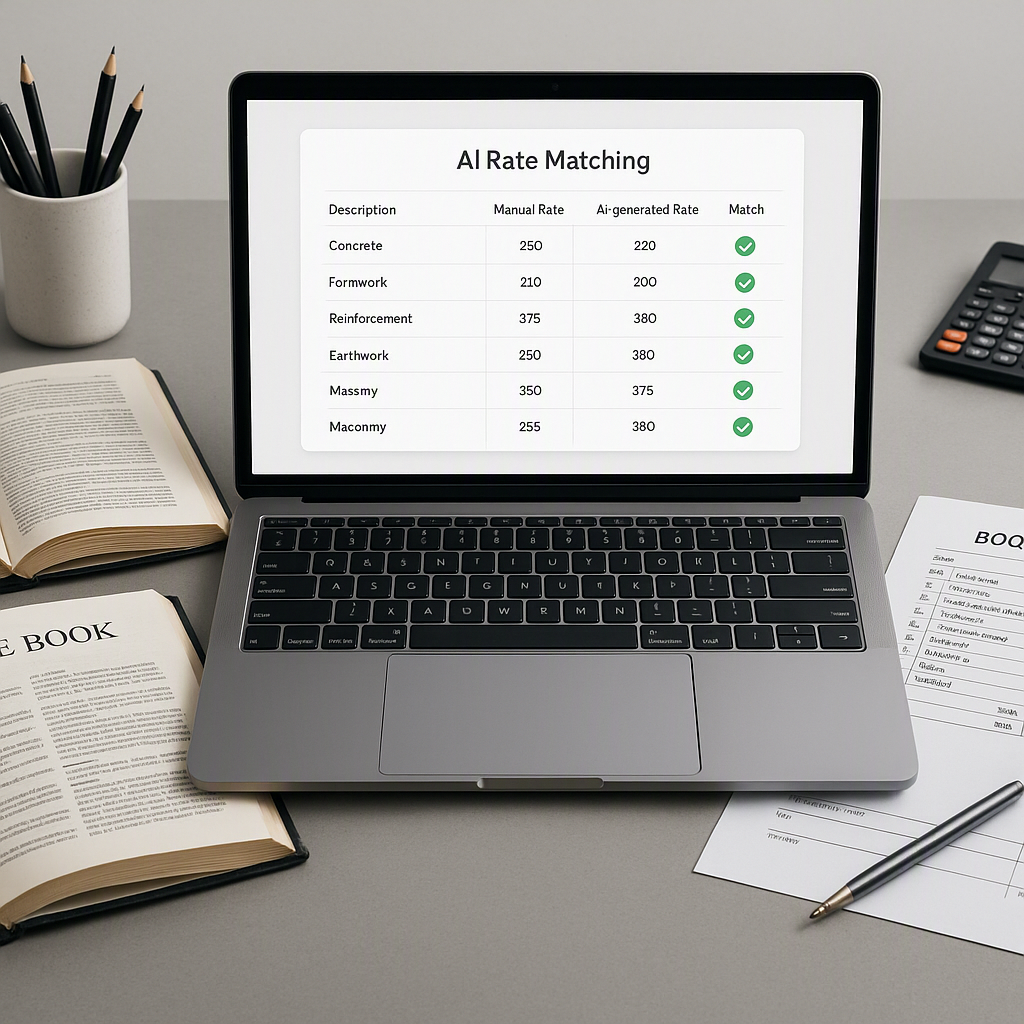
- Integrate Your Catalogs: Upload your rate books or custom SOR items to ensure estimates reflect actual costs.
- Track Results: Measure time saved, accuracy improvements, and overall ROI after each project.
Call to Action
If you’re tired of wasting 40 hours on manual takeoffs, EstimateNext can help. From drawings to priced estimates in minutes, it’s like hiring an extra estimator without the payroll. Get started free →