The Pain of Manual Takeoffs
Every estimator knows the drill: print the drawings, calibrate scales, trace every line, and double-check quantities. It’s tedious, and let’s be honest—errors creep in. On a typical project, manual takeoffs burn 40 hours. That’s two full workdays for two estimators. Multiply that by five GMP pursuits a year, and you’re losing weeks of productivity.
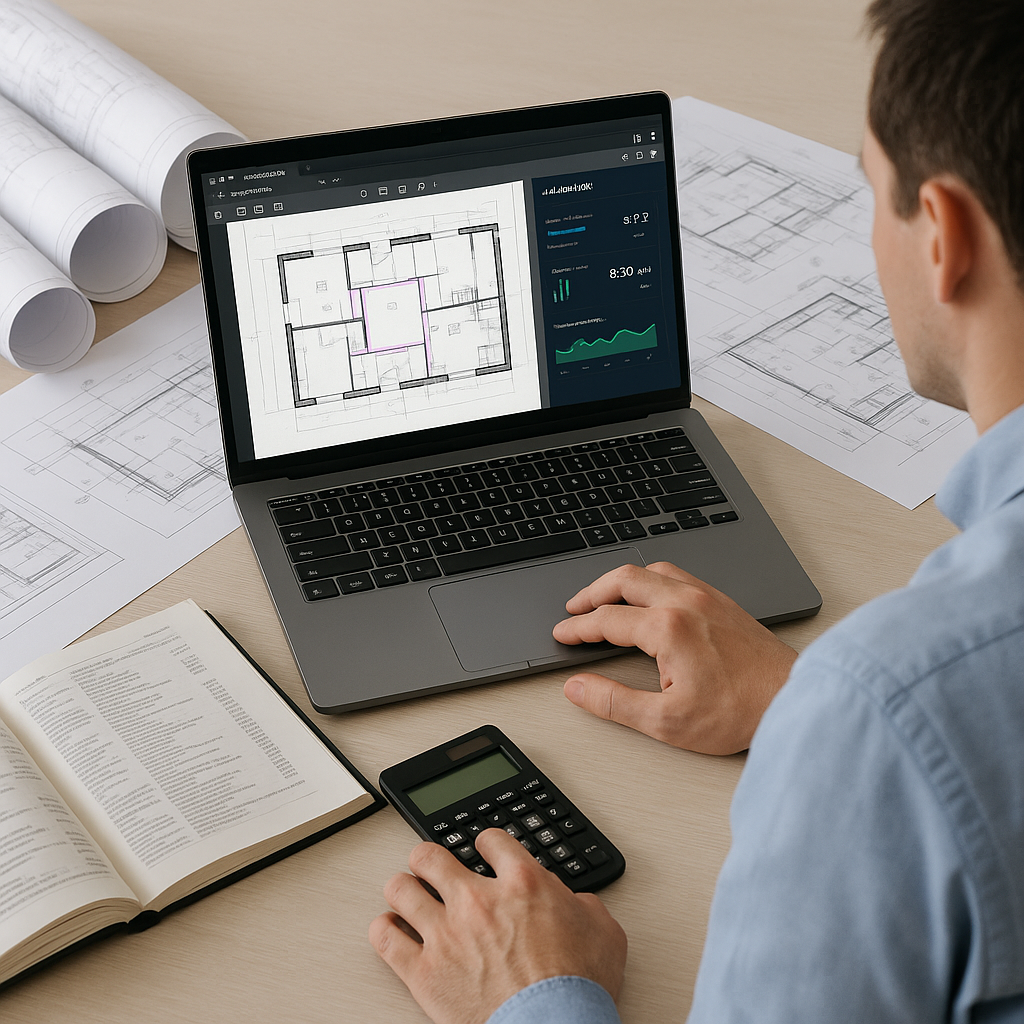
Now imagine cutting that to 10 minutes. Yes, 10 minutes. AI-powered tools like EstimateNext make this possible with Vision AI, a feature that automatically extracts quantities from PDF drawings. It’s not perfect, but it’s accurate enough to eliminate 80% of discrepancies, as noted in EstimateNext’s case study on a $1B rail project.
But what does this mean for you? Let’s break it down and explore how automation is redefining takeoffs, saving time, slashing costs, and creating competitive advantages.
How Does It Work?
Vision AI works by scanning uploaded PDFs, identifying rooms, walls, and fixtures, and automatically calculating measured quantities. For instance, if you’re bidding on a new high-rise construction project, the tool can analyze the blueprints, recognize the dimensions of walls and floors, and generate a detailed bill of quantities (BOQ) in a fraction of the time it would take a human.
Real-World Example: A Mid-Sized Contractor’s High-Rise Bid
On a recent high-rise project bid, a mid-sized contractor saved 120 hours by automating the takeoff process. That equates to two weeks of labor costs avoided—costs that would have gone into manual labor tracing lines and double-checking measurements. Instead, the team used that time to refine their bid pricing, negotiate with subcontractors, and improve their chances of winning the contract.
But speed isn’t the only advantage. The AI doesn’t just spit out raw data—it flags areas where it has low confidence in its measurements. This gives your team a clear focus: verify the tricky details rather than spending time on the obvious ones. As a result, human oversight becomes more strategic and less about mindless corrections.
Actionable Steps to Start Using AI for Takeoffs
- Upload Plans: Start by uploading your project’s PDF blueprints into the AI tool.
- Calibrate Measurements: Use the tool’s built-in calibration to ensure the dimensions align with the scale of the drawings.
- Review Flags: Focus on verifying flagged items with low confidence scores.
- Export Data: Seamlessly export the quantities into your estimating software or Excel.
With these steps, you can go from manual tracing to actionable takeoffs in minutes.
Why Speed Matters
Time isn’t just money in construction—it’s a competitive advantage. Let’s say your team spends 40 hours on takeoffs for a single project while your competitor uses AI to finish in 10 minutes. Who’s more likely to respond to bid packages faster and win more work?
The Financial Impact of Faster Takeoffs
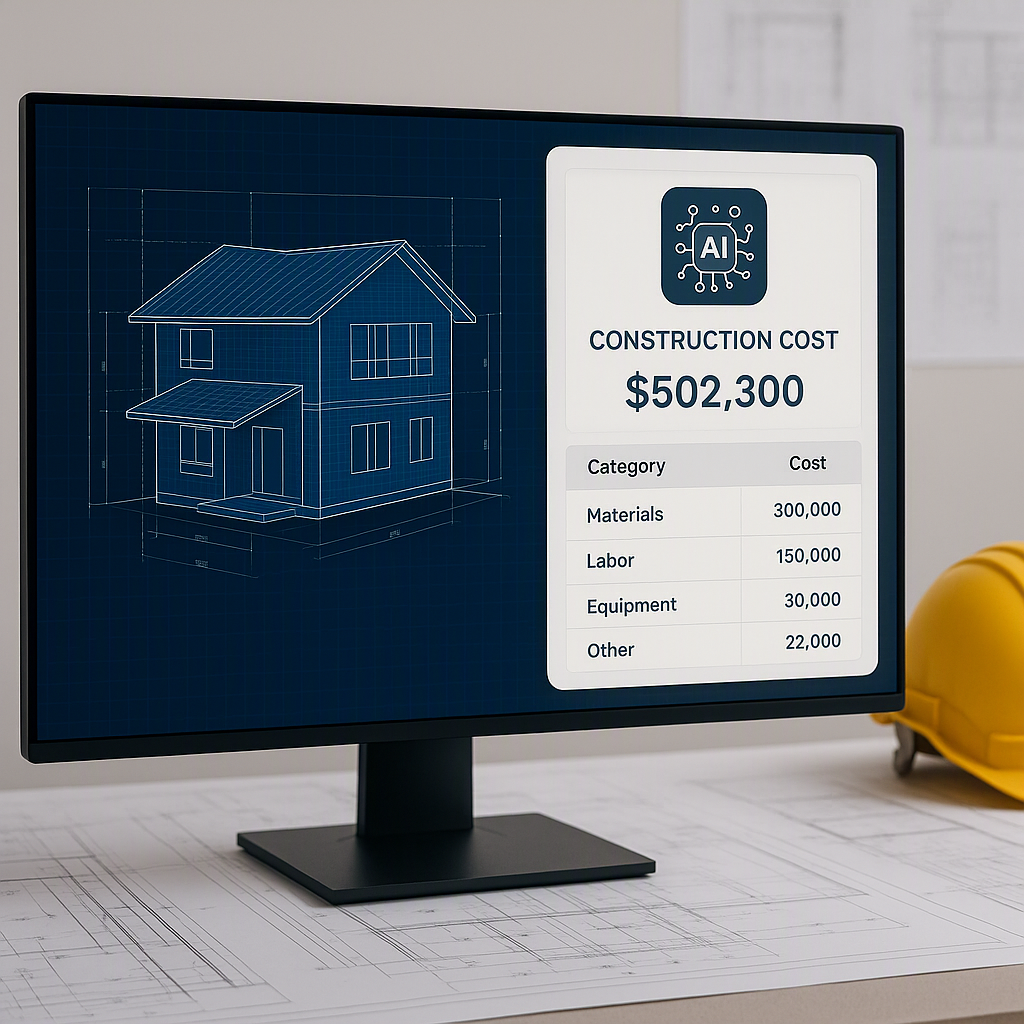
According to a 2023 McKinsey report, early adopters of AI in construction see cost savings of 10-20% per project. For example, if your company bids on 10 projects annually, with an average project value of $5 million, even a 10% savings translates to $500,000 in potential cost reductions. These savings aren’t just theoretical—they’re being realized by firms that embrace technology to optimize their workflows.
Reduced Human Error
Manual takeoffs are prone to mistakes. A missed dimension or incorrect calculation can lead to underbidding, cost overruns, or diminished profit margins. AI tools drastically reduce these errors by automating repetitive tasks and flagging discrepancies for review. With fewer errors, your bids are more accurate, and your risk exposure decreases.
The Obvious Objection: “AI Can’t Think Like an Estimator”
True, AI doesn’t understand the nuances of construction. It won’t spot a missing spec or negotiate with subs. But that’s missing the point. AI isn’t replacing estimators; it’s amplifying their productivity.
Amplifying Human Expertise
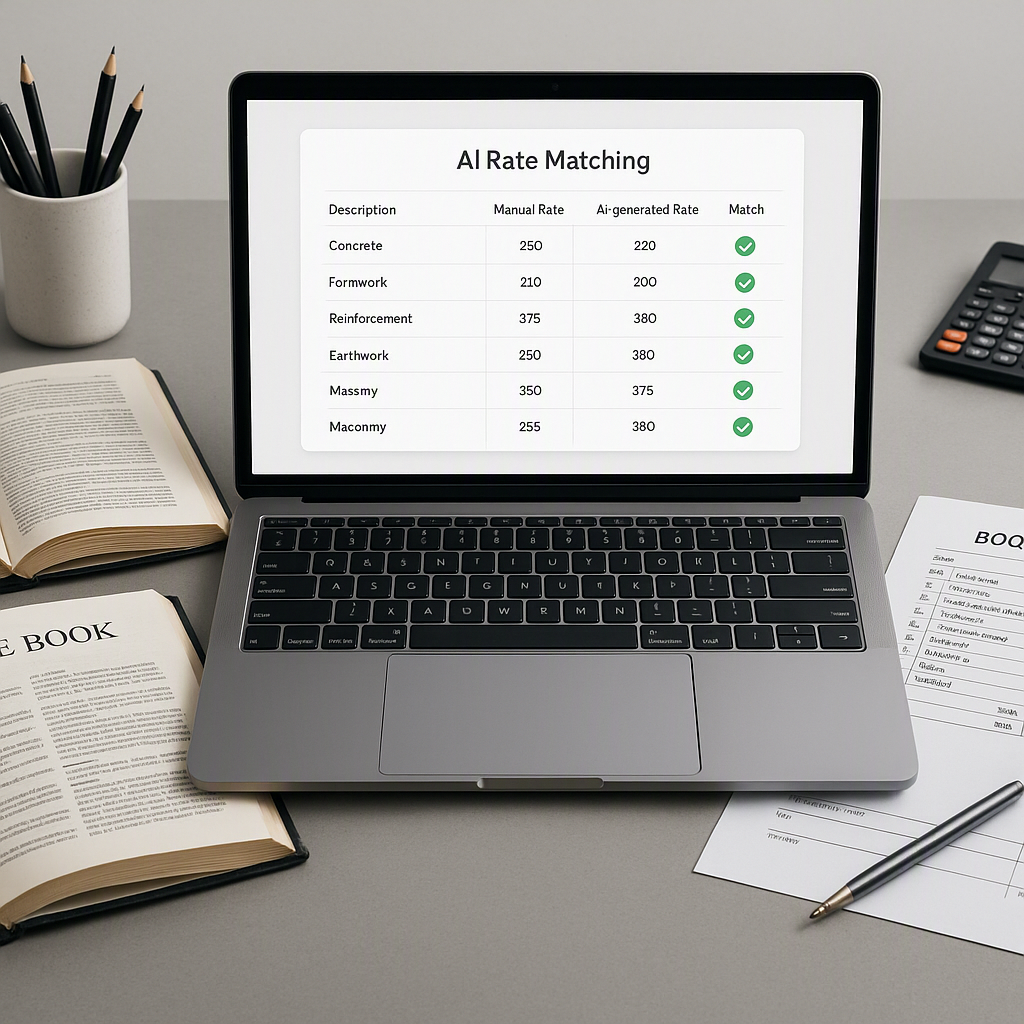
Think of AI as your assistant. It handles the grunt work—takeoffs, rate matching, and what-if recalculations—so you can focus on the high-value tasks that require expertise. For instance, Vision AI can calculate the square footage of flooring required, but you’re still the one deciding on the type of material, the supplier, and the final pricing strategy.
Real-World Example: The Dallas Water Project
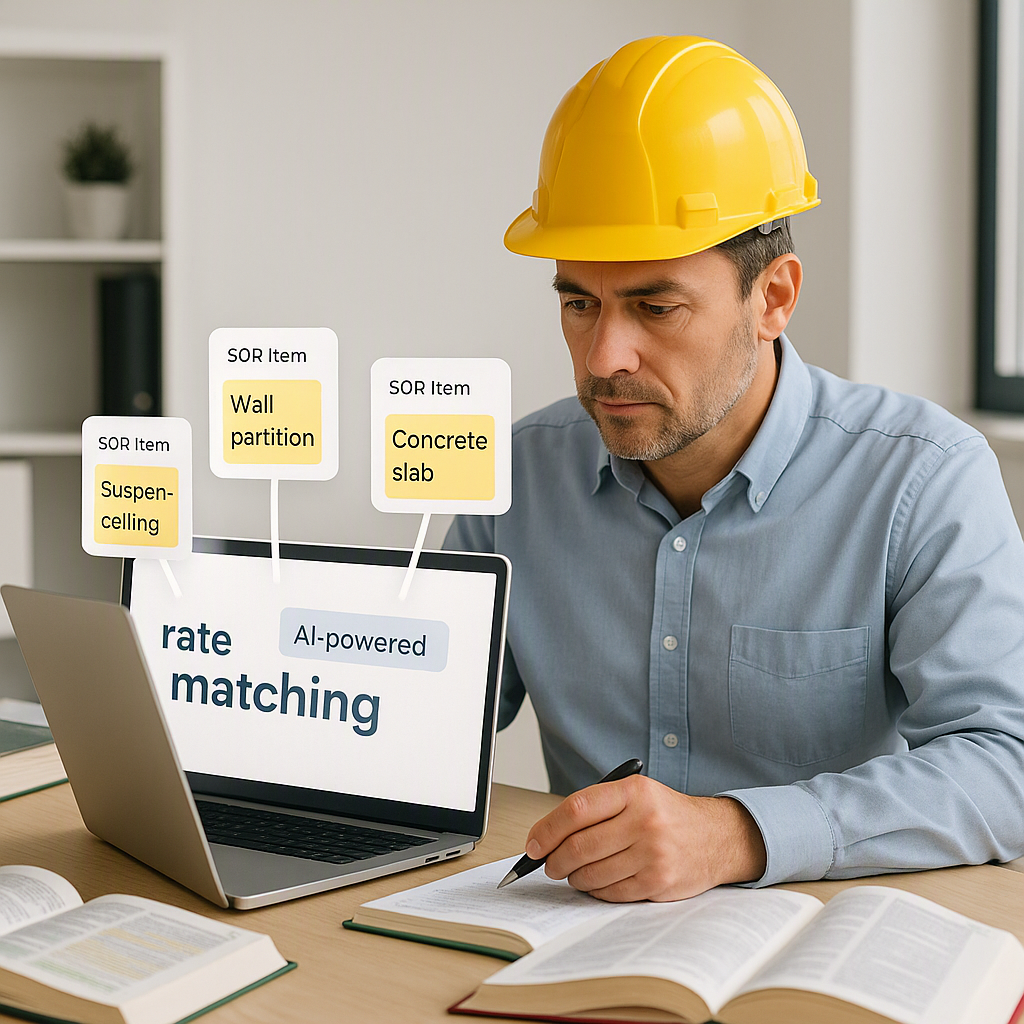
Consider the $108M Dallas Water Project. The general contractor used AI tools to handle rate matching across DOT-approved catalogs. Instead of wasting 12+ hours flipping through books, the team found labor rates for pre-stressed concrete girders in seconds. This freed up their senior estimators to focus on negotiating the finer details of the contract.
Actionable Tips to Balance AI and Human Input
- Define Roles: Use AI for data-heavy, repetitive tasks and reserve human time for creative and strategic work.
- Set Benchmarks: Regularly compare AI-generated outputs with manual calculations to identify any discrepancies.
- Train Teams: Make sure your staff understands how to use the AI tool effectively and how to interpret its outputs.
Real-World Examples
Solving CPWD Tender Challenges in India
India’s $50M regional contractors often face unique challenges with CPWD tenders. These projects require contractors to use massive rate books—some exceeding 2,000 pages—to manually look up approved rates. This is a time-consuming process that can take days.
AI-powered semantic search tools, like those offered by EstimateNext, simplify this process by scanning through over 78,000 SOR items in seconds. This capability is a game-changer for contractors who need to quickly and accurately price bids in highly competitive markets.
Hospital Construction in California
A California-based contractor bidding on a $250M hospital project used AI to perform takeoffs and build a detailed cost estimate. The AI not only reduced the time spent on takeoffs by 80%, but it also helped the team identify cost-saving opportunities by analyzing alternative materials and construction methods. This competitive edge helped the contractor secure the project despite stiff competition.
What’s Next?
AI isn’t just about saving time—it’s about shifting focus. Less time tracing lines means more time refining bids, negotiating with subs, and making smarter go/no-go decisions. Tools like Vision AI are already reshaping how preconstruction teams operate, from top-100 US general contractors to regional firms in India.
Decision Framework: Is AI Right for Your Business?
| Question | Answer |
|---|---|
| Do you spend more than 20 hours on takeoffs per project? | AI can reduce this to minutes, freeing up resources. |
| Do you frequently deal with large or complex projects? | AI excels at simplifying high-volume, intricate tasks. |
| Do you rely on custom or government rate catalogs? | AI can integrate and search these in seconds. |
| Do you struggle with bid deadlines? | Faster takeoffs mean quicker bid submissions. |
| Do you want to reduce errors in takeoffs? | AI minimizes human errors by automating calculations. |
Call to Action
If you’re tired of wasting 40 hours on manual takeoffs, EstimateNext can help. Upload your first BOQ and get a priced bid in minutes. Get started free →