Let’s Talk About the 40-Hour Time Sink
Here’s how most estimators still spend their time: flipping through drawings, tracing walls, counting doors, and manually inputting quantities into Excel. It’s tedious, error-prone, and frankly, outdated. On average, a general contractor spends about 40 hours per bid just on manual takeoffs. Multiply that across 5-8 GMP pursuits a year, and you’ve got weeks of labor tied up in grunt work.
But what if you could do the same job in 10 minutes? That’s what AI-powered tools like EstimateNext bring to the table. It’s not just a time-saver — it’s a game-changer for how preconstruction teams operate.
Not Just Speed — Reducing Errors Too
You might be thinking, “Sure, AI is fast, but can it match the accuracy of a seasoned estimator?” Fair question. The truth is, even the best human estimators make mistakes. Miss a room on a drawing set or miscalculate a wall length, and you’re looking at costly revisions later.
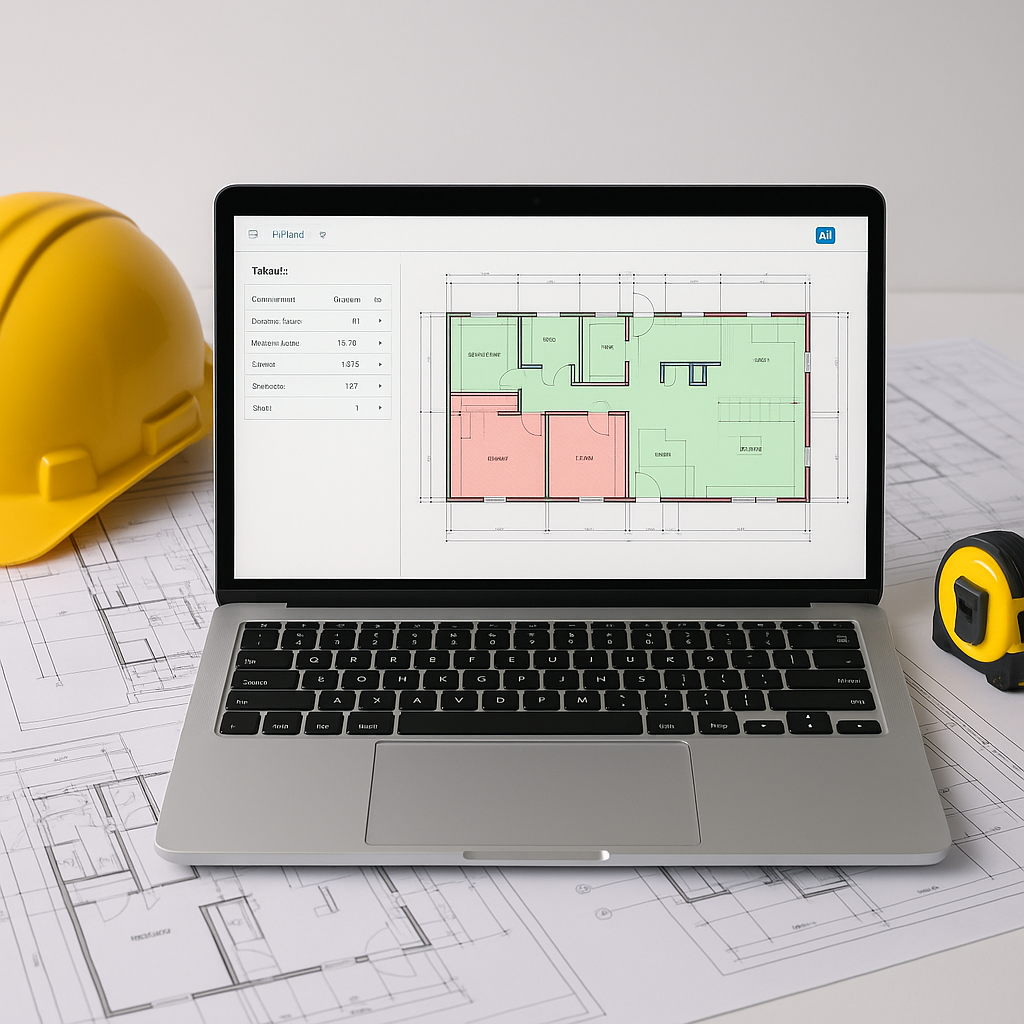
AI tools like EstimateNext’s Vision AI drastically reduce these errors. By extracting quantities directly from PDFs and DWGs with 99% accuracy, it eliminates the manual guesswork. And if the system isn’t confident about a measurement? It flags it for review. That’s where human oversight comes in — you’re still in control, but now you’re focusing on high-value decisions instead of tedious tasks.
Actionable Steps for Error Reduction:
- Automate Quantity Takeoffs: Start with AI tools capable of reading multiple file formats, including PDFs, DWGs, and scanned documents. This eliminates manual tracing and counting.
- Leverage Confidence Scores: Use platforms that flag questionable measurements, allowing your team to focus on reviewing flagged areas rather than the entire dataset.
- Cross-Check with Historical Data: AI tools often let you compare current project data with historical takeoffs, improving accuracy by spotting anomalies.
Real-World Example: Saving 36 Hours on a High-Rise Bid
One mid-sized general contractor put this to the test on a high-rise project in downtown Chicago. Traditionally, they’d need two estimators working full-time for four days to complete the quantity takeoff. Using Vision AI, the same work was done in just 4 hours, saving them 36 hours of labor.
What They Did Differently:
- Uploaded Drawings Directly to the Platform: The team uploaded construction drawings into EstimateNext’s system, allowing the AI to extract quantities automatically.
- Focused on Review: Instead of spending hours on takeoff, the estimators used the extra time to review subcontractor bids more thoroughly.
- Improved Bid Quality: With the time saved, the team submitted a second proposal for another project, increasing their chances of winning more work.
This example isn’t unique. Companies across sectors — from commercial construction to infrastructure — are reporting similar results, with time savings of 80-90% on preconstruction workflows.
The Real Cost of Doing Nothing
Still on the fence? Let’s talk numbers. At $130/hour (the average loaded cost of an estimator), those 40 hours translate to $5,200 per bid. Over a year, that’s $26,000-$41,600 wasted on manual processes.
Meanwhile, EstimateNext’s GC plan costs $99/month. That’s $1,188 per year. The ROI speaks for itself: 40X savings on labor costs alone.
Additional Costs of Manual Processes:
- Lost Opportunities: If you’re spending 40 hours on a single bid, you’re missing out on the chance to pursue additional projects.
- Rework Costs: Errors in manual takeoffs often lead to inaccurate bids, resulting in costly revisions during construction.
- Estimator Burnout: Overworked estimators are more prone to mistakes and less likely to stay engaged long-term.
With AI, faster takeoffs mean more bids submitted, better accuracy, and fewer sleepless nights before deadlines.
The Obvious Objection: “But AI Can’t Think Like an Estimator”
I hear this all the time. And it’s true — AI isn’t replacing your expertise. It doesn’t know your preferred subcontractors or the nuances of your local market.
But that’s not the point. AI handles the repetitive, mind-numbing parts of the job so you can focus on what you do best: making judgment calls, negotiating with subs, and fine-tuning the bid strategy. It’s a tool, not a replacement.
How AI Complements Human Expertise:
- Handles Repetitive Tasks: AI automates the grunt work, freeing up estimators for strategic activities.
- Provides Confidence Scores: While AI handles the basic measurements, human estimators review flagged areas to ensure accuracy.
- Improves Collaboration: Many AI tools integrate with platforms like Procore and Bluebeam, enabling smoother communication between preconstruction teams.
Comparison: Manual Takeoffs vs. AI-Powered Takeoffs
| Feature | Manual Takeoffs | AI-Powered Takeoffs |
|---|---|---|
| Time per Bid | ~40 hours | ~10 minutes |
| Accuracy | Prone to human error | 99% accuracy |
| Cost per Year | $26,000-$41,600 | $1,188 |
| Scalability | Limited by human capacity | Unlimited |
| Ease of Use | Tedious and repetitive | Automated and streamlined |
How to Get Started
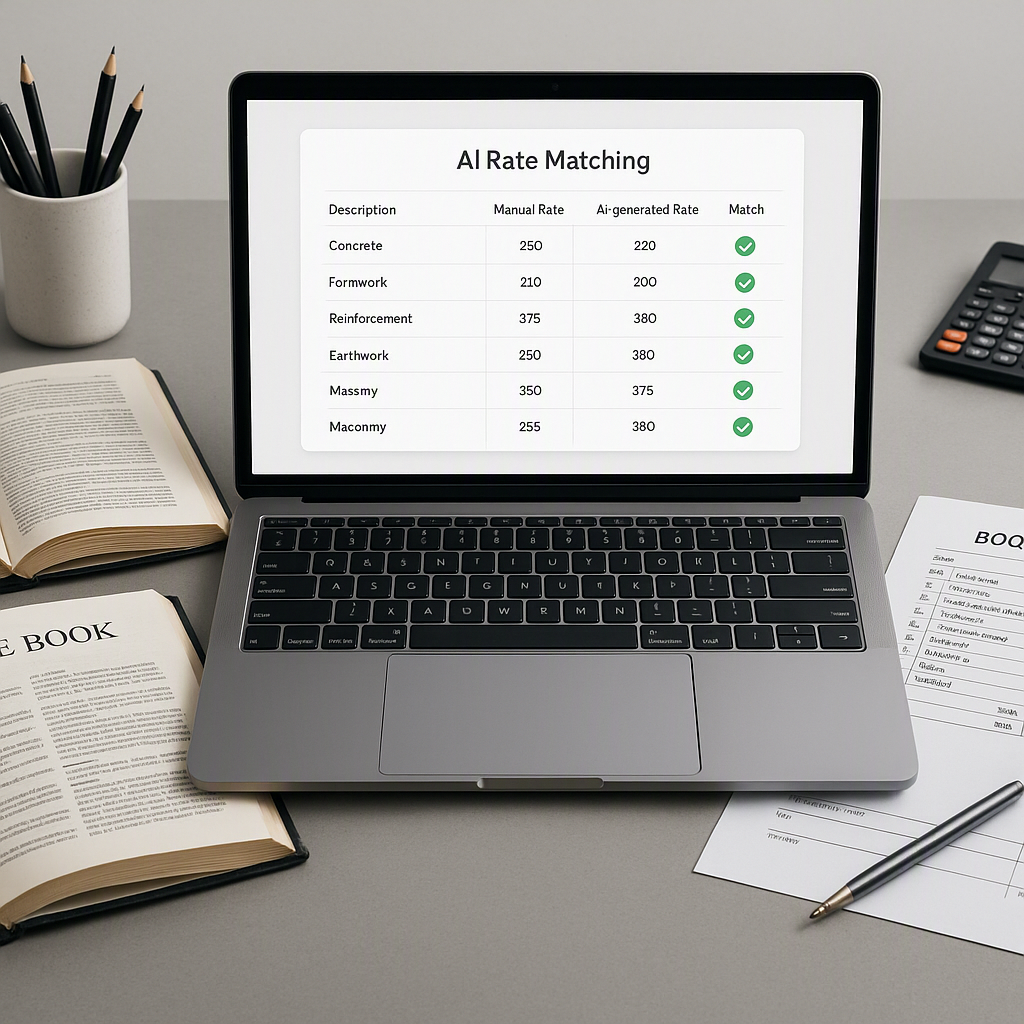
If you’re curious but cautious, start small. Upload a single BOQ into a platform like EstimateNext and compare the AI-generated takeoff to your manual process. Look for discrepancies, test the confidence scores, and get a feel for how the system works.
Steps to Begin:
- Trial Run: Most platforms offer free trials. Start with a smaller project to test accuracy and workflow.
- Integration: Check if the tool integrates with existing software like Procore or Excel to avoid disruption.
- Training: Invest time in understanding the tool’s features, such as custom rate uploads and confidence scoring.
Most platforms, including EstimateNext, integrate seamlessly with tools you’re already using like Bluebeam, Procore, and Excel. That means no disruptive learning curve — just faster, smarter workflows.
If you’re still spending 40 hours on manual takeoffs, it’s time to rethink your process. AI tools like EstimateNext can save you time, money, and headaches. Get started free →