Why Manual Takeoffs Are an Expensive Bottleneck
Every estimator knows the pain of manual takeoffs. You're staring at PDF drawings, measuring room areas, counting fixtures, and manually transferring quantities into Excel. It’s not just tedious—it’s a black hole for time. On average, a single estimate can take 40 hours of grinding. That’s an entire workweek lost to something that doesn’t even require strategic thinking.
But here’s the kicker: mistakes happen. Maybe you miscounted doors on a plan or missed a revision cloud. These errors don’t just cost time—they can tank your bid’s competitiveness. And if you’re running multiple bids each month, the inefficiencies pile up fast. According to a McKinsey report, the construction industry is one of the least digitized sectors, with productivity improvements lagging behind other industries for decades. Manual takeoffs are a classic example of this stagnation.
The AI Takeoff Advantage
This is where AI-powered tools like EstimateNext flip the script. Instead of spending 40 hours on takeoffs, you upload your PDF drawings, and the platform’s Vision AI extracts quantities in 10 minutes. Yes, 10 minutes. That’s a 10X speed improvement.
How Does AI Work for Takeoffs?
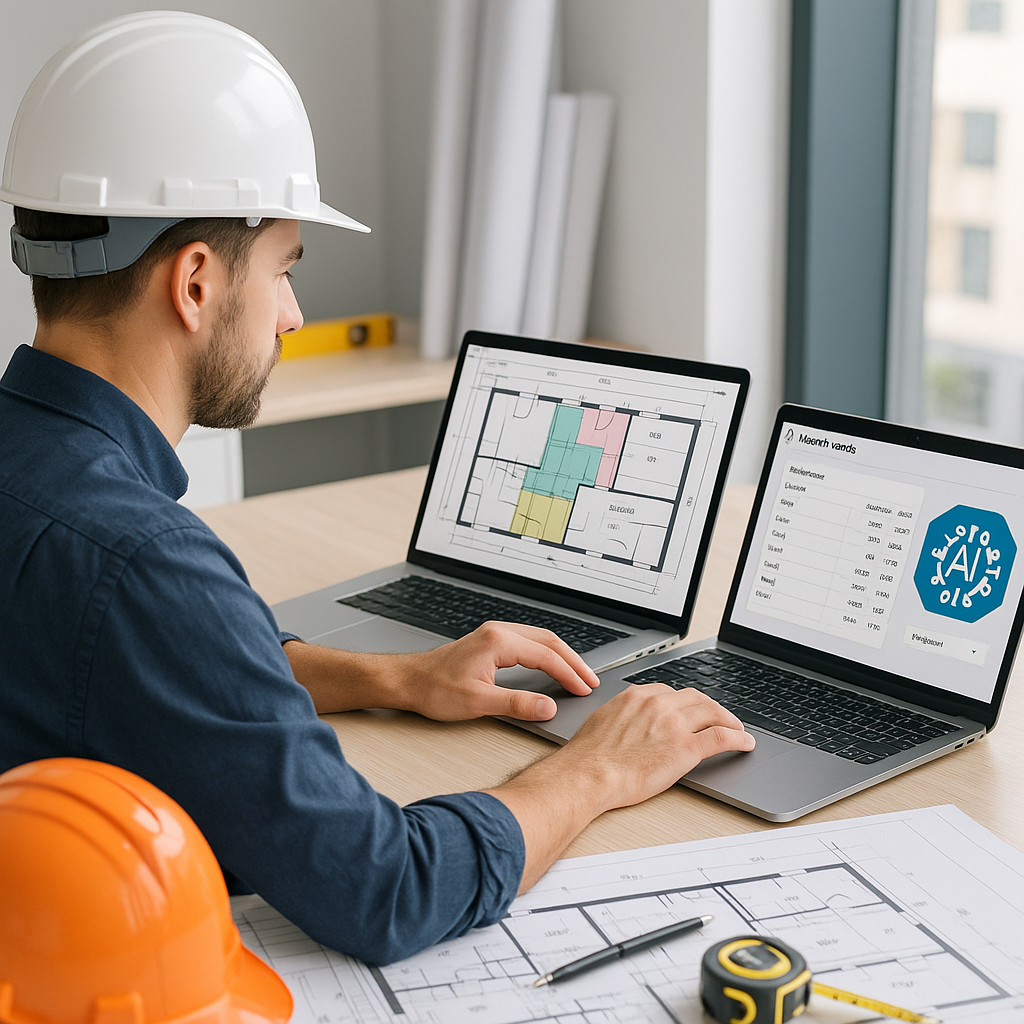
The process is surprisingly simple. The AI scans the drawing set, identifies elements like walls, doors, and fixtures, and generates a quantity takeoff—all without you lifting a finger. If it finds areas of low confidence (e.g., unclear annotations), it flags them for manual review. Here’s a breakdown:
- Scan and Recognize: The AI parses architectural and engineering drawings to identify key elements. For example, it can differentiate between a solid wall and a partition or recognize plumbing fixtures across different scales.
- Generate Quantities: Once recognized, the AI calculates quantities for each element based on the drawing dimensions. Whether it’s total square footage of drywall or the number of light fixtures, the results are delivered in minutes.
- Confidence Scoring: Areas where AI is unsure (e.g., poorly marked annotations) are flagged for human review. This ensures that critical elements aren’t missed.
Real Savings: A Case Study
A mid-sized contractor recently shared their experience in one of EstimateNext’s case studies. On a $150M high-rise bid, the team saved 120 hours using Vision AI. That’s three full weeks of estimator time freed up to focus on strategic tasks like bid strategy and subcontractor negotiations.
For smaller projects, the savings are equally compelling. A plumbing subcontractor pricing a $500K tenant improvement job cut their takeoff time from two days to three hours. The ability to generate accurate, fast takeoffs allowed them to submit more bids and ultimately win more work.
The Skeptic’s Question: Is AI Accurate?
You might be thinking, “Sure, it’s fast, but is it accurate?” Fair question. AI isn’t perfect, but it’s getting close. Tools like EstimateNext don’t just spit out results and hope for the best—they include built-in safety nets like confidence scoring and manual override options.
Why Confidence Scoring Matters
If the AI isn’t 100% sure about a room boundary or fixture count, it flags that item and prompts you for review. This ensures that you’re not blindly relying on the software. Over time, the system learns from your corrections, becoming more accurate with each project. By the third or fourth project, many users report a noticeable improvement in accuracy—some even achieving over 95% reliability.
AI vs. Human Error
While skeptics worry about AI accuracy, it’s worth considering the flip side: humans are prone to errors, too. A 2021 study by PlanGrid and FMI revealed that 52% of rework in construction projects is due to miscommunication and errors in project documentation, including takeoffs. AI tools mitigate this by standardizing processes and reducing manual oversight.
Why This Matters for GC Directors
For general contractors, time is money—literally. Let’s break down the math. If your team spends 40 hours on manual takeoffs for every bid and you’re pursuing eight GMP projects a year, that’s 320 hours. Assuming an average hourly rate of $130 for estimators, that’s $41,600 in labor costs just for takeoffs.
Now, imagine cutting that time by 90%. Those same eight bids would take just 32 hours total, saving you 288 hours. At $130/hour, that’s $37,440 in labor savings—per year. And that doesn’t even account for the competitive edge of responding to more bids faster.
Actionable Steps for GCs
- Identify Bottlenecks: Track how much time your team spends on takeoffs versus higher-value activities like bid strategy.
- Run a Pilot Program: Test AI-powered tools like EstimateNext on smaller projects to measure time saved and accuracy improvements.
- Train Your Team: Dedicate two weeks to training your estimators on the platform. Most tools are intuitive, but a little up-front effort goes a long way.
What About Subcontractors?
It’s not just GCs who benefit. Subcontractors face similar challenges with bid deadlines and limited resources. A plumbing contractor, for instance, might need to price a package that includes 47 line items across three trades. Doing this manually can take days, but with AI tools, they can turn around an accurate quote in hours.
Real-World Scenarios
- Mid-Sized GC Pursuing a Hospital Project: A team used Vision AI for takeoffs on a $240M hospital bid. Instead of spending two weeks on manual takeoffs, they finished in under a day. The extra time allowed them to refine their bid and negotiate better terms with subs.
- HVAC Subcontractor Pricing a High-Rise: An HVAC firm used EstimateNext’s AI to size ductwork and generate quantities. What would’ve taken three days was completed in four hours. They submitted their bid ahead of the deadline and secured the job.
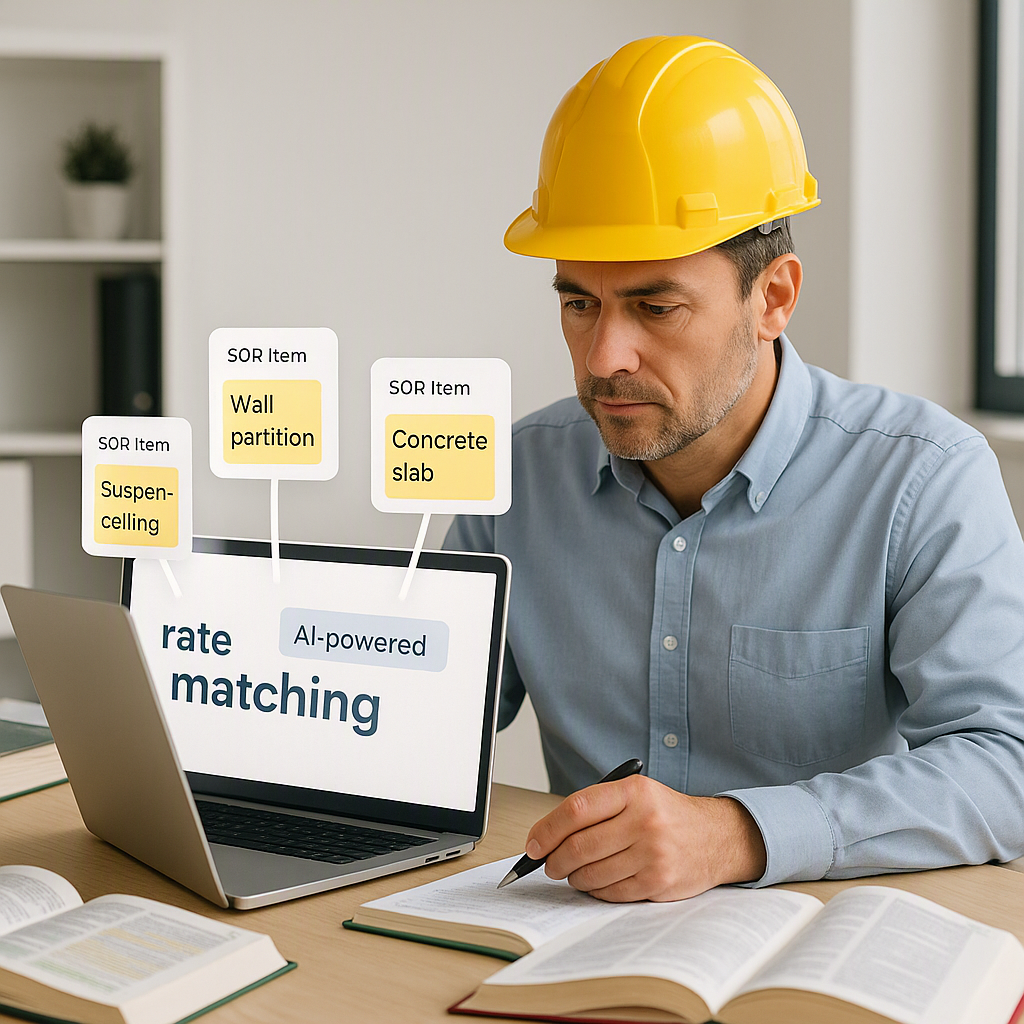
- Regional Contractor in India: Contractors working on CPWD/state PWD tenders often spend hours flipping through 2,000-page DSR PDFs. EstimateNext’s semantic search across 78,000+ SOR items cuts this process to seconds.
Comparison Table: Manual Takeoffs vs. AI Takeoffs
| Factor | Manual Takeoffs | AI-Powered Takeoffs |
|---|---|---|
| Time per Project | 40 hours | 2-3 hours |
| Accuracy | Highly Variable | 90-95% (with oversight) |
| Cost (Estimator Rate) | $5,200/project | ~$390/project |
| Scalability | Limited by manpower | Unlimited |
| Adaptability | Time-consuming | Learns over time |
The Bottom Line
Manual takeoffs aren’t just slow—they’re holding your team back. AI-powered tools like EstimateNext free up your estimators to focus on what really matters: winning bids and driving profitability.