Why Manual Takeoffs Are Killing Productivity
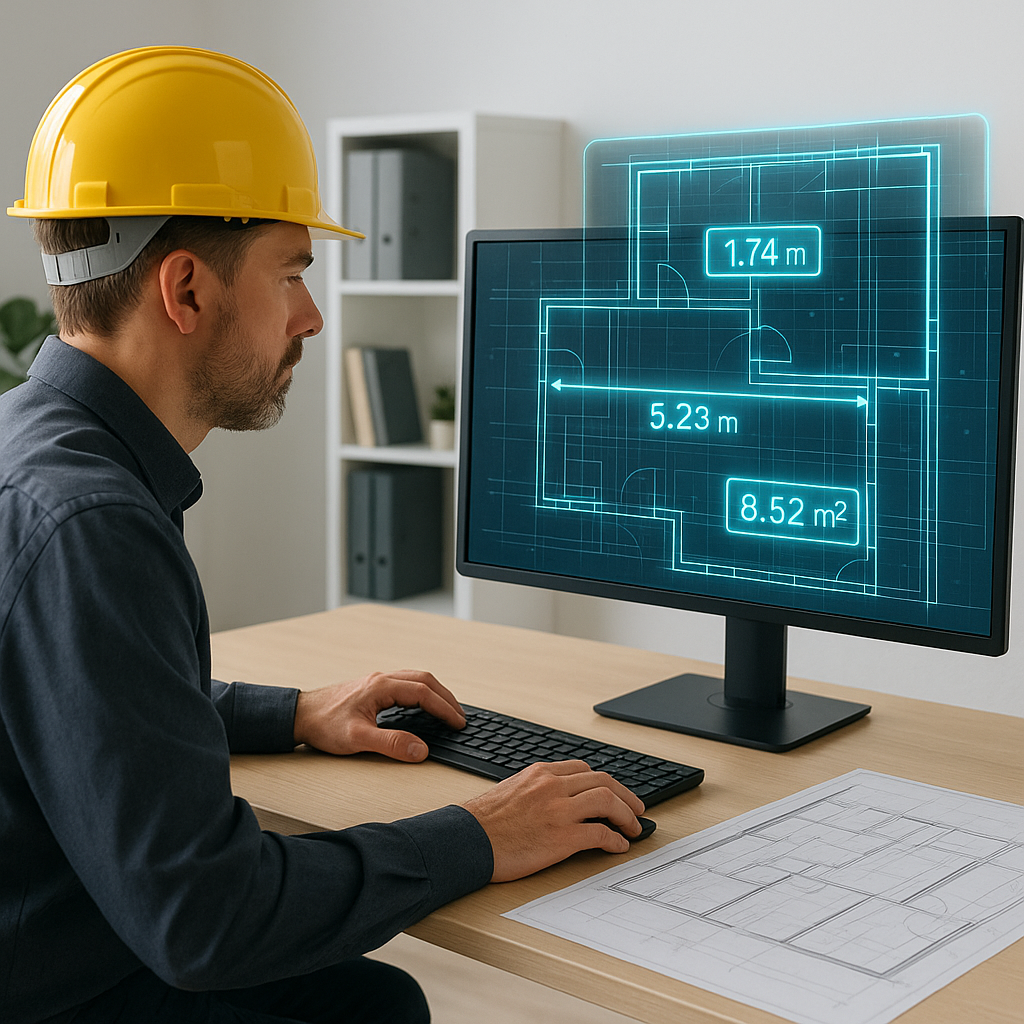
Let’s start with the basics. Every estimator knows the pain of manual drawing takeoffs. You’ve got the PDF plans, your calibrated measuring tools, and a looming deadline. On average, it takes two estimators two full days—40 hours—to extract quantities for a mid-sized project. That’s not just inefficient; it’s business-threatening.
Here’s why. With construction costs skyrocketing (blame inflation and supply chain woes), preconstruction teams are being squeezed to do more with less. According to a McKinsey report, early adopters of AI in construction save 10-20% per project. Yet, manual takeoffs still dominate because teams stick to what they know.
But familiarity doesn’t pay the bills. A missed deadline or inaccurate quantity takeoff can mean losing a bid—or worse, underbidding and eating the loss later. It’s not sustainable.
The Hidden Costs of Manual Takeoffs
Beyond the obvious inefficiency of manual takeoffs, there are hidden costs that many firms fail to account for:
-
Human Error: Studies show that manual data entry errors occur in 1-3% of cases, according to Data Entry Outsourced. For a mid-sized construction project, even a minor error in material quantities can lead to tens of thousands of dollars in overruns.
-
Delayed Bids: When your team spends 40 hours on takeoffs, they have less time to focus on bid strategy, subcontractor relationships, and value engineering. This delay can cause you to miss submission deadlines for high-value projects.
-
Morale Issues: Let’s face it—manual takeoffs are soul-crushingly repetitive. Estimators burn out faster when they’re stuck doing tedious tasks instead of engaging in strategic decision-making.
Concrete Example: A small general contractor in Texas reported losing a $3 million school renovation project because their manual takeoff process delayed their bid submission by two days. An AI-powered tool could have saved them 30 hours, allowing them to hit the deadline.
AI Takeoffs: Brutally Fast and Surprisingly Accurate
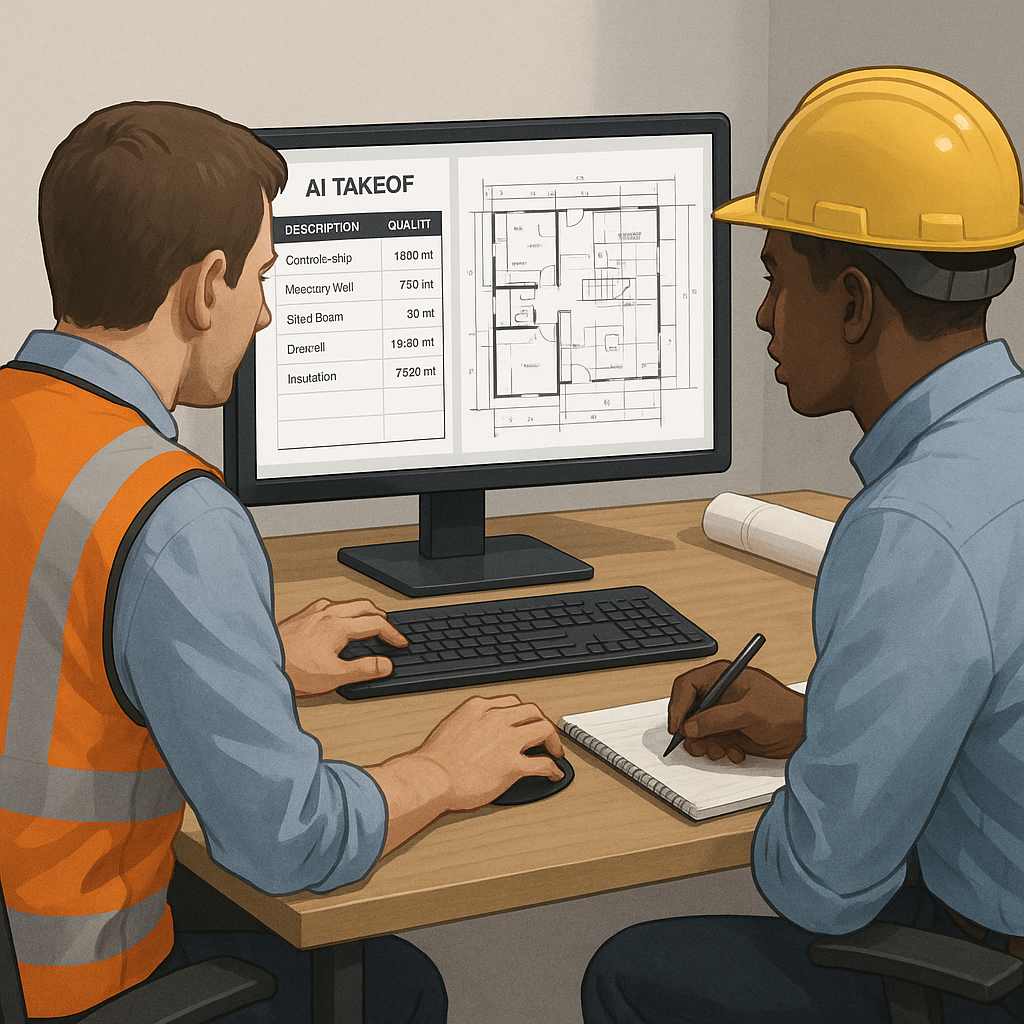
This is where AI-powered tools flip the script. Take EstimateNext’s Vision AI as an example. It extracts quantities from PDF drawings in 10 minutes. Not hours. Minutes.
Imagine this: You upload the drawing set. The system scans room areas, wall lengths, and even counts doors and windows. It flags low-confidence areas for manual review (because no system is perfect), but 90% of the grunt work is done automatically. That’s a 10X speed improvement over manual methods.
Case Study: AI vs. Manual Methods
A mid-sized general contractor (GC) recently tested Vision AI on a $1 billion rail project. Their case study highlights the following outcomes:
- Time Saved: 120 hours saved on a single bid.
- Accuracy Improvement: Reduced takeoff discrepancies by 80% compared to manual methods.
- Cost Efficiency: With senior estimators billing at $150/hour, the time savings translated to $18,000 in labor cost reductions for one project.
These aren’t hypothetical numbers—they’re real-world results that can make or break a project’s profitability.
The Obvious Objection: “AI Can’t Think Like Us”
You’re probably thinking, “Sure, AI is fast, but it doesn’t understand the nuances of construction.” And you’re right—AI doesn’t replace your expertise. It amplifies it.
Here’s what AI can’t do: negotiate with subs, decide on markup, or catch quirky architect revisions. But it can handle the repetitive, time-sucking work that eats into your day. That means you can focus on high-value tasks like refining the bid strategy or analyzing risks.
Actionable Insight: Pairing Human Expertise with AI
- Flagged Areas: Most AI tools allow you to manually review flagged areas for low-confidence items. Use your expertise to verify these elements.
- Custom Libraries: Upload custom cost libraries to ensure AI-generated estimates align with your actual material and labor costs.
- Workflow Integration: Use AI to handle initial takeoffs, then apply your judgment to refine and finalize bids.
How to Use AI for Construction Estimating
If you’re ready to dip your toes into AI-powered estimating, here’s a step-by-step guide:
- Start Small: Test AI tools like EstimateNext on smaller projects first. This helps you evaluate accuracy without risking high-stakes bids.
- Train Your Team: Junior estimators can use AI for initial takeoffs while senior staff review flagged items. It’s like pairing an apprentice with a seasoned pro.
- Integrate with Existing Tools: Many AI platforms, including EstimateNext, work seamlessly with Bluebeam, Procore, and Excel. No need to overhaul your workflow.
- Leverage Feedback Loops: AI tools improve with use. Every adjustment you make trains the system to be smarter on the next project.
Comparison Table: Manual vs. AI Takeoffs
| Aspect | Manual Takeoffs | AI-Powered Takeoffs |
|---|---|---|
| Speed | 40 hours/project | 10 minutes/project |
| Accuracy | Prone to 1-3% human error | 90-95% accurate |
| Cost | $5,200 per estimate (labor) | $100/month subscription |
| Scalability | Limited by human resources | Scales with project size |
| Team Morale | Repetitive and tedious | Focus on strategic tasks |
Real ROI: What’s the Payoff?
For GC directors, the math is brutal: saving 40 hours per estimate x $130/hour = $5,200 saved per pursuit. That’s a 52X ROI versus EstimateNext’s $100/month tool cost.
MEP subcontractors see even bigger wins. Faster quotes mean responding to more bid packages—50% more, according to internal data. That’s 4-8 extra wins per year at $200K avg/project. Do the math: $800K-$1.6M in incremental revenue.
Concrete Example: A plumbing subcontractor in Florida adopted AI tools and doubled the number of bids they submitted in a year. They increased their annual revenue by $1.2 million.
FAQs
Q: How accurate are AI-generated takeoffs? A: Highly accurate, but no system is perfect. Tools like EstimateNext include confidence scoring and manual overrides for flagged items.
Q: Can AI handle custom requirements? A: Yes. You can upload your own rate catalogs or define custom rates for specific items. This ensures estimates reflect your actual costs.
Q: What’s the learning curve? A: Most tools are designed for ease of use. Training typically takes under two weeks.
Q: Does AI work for smaller projects? A: Absolutely. AI scales to any project size, whether it’s a $1 million renovation or a $1 billion infrastructure bid.
Q: Is human oversight still necessary? A: Yes. AI handles the heavy lifting, but your team makes the judgment calls.
Call to Action
If you’re tired of wasting 40 hours on manual takeoffs, AI-powered tools like EstimateNext can help. Get started free →