Stop Wasting Weeks on Manual Takeoffs
Every estimator knows the grind. You’re staring at a pile of PDFs, manually measuring walls, doors, areas—anything that needs pricing. Two days later, you’ve got a quantity takeoff that might be accurate, if no one missed a detail. This isn’t just inefficient. It’s risky. A missed measurement could sink your bid or eat into your margins.
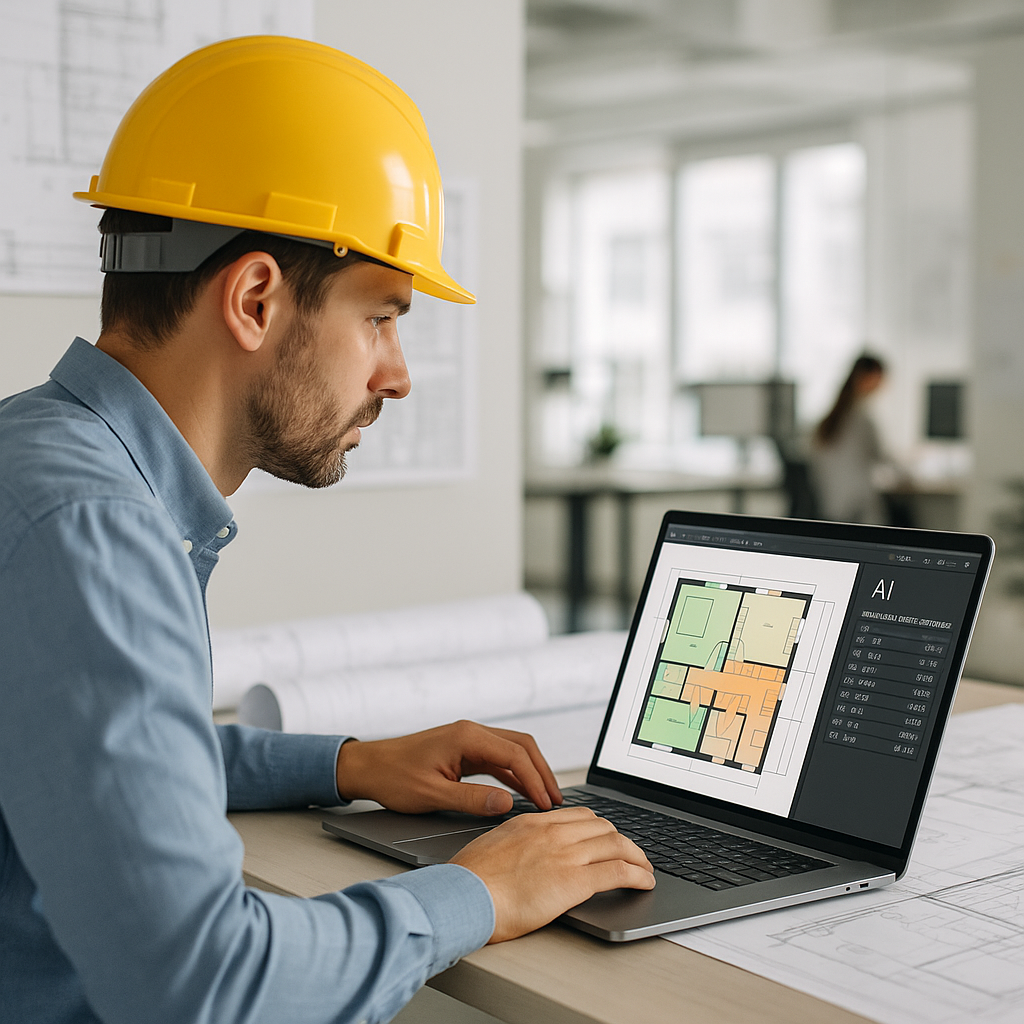
Now, imagine cutting that process from 40 hours to 10 minutes. That’s what AI-powered tools like EstimateNext offer. Their Vision AI reads PDF drawings, extracts quantities, and even flags low-confidence measurements for manual review. It’s not perfect, but it doesn’t have to be. The real game-changer is speed. You save time, reduce errors, and free up your team for higher-value work.
Real Example: $1B Rail Project Takeoff
In their case study on a $1 billion rail project, EstimateNext notes how AI handled takeoffs for concrete columns, rail decks, and beams—tasks that would’ve taken weeks manually. With AI, it was done in 10 minutes. Think about the implications: faster bids, better subcontractor negotiations, and more time to refine your strategy. Read the case study.
Another Case Study: Mid-Sized GC Saves 120 Hours
It’s not just mega-projects that benefit from AI. A mid-sized general contractor working on a high-rise bid saved over 120 hours using Vision AI. The manual process would have required multiple estimators working overtime for two weeks. Instead, the team completed the takeoff in less than an hour, reducing labor costs and freeing up staff to pursue three other bids during the same timeframe. Read the case study.
Why Manual Takeoffs Are a Hidden Cost
Manual takeoffs don’t just waste time—they cost real money. Let’s break it down:
Labor Costs
Two estimators spending 40 hours on a bid at $130/hour? That’s $10,400 per project. Multiply this by five bids a month, and you’re looking at $52,000 in monthly labor costs. Even smaller firms handling fewer bids feel the pinch.
Missed Opportunities
If your team’s tied up on takeoffs, they’re not chasing new bids, negotiating better subcontractor terms, or improving project strategies. Every hour spent on manual work is an hour not spent growing your business.
Error Risk
Human error in measurements can lead to underpricing or overpricing, both of which hurt your bottom line. A single missed measurement could result in thousands of dollars in lost profit or an uncompetitive bid that doesn’t win the job.
AI isn’t a magic wand, but it fixes these bottlenecks. Vision AI doesn’t get tired or distracted. It processes every drawing with consistency and flags anything that needs a second look.
How Vision AI Works
Here’s the step-by-step process:
- Upload Your Drawings: Drop your PDFs or CAD files into the platform. Vision AI scans the documents in seconds.
- Automated Quantity Extraction: The AI identifies areas, lengths, counts, and other quantities. Need room areas or door counts? It’s all there.
- Confidence Scoring: Measurements with low confidence are flagged for manual review, ensuring accuracy.
- Export Your Takeoff: Download the results into Excel, Procore, or your preferred tool. No reformatting needed.
Actionable Steps for First-Time Users
- Start Small: Test Vision AI on a smaller project to familiarize yourself with its capabilities.
- Review Flagged Items: Spend time understanding how confidence scoring works to ensure accurate results.
- Integrate with Your Workflow: Export takeoffs directly into your estimating software to streamline processes.
- Track Time Savings: Measure how much time your team saves and reinvest that time into higher-value activities.
The Obvious Objection: “But AI Can’t Think Like an Estimator”
You’re right. AI doesn’t replace your expertise. It doesn’t know the nuances of construction or how to negotiate with subs. But it’s not meant to. It’s there to handle the grunt work—like measurements and rate matching—so you can focus on what matters.
Think of it as an apprentice. It’s fast, reliable, and learns from your feedback. The more you use it, the smarter it gets. Most users report accuracy improvements by their third project.
Practical Comparison: AI vs. Manual Takeoffs
| Feature | Manual Takeoff | AI-Powered Takeoff |
|---|---|---|
| Time Required | 40+ hours | 10 minutes |
| Error Rate | Highly variable (human error) | Consistent (with review flags) |
| Labor Costs | $10,000+ per bid | Typically <$100 per bid |
| Scalability | Limited by team size | Unlimited |
| Integration with Software | Manual data entry | Automatic export |
What About Smaller Projects?
You might think AI tools are overkill for modest bids. Not true. Whether you’re pricing a $1M renovation or a $1B rail bridge, the process scales. A mid-sized GC saved 120 hours on a high-rise bid using Vision AI. That’s two weeks of labor avoided. Even smaller firms report shaving days off their workflows, letting them tackle more bids with fewer resources.
Actionable Steps for Small Firms
- Assess ROI: Calculate your labor costs for takeoffs and compare them to the cost of an AI-powered tool like EstimateNext.
- Start with Subscription Plans: Most tools offer affordable monthly plans starting at under $100.
- Look for Integration: Find AI platforms that work seamlessly with your existing tools like Excel or Procore.
The Bottom Line
Manual takeoffs are holding your team back. AI-powered tools like EstimateNext transform the process, saving time, money, and sanity. If your team’s still stuck in the old way of doing things, it’s time to rethink your workflow.


