10 Minutes vs. 40 Hours: Why AI-Powered Takeoffs Are the Future
Picture this: your team is prepping a bid for a $200M high-rise. The deadline is tight, and the scope includes hundreds of drawings, each packed with quantities to extract. You’ve got two options: assign two estimators to grind through manual takeoffs for 40 hours or let AI handle it in 10 minutes. Which would you choose?
If you’re still relying on manual takeoffs, you’re not just wasting time—you’re risking errors and losing bids to faster competitors. Let’s break this down.
The Pain of Manual Takeoffs
Anyone who’s spent time in preconstruction knows the drill. You open a PDF, calibrate a scale, and start measuring walls, doors, and room areas. It’s tedious work. By the end of the week, you’ve got a spreadsheet full of quantities and a sore wrist from clicking so much.
Why Manual Takeoffs Are a Problem
But here’s the kicker: manual takeoffs aren’t just slow. They’re prone to mistakes. Miss a line on a drawing? Your quantities are off, your estimate is wrong, and your margins evaporate. A 2023 McKinsey report found that human error in preconstruction workflows can inflate costs by 10-15% per project. That’s brutal.
For example, a small commercial contractor in Texas recently lost a $5M bid because their manual takeoff missed a critical detail in the specifications. A single $20,000 miscalculation on material costs was enough to make their bid uncompetitive. This isn’t an isolated case—errors like these happen all the time.
What’s Holding Teams Back?
So why is manual still the norm? Because most teams think they don’t have an alternative. They worry about the upfront cost of new technology or assume the learning curve will slow them down. But sticking with manual processes isn’t just inefficient—it’s costing you money, time, and opportunities.
How AI-Powered Takeoffs Work
Tools like EstimateNext are changing the game with Vision AI. Here’s how it works:
- Upload Your Drawings: Drop your PDF set into the platform.
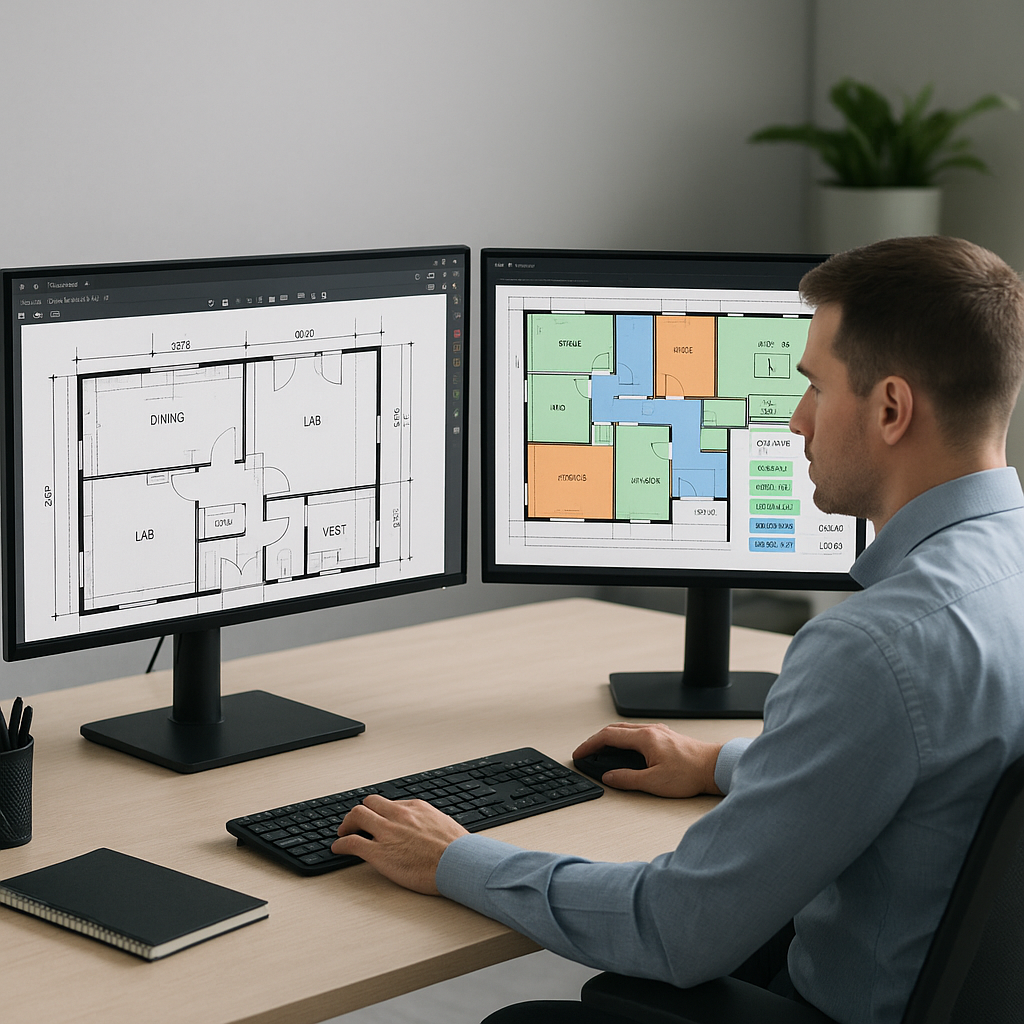
- AI Extraction: The system scans the drawings and identifies key quantities—room areas, wall lengths, door/window counts, and more.
- Confidence Scoring: Low-confidence extractions are flagged for review, so you can double-check before moving forward.
- Export to BOQ: Once reviewed, the quantities are ready to integrate into your bill of quantities (BOQ).
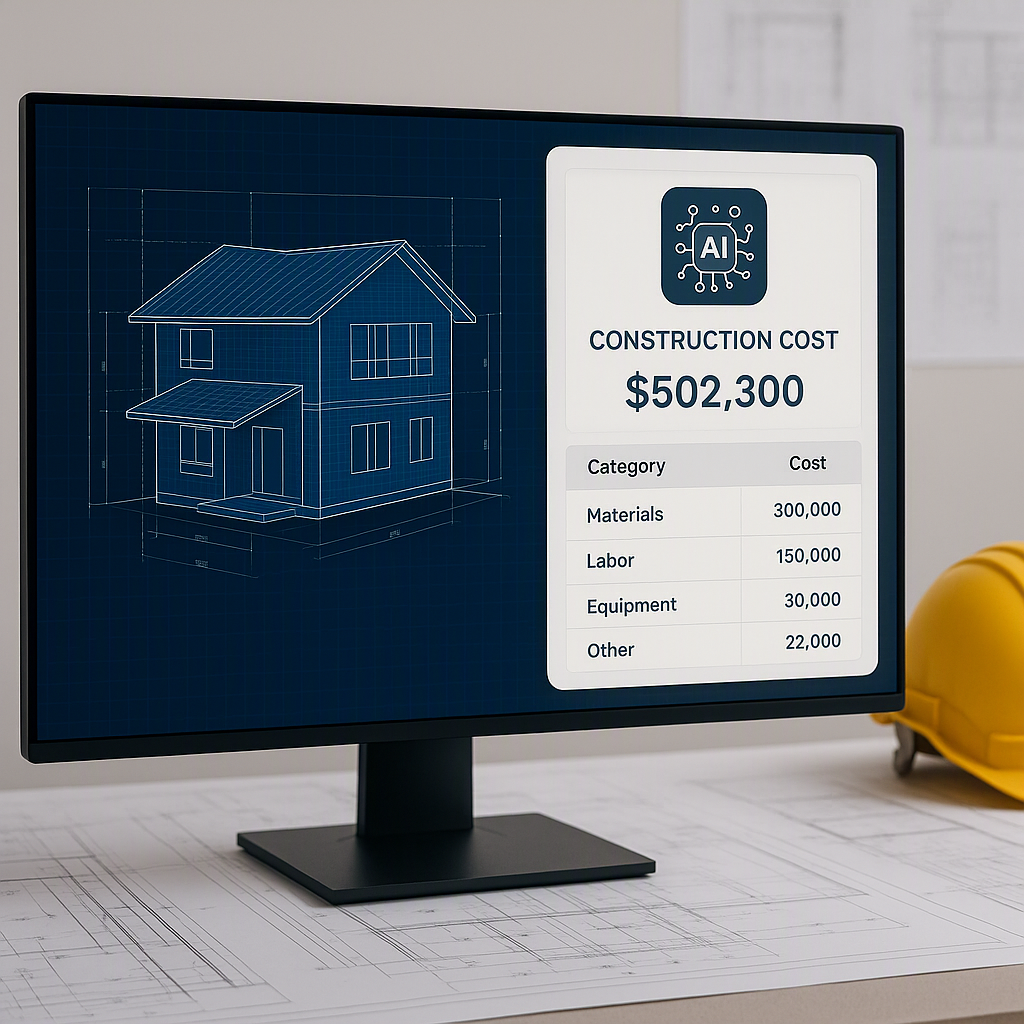
All of this takes about 10 minutes. Compare that to the two full days you’d spend doing it manually.
A Step-by-Step Example
Let’s say you’re bidding on a 20-story residential building. You upload a 50-page PDF of architectural drawings to EstimateNext. Within minutes, the AI identifies:
- Total wall lengths: 4,500 linear feet
- Number of doors: 800
- Total floor area: 250,000 square feet
- Window counts: 1,200
The system flags 5% of the quantities for review due to unclear markings on the drawings. You spend 30 minutes reviewing these flagged items and make a few adjustments. The final BOQ is ready in under an hour. By comparison, a manual takeoff for this project would have taken at least 40 hours.
Real-World Results
Case Study: High-Rise Bid
Let’s look at an actual case. A mid-sized general contractor recently used EstimateNext on a high-rise bid. They saved 120 hours of labor—equivalent to two full workweeks—just on takeoffs. That time went straight into refining their bid strategy and negotiating with subs. The result? A more competitive bid and a higher win rate.
Case Study: $1B Rail Project
It’s not just about speed. AI extraction reduces errors by up to 80%, according to a case study on a $1B rail project. In this scenario, the contractor used AI tools to process over 10,000 pages of drawings. The system flagged inconsistencies and potential errors that would have been missed during a manual review, saving the team from costly rework later.
Data Point: Industry-Wide Impact
A 2024 Deloitte study found that firms using AI-powered takeoff tools reduced their bid preparation times by an average of 50% and saw a 15% increase in bid accuracy. These aren’t just theoretical gains—they’re measurable differences that directly impact project outcomes.
The Skeptic’s Objection
You might be thinking, “AI can’t think like an estimator.” You’re right. AI doesn’t replace your expertise—it amplifies it. The tool handles the grunt work, but you’re still in charge of the strategy, the judgment calls, and the final numbers. In my view, that’s exactly how it should be.
Addressing Training Concerns
Another concern? Learning curve. No one wants to spend weeks figuring out new software. The good news is that most AI tools are designed for ease of use. EstimateNext, for example, typically takes less than two weeks to train a team. If you can use Bluebeam, you can use this.
Cost vs. ROI
Some teams worry about the cost of adopting AI tools. But consider this: EstimateNext starts at $39/month, while traditional takeoff software like CostX can cost over $15,000 per year. The ROI on AI tools is immediate—you’ll save hundreds of hours per project, which translates directly into cost savings and increased bid capacity.
Why This Matters Now
The construction industry isn’t exactly known for rapid tech adoption. But the landscape is changing. Labor shortages, tighter margins, and rising material costs are forcing firms to do more with less. AI-powered tools are no longer a luxury—they’re a necessity.
A 2024 report by Reuters highlights that early adopters of AI in construction have seen cost savings of 10-20% per project. That’s not just a nice-to-have. It’s the difference between winning and losing bids in a hyper-competitive market.
Getting Started
So, what’s the next step? Start small. Use AI tools on one project and measure the results. How much time did you save? How accurate were the takeoffs? Did it help you hit your deadline? Most teams find that the ROI becomes undeniable after just a few bids.
If you’re curious, EstimateNext offers a free tier to help you test the waters. Upload a BOQ, run a takeoff, and see for yourself.
Comparison Table: Manual vs. AI-Powered Takeoffs
| Feature | Manual Takeoffs | AI-Powered Takeoffs |
|---|---|---|
| Time Required | 40+ hours per project | ~10 minutes per project |
| Error Rate | High (10-15%) | Low (2-5%) |
| Scalability | Limited by labor hours | Scales to any project size |
| Cost | High (labor-intensive) | Low (affordable tools) |
| Training Required | None | Minimal (~2 weeks) |
If you’re tired of wasting 40 hours on manual takeoffs, it’s time to upgrade. EstimateNext can help you cut that down to 10 minutes and focus on what really matters—winning more bids. Get started free →