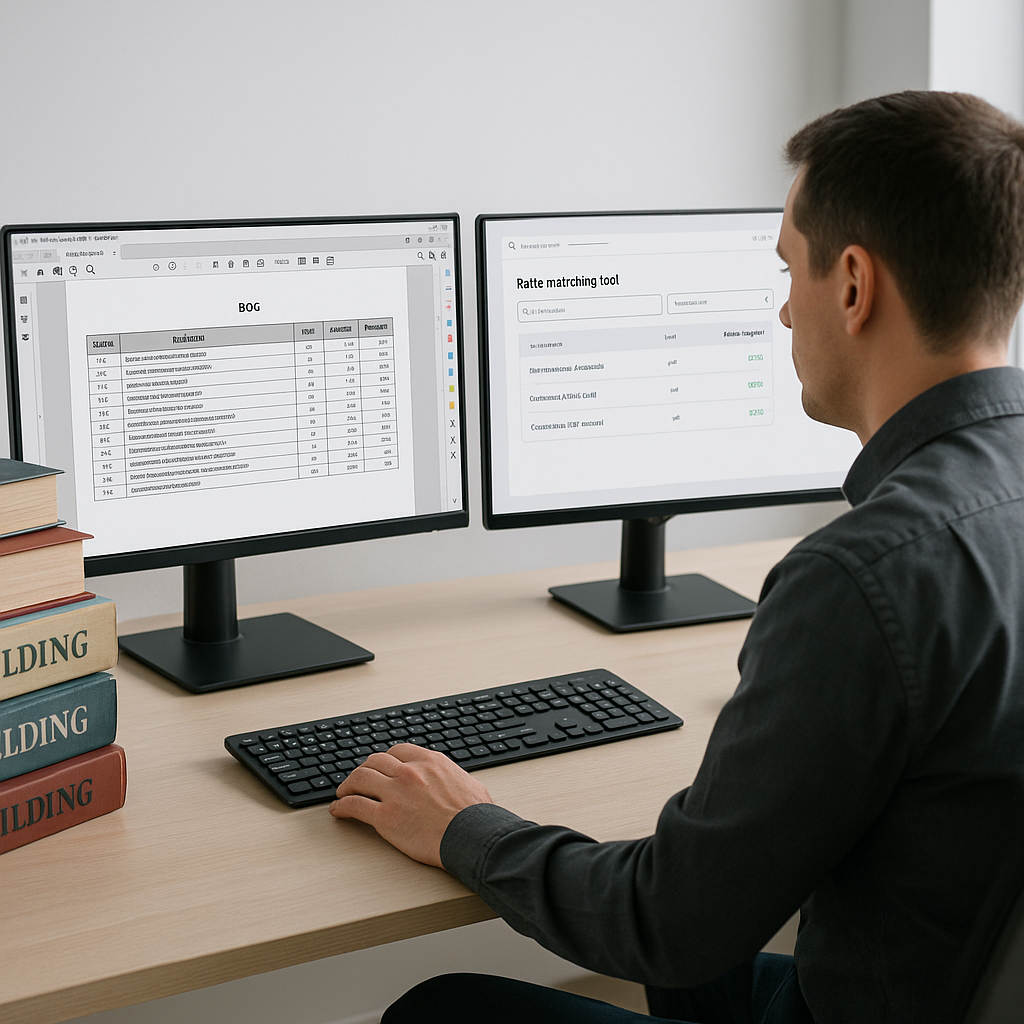
The Problem with Manual Rate Matching
Let’s face it—manual rate lookup is brutal. You’ve got a 2,000-page CPWD DSR, an Excel BOQ with 500 line items, and a bid deadline breathing down your neck. Sound familiar? For estimators, this isn’t just a one-time headache—it’s a recurring nightmare. If you’re still doing this manually, you’re probably spending more hours on rate matching than you’d like to admit.
Why Manual Rate Matching is Inefficient
Most estimators spend 12 hours per estimate just flipping through rate books or scrolling PDFs. Multiply that by 10 bids a month, and you’re looking at 120 hours—three full workweeks—spent on rate matching alone. The problem doesn’t end with wasted time. The process is prone to errors, and even a small mistake can lead to significant consequences:
- Missed Items: Forgetting to include a critical rate can result in underbidding, eating into your profit margins.
- Typos: A single wrong digit in a unit rate can skew your entire estimate.
- Outdated Rates: Using rates from an outdated catalog can result in an uncompetitive bid or unexpected cost overruns.
And let’s not forget the client’s perspective. Trust is everything. Clients and subcontractors want to know your numbers are airtight. If your estimates appear rushed or inconsistent, it erodes confidence. Credibility takes years to build but seconds to lose.
How AI Rate Matching Works
AI-powered tools like EstimateNext don’t just speed up the process—they fundamentally change how rate matching is done. Here’s a breakdown of how these tools work and why they’re transformative:
1. Upload Your BOQ
Forget manual cleanup. Simply drag and drop your Excel or CSV file, and the AI automatically parses merged cells, section headers, and hierarchies. This eliminates hours of pre-processing and lets you focus on the actual estimate.
2. Semantic Search Across 78,000+ Rates
Instead of flipping through a 2,000-page rate book, type in "reinforced concrete slab 150mm," and the AI will instantly surface matching rates. It searches across 135+ catalogs, including state-specific and custom tenant rates, saving you from tedious manual lookup.
3. 4-Step Matching Process
The system uses a tiered approach to deliver accurate rates:
- Tenant History: Prioritizes rates you’ve used before.
- User-Specific Catalogs: Looks at your organization’s custom rates.
- Country-Level Defaults: Uses standard rates for your region.
- AI Fallback: Handles edge cases and obscure items.
By the third project, most users report 99% match accuracy.
4. Full Audit Trail
Every matched rate includes breakdowns for material, labor, and equipment, along with inflation adjustments and a confidence score. You can override rates manually, but the audit trail ensures transparency for clients and stakeholders.
Real Impact: A Mid-Sized GC’s Story
To illustrate the power of AI rate matching, let’s look at a real-world example. A mid-sized general contractor recently used EstimateNext for a $45M high-rise bid. Normally, rate matching for 600 BOQ lines would’ve taken two estimators 3 days. With AI, it took under 2 hours.
The Results:
- Time Savings: 22 hours saved on one bid.
- Improved Accuracy: The AI flagged outdated rates that would’ve added $120K to the bid.
- Client Feedback: "It’s like hiring a full-time rate specialist without the payroll cost."
This isn’t just about speed. It’s about reducing errors and building trust. By delivering more accurate estimates faster, the GC was able to focus on winning the bid instead of wrestling with spreadsheets.
Common Objection: "But AI Can’t Think Like an Estimator"
Yes, AI isn’t perfect. It doesn’t understand local quirks or design intent the way a seasoned estimator does. But that’s not the point. AI isn’t here to replace you—it’s here to amplify your expertise.
Think of AI as a highly efficient assistant. It handles the grunt work—rate matching, takeoffs, and real-time recalculations—so you can focus on judgment calls, strategy, and client relationships. Estimators who pair AI with their expertise don’t just survive; they thrive.
Why Speed + Accuracy = More Wins
Fast, accurate estimates don’t just save time—they win bids. Here’s why:
1. Faster Turnarounds
Subs and GCs operating on tight deadlines can’t afford to spend 12 hours on rate lookups. AI-powered tools cut that time to minutes, allowing you to respond to more bids and increase your chances of winning.
2. Fewer Errors
Errors in estimates can lead to underbidding or overbidding—both of which are costly. AI tools eliminate human error by catching missed rates, outdated prices, and typos.
3. Better Client Trust
Clients notice when your numbers are consistent, transparent, and accurate. AI’s audit trails provide the documentation you need to build trust and demonstrate your professionalism.
How to Get Started
Not sure if AI rate matching is for you? Start small. Test it on a low-stakes project to evaluate its accuracy, speed, and ease of use. Most tools, including EstimateNext, integrate seamlessly with popular software like Procore or Bluebeam, so you don’t have to overhaul your workflow.
Actionable Steps:
- Identify Bottlenecks: Track how much time you spend on rate matching per bid.
- Choose a Tool: Research AI rate matching tools like EstimateNext, and request a demo.
- Test on a Pilot Project: Use AI for a smaller project to gauge its impact.
- Evaluate ROI: Compare the time saved and error reduction to the cost of the tool.
Comparison Table: Manual vs. AI Rate Matching
| Feature | Manual Rate Matching | AI Rate Matching |
|---|---|---|
| Time per Estimate | 12 hours | 2 hours |
| Error Risk | High (typos, missed items) | Low (99% accuracy) |
| Scalability | Limited | High |
| Transparency | Minimal | Full audit trail |
| Cost per Estimate | ~$1,560 (12 hours @ $130/hour) | ~$200 (subscription cost) |
Ready to Save 36 Hours Per Bid?
If you’re tired of flipping pages and second-guessing rates, EstimateNext can help. Upload your first BOQ and get a priced estimate in minutes. Start Free →


