The Problem: Manual Takeoffs Are Killing Productivity
If you’re in preconstruction, you already know the pain. You’ve got a PDF drawing set, a looming deadline, and 40 hours of manual takeoff work ahead. Two estimators, two full days, and dozens of chances for human error. Sound familiar?
Here’s the kicker: it doesn’t have to be this way anymore. AI-powered tools like EstimateNext can now extract quantities from drawings in just 10 minutes. That’s not marketing fluff—it’s real, tested, and working for firms handling billion-dollar projects. Let’s break it down.
How It Works
AI takeoff tools use machine learning algorithms to analyze PDF drawings. Here’s what happens:
- Upload Your Drawings: Drag and drop your PDF or CAD files into the platform.
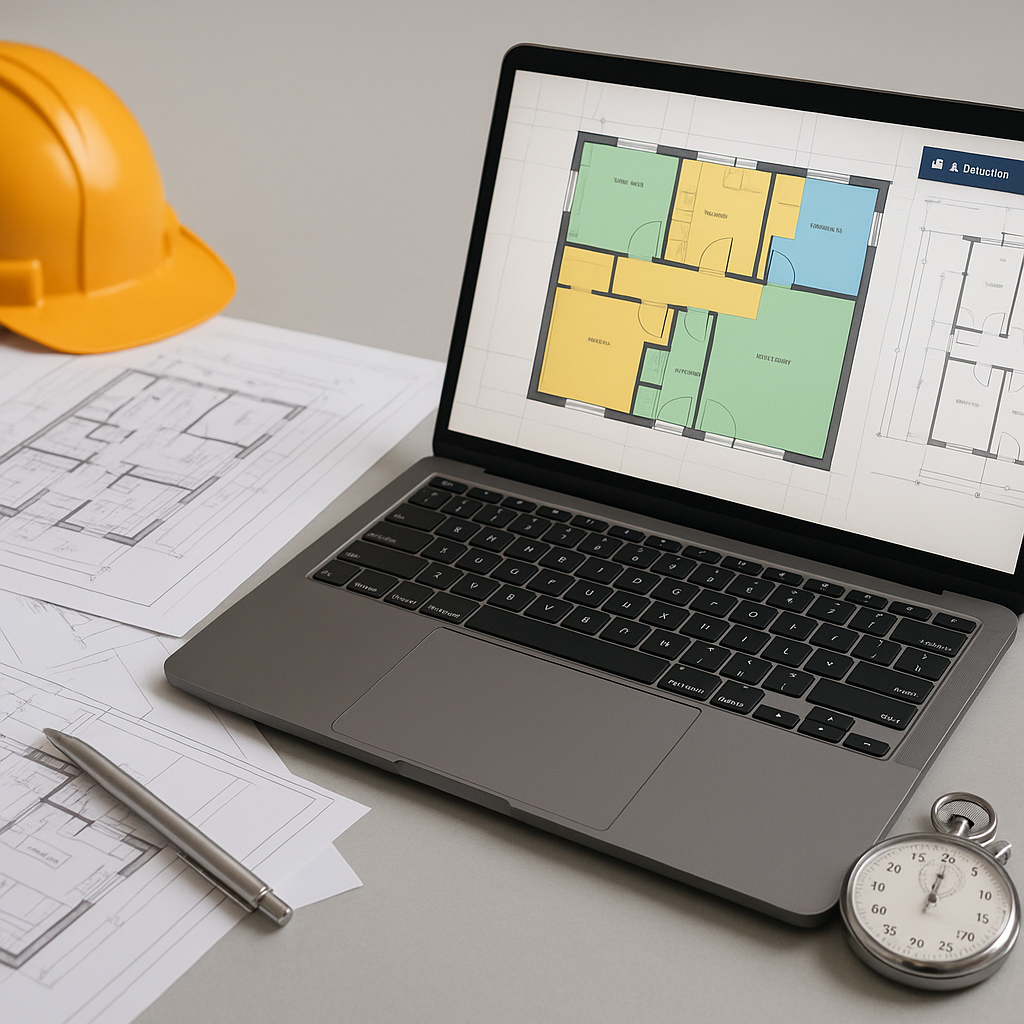
- AI Reads the Data: The system identifies walls, doors, windows, and other elements automatically.
- Quantities Extracted: Within minutes, you get a detailed quantity takeoff—room areas, wall lengths, counts, and more.
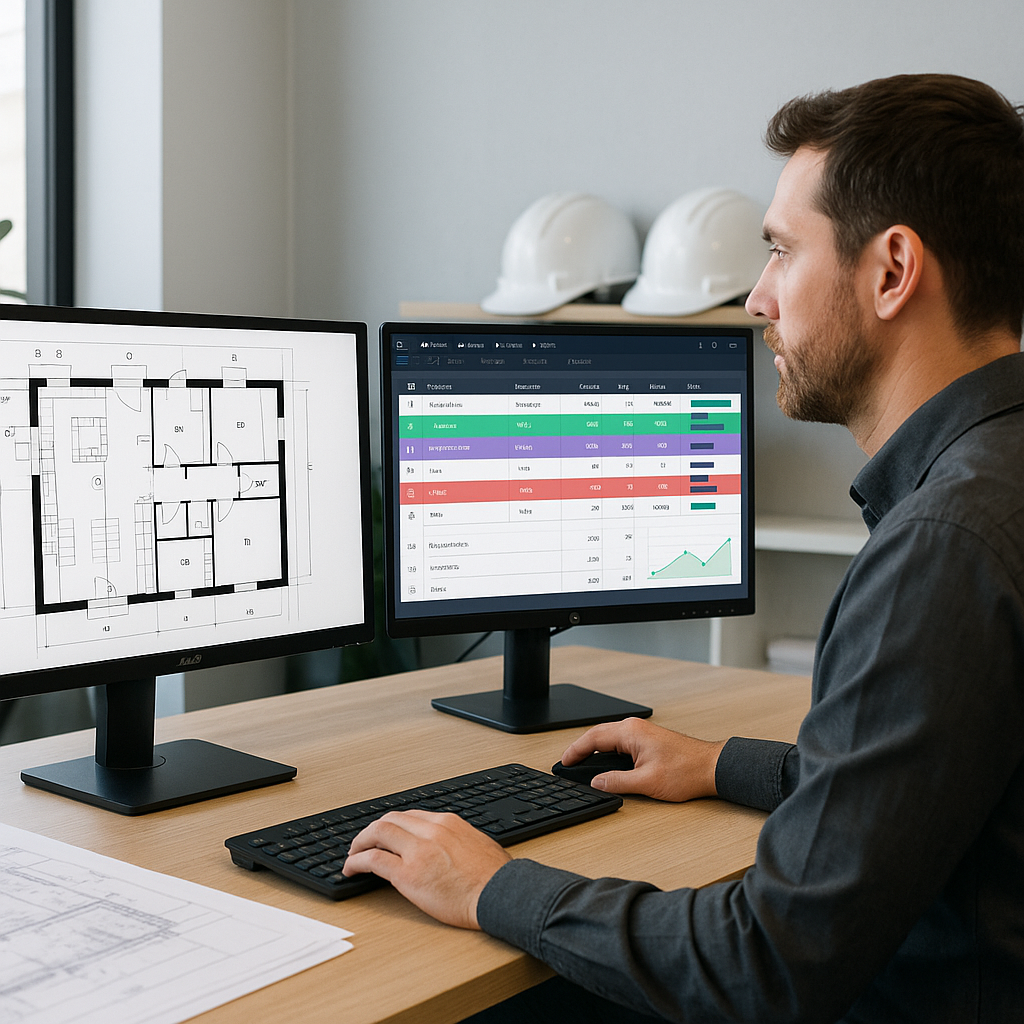
- Confidence Scoring: The tool flags low-confidence areas for human review.
It’s not perfect (no AI is), but it’s close. And when you add human oversight, it becomes a game-changer. One mid-sized GC saved 120 hours on a high-rise bid using this exact approach. That’s two full weeks of labor costs eliminated.
Another example comes from a small subcontractor specializing in drywall installation. By using AI takeoff software, they reduced their bid preparation time by over 80% for a hospital renovation project. This freed up their estimator to focus on value engineering and subcontractor coordination, which directly contributed to winning the bid.
Actionable Steps to Implement AI Takeoff Tools
If you’re considering adopting AI takeoff software, here’s how to get started:
- Research Platforms: Compare tools like EstimateNext, Togal.AI, and STACK based on features, pricing, and integrations.
- Start Small: Test the software on a smaller, less critical project to evaluate accuracy and ease of use.
- Train Your Team: Allocate time for training sessions. Most platforms offer onboarding support.
- Integrate with Workflows: Ensure the software integrates with tools your team already uses, like Procore or Bluebeam.
- Monitor ROI: Track time savings and cost reductions over multiple projects to justify continued investment.
What’s Holding Teams Back?
You might be thinking, "But AI can't think like an estimator." You’re right—it doesn’t. What it does is handle the grunt work, so your team can focus on the high-value tasks: negotiating with subs, refining bids, and strategizing on margins.
The hesitation often boils down to trust. Will the AI miss something critical? Maybe. But manual takeoffs miss things too. The difference is that AI tools like EstimateNext flag uncertainties, so you can double-check. It’s like having a junior estimator who never gets tired.
Overcoming Skepticism: Why Trust AI?
Let’s address common concerns:
- Accuracy: AI tools are trained on thousands of datasets to minimize errors. For example, EstimateNext’s confidence scoring feature highlights areas where the AI might be uncertain, enabling human review.
- Complex Projects: Tools can be customized for unique project needs, whether it’s a stadium or a residential development.
- Ease of Use: Modern AI software is designed to be intuitive, with drag-and-drop functionality and step-by-step guides.
The ROI is Brutal
Let’s do the math.
- Manual Takeoffs: 40 hours x $130/hour (senior estimator rate) = $5,200 per bid.
- AI Takeoffs: 10 minutes x $130/hour = $22 per bid.
Even if you factor in the cost of the tool (starting at $99/month), you’re saving thousands per project. Over the course of a year, that adds up fast. For a GC chasing five GMP bids annually, that’s over $25,000 saved.
This doesn’t even account for the opportunity cost. With AI freeing up staff time, your team can work on more bids or refine existing ones. For example, a general contractor in the Midwest reported a 20% increase in bid volume after adopting AI takeoff tools.
Comparison Table: Manual vs. AI Takeoffs
| Feature | Manual Takeoffs | AI Takeoffs |
|---|---|---|
| Time Required | 40 hours per project | 10 minutes per project |
| Labor Cost | $5,200 per bid | $22 per bid |
| Error Rate | Moderate to High | Low (with confidence scoring) |
| Scalability | Limited | High |
| Team Focus | Grunt work | Strategy and refinement |
Real-World Example: A $1B Rail Project
In a case study shared on EstimateNext’s site, a contractor bidding on a $1 billion rail project used AI takeoffs to extract quantities for concrete columns, beams, and rail decks. The manual process would’ve taken 56 hours. With AI, it took 10 minutes. The contractor’s team estimated they saved $7,200 in labor costs on just this one bid.
Imagine scaling that efficiency across multiple bids. It’s not just about the savings—it’s about freeing up your team to do more. More bids, more refinements, more wins.
The Obvious Objection: “But AI Can’t Think Like an Estimator”
We hear this all the time. And it’s partially true. AI doesn’t replace your expertise—it amplifies it. You’re still the one making judgment calls, deciding on markup, and negotiating with subs. The AI just handles the repetitive, time-consuming tasks. Think of it as an apprentice that gets smarter with every project.
Why You Need AI Now
The construction industry is under pressure. Labor shortages, tighter margins, and rising material costs mean teams are being asked to do more with less. AI tools aren’t a luxury—they’re becoming a necessity. According to a 2023 McKinsey report, early adopters of AI in construction see cost savings of 10-20% per project. If you’re not using these tools, your competitors probably are.
FAQs
Q: How accurate are AI-powered takeoffs?
A: AI tools like EstimateNext are highly accurate but not infallible. That’s why features like confidence scoring and manual override exist. Human review is still crucial.
Q: Can AI handle custom or complex projects?
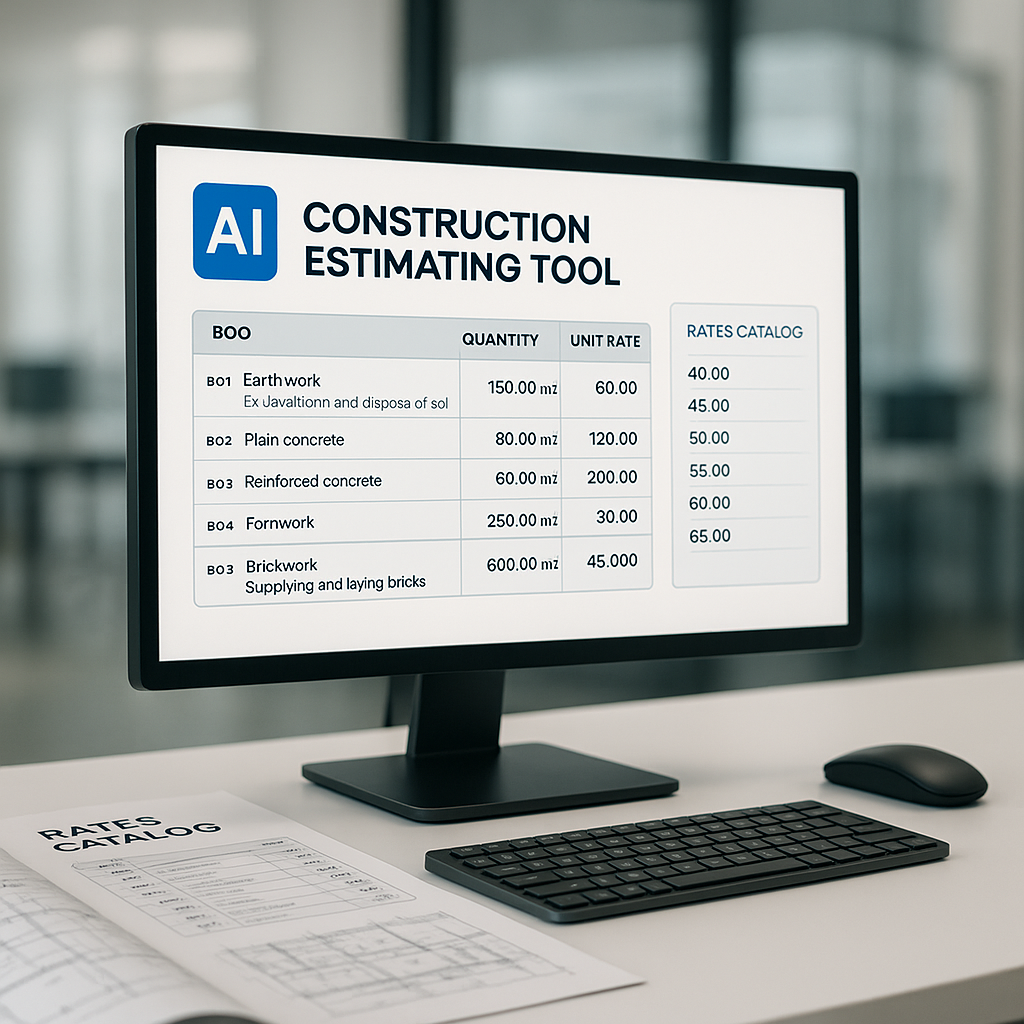
A: Yes. Tools like EstimateNext allow you to upload custom rate catalogs and define project-specific parameters, ensuring the output matches your requirements.
Q: Is it hard to learn?
A: Not at all. Most platforms are designed for ease of use, with training typically taking under two weeks.
Q: What about integration with existing tools?
A: AI platforms often integrate seamlessly with software like Procore, Bluebeam, and Excel, so you can export estimates directly into your workflows.
Q: What happens if the AI misses something?
A: Confidence scoring highlights areas of uncertainty, so estimators can double-check before finalizing the bid.
Final Thoughts
If you're still spending 40 hours on manual takeoffs, it's time to rethink your process. AI tools like EstimateNext don’t just save time—they save money, reduce errors, and let your team focus on what really matters.