How a JV Won the $1.02B NYC Subway Extension
Winning a $1.02 billion infrastructure project in New York City isn’t about luck. It’s about precision. The joint venture (JV) behind the Second Avenue Subway extension didn’t just out-engineer their competitors—they out-estimated them. And if you’re in preconstruction or cost engineering, there are lessons you can’t afford to ignore.
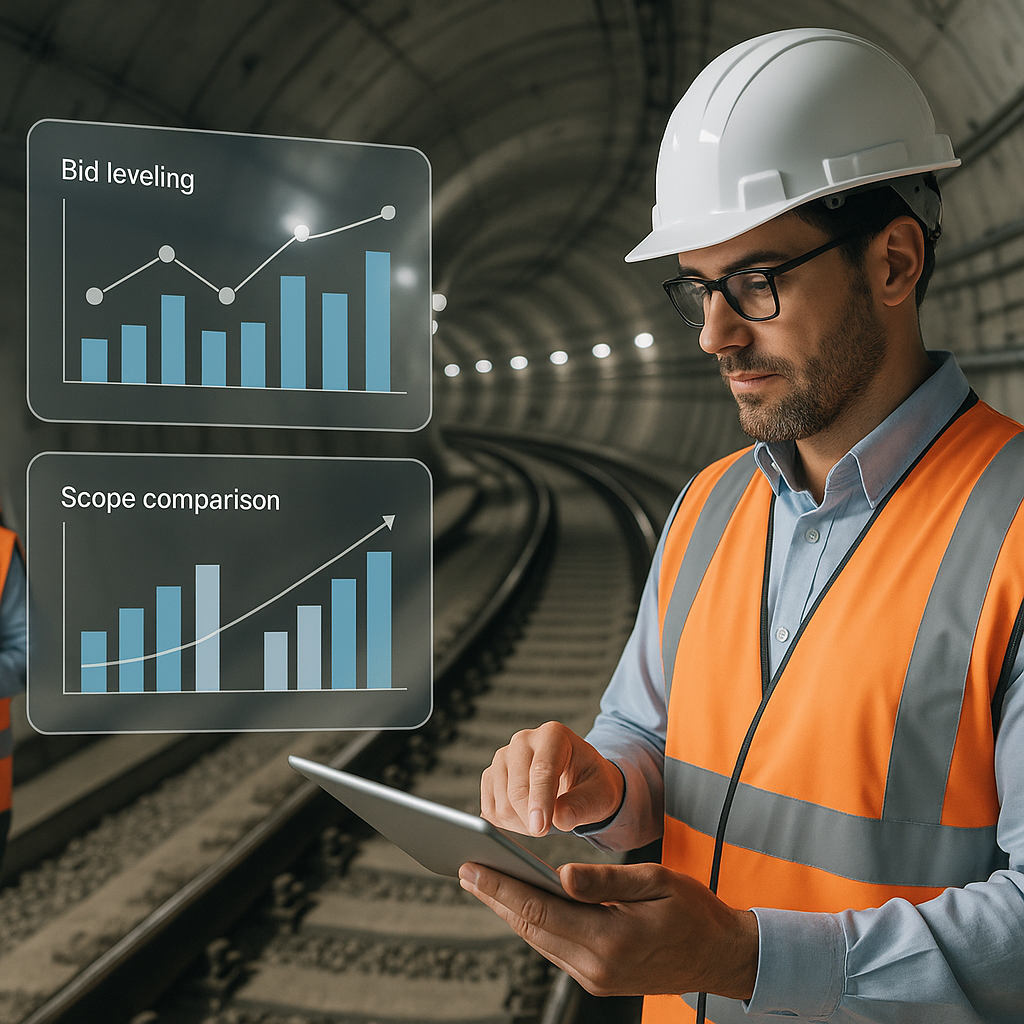
Here’s the big one: bid leveling. It’s unsexy but critical. On a project this size, you’re not just comparing apples to oranges—you’re comparing entire orchards. Scope mismatches, missing line items, and hidden contingencies can tank your bid or cost you millions post-award.
The Problem: Manual Bid Leveling Kills Speed and Accuracy
Let’s start with the obvious. Bid leveling is a slog. For a project like the Second Avenue Subway, you’re dealing with hundreds of line items across multiple subcontractor quotes. Normalizing these quotes by hand takes days—sometimes weeks. And even then, mistakes creep in. Miss a scope gap, and you’re taking on a risk you didn’t price. Overestimate contingencies, and your bid becomes uncompetitive.
For the NYC subway extension, the stakes were even higher. This wasn’t a simple hard-bid; it was a design-build contract. That means the JV had to integrate design, construction, and estimation into a cohesive package. Any inefficiency in preconstruction could spiral into delays, cost overruns, or worse—a lost bid.
Case Study: The $1.02B Second Avenue Subway Extension
The Second Avenue Subway extension was one of the most complex infrastructure projects in recent NYC history. It involved extending the subway line by 1.6 miles, adding new stations, and upgrading existing systems to meet modern standards. The project required coordination across multiple disciplines: tunneling, MEP (mechanical, electrical, plumbing), structural engineering, and urban planning.
The JV faced unique challenges, including:
- Integrating design and construction in a way that minimized risks during execution.
- Managing hundreds of subcontractor quotes across various trades.
- Navigating New York City’s regulatory landscape, which added layers of complexity to cost estimation.
These challenges demanded a bid leveling process that was faster, more accurate, and more transparent than traditional methods.
The Solution: AI-Powered Bid Leveling
Here’s where tools like EstimateNext come in. The JV used AI-driven technology to normalize subcontractor quotes quickly and accurately. Instead of manually aligning scope items (a process that can take 6 hours per quote set), AI handled it in 30 minutes. That’s a 12x speed boost.
But speed wasn’t the only benefit. The platform flagged scope mismatches—like a missing fire protection system in one quote—and suggested adjustments. It also ranked bids by total cost, scope coverage, and risk, giving the JV a clear picture of which subcontractor offered the best value.
Example: Avoiding Costly Scope Gaps
One subcontractor’s bid omitted fire protection systems entirely, which could have led to a $2M post-award cost if missed. The AI flagged this omission, enabling the JV to adjust the bid package before submission. Without this technology, the scope gap might have gone unnoticed until execution, leading to cost overruns and profit erosion.
Why This Matters for Cost Engineers
You might be thinking, “That’s great for billion-dollar contracts, but what about my projects?” The truth is, the same principles apply. Whether you’re pricing a $5M office fit-out or a $500M highway expansion, bid leveling is where competitive edges are won.
Real-World Example: Regional GC Saves $400,000
A regional GC in Chicago used EstimateNext to normalize seven MEP subcontractor bids on a $14M hospital retrofit. The AI tool identified a $400,000 scope gap in the low bid. Without that adjustment, the GC would’ve absorbed that cost post-award. Instead, they adjusted their bid package, won the project, and protected their margins.
Actionable Steps to Improve Your Bid Leveling Process
-
Adopt AI Tools Early: Start integrating AI-driven platforms like EstimateNext into your preconstruction workflows. These tools save time, reduce errors, and give you a competitive edge.
-
Invest in Training: Ensure your team understands how to use AI tools effectively. The technology is only as good as the person operating it.
-
Standardize Bid Templates: Use standardized templates for subcontractor quotes to make normalization easier. AI tools work best when data is clean and consistent.
-
Audit Your Process: Regularly review your bid leveling process for inefficiencies. Are you catching scope gaps early? Are you analyzing quotes effectively?
-
Leverage Historical Data: Use past project data to inform your estimates. AI tools can aggregate and analyze this data, giving you insights into market trends and pricing.
Comparison Table: Manual vs. AI-Powered Bid Leveling
| Feature | Manual Process | AI-Powered Process |
|---|---|---|
| Speed | Days to weeks | Hours |
| Accuracy | Prone to human error | High precision |
| Scope Gap Detection | Limited | Automated and reliable |
| Cost Analysis | Basic | Data-driven insights |
| Scalability | Limited | Handles large projects easily |
The Future of Cost Engineering
The success of the Second Avenue Subway extension isn’t an outlier. It’s a glimpse into the future of construction estimation. As projects grow more complex and margins tighten, manual processes won’t cut it anymore. AI tools are no longer optional—they’re essential.
If you’re still leveling bids in Excel, ask yourself this: how many hours—and how much money—are you leaving on the table? Tools like EstimateNext aren’t just faster; they’re smarter. They don’t just save time; they improve accuracy, reduce risk, and increase your win rate.
The JV behind the $1.02B NYC subway extension understood this. Do you?
If you’re ready to upgrade your cost engineering process, try EstimateNext today. Start free →


