Stop Wasting 40 Hours on Takeoffs
If you've ever spent days manually measuring lengths, counting fixtures, or calculating areas on PDF drawings, you know how soul-crushing it is. And for what? Just to realize the architect has uploaded a revised drawing set two days later. Now you're back at square one.
This isn’t just an annoyance—it’s a massive bottleneck. For general contractors (GCs) chasing GMPs or subcontractors trying to hit tight bid deadlines, every hour counts. That’s where AI-powered takeoff tools like EstimateNext come in. They don’t just save time—they fundamentally change how you approach preconstruction.
The Math Behind AI Takeoffs
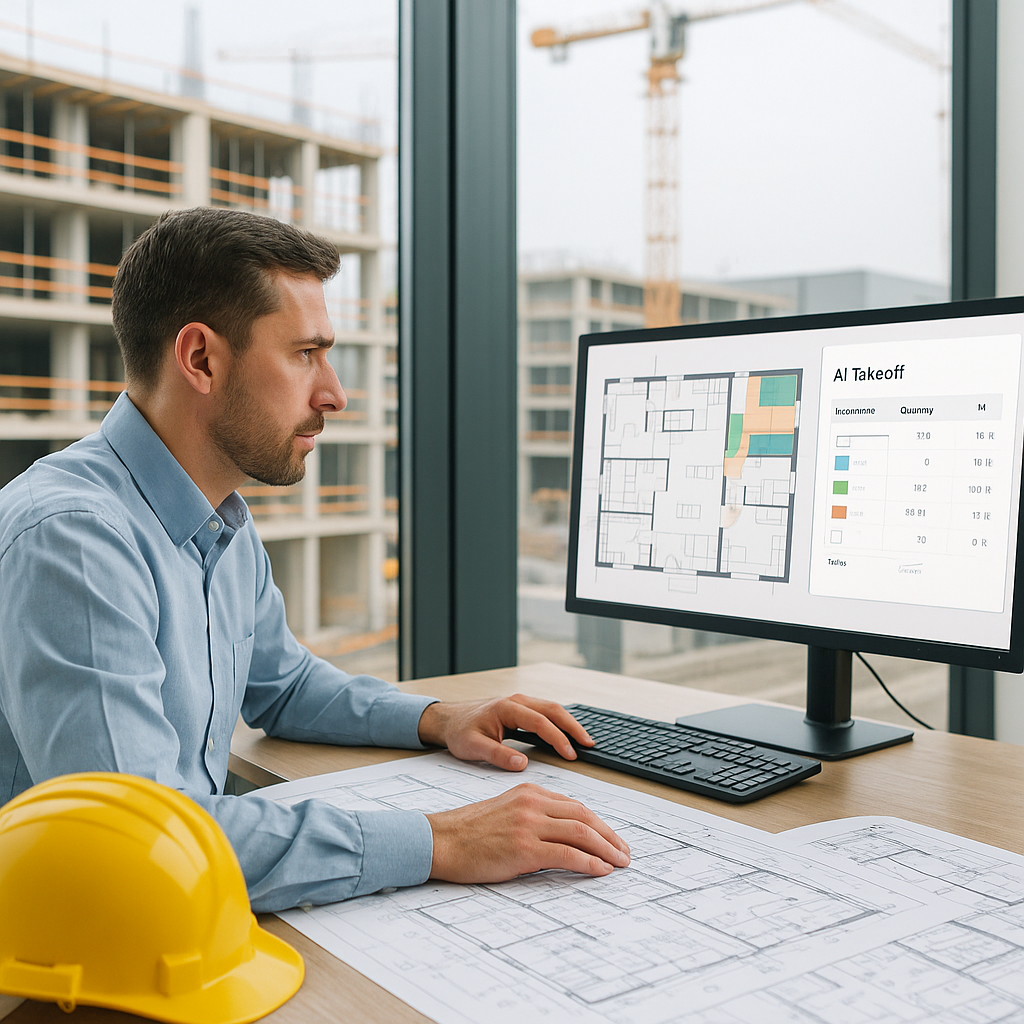
Let’s break it down. A typical takeoff process for a mid-sized commercial project takes about 40 hours. That’s two estimators working full-time for two days. With AI-powered tools, this same process can be done in under 10 minutes. Yes, minutes—not hours.
How? AI doesn’t just "read" drawings. It interprets them. Platforms like EstimateNext use advanced Vision AI to extract quantities directly from PDFs. Room areas, wall lengths, door/window counts—it’s all automated. And it’s not just faster; it’s more accurate. One case study showed an 80% reduction in discrepancies compared to manual methods.
Real-World Example:
A mid-sized GC bidding on a $50M high-rise project saved 36 hours by using AI for their quantity takeoff. That’s nearly a week of labor costs avoided, freeing up their team to focus on value engineering and bid strategy instead. Imagine the competitive edge that gives them during GMP negotiations.
Another Example:
Consider a subcontractor specializing in drywall and framing. For a large $10M interior renovation, a manual takeoff would have taken them three days. Using AI, they completed it in under 15 minutes—allowing them to submit their bid two days earlier than competitors. That early submission led to a win, and ultimately, over $500K in revenue.
"But AI Can’t Think Like an Estimator"
I hear this objection all the time. And sure, AI doesn’t have decades of field experience. It doesn’t know that a specific vendor always ships late or that certain materials perform better in winter conditions. But that’s not the point. AI isn’t here to replace your expertise—it’s here to amplify it.
Think of it this way: would you rather spend your time manually tracing lines on a drawing or negotiating with subcontractors to improve scope clarity? AI tools like EstimateNext handle the repetitive grunt work so you can focus on what actually moves the needle.
Actionable Insight:
Instead of viewing AI as competition, think of it as your assistant. Use AI to handle the tedious tasks so you can dedicate your energy to high-value activities like:
- Refining the scope of work for better clarity.
- Identifying cost-saving alternatives during value engineering.
- Building stronger relationships with subcontractors.
Handling Edge Cases
What about drawings with incomplete dimensions or poor-quality scans? Good AI tools account for this. EstimateNext, for example, flags low-confidence measurements and lets you remeasure with manual overrides. There’s even an audit trail, so you know exactly what’s been adjusted and why.
Key Features for Edge Cases:
- Confidence Scores: AI assigns confidence levels to its measurements, flagging areas that may require human review.
- Manual Overrides: When AI encounters unclear areas, estimators can manually adjust quantities directly within the platform.
- Audit Trails: Every adjustment is recorded, ensuring transparency and accountability.
Comparison Table: Manual Takeoffs vs. AI-Powered Takeoffs
| Feature | Manual Takeoffs | AI-Powered Takeoffs |
|---|---|---|
| Speed | 30-40 hours per project | 10-30 minutes per project |
| Accuracy | Prone to human error | 80% fewer discrepancies |
| Handling Revisions | Entire process repeated | Instant updates with revised PDFs |
| Scalability | Limited by manpower | Handles multiple projects simultaneously |
| Cost | High labor expenses | Lower long-term costs |
ROI That’s Hard to Ignore
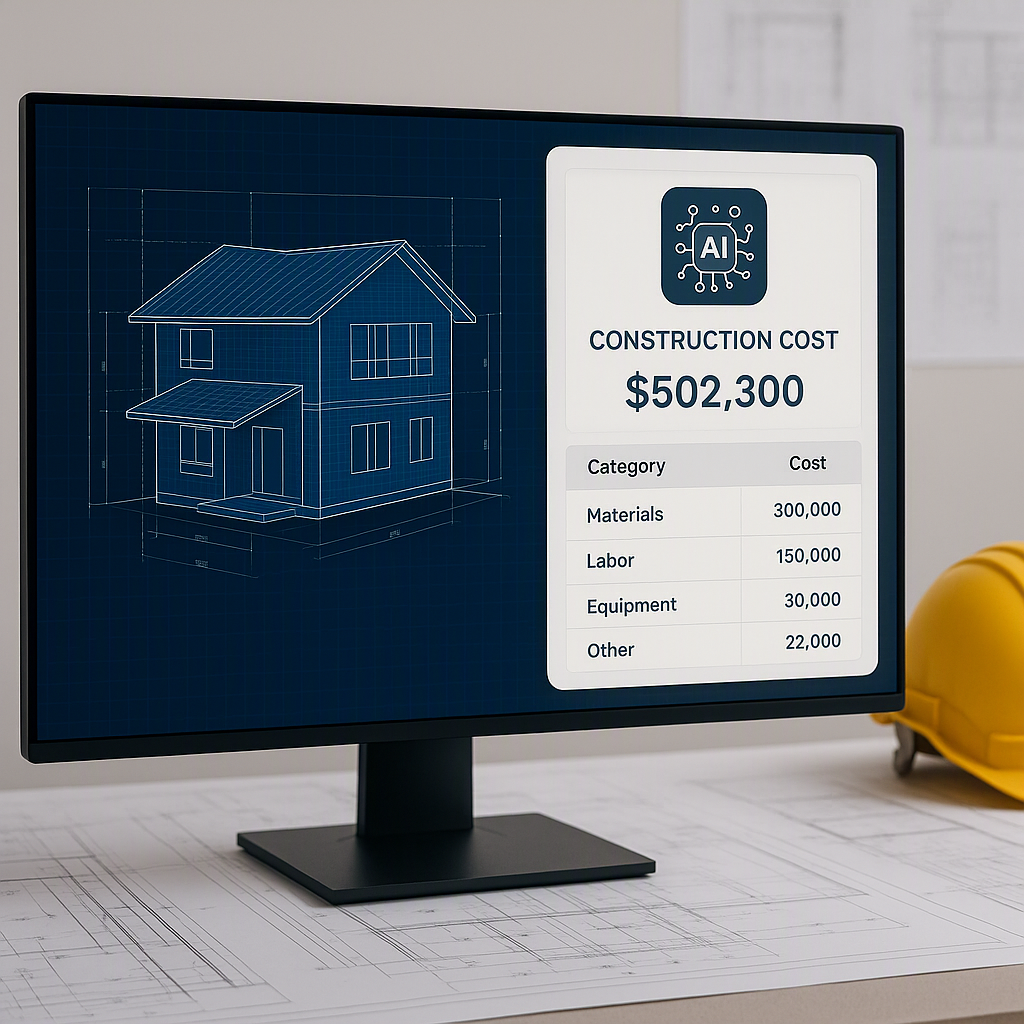
For GCs, the numbers speak for themselves. Let’s assume your estimators cost $130/hour. Cutting 36 hours from a single takeoff saves you $4,680. Now multiply that across 5-8 GMP pursuits a year. That’s $23,000-$37,000 saved annually—conservatively.
For subcontractors, the ROI is even clearer. Faster takeoffs mean more bids submitted. More bids mean more wins. One MEP (mechanical, electrical, plumbing) firm using EstimateNext reported a 50% increase in bids submitted within deadlines, leading to an additional $1.2M in annual revenue.
ROI Breakdown:
- Estimator Labor Savings: Reducing 36 hours on one project saves $4,680.
- Bid Submission Volume: Faster takeoffs allow a subcontractor to submit 15% more bids annually.
- Revenue Impact: Submitting more bids leads directly to more contracts, increasing annual revenue significantly.
How to Get Started
If you’re ready to ditch manual takeoffs, start small. Test AI tools like EstimateNext on a smaller project to see how they perform. Most platforms offer free trials or low-cost entry tiers. The learning curve is short—most teams get up to speed in under two weeks.
Step-by-Step Guide:
- Choose a Trial Project: Pick a small or medium-sized project to test the software.
- Train Your Team: Take advantage of online tutorials and customer support to get your estimators comfortable with the tool.
- Compare Results: Measure the time saved and accuracy improvements compared to your traditional process.
- Scale Gradually: Once you're confident, roll out AI-powered takeoffs across larger projects.