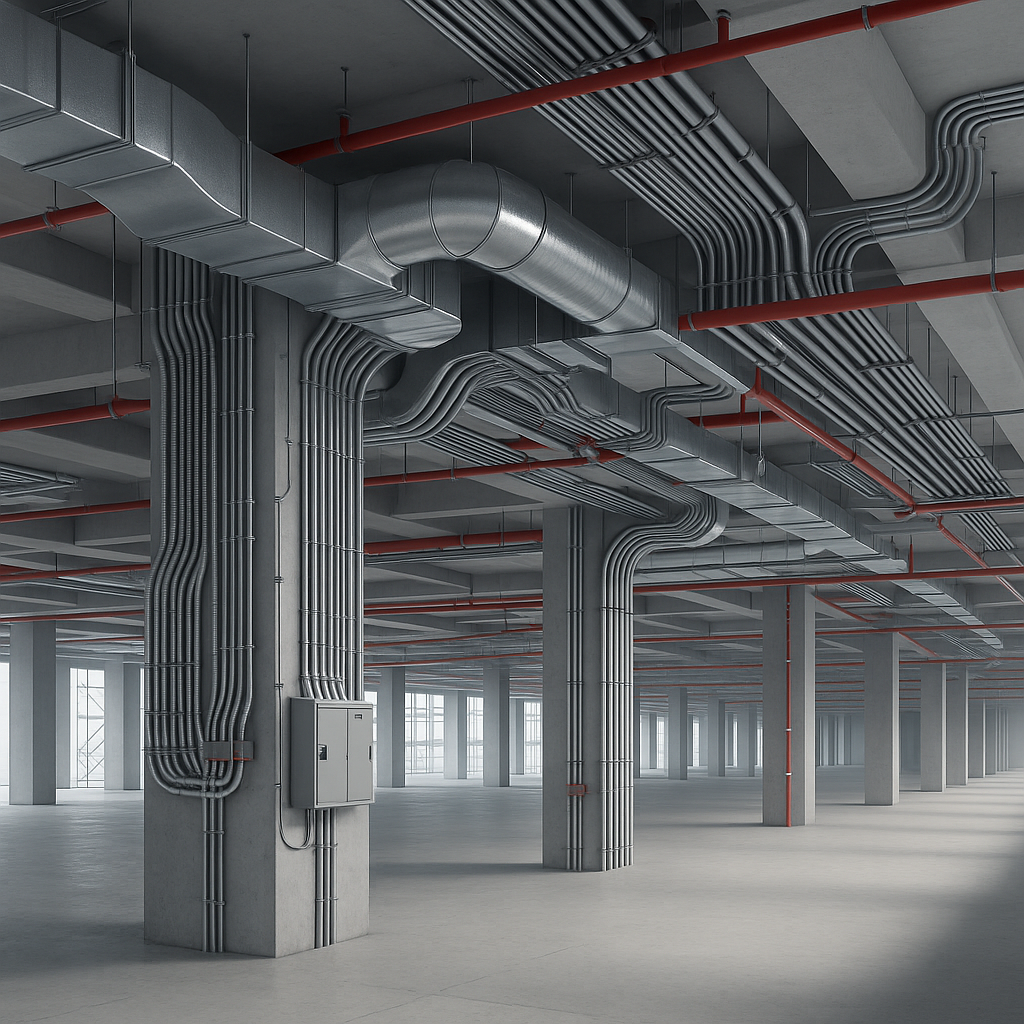
Why Data Center Construction Spending Rocketed 28% and What It Means for Estimators
The data center boom isn’t slowing down. Spending jumped 28% last year, according to Research and Markets. That’s billions pouring into hyperscale builds for AWS, Google, and Meta, plus regional players expanding into mid-market facilities. But estimating for these projects? It’s a nightmare.
If you’ve worked on a data center bid, you know the drill: 20,000-line BOQs, constant scope changes, and margins so tight you can’t afford errors. It’s not a typical office build. Everything—HVAC, electrical, fire suppression—requires precision. And if you’re late on a bid? Forget it. AWS doesn’t wait.
So, how do you stay competitive without burning out your team? Let’s break it down.
The Growing Pains of Data Center Estimation
1. Scale and Complexity
Data centers are massive. A single facility might require estimating for:
- Redundant electrical systems (think dual generators, UPS backups, and panel sizing).
- Advanced HVAC systems to handle insane cooling loads.
- Fire suppression, often with overlapping NFPA compliance requirements.
For example, a mid-tier regional data center might include 15,000+ fixtures, conduits, and fittings to estimate. Manually building out rates for this in Excel? It’s not just inefficient—it’s risky. A missed line item during manual calculations could snowball into significant cost overruns.
Concrete Example: In a 20 MW data center in the Midwest, a general contractor miscalculated the cost of UPS systems due to an incomplete BOQ. The error added an unaccounted $200,000 to the final construction cost, which wiped out the project’s profit margin.
2. Tight Margins
Margins on data centers are razor-thin. JLL’s recent report showed that hyperscalers like Meta and Google demand aggressive pricing. If your labor or material rates are off by even 1%, you could lose the project—or worse, win it and bleed money.
Inflation adds another layer of complexity. Steel prices, for example, surged over 45% between 2020 and 2022, according to World Steel Association data. If your estimate doesn’t account for such fluctuations, you’re operating on borrowed time.
Case Study: A subcontractor in Texas lost $1.2M on a data center project after failing to update their copper wire pricing. Copper prices had risen 30% since their initial estimate, but they submitted a bid based on outdated rates.
3. Time Pressure
Bid deadlines for data centers are brutal. Some projects require a full estimate in less than two weeks. That’s why speed isn’t a luxury—it’s a necessity.
Data center owners, particularly hyperscalers, expect rapid turnaround. AWS, for instance, has been known to issue RFPs with four-week submission deadlines for projects worth $100M+. Estimators don’t just need to work faster—they need tools that prevent errors under time pressure.
How AI Changes the Game
This is where platforms like EstimateNext come into play. Let’s look at one feature that directly addresses these challenges: the AI-powered BOQ Parser.
Why the BOQ Parser Matters
Imagine you’re handed a 20,000-line BOQ in Excel. It’s full of merged cells, inconsistent headers, and cryptic descriptions. Normally, you’d spend hours cleaning it up before you even start estimating. EstimateNext’s BOQ Parser automates this.
- Auto-detection: The parser identifies sections, hierarchies, and headers in seconds.
- Rate matching: It cross-references 78,000+ SOR items, pulling rates from catalogs like RSMeans or CPWD.
- Inflation adjustments: Need 2023 labor rates? The tool suggests CPI-based uplifts automatically.
The result? What used to take 10 hours now takes 10 minutes.
Real-World Example: One regional GC director I worked with recently used this feature on a 15 MW data center project. They shaved two full days off their BOQ prep time and caught five rate inconsistencies they would’ve missed manually. Those errors alone could’ve cost $50,000 on the bid.
Other AI-Driven Features
Aside from BOQ parsing, tools like EstimateNext offer:
- Historical cost analysis: Quickly compare current data center bids to previous ones to identify trends and potential cost drivers.
- Error detection: AI flags potential issues, like duplicated items or missing quantities, in your estimate.
- Collaboration tools: Share estimates across teams instantly, reducing back-and-forth emails during preconstruction.
Why Speed Wins in Data Centers
Speed isn’t just about meeting deadlines—it’s about winning more bids. Industry case studies show that AI-powered tools can save estimators around 40 hours per bid. At $130/hour, that’s $5,200 saved per project. Multiply that by 8 bids/year, and you’re looking at $41,600 saved annually—per estimator.
Now compare that to the cost of a tool like EstimateNext: $99/month. The math is brutal (in a good way).
Actionable Steps for Speed Optimization
- Adopt AI tools: Start with free trials to evaluate ROI before committing to an annual subscription.
- Standardize processes: Use templates for common data center components, such as HVAC systems or fire suppression.
- Train your team: Dedicate time to upskill estimators on using tools like EstimateNext or RSMeans effectively.
Comparison Table: Manual Estimation vs. AI-Assisted Estimation
| Feature | Manual Estimation | AI-Assisted Estimation |
|---|---|---|
| BOQ Parsing Time | 8-10 hours | 10-15 minutes |
| Error Detection | Manual reviews (risk of misses) | Automated, with alerts |
| Rate Updates | Requires manual research | Auto-suggested inflation uplifts |
| Collaboration | Email-based | Real-time sharing |
| Cost | Labor-intensive (hidden costs) | $99/month for AI tools |
What’s Next for Estimators?
Data centers aren’t just a trend—they’re reshaping the construction landscape. By 2026, they’re expected to account for over 50% of all tech-sector construction growth. But that growth comes with challenges:
- More competition: Everyone from the largest national GCs to mid-size firms is chasing these projects.
- Higher expectations: Owners want detailed estimates faster, with less room for error.
- Specialist knowledge: HVAC, electrical, and fire protection systems are increasingly complex.
The takeaway? The GCs and subs who invest in speed and accuracy will dominate this space.
The Bottom Line
If you’re tired of burning hours on manual BOQs or losing bids because you couldn’t meet a deadline, it’s time to rethink your tools. The data center boom is here to stay, and AI-powered estimation is the fastest way to stay competitive.


