The Problem: Manual Takeoffs Are a Time Sink
Estimators spend 40 hours on takeoffs for every major bid. That’s two full workdays gone—not to mention the mental fatigue that creeps in after flipping through endless drawings and rate books. It’s not just about time; it’s about accuracy. Errors pile up when humans are stuck doing repetitive tasks. Miss one wall length or mismeasure a room, and you’re looking at costly rework or even losing the bid entirely.
But AI-powered takeoff tools are changing the game. These tools don’t just speed up the process—they improve accuracy and free estimators to focus on strategy instead of grunt work. The secret? Smarter training data.
Why Training Data Matters for AI Takeoffs
AI doesn’t magically know how to read construction drawings or match rates. It learns from data—lots of it. In the same way you wouldn’t expect an apprentice estimator to perform flawlessly on day one, AI systems need training data to build their "experience." This data is what powers AI to work faster and more accurately than humans ever could.
How Training Data Powers AI
Take EstimateNext’s Vision AI, for example. It’s trained on thousands of preconstruction projects, spanning residential renovations to billion-dollar infrastructure builds. This extensive dataset allows it to recognize patterns in drawings—like wall dimensions, room areas, and fixture counts—and extract quantities automatically. Here’s how it works:
- Pattern Recognition: The AI identifies common drawing elements like walls, doors, windows, and furniture based on historical data. These patterns become the foundation for its takeoffs.
- Confidence Scoring: Each measurement comes with an accuracy score, flagging low-confidence items for manual review. This ensures you’re never blindsided by a critical mistake.
- Learning Over Time: Every project feeds back into the system, making future takeoffs even smarter. The more you use the tool, the better it gets at understanding your specific needs.
Data in Action
The result? Takeoff time shrinks from 40 hours to just 10 minutes. According to a case study by EstimateNext, a mid-sized contractor saved 120 hours on a single bid—equivalent to hiring a full-time estimator but without the overhead costs.
This isn’t just about saving time; it’s about improving quality. With AI handling the grunt work, estimators can focus on value engineering, risk assessment, and client negotiations.
Real-World Example: Smarter Takeoffs in Action
Let’s make this tangible. Imagine pricing a 200,000-square-foot office building. Manual takeoffs would take two estimators 40 hours, not counting time spent double-checking their work. With AI? You’re done before lunch.
Workflow Breakdown
Here’s how the process looks:
- Uploading Drawings: You upload the project’s PDF drawings into the AI platform.
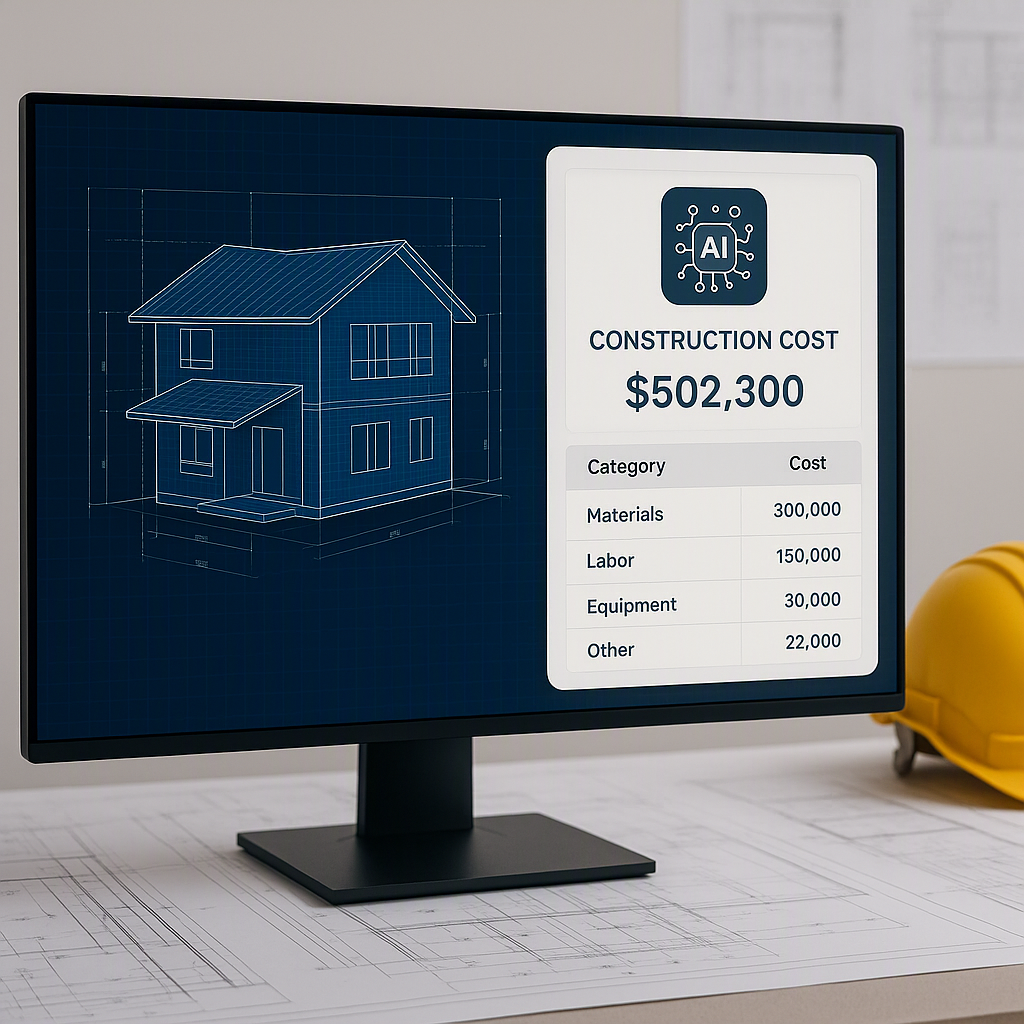
- Automated Extraction: The tool reads the drawings, extracts areas, counts openings, and maps quantities directly into your Bill of Quantities (BOQ).
- Revision Management: If an architect uploads a revision set midway through the bid process, the AI compares the old and new files, flagging changes instantly so you don’t have to.
A real-world example? A regional general contractor (GC) in Texas implemented AI takeoff tools and slashed bid preparation time by 30%, enabling them to pursue 20% more projects annually. That’s not just efficiency—it’s revenue growth. By reducing manual effort, the GC freed up estimators to focus on securing more bids and strengthening client relationships.
The AI Takeoff Workflow: How It Saves You Time
Let’s break down a typical workflow with an AI-powered tool like EstimateNext. This isn’t just about automation—it’s about creating a smarter, more efficient process:
- Upload Drawings: Drag and drop your PDFs into the platform. The AI immediately begins analyzing the files.
- Automated Quantities: The tool extracts quantities for elements like walls, doors, and fixtures, populating them into your takeoff template.
- Review Low-Confidence Items: The AI flags unclear measurements (e.g., faded lines or missing labels) for your review. You can make corrections directly in the interface, ensuring nothing is missed.
- Generate BOQ: Once the quantities are confirmed, the AI compiles a Bill of Quantities, structured in formats like CSI MasterFormat or CPWD DSR.
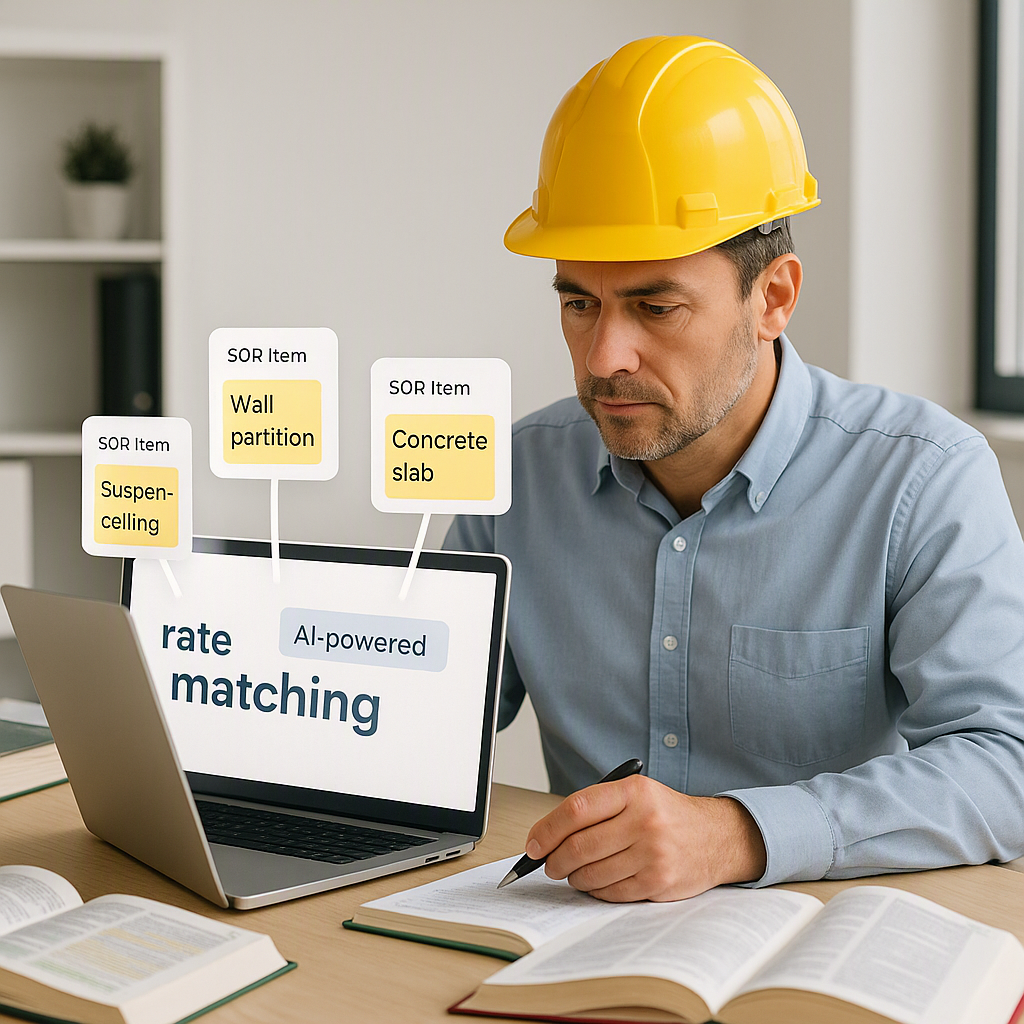
- Rate Matching: Semantic search across 78,000+ Schedule of Rates (SOR) items helps you find the most accurate rates in seconds.
- Export & Submit: Generate professional, easy-to-read reports for clients or internal use.
This process reduces human error, streamlines workflows, and allows your team to work on more bids simultaneously. The AI even learns from your corrections, so subsequent projects are more accurate and require less oversight.
The Skeptic’s Question: Is AI Really Accurate?
You might be thinking, “Sure, AI is fast, but can it really match human accuracy?” The short answer: Yes—with proper oversight.
AI Accuracy vs. Human Accuracy
AI takeoff tools like EstimateNext use features like confidence scoring and manual overrides to maintain accuracy. Here’s how they compare:
| Metric | AI Takeoffs | Manual Takeoffs |
|---|---|---|
| Accuracy Rate | 95%+ | 85-90% (varies based on fatigue) |
| Time to Completion | 10 minutes/project | 40 hours/project |
| Error Reduction Over Time | Improves with use | Stagnant |
While AI can handle the bulk of the work, human estimators remain essential for judgment calls, verifying flagged items, and fine-tuning the final numbers. Over time, as the AI learns from your feedback, its error rate drops even further.
Call to Action
If you’re tired of wasting 40 hours per estimate—or risking costly errors—AI-powered takeoff tools like EstimateNext can change the way you work. Stop spending your days on tedious manual tasks. Focus on what really matters: winning more bids and maximizing profits.