78,000 Matches in Seconds: AI’s Real Fix for Estimation Bottlenecks
Have you ever spent half a day flipping through an RSMeans PDF, hunting for the right rate? If you’re nodding, you’re not alone. Rate lookup is one of the biggest time sinks in preconstruction. It’s tedious, error-prone, and frankly, outdated. But AI-powered rate matching is changing the game — and fast.
The Problem: Manual Rate Lookup
Let’s start with the obvious. Rate lookup is a slog. You’ve got a Bill of Quantities (BOQ) in front of you, and every line item needs a cost. Labor, materials, equipment, overhead — it’s all got to be justified. Traditionally, that means:
- Searching through massive rate books (think 2,000+ pages).
- Comparing line items across catalogs to find the best fit.
- Manually updating your estimate spreadsheet.
For a mid-sized project, this process can take 12+ hours per bid. That’s not just annoying; it’s expensive. If your estimating team bills at $130/hour, you’re burning $1,560 per project on something a machine could do in seconds.
And let’s not forget accuracy. Human error is inevitable, especially when you’re cross-referencing multiple rate sources. A single mistake — like misapplying a labor rate or forgetting a markup — can throw off your entire bid. According to a study by McKinsey, manual processes in construction lead to an average cost overrun of 13%, and mistakes in estimation are a major contributor.
Example of a Manual Mishap
Picture this: A contractor bidding for a $5 million hospital renovation project accidentally applies a residential-grade flooring rate instead of a healthcare-grade rate. The result? A $120,000 shortfall that eats into already slim profit margins. These types of errors are far too common in manual workflows.
The Fix: AI-Powered Rate Matching
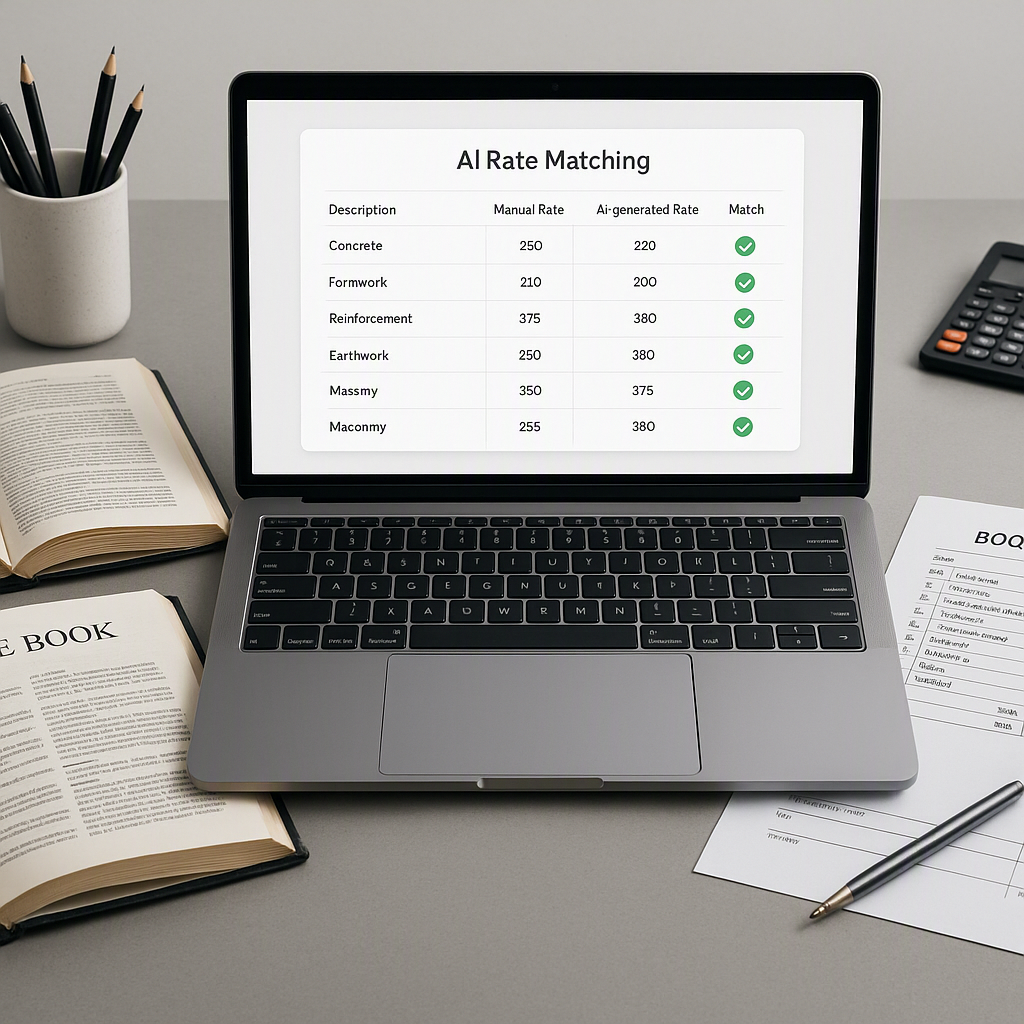
This is where AI steps in. Tools like EstimateNext automate rate lookup, pulling from massive databases of standard and custom rates. Here’s how it works:
- Semantic Search: Instead of manually flipping through pages, you type a description like “pre-stressed concrete girder installation.” The AI scans its database and returns the most relevant options — instantly.
- Custom Catalogs: Got your own rate book? No problem. Upload it, and the AI integrates it into its search process.
- Historical Learning: The more you use it, the smarter it gets. Accept or reject suggestions, and the system adapts to your preferences.
Case Study: A $1B Rail Project
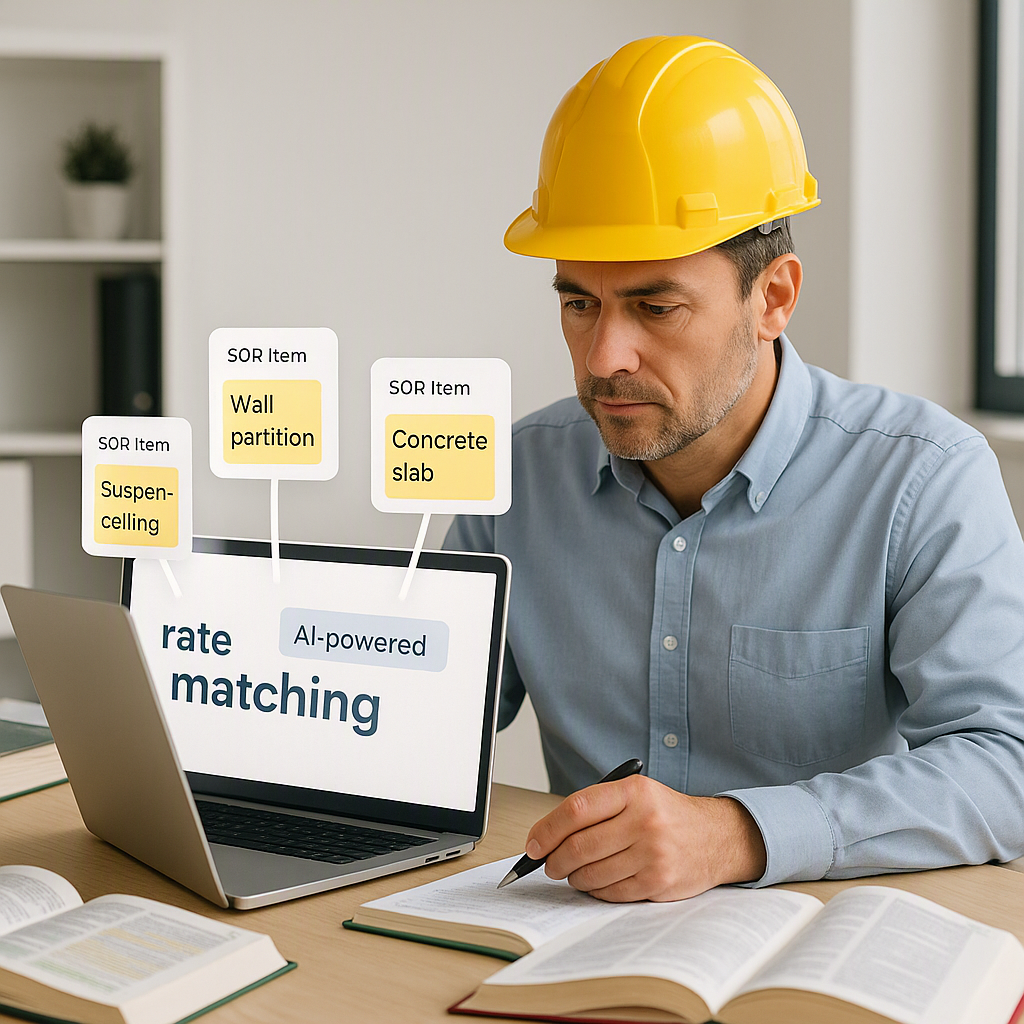
One of our users, a general contractor bidding on a $1 billion rail project, saved 56 hours on rate lookup alone. They needed rates for materials like concrete girders, track ballast, and structural steel — all DOT-compliant. Instead of spending days combing through rate books, they used AI to match 78,000+ Schedule of Rates (SOR) items in seconds.
The result? They submitted their bid ahead of schedule, with zero compromises on accuracy. That’s not just a time saver; it’s a competitive advantage. According to EstimateNext’s Blog, they estimated a direct cost saving of $7,000 on labor and an indirect saving of over $20,000 by reducing the risk of misapplied rates.
Why It Matters
You might be thinking, “Sure, AI is fast, but how accurate is it?” Fair question. Here’s what we’ve seen:
- Speed: Manual lookup takes hours; AI does it in seconds.
- Accuracy: AI reduces rate discrepancies by up to 99% thanks to feedback loops and confidence scoring.
- Scalability: Whether it’s a $1 million renovation or a $1 billion infrastructure project, AI handles it all.
And it’s not just about saving time. Faster rate matching means your team can focus on higher-value tasks, like optimizing bids or negotiating with subcontractors. Plus, you’re reducing the risk of costly errors.
Actionable Insights:
- Reallocate Senior Staff: By automating rate lookups, senior estimators can focus on strategic tasks like bid optimization, value engineering, or client negotiations.
- Improve Collaboration: AI tools make it easy to share cost data across teams, ensuring everyone is aligned on baseline rates.
- Enhance Bid Competitiveness: Accurate rates mean fewer contingencies, which can make your bids more attractive without sacrificing profit margins.
How to Get Started
If you’re ready to ditch manual rate lookup, here’s what we recommend:
- Start Small: Test AI-powered rate matching on a smaller project to see how it integrates into your workflow. For example, try it on a single trade like drywall or plumbing.
- Upload Custom Rates: Make sure the system reflects your actual costs by uploading your own catalogs. Most AI tools allow you to overlay your data on top of industry standards like RSMeans or National Construction Estimator.
- Train Your Team: AI is a tool, not a replacement. Pair junior estimators with AI to free up senior staff for strategic work. Most platforms offer training resources or onboarding support.
Comparison Table: Manual vs. AI Rate Matching
| Category | Manual Process | AI-Powered Process |
|---|---|---|
| Time Required | 12+ hours per project | Seconds to minutes |
| Error Rate | 5-10% (human error) | <1% with feedback loops |
| Scalability | Limited by team size | Unlimited |
| Cost Efficiency | High labor costs | Upfront cost, long-term ROI |
| Adaptability | Static rate books | Learns and evolves |
The Bottom Line
AI-powered rate matching isn’t just a nice-to-have; it’s a must-have for modern estimators. The time savings alone justify the investment, and the accuracy improvements are the icing on the cake. In my view, if you’re still doing this manually, you’re leaving money on the table.
Ready to take the leap? Get started with EstimateNext today →