78,000 Rate Matches in Seconds: Fixing the Biggest Estimation Bottleneck with AI
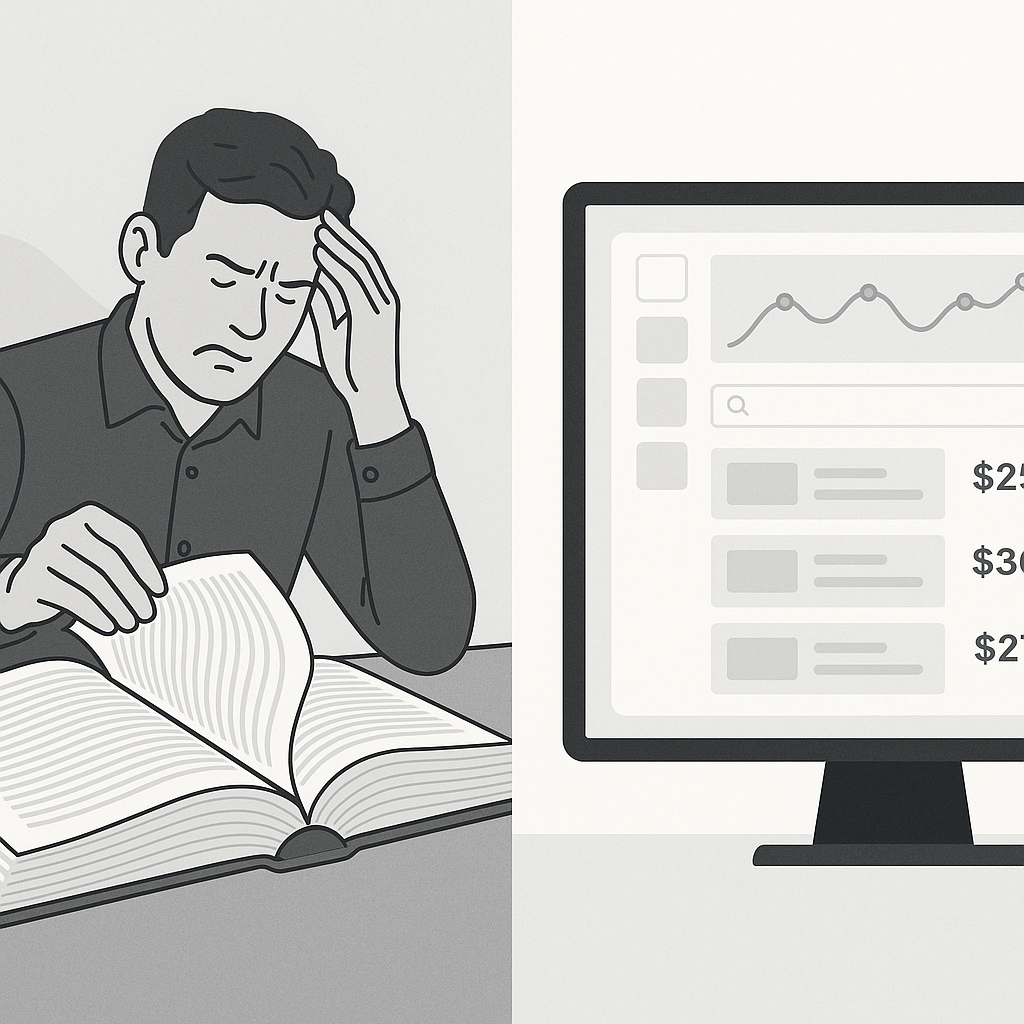
It’s 8:30 PM. Your estimator is still staring at a 2,000-page PDF, trying to find the exact labor rate for installing pre-stressed concrete girders. Sound familiar?
This is one of the most painful parts of preconstruction estimation: rate matching. Whether you’re a general contractor bidding on a $50M office build or a regional contractor chasing government tenders, this step slows everything down. It’s tedious, error-prone, and eats up hours you don’t have. Worse, one wrong rate can tank your entire bid.
But what if you could find the right rate in seconds?
Why Rate Matching Is a Nightmare
Here’s the problem. Rate books like RSMeans or CPWD DSR aren’t exactly user-friendly. They’re packed with thousands of Schedule of Rates (SOR) items, each buried inside dense tables and subcategories. Even with digital PDFs, you’re left CTRL+F-ing through vague keywords, hoping to land on what you need.
And let’s not forget the edge cases. What if the item you’re pricing has no exact match? Estimators end up Frankensteining a rate together—combining material, labor, and overheads from multiple sources. It’s messy and inconsistent.
Real-World Frustration
Take this example: A mid-sized general contractor bidding for a $1B rail bridge needs rates for everything from rail ties to structural steel. Each rate must comply with Department of Transportation (DOT) standards. Manually looking these up can take 12 hours per estimate.
Now multiply that by 5-8 GMP pursuits a year, and you’re bleeding time—time that could’ve been spent refining your bid strategy or ensuring compliance.
Beyond time, there’s the risk of errors. A single incorrect rate can result in underpricing or overpricing, jeopardizing both the bid and profitability.
AI-Powered Rate Matching: The Fix
This is exactly where AI-powered estimation tools like EstimateNext shine. Instead of flipping through PDFs or rate books, you upload your Bill of Quantities (BOQ). The AI scans your BOQ line items and matches them to the most relevant rates across 78,000+ SOR entries.
It’s not just about speed. The AI uses semantic search, which means it understands intent—not just exact keywords. For example, if you input “installing pre-stressed concrete girders,” it’ll find the closest match even if the phrasing is slightly different (e.g., “placing pre-stressed girders”). That’s something no PDF search can do.
Case Study: Time Savings in Action
One of our clients, a large general contractor, used EstimateNext to cut their rate-matching time from 6 hours to under 5 minutes for a $50M office project. That’s not just a time-saver—it’s a competitive edge in a world where bid deadlines are non-negotiable.
Actionable Steps to Get Started
- Upload Your BOQ: Start by uploading your BOQ directly into the estimation tool.
- Review Matches: Use the AI’s confidence scoring to identify high-probability matches.
- Override As Needed: If the AI doesn’t get something perfect, take advantage of manual overrides.
- Save Custom Rates: Train the AI to prioritize your custom rates for future projects.
What About Accuracy?
You might be thinking, “Sure, it’s fast. But can it be accurate?”
Fair question. AI isn’t perfect, but it’s getting closer. Tools like EstimateNext include confidence scoring, so you can see how certain the system is about each match. And if something looks off, you can override it manually. This hybrid approach—AI speed with human oversight—is what makes it so effective.
Learning Over Time
The AI gets smarter with use. Every time you correct a match or add a custom rate, it learns. By your third project, you’ll notice significant improvements in accuracy. It’s like having an estimator who never forgets.
The ROI of Faster Rate Matching
Let’s talk numbers. What’s the actual cost of spending 12 hours on rate matching?
For a typical GC, that’s:
- 12 hours x $130/hour = $1,560 per estimate.
- If you’re bidding on 5 projects a year, that’s $7,800 wasted on just this one task.
Switch to AI-powered rate matching, and you’re paying a $99/month subscription instead. That’s a 52X ROI.
For subcontractors, the math is even more brutal. Faster rate matching means faster quote turnarounds—potentially doubling the number of bid responses you can handle. More responses = more wins = more revenue.
Here’s a comparison table:
| Scenario | Manual Rate Matching | AI-Powered Rate Matching |
|---|---|---|
| Time per Estimate | 12 hours | Under 5 minutes |
| Cost per Estimate | $1,560 | ~$24 (monthly subscription) |
| Annual Cost (5 Estimates) | $7,800 | ~$300 |
| Error Risk | High | Low |
Edge Cases: What If My Rates Are Custom?
Another common concern: “What if my rates are custom or project-specific?”
No problem. AI tools like EstimateNext let you upload your own rate catalogs. This way, the system can prioritize your custom rates while still falling back on broader catalogs like RSMeans or CPWD DSR when needed.
Regional Application Example
A regional contractor in India bidding on CPWD tenders can upload their state-specific SORs. The AI will match BOQ items to the most relevant state or national rates, saving hours of manual lookup.
Why This Matters for Your Team
Time isn’t the only thing you’re saving. Faster rate matching also:
- Reduces Errors: Manual lookups are prone to human error. A single mistake can cost you the bid—or worse, your profit margin.
- Improves Collaboration: With AI-generated matches, your team spends less time debating rates and more time strategizing.
- Boosts Morale: Let’s face it—nobody became an estimator to spend hours flipping through PDFs. Automating the grunt work lets your team focus on higher-value tasks.
Final Thoughts
Rate matching doesn’t have to suck up your time—or your team’s sanity. AI-powered tools like EstimateNext make the process faster, smarter, and more accurate. And the ROI? It’s a no-brainer.
If you’re tired of wasting hours flipping through rate books, EstimateNext can help. Get started free →


