Why Manual Rate Matching Is Killing Your Estimation Team
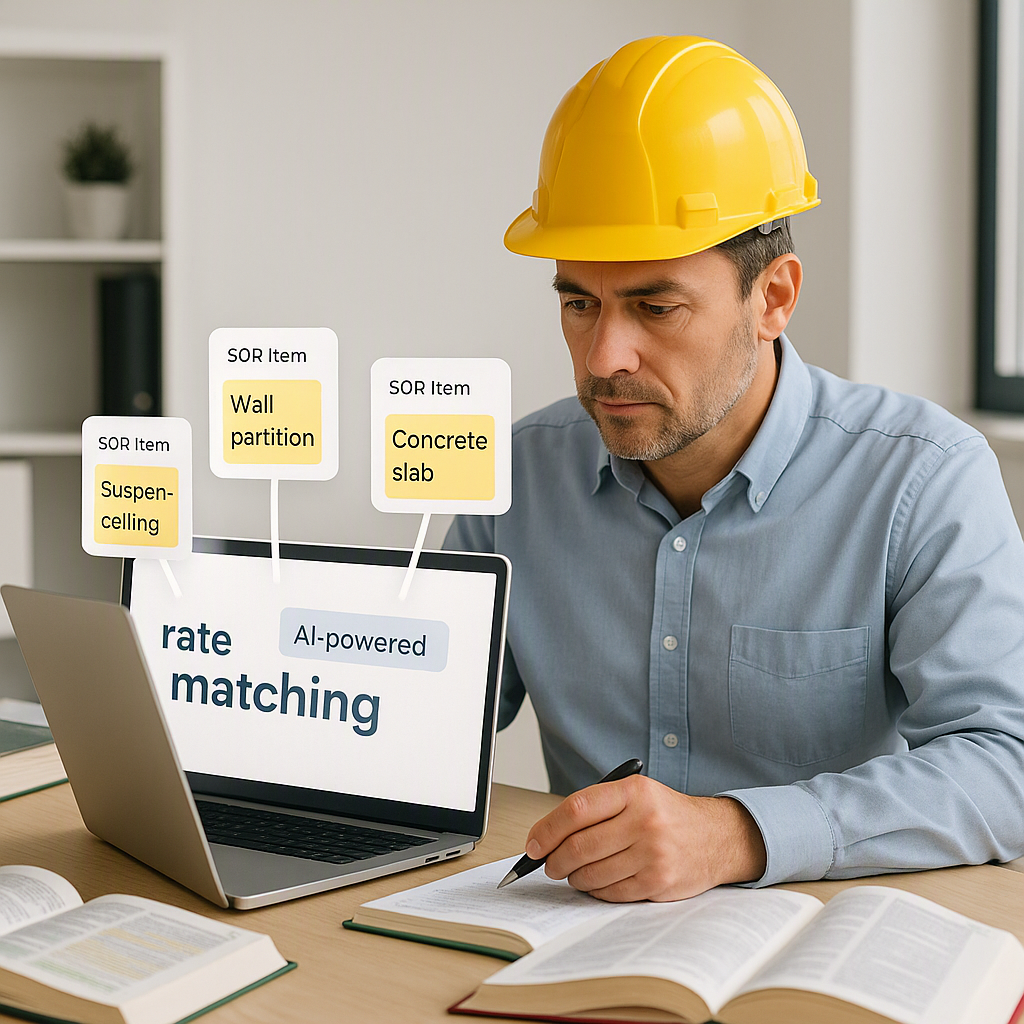
Let’s be honest. If you’ve ever flipped through a 2,000-page rate book like RSMeans or CPWD DSR, you know the drill. You’re hunting for the exact labor, material, and equipment rates for a specific line item. It’s slow, error-prone, and frankly, outdated.
A typical estimate for a mid-sized project can involve matching 300+ line items to rate books. If you spend just 2 minutes per line item (and that’s optimistic), you’re looking at 10+ hours of pure rate lookup. Multiply that across several bids a month, and you’re sinking hundreds of hours into a task that doesn’t require human expertise—it just requires speed and accuracy.
The Hidden Costs of Manual Rate Matching
The inefficiencies of manual rate matching extend beyond just time. Here’s a breakdown of what’s really at stake:
-
Human Error: Even the best estimators make mistakes, especially when fatigue sets in. A single error in labor or material rates can skew the entire project budget, leading to underbidding or costly overruns.
-
Lost Opportunities: Spending 10+ hours on rate matching means less time to analyze project risks, refine proposals, or strategize for competitive pricing. For subcontractors responding to dozens of bids per year, this can mean losing out on lucrative opportunities.
-
Team Burnout: Tedious tasks like flipping through rate books or manually cross-referencing spreadsheets contribute to employee frustration. Over time, this can lead to high turnover among skilled estimators, further increasing costs.
How AI Fixes This
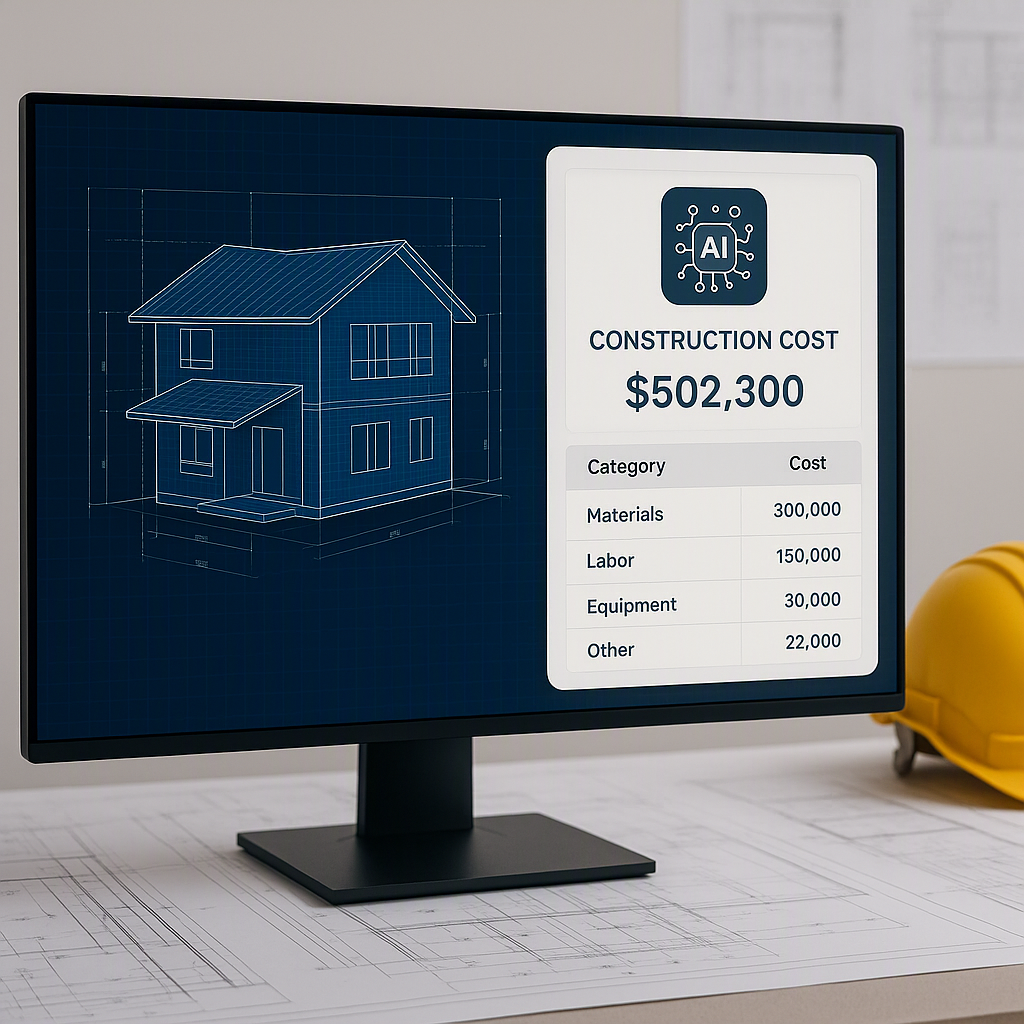
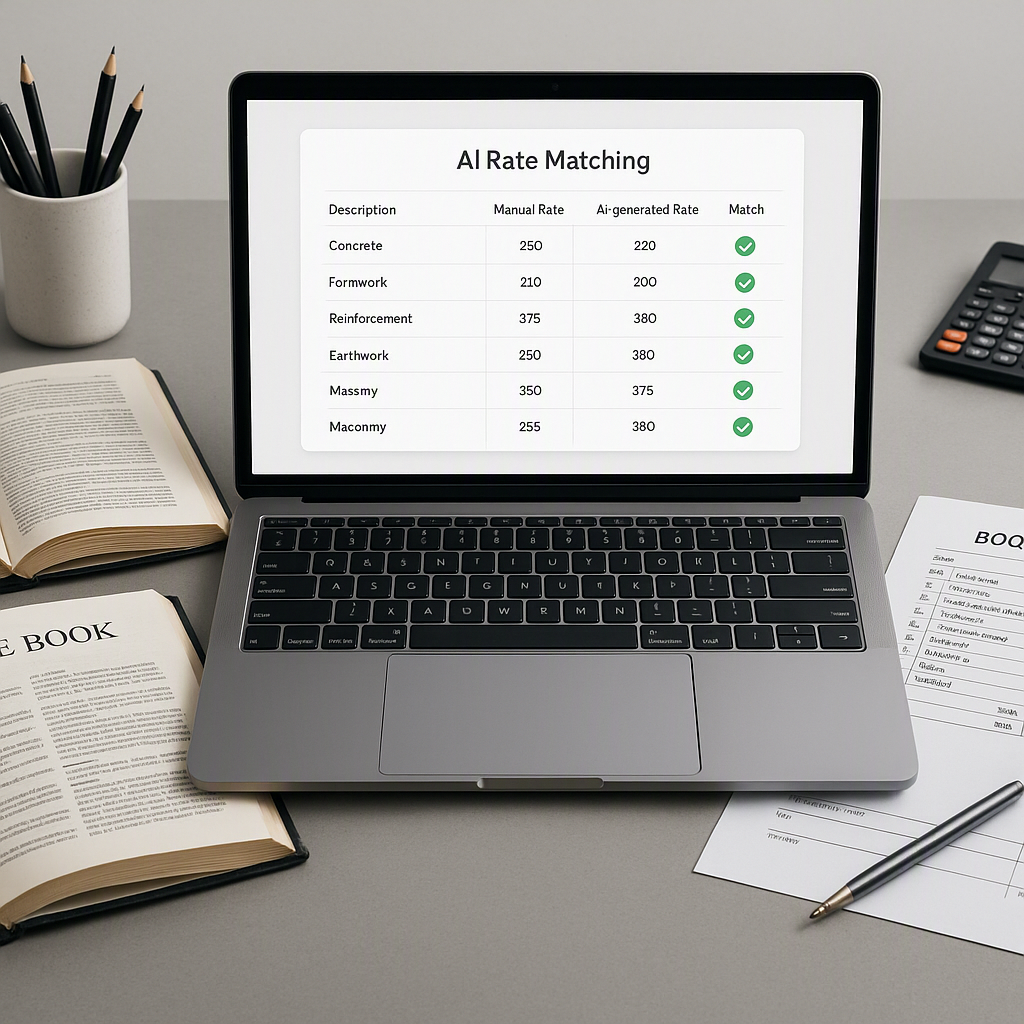
Here’s where AI-powered tools like EstimateNext come in. Instead of manually flipping pages or searching PDFs, you can upload your BOQ (Bill of Quantities), and the system matches each line item to a database of 78,000+ rates across 135 catalogs. Matches happen in seconds, not hours.
Real-World Example: A $1 Billion Rail Project
Imagine you’re pricing a $1 billion rail project and need rates for everything from concrete girders to structural steel. Instead of manually cross-referencing DOT-approved catalogs, AI finds the exact matches instantly—even for items with regional variations. This doesn’t just save time—it eliminates human error. One estimator reported reducing their rate-matching time by 95% on a similar project, enabling them to focus on value engineering instead of data entry.
Actionable Steps for Teams
- Start Small: Use AI tools for a single project to compare efficiency and accuracy against your current manual process.
- Customize Your Catalogs: Many tools allow you to upload your proprietary rate books, ensuring that AI recommendations align with your specific needs.
- Incorporate Feedback Loops: Take advantage of AI’s machine learning capabilities by correcting mismatches and allowing the system to "learn" over time.
The ROI Math
Let’s break it down. The average GC director oversees 5-8 GMP pursuits per year. If rate lookup takes 10+ hours per bid, that’s 50-80 hours wasted annually. With AI, it’s down to a few seconds per line item, saving tens of thousands in labor costs.
ROI for General Contractors
- Time Saved: For a 300-line item estimate, reducing lookup time from 10 hours to 10 minutes saves 9.8 hours per bid.
- Labor Cost Reduction: At $130/hour for senior estimators, saving 9.8 hours translates to $1,274 per bid.
- Annual Savings: Across 8 bids, that’s over $10,000 saved annually—just on rate matching.
ROI for Subcontractors
If you’re a subcontractor responding to 30-60 bids annually, shaving 10 hours off each quote means doubling your capacity to respond to bid packages. This could lead to winning just one more project worth $200K+ annually. For small to mid-sized firms, that’s a game-changer.
Addressing Edge Cases
You might be thinking, “Sure, AI is fast, but what if my rates are highly customized?” Good question. Tools like EstimateNext allow you to upload custom catalogs or define project-specific rates. The AI integrates these seamlessly, so your estimates reflect real-world costs.
Case Study: A Regional Roadwork Contractor
A contractor specializing in roadwork projects faced challenges with regional variations in asphalt and aggregate costs. By uploading their custom rate sheets into EstimateNext, they achieved a 98% match accuracy and reduced their bid preparation time by 60%. The AI even flagged discrepancies in their original cost assumptions, helping them avoid underbidding.
How AI Learns Over Time
Even better, it learns. By the third project, most users report significant accuracy improvements, thanks to feedback loops built into the system. It’s not perfect out of the box, but it gets smarter every time you use it.
The Obvious Objection
“But AI can’t think like an estimator.” I hear this a lot. And it’s partially true—AI doesn’t replace your judgment. It doesn’t negotiate with subs or decide markup percentages. What it does is amplify your expertise. Instead of drowning in manual grunt work, you can focus on high-value tasks: refining bids, optimizing margins, or strategizing for the next pursuit.
The Augmentation Model
Think of AI as a teammate, not a replacement. It handles the repetitive, time-sensitive tasks, freeing up your brainpower for creative problem-solving and strategic decision-making. Firms that adopt this mindset often see faster adoption and better ROI.
Comparing Manual vs. AI Rate Matching
| Criteria | Manual Rate Matching | AI-Powered Rate Matching |
|---|---|---|
| Time per Line Item | 2-5 minutes | <1 second |
| Error Rate | 5-10% | <1% with feedback loops |
| Scalability | Low | High |
| Initial Setup Effort | None | Moderate (uploading catalogs) |
| Long-Term Cost Efficiency | Low | High |
Call to Action
Tired of wasting hours on manual rate matching? EstimateNext slashes that time to seconds, letting your team focus on what matters: winning bids. Get started free →