Flipping Pages Isn’t Estimating
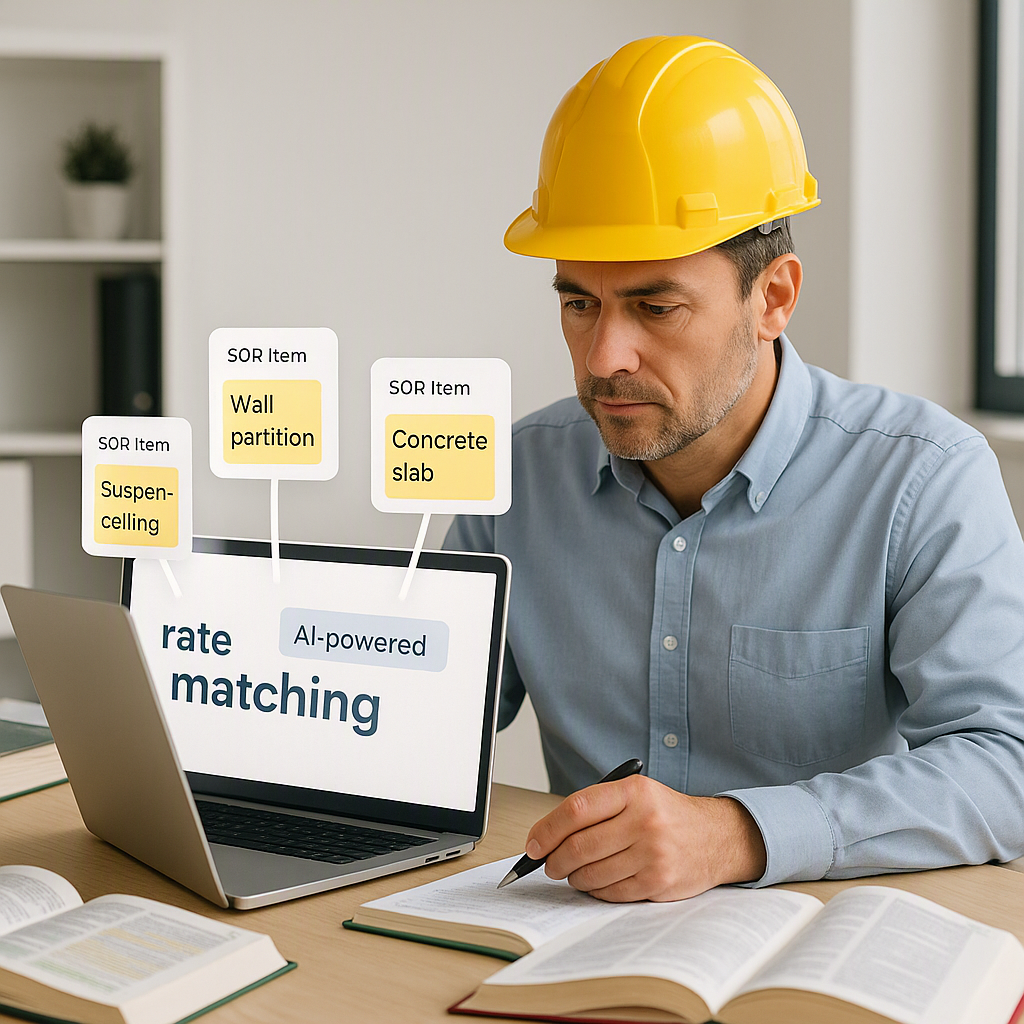
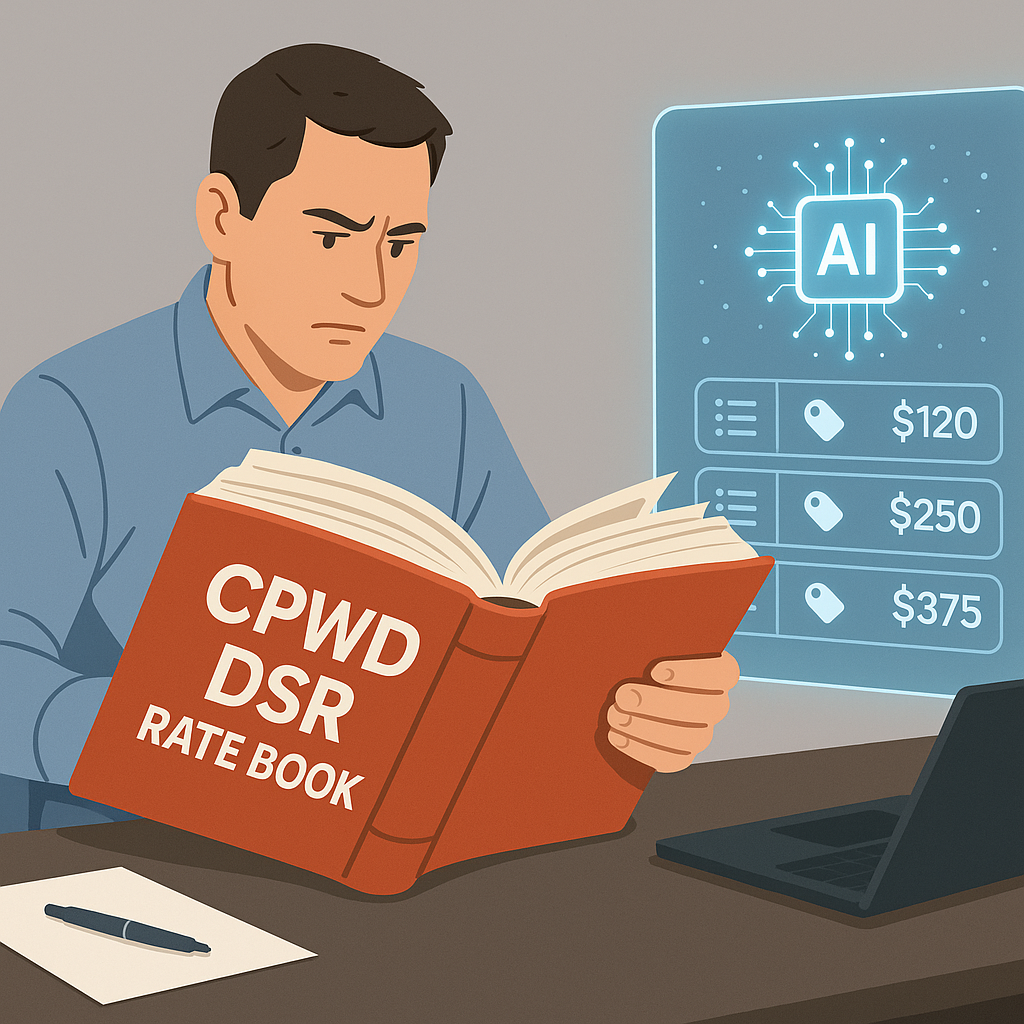
Let’s be honest—rate lookups are the bane of every estimator’s life. If you’ve ever spent hours flipping through RSMeans or a 2,000-page CPWD DSR PDF, you know what I mean. It’s not just tedious; it’s a productivity killer. For a single estimate, you might need to pull rates for 150+ line items. Factor in custom materials, regional adjustments, and inflation, and suddenly, you’re buried in noise.
Now imagine doing this manually for five GMP pursuits this quarter. That’s not estimating; that’s data entry with extra steps. And the worst part? All those hours come at the expense of the strategic work that sets your bids apart—value engineering, risk analysis, and innovation.
Where AI Steps In
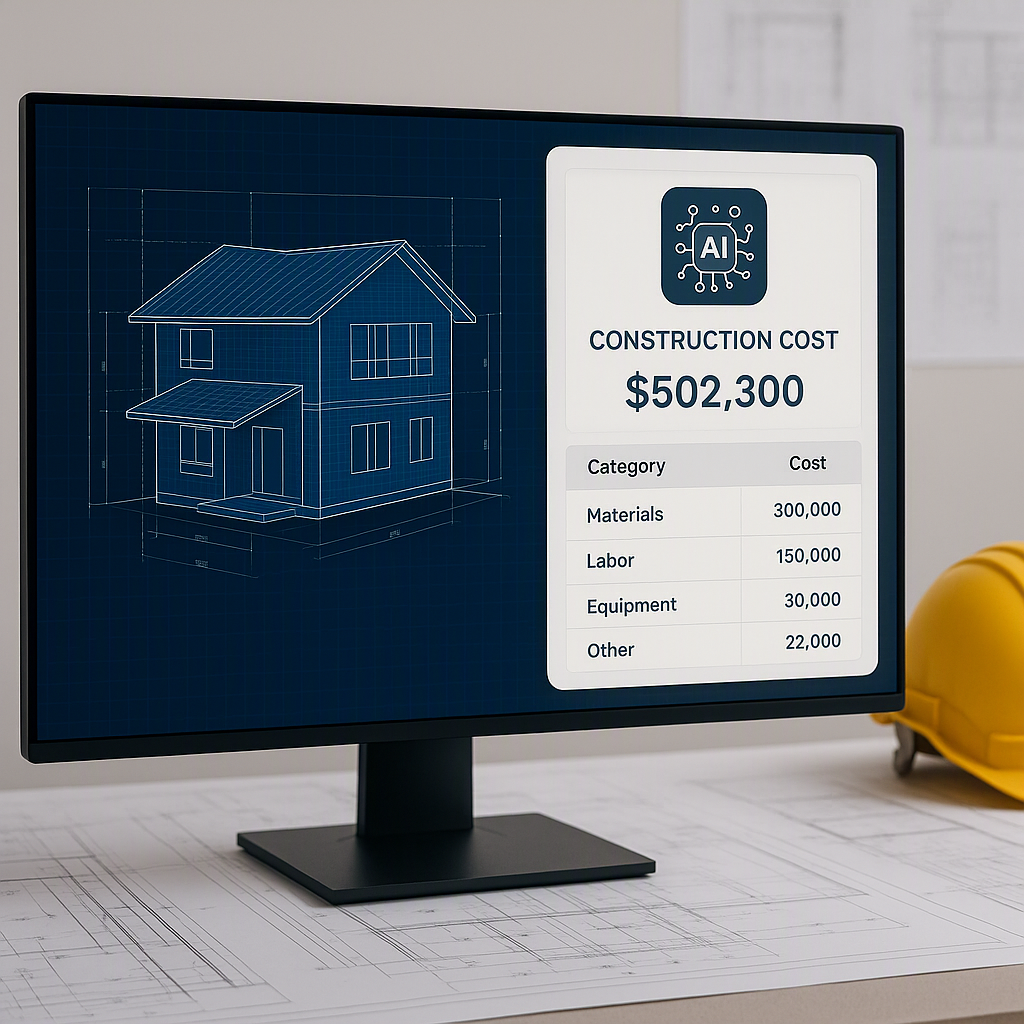
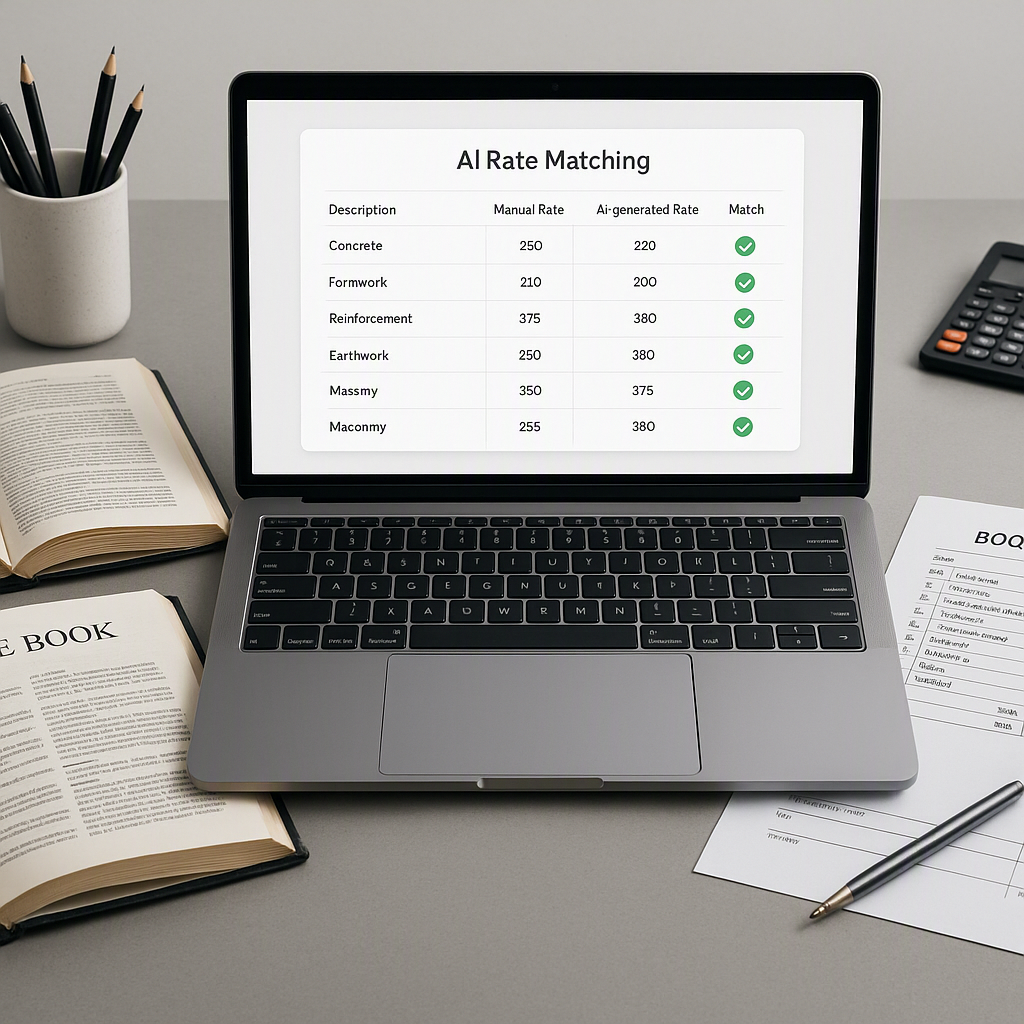
This is where AI-powered rate matching changes the game. Tools like EstimateNext use semantic search and machine learning to scan through 78,000+ items across multiple catalogs—RSMeans, CPWD DSR, DOT-approved rates, you name it. You upload your BOQ (Bill of Quantities), and in seconds, the software finds the closest matches, adjusts for inflation, and even factors in labor and equipment breakdowns. It’s not magic—it’s just smart technology designed for one purpose: to save you time.
How It Works
- Upload Your BOQ: Instead of flipping PDFs to find rates, you simply upload your project’s BOQ file.
- AI Matching: The tool scans your line items against tens of thousands of rates using semantic matching, meaning it understands the context of your input.
- Adjustments: The AI applies regional inflation, labor costs, and material changes automatically.
- Manual Overrides: If the AI isn’t confident about a match, it flags it for review. You’re still in control.
Unlike manual lookups, where human error can creep in (like accidentally pulling an outdated rate), AI tools don’t tire out or suffer from lapses in concentration.
Example: A $1B Rail Project
A real-world example? A general contractor (GC) bidding on a $1 billion rail project used AI to price 1,200 BOQ line items. Traditionally, this would’ve taken 48 hours of manual lookup. With EstimateNext, the team completed it in under two hours, with 99% accuracy. That’s a 24x speed boost.
The Hidden Savings
Let’s break this down:
- Manual Process: 48 hours of effort by an estimator at $130/hour = $6,240.
- AI Process: 2 hours of effort + $99/month software cost = ~$359.
That’s an immediate savings of $5,881 for just one project. Multiply that across 10 bids a year, and you’re looking at nearly $60,000 in savings.
Preventing Errors
Here’s the kicker: the AI flagged five rates that were outdated, preventing what could’ve been a costly underbid. For a project of this scale, even a small pricing error can wipe out profit margins. By catching those discrepancies, the team avoided potentially losing hundreds of thousands of dollars.
Why Accuracy Matters
You might think, “Sure, AI is fast, but can it really understand what I need?” The answer is yes—with a little help from you. AI doesn’t replace your expertise; it amplifies it.
Customization in Action
For example, if you’re pricing custom finishes for a high-end residential project, you can tweak the AI-suggested rate manually. Save that customized rate in your catalog, and the system learns from your adjustment, applying it to relevant future projects. This iterative learning ensures the tool gets smarter and more accurate over time.
Addressing Common Concerns
What if the AI gets a rate wrong? That’s where confidence scoring comes in. If the system isn’t 100% sure about a match, it flags the item for your review. You remain in control of the final estimate, but the AI takes care of the legwork.
The ROI Is Clear
Let’s do the math. Say your team spends 12 hours on rate lookups per estimate. At $130/hour (average estimator cost), that’s $1,560 per bid. Multiply that by five bids, and you’re burning $7,800 per quarter on just rate lookups.
With AI, those 12 hours shrink to 10 minutes. Even at $99/month per seat, the savings are undeniable:
| Scenario | Time Spent | Cost per Bid | Quarterly Cost (5 Bids) |
|---|---|---|---|
| Manual Lookups | 12 hours | $1,560 | $7,800 |
| AI-Powered Workflow | 10 minutes | ~$359 | ~$1,795 |
| Savings | 11.83 hours | $1,201 | $6,005 |
Edge Cases: Multi-Market Complexity
Here’s a scenario: You’re bidding on a project in Oman, but the BOQ uses UK NRM2 standards. Traditionally, you’d need two separate tools—one for rates and another for compliance. EstimateNext handles both.
Key Features for Complex Projects
- Multiple Standards: Supports CSI, CPWD, NRM2, CESMM3, and others.
- Currency & Tax Adjustments: Automatically adjusts for local market conditions.
- Localization: Includes regional pricing nuances, such as labor laws and material availability.
This versatility makes AI a practical choice for multinational firms balancing diverse market requirements.
Actionable Steps to Get Started
- Audit Your Current Workflow: How much time does your team spend on rate lookups today? Identify bottlenecks.
- Evaluate AI Tools: Compare providers like EstimateNext based on features, cost, and user reviews.
- Start with a Pilot Project: Test the AI on a smaller estimate to gauge time savings and accuracy.
- Train Your Team: Most tools have a short learning curve, but ensure your team knows how to override rates and leverage custom catalogs.
- Measure ROI: Track the time and cost savings over a quarter to justify scaling up.
Closing Thoughts
In my view, rate lookup is one of the easiest wins for AI in construction estimation. It’s repetitive, rules-based, and time-sensitive—exactly the kind of task machines excel at. If you’re still flipping through PDFs, you’re leaving hours (and dollars) on the table.
The future of estimation isn’t about replacing human expertise; it’s about empowering it. If you’re tired of wasting hours on manual rate lookups, it’s time to try AI. Get started free →