78,000 Rates in Seconds: Fixing Estimation Bottlenecks with AI
Manual rate lookups are holding your team back. Ask any estimator how long it takes to sift through rate books like RSMeans or CPWD DSR, and you’ll hear the same answer: too long. For larger bids, this process can take hours—possibly days. Worse, it introduces errors that ripple through every decision you make.
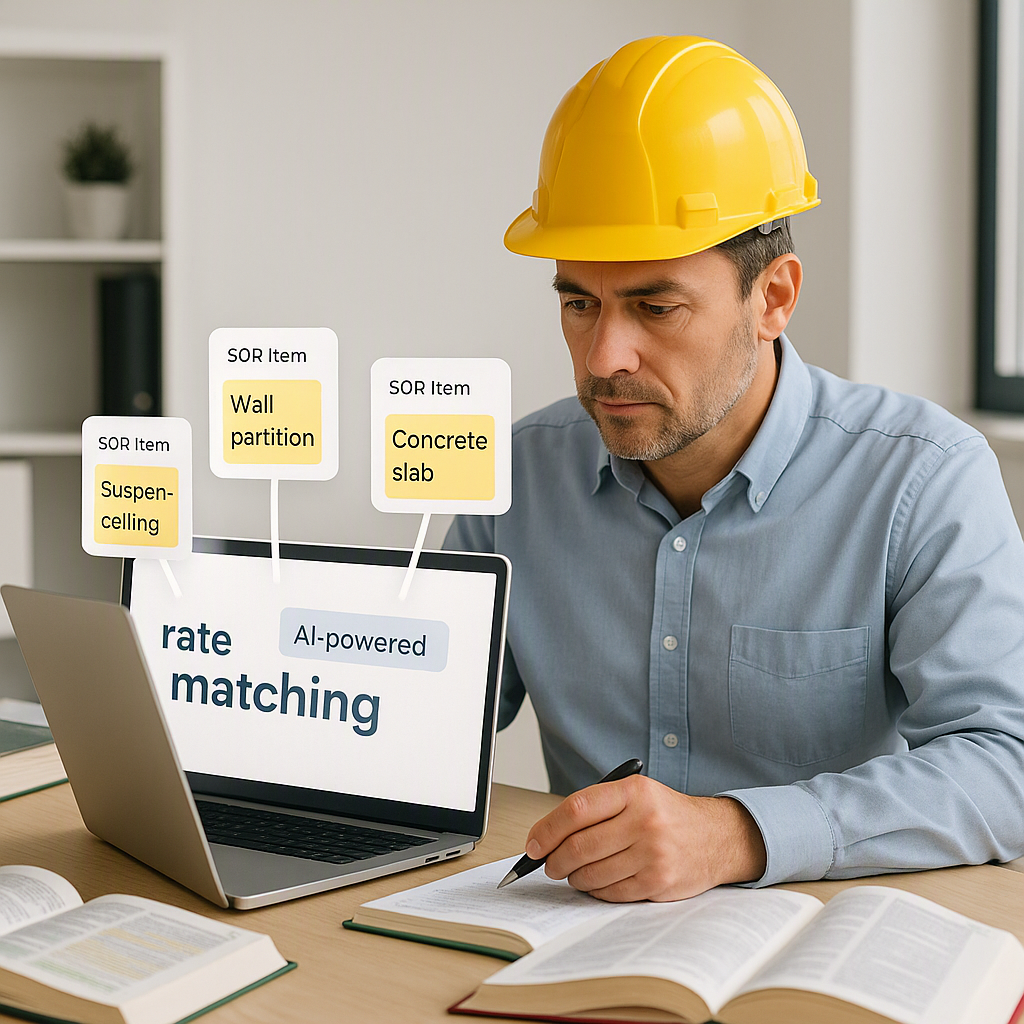
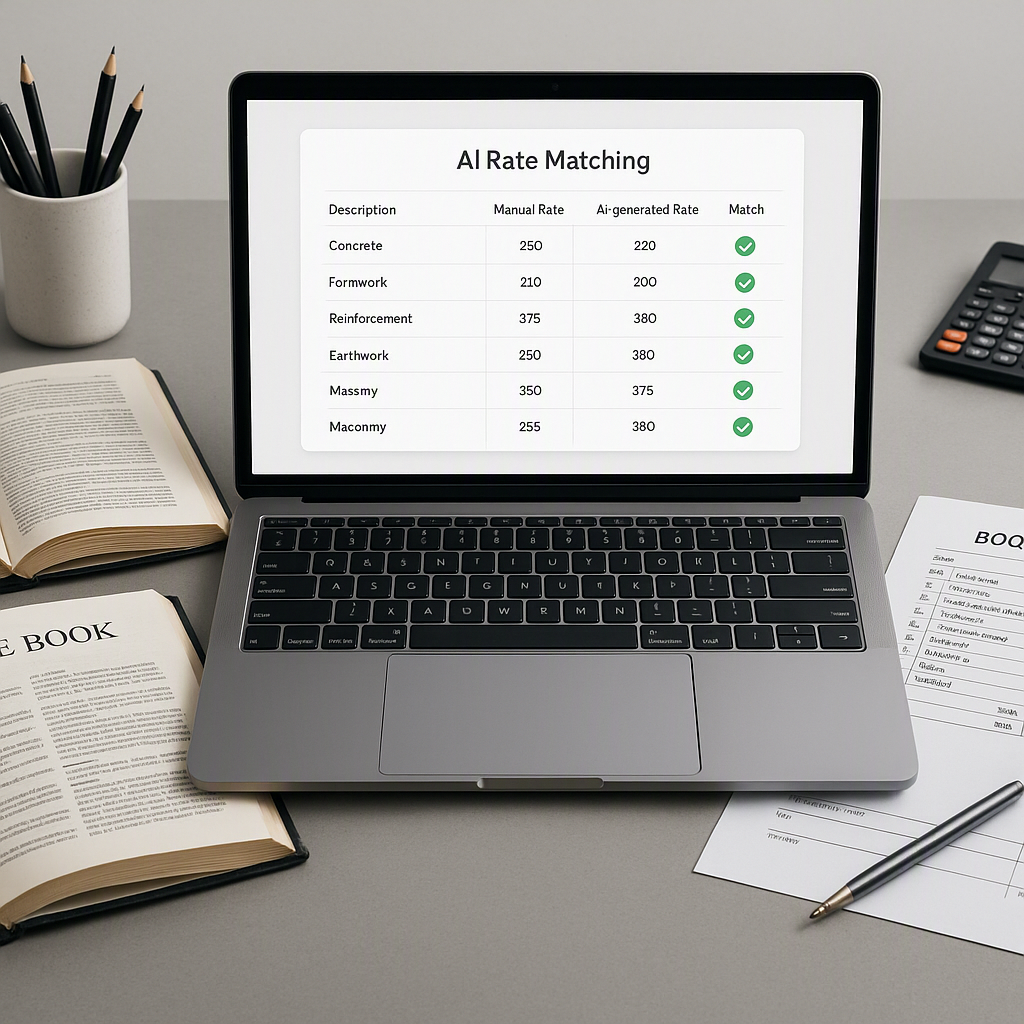
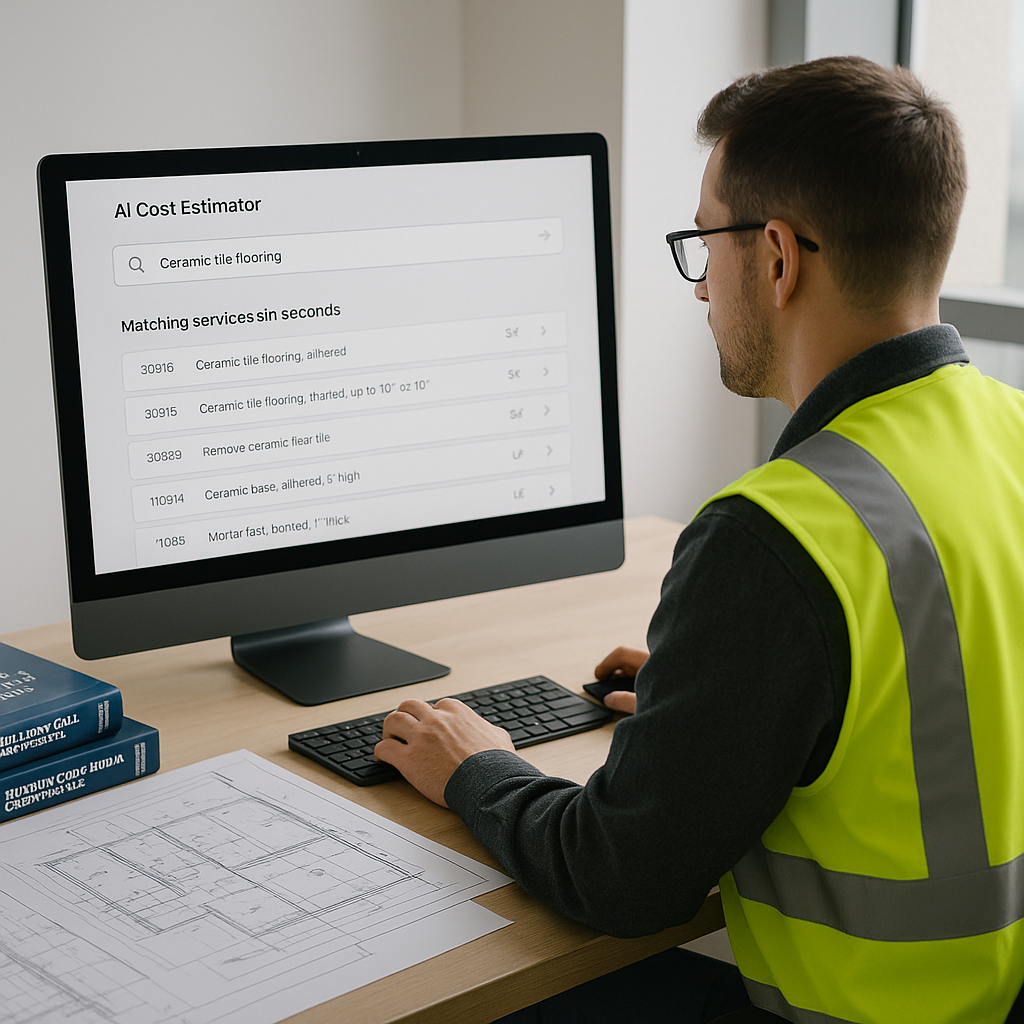
AI-powered estimation tools like EstimateNext are solving this bottleneck. By using semantic search across 78,000+ SOR items, these tools reduce rate lookup time from hours to seconds.
Why Manual Rate Lookups Are a Problem
Let’s be real: flipping through 2,000-page rate books isn’t efficient. Even experienced estimators miss details when they’re under pressure. Imagine you’re pricing a $200M hospital project. You need rates for everything: steel framing, concrete pours, HVAC equipment, and finish materials. With manual lookup, pulling rates for just one trade can take several hours.
The Hidden Costs of Manual Lookups
-
Time Consumption: Estimators waste valuable time flipping through pages or scrolling through outdated spreadsheets. This is time that could be spent refining bids, negotiating with subcontractors, or strategizing ways to win projects.
-
Human Error: Missing a single line item or misapplying regional cost adjustments can result in underestimating project budgets by millions. For example, a $50M commercial project underestimated by just 3% equates to a $1.5M error—a potential dealbreaker.
-
Lack of Scalability: As project complexity increases (e.g., multi-trade construction or infrastructure projects), manual processes simply don’t scale. Teams spend exponential effort on increasingly granular tasks.
Real Example: A $20M Residential Tower
Take a $20M residential tower project. The estimator spent 12 hours manually pulling rates for structural components and HVAC systems. After submitting the bid, they realized they had overlooked updated labor rates for an urban location. The result? A $350,000 overrun that wiped out the project’s planned profit margin.
Inflation and Regional Variations
What happens when you need to adjust for inflation or regional cost variations? You’re back in the spreadsheets, manually recalculating every line item. It’s not just time-consuming—it’s risky. Mistakes here can mean underestimated costs, blown margins, or losing the bid entirely.
How AI Tools Fix Rate Lookup Bottlenecks
Here’s the fix: AI-powered rate matching. Tools like EstimateNext use semantic search to match BOQ items with relevant rates instantly. Say you’re quoting labor costs for installing pre-stressed concrete girders. Instead of flipping through pages, you type the item description into the platform. The AI searches catalogs, applies inflation adjustments, and returns a rate breakdown in seconds.
How Semantic Search Works
Semantic search goes beyond simple keyword matching. It understands the intent behind your query and matches it to the most relevant rate data. For example:
- Manual Search: Searching for “steel reinforcement” might yield 50+ unrelated results.
- AI-Powered Search: The tool identifies that you’re pricing "#4 rebar," applies regional adjustments, and delivers the exact rate.
Real-World Example: A $1B Rail Project
A case study from EstimateNext highlights this. For a $1 billion rail bridge, the team saved 56 hours on rate lookup alone. The AI handled complex items like rail ties and structural steel, pulling rates directly from DOT-approved catalogs. This wasn’t just faster—it was more accurate, reducing cost discrepancies by up to 80%. Read the case study here.
Actionable Steps for Teams
- Start Small: Use AI tools on smaller bids to understand their workflows before scaling up.
- Upload Custom Data: Add your proprietary rate catalogs to maximize relevance.
- Train Your Team: Ensure key estimators are trained to use the platform effectively—most tools require less than two weeks to master.
The ROI of AI Rate Matching
Let’s talk numbers. Manual rate lookup for a mid-sized bid costs you at least 6 labor hours. At $130/hour for senior estimators, that’s $780 per bid. Now multiply that across 5 GMP pursuits per year. You’re wasting nearly $4,000 annually on just this one task. And that’s assuming everything goes smoothly.
Cost Breakdown Comparison
| Task | Manual Process Cost | AI-Powered Process Cost |
|---|---|---|
| Rate Lookup (Per Bid) | $780 | ~$10 |
| Annual Cost (5 Bids) | $4,000 | ~$50 |
| Potential Errors/Overruns | $$$$ (Unpredictable) | Minimal |
EstimateNext cuts this cost to almost zero. A GC director using the platform can save $5,200 per pursuit—52X ROI on the $99/month subscription cost. See pricing details.
Common Misconceptions About AI in Estimation
You might be skeptical. Here are the objections we hear most often:
1. “AI Can’t Think Like an Estimator”
True, AI doesn’t replace human expertise. But it amplifies it. The estimator still makes judgment calls, negotiates with subs, and decides on markup. The AI handles grunt work like rate matching and what-if recalculations.
2. “What About Custom Rates?”
No problem. AI tools allow you to upload your own catalogs or define project-specific rates. These become part of the system’s database, so future estimates automatically include them.
3. “Is It Hard to Learn?”
Not really. Most platforms, including EstimateNext, are designed for ease of use. Training typically takes under two weeks. In the words of one GC director, “It’s like hiring a full-time estimator without the overhead.”
Call to Action
If your team wastes hours on rate lookups, EstimateNext can help. Upload your BOQ and get a priced bid package in minutes. Get started free →