The Hidden Cost of Rate Lookups
If you've ever priced a bid manually, you know the pain. Flipping through a 2,000-page CPWD DSR or RSMeans rate book takes hours. Worse, you’re double-checking to make sure the labor rates, material costs, and equipment charges even apply to your project. Then there’s the inevitable, "Wait, where’s the rate for X?" moment.
Here’s the kicker: On average, rate lookups eat up 12 hours per estimate. That’s 12 hours of your team’s time—not spent on higher-value tasks like scope reviews or subcontractor negotiations. For estimators working on tight deadlines, this isn’t just frustrating. It’s expensive.
How Does AI Change This?
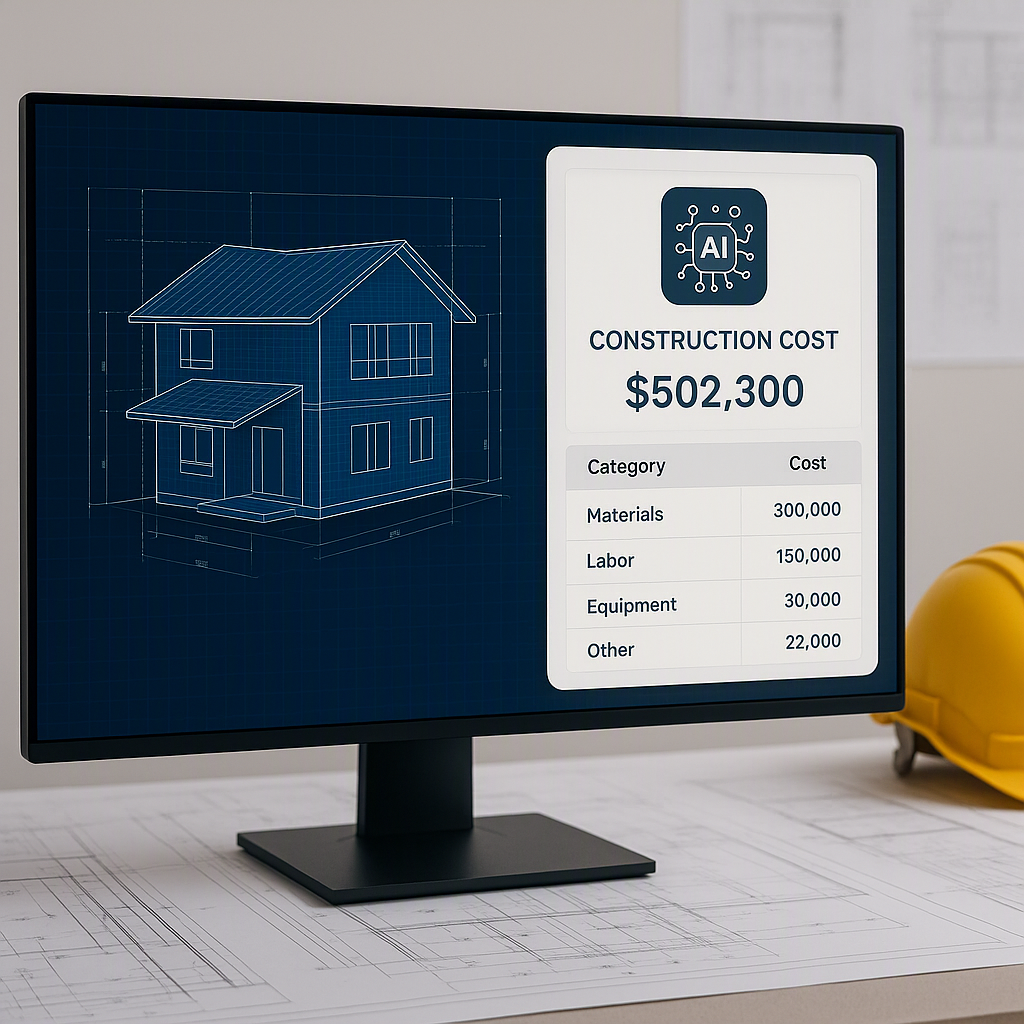
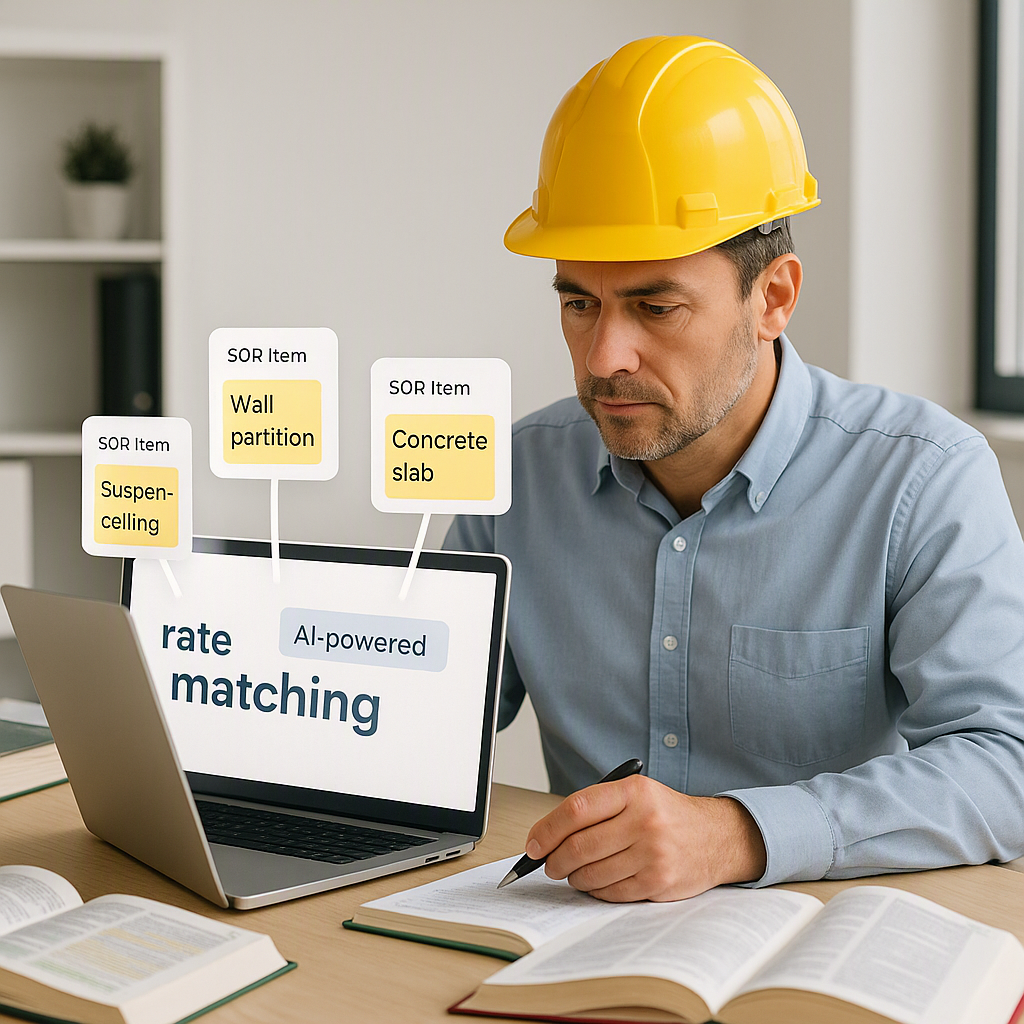
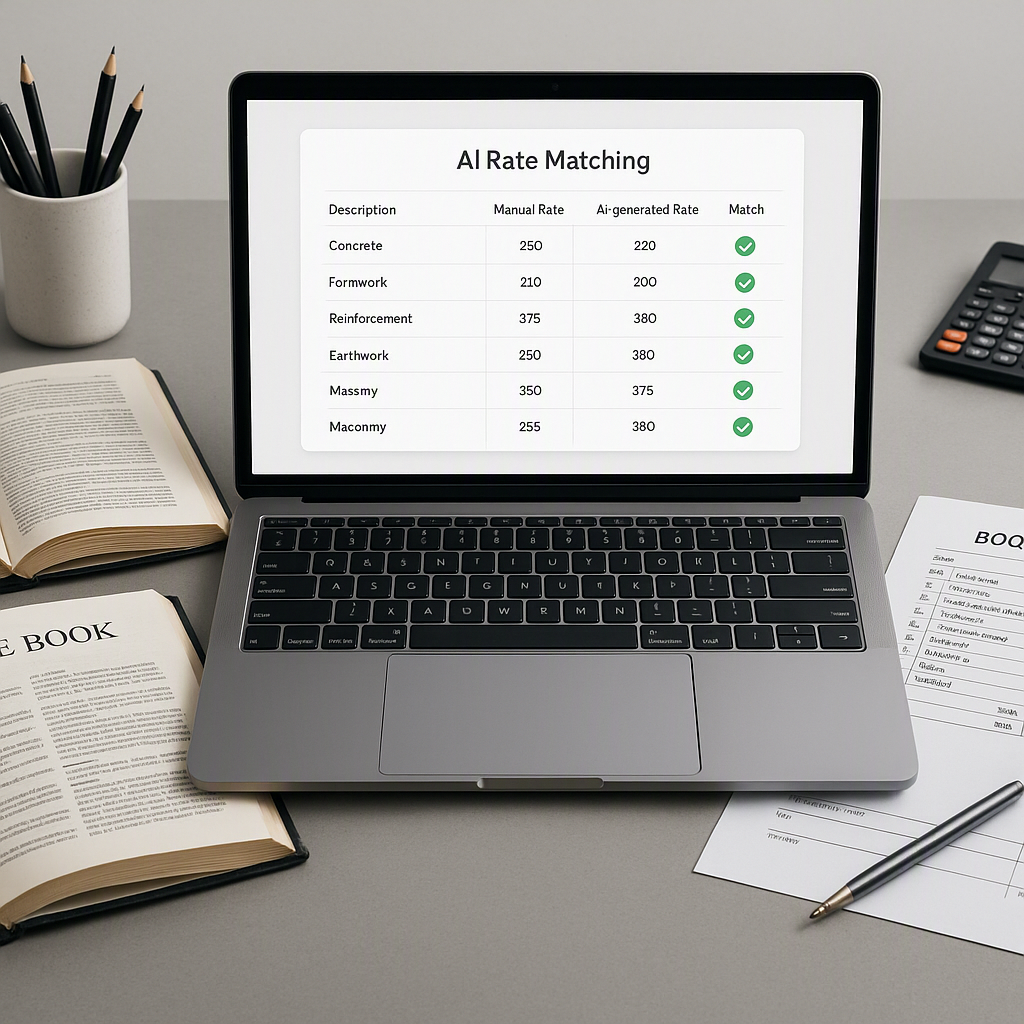
AI-powered tools like EstimateNext solve this by doing the grunt work for you. Instead of manually searching, you upload your BOQ (Bill of Quantities), and the system matches each line item with rates from a pre-loaded catalog. EstimateNext, for example, taps into a database of 78,000+ SOR (Schedule of Rates) items across 135+ catalogs. Whether you’re pricing a renovation in Florida or a public works tender in India, it pulls the relevant rates in seconds.
Not generic placeholders—actual rates tailored to your catalog, location, and project type. Forget flipping pages. Forget CTRL+F-ing through PDFs. You type it in, and AI gets it done.
Example: The CPWD DSR Problem
For context, imagine a contractor working on a tender under India’s CPWD (Central Public Works Department) guidelines. The CPWD DSR includes thousands of line items across categories like civil works, electrical installations, and road repairs. Manually finding the rate for even a single line item could take 5 to 10 minutes if the contractor is lucky. Multiply that by hundreds of items in a BOQ, and you’re looking at days of effort.
With an AI tool like EstimateNext, you simply upload your BOQ, and the system references the exact section of the CPWD DSR for each line item. It’s not only faster—it’s auditable. You can trace every rate back to its source.
Real-World Impact: What 12 Hours Saved Looks Like
Let’s break this down. Say you’re a GC (General Contractor) preconstruction director managing five GMP (Guaranteed Maximum Price) bids this quarter. Each bid requires 12 hours of manual rate lookup. That’s 60 hours—basically a week and a half of one estimator’s time.
With AI-powered rate matching, those 60 hours drop to 5. What can you do with 55 hours back? Respond to more RFQs (Requests for Quotations). Fine-tune your bid strategy. Or just stop working weekends.
Case Study: Water Infrastructure Bid
A mid-sized general contractor we worked with used EstimateNext to automate rate matching for a $108M water infrastructure bid. Their team saved 14 hours on rate lookups alone. That’s nearly two days of work shaved off one task. Better yet, they reallocated those hours to refining their bid pricing, ultimately winning the contract by a margin of less than 2%—a margin they might not have achieved without the extra time.
Case Study: Small Commercial Projects
For smaller contractors, the impact is equally notable. A firm specializing in $1M–$5M commercial projects used AI to handle rate lookups for its bids. Over six months, they saved approximately 120 hours, equivalent to three weeks of full-time work. This allowed them to respond to 18% more RFQs compared to the previous year.
"But What About Custom Rates?"
Good question. Not every project sticks to standard SOR items. Maybe your client wants a specific type of flooring, or your subcontractor provides custom material pricing. AI tools handle this too. You can upload custom rate catalogs or define project-specific rates directly in the platform. With each use, the system gets smarter at identifying and matching your unique inputs.
Example: Custom Flooring Rates
Consider a high-end residential project requiring imported Italian marble. Standard rate books won’t account for this material, but AI tools allow you to input the supplier’s quote directly. The system factors it into your estimate alongside standard rates for labor and equipment, ensuring nothing is missed.
And it’s not just about speed. AI eliminates the human error that inevitably creeps into manual methods. No more missed line items or misapplied rates. You get consistent, auditable results every time.
The ROI Math You Can’t Ignore
Let’s talk dollars. For a GC director, saving 12 hours per estimate isn’t just about time—it’s about money. Here’s the math:
- Estimator hourly rate: $130
- Hours saved per estimate: 12
- Total savings: $1,560 per bid
Run five bids a quarter? That’s $7,800 saved. Over a year, you’re looking at $31,200 in savings just on rate lookups. And that’s before you factor in the additional bids you can pursue with the extra capacity AI frees up.
Expanded ROI Example: Multi-Market Contractors
For contractors operating across multiple regions, the savings multiply. One U.S.-based contractor handling projects in California, Texas, and Florida estimated annual savings of $74,000 after adopting AI for rate lookups. Why? They avoided hiring an additional junior estimator, thanks to the efficiency gains.
The Obvious Objection: "AI Won’t Understand My Market"
We get it. Construction isn’t cookie-cutter. A road project in Texas isn’t the same as a high-rise in Dubai. But that’s exactly why platforms like EstimateNext are built with market-specific catalogs. From CPWD DSR in India to AECOM Middle East rates, these tools are designed to handle multi-market complexity.
Example: Regional Adaptability
Suppose you’re bidding on a government-funded bridge in Texas. EstimateNext will reference TxDOT (Texas Department of Transportation) rates, ensuring compliance with local specifications. Switch to a private residential project in Arizona? It adapts to RSMeans or your custom catalog. The platform doesn’t just understand your market—it actively works within it.
And if the pre-loaded catalogs don’t cover your exact needs? You can add your own. AI adapts to your team’s workflow, not the other way around.
Why Manual Methods Won’t Cut It Anymore
The construction industry is changing fast. Margins are tighter, deadlines are shorter, and skilled labor is harder to find. Yet, many teams are still clinging to manual estimation methods developed decades ago.
Here’s the reality: You can’t outbid competitors if they’re using faster, smarter tools. And AI isn’t just "faster." It’s accurate, scalable, and learns from every estimate you run.
As one contractor put it, "AI didn’t replace my team—it amplified them."
Decision Framework: Should You Automate Rate Lookups?
| Question | If Yes, Consider AI | If No, Stick to Manual |
|---|---|---|
| Are you spending more than 10 hours per bid on rate lookups? | AI can save you significant time and money. | Manual methods may suffice for now. |
| Do you work in multiple regions or markets? | AI tools handle region-specific rates seamlessly. | Manual processes may struggle to adapt. |
| Are you losing bids due to tight deadlines? | Faster estimates could help you bid on more projects. | Deadlines may not be an issue. |
| Do you regularly handle custom rates? | AI platforms allow easy integration of custom catalogs. | Manual entry might still work. |