The Hidden Cost of Manual Rate Lookups
Let’s talk about one of the biggest bottlenecks in preconstruction: rate matching. If you’ve ever flipped through a 2,000-page RSMeans or CPWD DSR catalog trying to find the right labor rate, you know the struggle. It’s not just tedious—it’s a massive productivity drain. On average, estimators spend 12 hours per estimate just on rate lookup. Multiply that across a busy preconstruction team, and it’s clear why deadlines get missed.
But the issue goes deeper than just lost time. Manual lookups are prone to human error. A single wrong rate can skew your bid by thousands—or even millions—on large-scale projects. For example, one study by Dodge Data & Analytics found that errors in preconstruction cost estimates account for up to 25% of project delays and budget overruns. That’s not a risk your team can afford to take.
Hidden Costs Beyond Time
The financial implications of manual rate lookups aren’t always obvious. Let’s break it down:
- Labor Costs: If a senior estimator earning $50/hour spends 12 hours on rate lookups, that’s $600 per estimate. Multiply that by 100 estimates annually, and you’re looking at $60,000 in labor costs alone.
- Opportunity Costs: While your team is bogged down in manual work, they’re missing opportunities to refine bids, strategize with clients, or explore value engineering options.
- Risk of Errors: A miscalculated rate or mismatched item can lead to underbidding or overbidding. Underbidding eats into margins, while overbidding could lose you the job entirely.
The inefficiency is clear. So, what’s the solution?
How AI Fixes the Problem
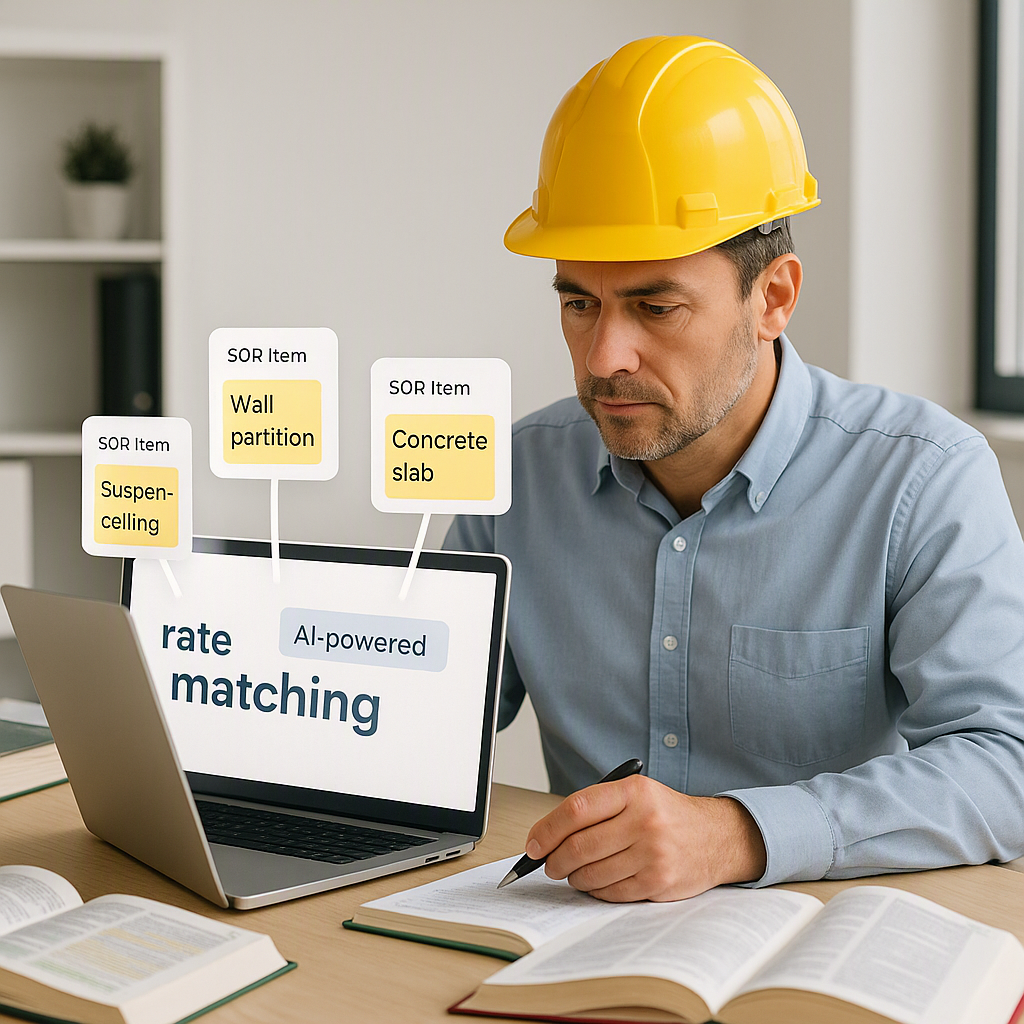
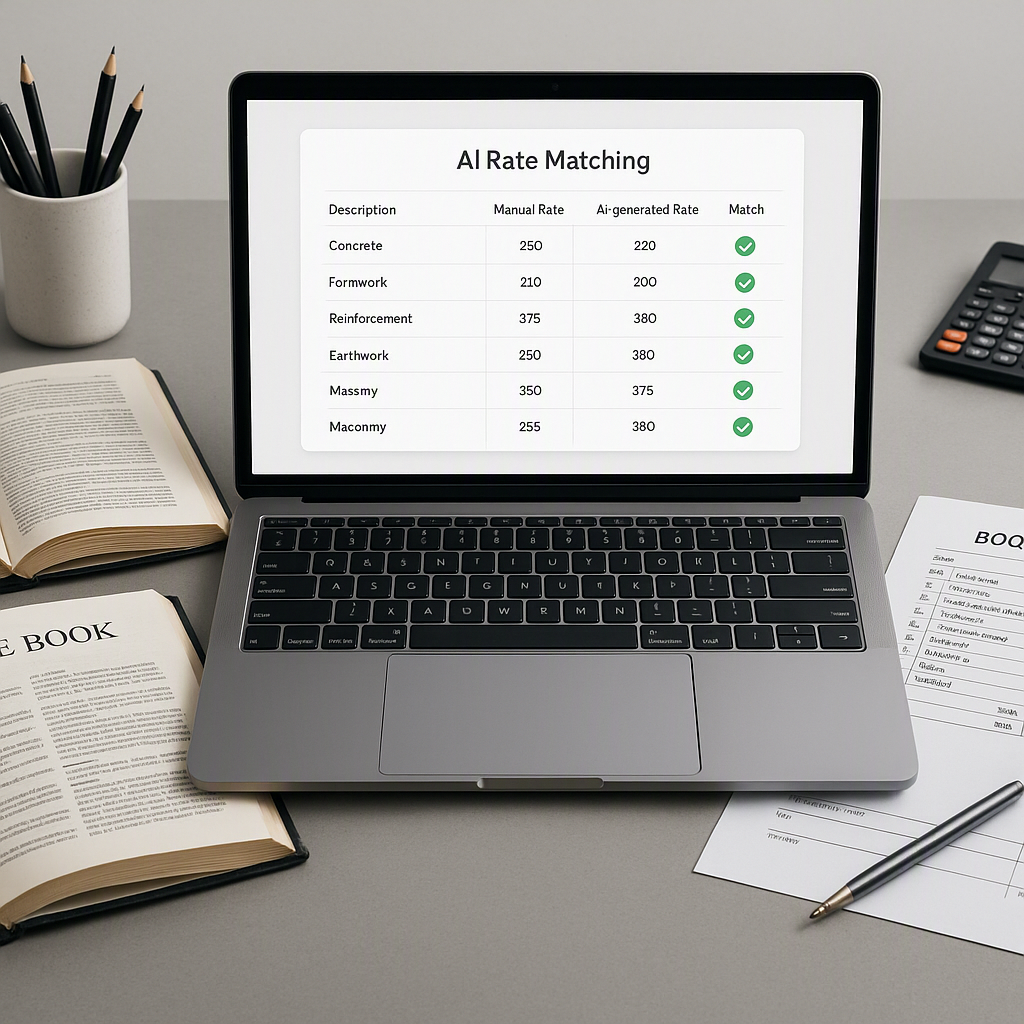
AI-powered tools like EstimateNext are transforming the way preconstruction teams handle rate lookups. Instead of flipping through PDFs or spreadsheets, these tools allow you to type in what you need—like “labor rate for pre-stressed concrete girders”—and get accurate matches in seconds. The AI searches across 78,000+ SOR (Schedule of Rates) items from catalogs like RSMeans, CPWD DSR, and even custom user databases.
Case Study: Large-Scale Efficiency
Let’s look at a real-world example: a major general contractor’s $1 billion rail bridge project. Rates for everything from rail ties to structural steel needed to be pulled from DOT-approved catalogs. Using traditional methods, this process would have taken days—potentially weeks—for a team of estimators. With AI, the team completed the same task in minutes, dramatically reducing costs and staying ahead of tight deadlines.
Another example comes from a mid-sized general contractor pricing a high-rise bid. Before switching to AI tools, their estimators spent 12 hours manually matching rates. After adopting EstimateNext, the same work took under an hour. Over 10 bids, they saved 120 hours—equivalent to two weeks of productivity.
Actionable Steps to Implement AI Rate Matching
- Evaluate Your Needs: Identify how much time your team spends on rate lookups and where errors most frequently occur.
- Choose the Right Tool: Look for an AI-powered platform that supports your region’s catalogs (e.g., RSMeans, CPWD DSR) and integrates with your existing workflows.
- Train Your Team: While AI is easy to use, initial training ensures that your team understands how to override rates, upload custom catalogs, and audit results.
- Start Small: Begin with a pilot project to measure time savings and ROI before scaling across your organization.
Real-World Example: Saving 12 Hours Per Estimate
Consider this scenario: A mid-sized general contractor in the Midwest was pricing bids for commercial office towers. Before adopting AI, their estimators spent hours flipping through catalogs and manually inputting rates. They switched to EstimateNext for rate matching, and the results were dramatic:
- Time Saved: 12 hours per estimate reduced to 1 hour.
- Productivity Gained: 120+ hours saved over 10 bids.
- Error Reduction: Fewer mismatches in labor and material rates, resulting in more accurate bids.
One estimator remarked, “It’s like having a junior estimator who works 10 times faster and never misses a detail.”
Addressing the Obvious Objection: Can AI Really Understand Nuances?
You might be thinking, “AI is fast, but does it really understand project-specific nuances?” It’s a valid concern. AI isn’t perfect, and it doesn’t replace human expertise. But the goal isn’t to eliminate estimators—it’s to amplify their efficiency.
Here’s how AI tools navigate nuances:
- Custom Item Adjustments: You can override rates, add custom items, and annotate adjustments directly in the tool.
- Feedback Loops: The more you use the tool, the smarter it gets. AI systems like EstimateNext learn from your inputs and improve over time.
Think of AI as your assistant. You’re still calling the shots, but the AI eliminates the grunt work so you can focus on strategic decisions.
What About Custom Rates?
Custom rates often present a challenge, especially for teams that use proprietary catalogs or adjust standard rates for local conditions. AI-powered tools address this by allowing users to:
- Upload Custom Catalogs: Simply import your proprietary rates into the system.
- Define Adjustments: Set inflation factors, regional adjustments, and overhead/profit margins.
- Automate Learning: The system learns your preferences, so future estimates align with your specific requirements.
Case Study: MEP Subcontractor in California
An MEP subcontractor in California uploaded their custom HVAC rates into EstimateNext. On their next bid, the AI prioritized matching rates from their custom catalog. This saved them hours of manual entry and ensured consistency across bids.
Why Speed Isn’t the Only Advantage
While saving time is a major benefit of AI-powered rate matching, it’s not the only one. Here are three additional advantages:
- Transparency: Each rate comes with an audit trail, showing its source, adjustments, and history. This builds trust internally and externally.
- Consistency: AI minimizes variability in how rates are selected, ensuring that estimates are consistent across projects.
- Improved Client Confidence: Detailed breakdowns backed by documented rates instill confidence in clients and stakeholders.
Example: Transparent Bids Win Projects
Imagine presenting a bid to a client with a detailed breakdown of labor, material, and equipment costs, all backed by documented rates. This level of transparency not only builds trust but can also be a deciding factor in winning competitive bids. A large general contractor in Texas reported a 15% increase in bid win rates after switching to AI-powered rate tools.
Decision Framework: Manual vs. AI Rate Matching
| Factor | Manual Rate Matching | AI-Powered Rate Matching |
|---|---|---|
| Time Required | 8-12 hours per estimate | Minutes |
| Error Risk | High | Low |
| Transparency | Limited | Full Audit Trail |
| Custom Catalog Support | Manual Entry Required | Automated |
| Initial Investment | None | Subscription Fee |
Conclusion
If manual rate matching is slowing your team down, it’s time to try AI-powered tools. EstimateNext simplifies rate lookup, eliminates errors, and saves hours per bid. With benefits like increased productivity, reduced errors, and improved transparency, the ROI is undeniable. Don’t let outdated methods hold your team back—Get started free →