Stop Wasting Hours on Rate Matching
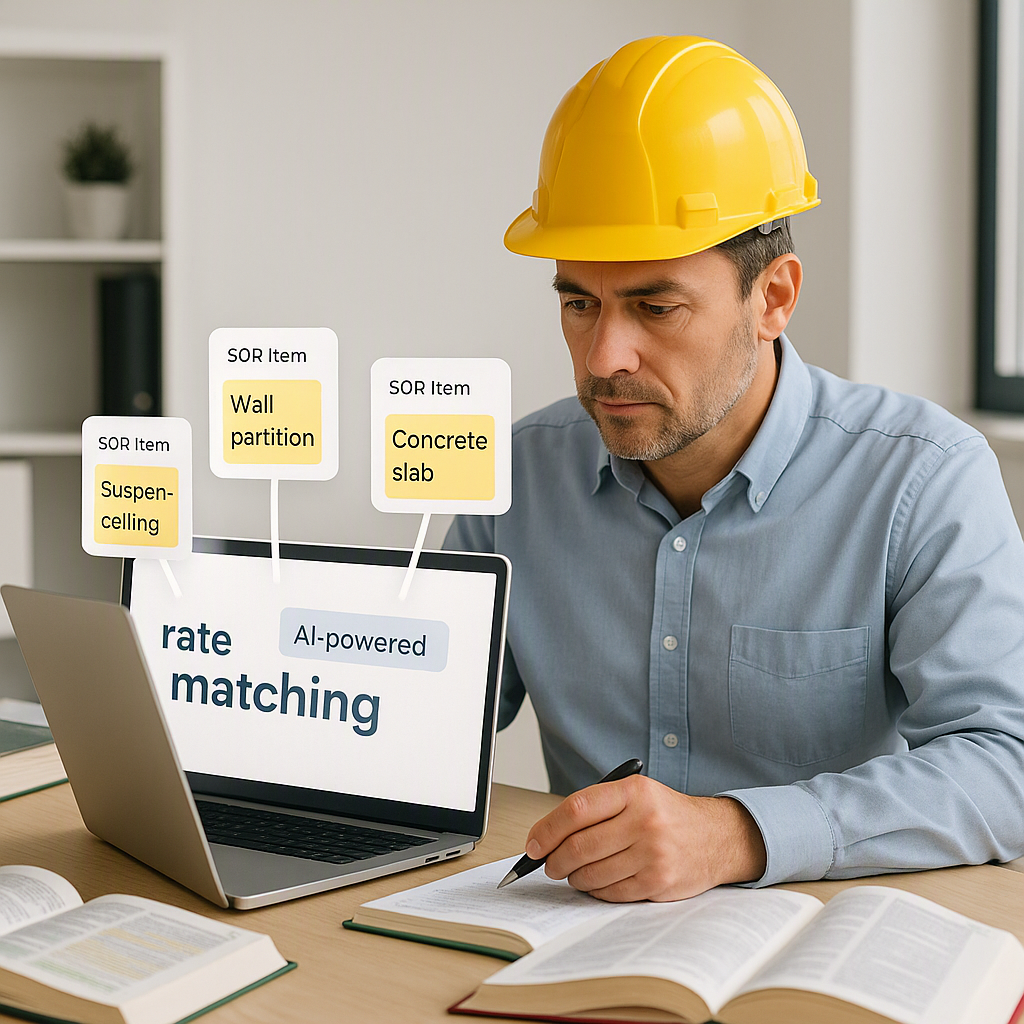
If you've ever spent a full day flipping through a 2,000-page rate book, you know the pain. Rate matching isn’t just tedious—it’s a productivity killer. You’re juggling outdated PDFs, Excel sheets, and maybe even your own custom catalogs. Worst of all, you’re crossing your fingers that you didn’t miss anything critical.
This manual process is where most estimates start falling apart. And it’s not just about time—it’s about accuracy. Miss a key rate, and you could underbid (and lose money) or overbid (and lose the job). Either way, you’re screwed.
That’s where AI-powered tools like EstimateNext come in. They don’t just speed things up; they fundamentally change how you approach rate matching.
The Problem with Traditional Rate Matching
Let’s break it down. Here’s what you’re dealing with when you do this the old-school way:
- Time Drain: Manually scanning catalogues takes hours. A typical estimator spends 12+ hours per estimate hunting for rates. In a high-pressure environment, those hours add up fast—especially when you’re juggling multiple bids.
- Error Risk: Copy-paste errors are real. So is the risk of overlooking the most cost-effective rate. A 2021 study by PwC found that human error accounts for nearly 90% of spreadsheet mistakes, which can lead to significant cost overruns.
- Updates Are a Nightmare: When a supplier updates their rates, you’re stuck manually reconciling changes across multiple spreadsheets. It’s a mess. A recent report from FMI Corp. found that 35% of construction professionals spend more than 14 hours per week just managing project data.
And let’s not even get started on what happens if you’re working on a multi-market bid. Different catalogs, currencies, and measurement standards? That’s a logistical migraine. I’ve witnessed teams crumble under the pressure of getting all this right at the eleventh hour.
Real-World Example: The Multi-Market Chaos
A civil contractor bidding on a $15 million infrastructure project that spanned three countries spent over 50 hours just reconciling rates across different catalogs for concrete, rebar, and earthwork. The team missed critical deadlines, and the bid was rejected. The reason? A currency exchange rate mismatch led to a $200,000 error in the final estimate.
How AI Fixes Rate Matching
Here’s the good news: AI doesn’t care how many catalogs or custom rates you’ve got. It just works.
EstimateNext, for example, uses a 4-step rate-matching engine that processes over 78,000 items from 135+ catalogs. And it doesn’t matter if you’re pulling rates from CPWD DSR in India, RSMeans in the U.S., or AECOM in the GCC.
Here’s how it works:
- Upload Your BOQ: Drag and drop your BOQ (Excel, CSV, or even PDF). AI parses the file, identifying sections, hierarchies, and even merged cells. No need for manual reformatting.
- Semantic Search: Type in a description, and AI searches across all available catalogs. Need a rate for “25MPa concrete”? It finds the closest match in seconds, even if the phrasing differs across catalogs.
- Custom Catalogs: If you’ve got special rates from a supplier, you can upload them. The AI will integrate these into its database and prioritize them for future searches.
- Audit Trail: Every rate match is logged. You can see why the AI picked a specific rate and manually adjust if needed. Transparency is key.
Actionable Steps to Get Started with AI Tools
- Digitize Your Catalogs: Ensure all your rate books, supplier lists, and custom pricing are in digital formats like Excel or PDF.
- Test Small Projects First: Before relying on AI for large bids, try a smaller project to see how well it matches rates.
- Provide Feedback: Most AI tools improve with user feedback. If a rate match isn’t accurate, flag it. The system learns and adjusts over time.
- Integrate with Existing Workflows: Look for tools that integrate with platforms like Procore, Bluebeam, or Primavera.
Real-World Impact
Let’s look at an example. A mid-sized general contractor working on a high-rise bid saved 12 hours on rate matching alone by using EstimateNext. That’s not just 12 hours of payroll saved—it’s 12 hours they could reinvest in refining their bid strategy or negotiating with subs.
But the benefits go deeper than time savings:
- Improved Accuracy: Semantic search reduces the risk of missing critical rates. A 2022 case study showed that contractors using AI tools reduced estimate errors by 30% on average.
- Multi-Market Capabilities: AI makes it easy to handle complexity. A global engineering firm used AI to reconcile rates across projects in three countries, saving $75,000 in overhead costs.
- Scalability: Need to process 10 bids in a week? AI doesn’t slow down or make mistakes under pressure.
- Continuous Improvement: The system learns over time, improving accuracy with feedback.
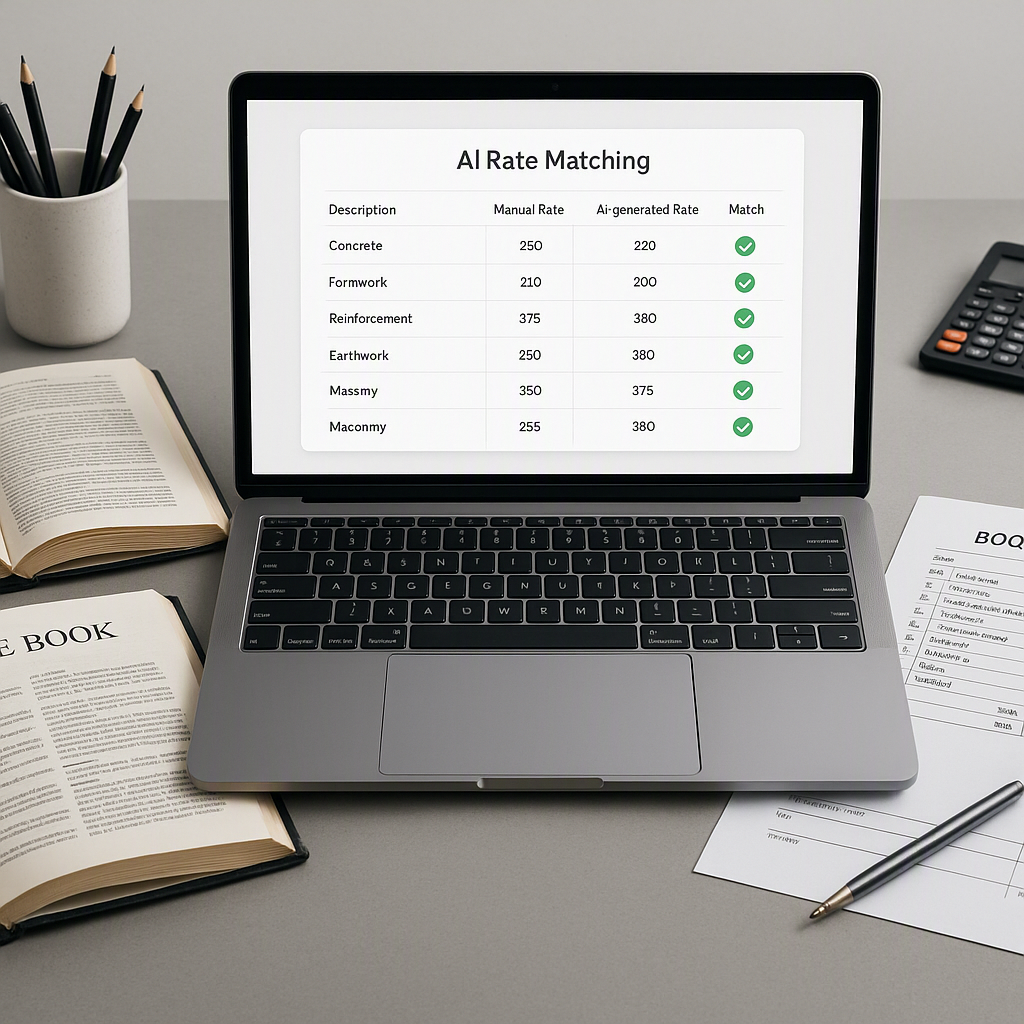
Comparison Table: Manual vs. AI Rate Matching
| Feature | Manual Process | AI-Powered Process |
|---|---|---|
| Time per Estimate | 12+ hours | 10-15 minutes |
| Error Risk | High (90% human error) | Low (<1% with feedback) |
| Multi-Market Projects | Difficult | Seamless |
| Handling Custom Rates | Manual Integration | Automated |
| Scalability | Limited | Unlimited |
The Obvious Objection: “AI Can’t Think Like an Estimator”
I hear this all the time. And you know what? It’s true. AI doesn’t replace your expertise. It amplifies it.
You’re still the one making judgment calls, negotiating with subs, and deciding on markup. The AI just handles the grunt work—like rate matching, takeoffs, and what-if recalculations. Think of it as the ultimate assistant, not a replacement.
Example: A Complex Renovation Project
On a recent hospital renovation project, an estimator used an AI tool to match over 1,200 line items across three separate catalogs. While the AI handled the bulk of the matching, the estimator still fine-tuned key line items to account for unique project constraints, like restricted work hours and specialized materials. The result? A bid that was 98% accurate and submitted two days ahead of the deadline.