78,000 Rates in Seconds: Why AI Estimation Tools Are Your Best Bet in 2024
Imagine this: you're pricing a $50M office fit-out. The BOQ (Bill of Quantities) is 1,847 line items long, and half the rates are missing. Your team spends six hours flipping through RSMeans, guessing margins, and hoping the math holds up. Sound familiar? It's the reality for most estimators.
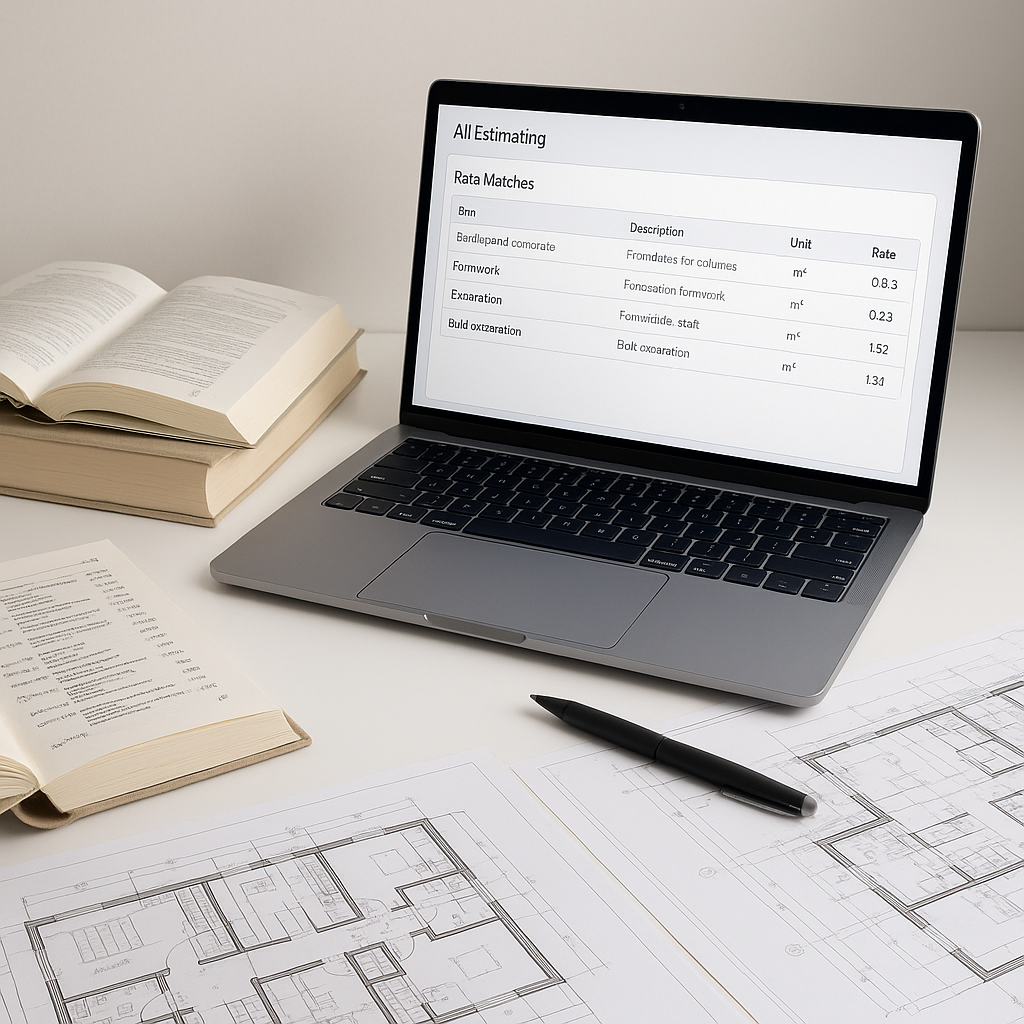
Now picture this instead: you upload the BOQ, hit "match rates," and get the full pricing breakdown—materials, labor, equipment—in under a minute. That's not science fiction. It's AI-powered rate matching, and it's saving contractors thousands of hours every year.
The Problem: Manual Rate Lookup Is a Time Sink
Rate lookup is painfully slow. Whether you're flipping through RSMeans, CPWD DSR, or your own Excel catalogs, you're looking at hours of manual effort per estimate. And let’s be honest—it’s also error-prone. Missing one rate can throw off an entire bid, jeopardizing your chances of winning projects or staying profitable.
A McKinsey report revealed that early adopters of AI in construction are seeing average cost savings of 10-20% per project. Why? Because tools like EstimateNext cut rate lookup time from hours to seconds, while also reducing human error.
Specific Example: Manual Labor Costs
Let’s break it down. If your team spends 12 hours on manual rate lookup per estimate, and estimators are paid $130/hour, that’s $1,560 in labor costs per bid. For contractors bidding on five projects a month, that adds up to $93,600 annually—just for rate matching. And that doesn’t even account for mistakes made under time pressure.
The Solution: AI-Powered Rate Matching
AI estimation tools are transforming how contractors approach rate matching. Here’s how they work:
1. Semantic Search Across 78,000+ Items
Instead of flipping through 2,000-page PDFs or endless Excel rows, you type in what you need—"steel girder installation" or "HVAC duct cleaning." The AI returns matches instantly, pulling from preloaded catalogs like RSMeans, CPWD DSR, and AECOM Middle East rates. It’s Google Search for estimators.
2. Custom Rate Integration
Many contractors rely on their own custom rate catalogs, especially for local labor and material costs. With AI tools, you can upload your proprietary rates, and the system integrates them seamlessly. Over time, the AI learns your preferences, tailoring future estimates to match your specific needs.
3. Real-Time Feedback Loop
AI-powered systems improve as you use them. For example, if you reject a suggested rate for being inaccurate or irrelevant, the system remembers that input and avoids similar errors in future estimates. This feedback loop ensures the tool becomes more accurate and personalized over time.
Case Study: Mid-Sized GC Saves 120 Hours
In one instance, a mid-sized general contractor saved 120 hours on a single high-rise bid using EstimateNext's rate matching tool. For context, that’s two weeks of labor costs avoided. Beyond the time savings, the team eliminated the risk of errors from manual data entry and rate lookup. Source
Use Case: A Large Rail Bridge Bid
Let’s get specific. A major general contractor recently priced a $1B rail bridge project with a BOQ that included rates for everything from rail ties to structural steel. These rates were pulled from DOT-approved catalogs. Without AI, manual lookup would’ve taken 12 hours. Using an AI-powered tool, they completed the rate matching in just seconds.
Benefits for the Contractor:
- Accurate Pricing: Rates were matched directly from approved catalogs, ensuring compliance and precision.
- Faster Bids: The team submitted their bid days earlier than competitors reliant on manual methods.
- Error-Free Estimates: With AI handling the rate matching, there were zero mistakes in the pricing breakdown.
This efficiency gave the contractor a competitive edge, showcasing the ROI of integrating AI into preconstruction workflows.
Objection: "But AI Can’t Think Like an Estimator"
You might be thinking, "Sure, AI is fast, but it doesn’t understand construction nuances." And you’re right—AI isn’t replacing your expertise. It’s amplifying it.
Why AI + Human Expertise Beats Manual Effort:
- AI Handles the Repetitive Tasks: Think rate matching, takeoffs, and catalog searches.
- You Make the Judgment Calls: Negotiating with subs, refining markups, and adjusting for project-specific factors still require human expertise.
Think of AI as a power tool. A drill doesn’t make you a carpenter, but it makes you a faster, more efficient one. Similarly, AI speeds up tedious tasks so you can focus on strategy and creativity.
ROI Math: What Are You Losing Without AI?
Still skeptical? Let’s crunch the numbers:
| Metric | Manual Process | AI Process | Savings |
|---|---|---|---|
| Time per estimate | 12 hours | <1 minute | 99.8% |
| Labor cost per estimate | $1,560 | Negligible | $1,560 per bid |
| Annual labor cost* | $93,600 | ~$0 | $93,600 |
| Error-related costs** | Tens of thousands | Minimal | Variable savings |
*Assumes 5 estimates per month at $130/hour labor rate.
**Error-related costs depend on project size and bid accuracy.
For a GC pricing five GMP pursuits per year, these savings add up fast. And that doesn’t even factor in the competitive advantage of submitting bids faster and more accurately than your competitors.
Call to Action
If you're tired of wasting hours on manual rate lookup, it’s time to make the switch. Tools like EstimateNext let you upload your BOQ, match rates across 78,000+ items, and get an accurate, priced estimate in minutes. Say goodbye to tedious manual processes and hello to faster, more profitable bids.


