The Real Bottleneck in Preconstruction Estimation
Let’s be honest: rate lookups are a massive time sink. Whether you’re flipping through a 2,000-page RSMeans PDF or hunting for CPWD DSR codes, it’s a slow, painful process. The average estimator spends 12 hours per estimate just matching rates. For larger projects, it can take days.
The worst part? It’s error-prone. Fatigue sets in, rates get misread, and suddenly your bid is off by 5% or more. That’s how you lose contracts—or worse, win contracts that bleed cash.
But here’s the good news: this is exactly the kind of grunt work AI excels at.
How AI Fixes Rate Matching
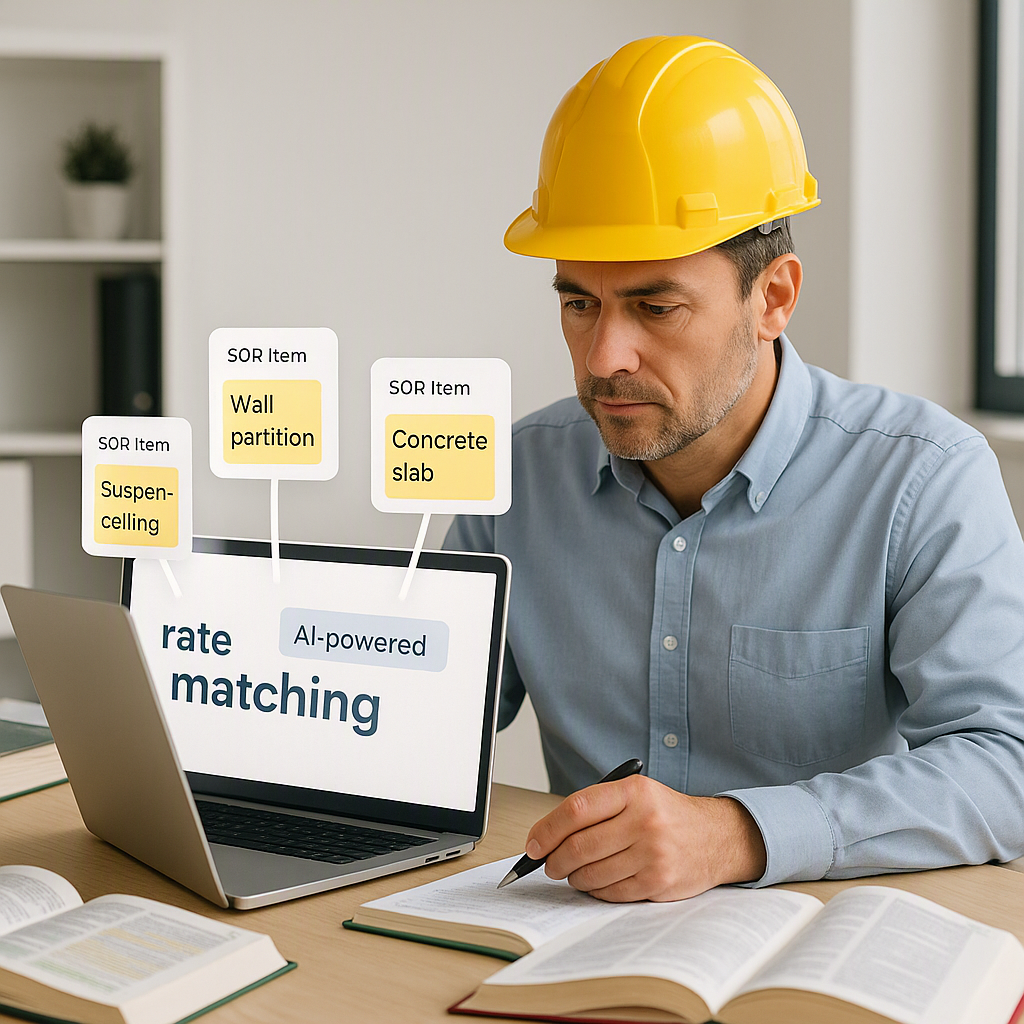
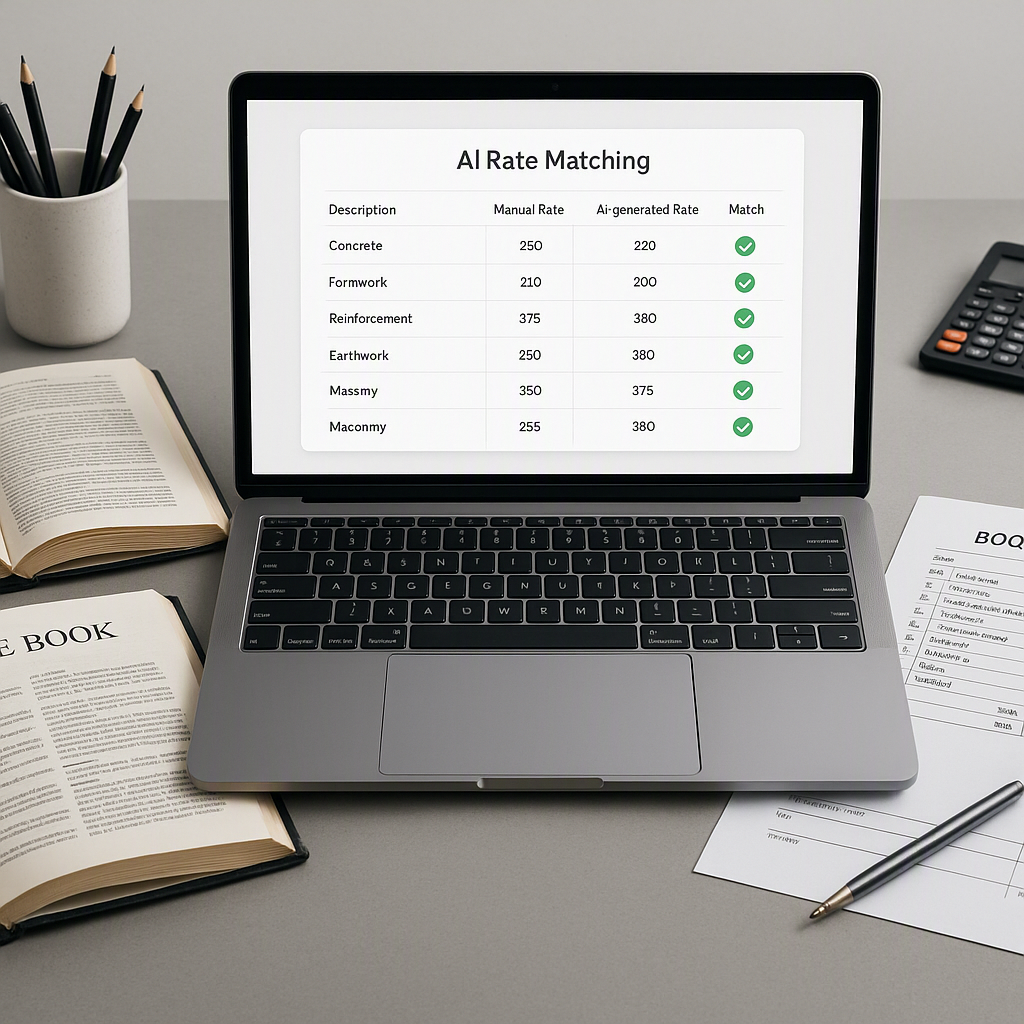
AI-powered tools like EstimateNext use semantic search to cut this process down to seconds. Need the labor rate for installing pre-stressed concrete girders? Just type it in. The system combs through 78,000+ SOR items, finds the closest match, and returns it instantly.
Here’s what makes it different:
- Custom Catalogs: Got project-specific materials or finishes? Upload your own rates, and the AI integrates them seamlessly.
- Learning Over Time: The system gets smarter with every project. By the third bid, users typically report significant accuracy improvements.
- Audit Trail: Every rate suggestion comes with a breakdown of material, labor, and equipment costs. You’ll see exactly how it was calculated.
This isn’t just faster—it’s more reliable. AI eliminates human error and provides a full audit trail for every rate. That makes it easier to catch and fix mistakes before they cost you money.
Actionable Steps to Implement AI in Estimation
- Start Small: Test AI tools on a single project with a manageable scope (e.g., 50-100 BOQ items). Assess the time savings and accuracy improvements.
- Upload Your Own Data: If your company relies on proprietary rate libraries, integrate those into the AI tool for a more tailored experience.
- Audit AI Recommendations: Initially, cross-check AI-suggested rates with your existing processes to build trust in the system.
- Iterate: Provide feedback to the AI tool as you go. Over time, it will adapt to your preferences and produce even more accurate results.
Real-World Example: 120 Hours Saved on a High-Rise Bid
Let’s break this down with a real-world success story. A mid-sized general contractor recently used EstimateNext on a 25-story high-rise project. The bid required matching rates for 600+ BOQ items, from concrete pours to HVAC ductwork. Normally, their team would spend two weeks on this process.
With AI, they finished in just 10 hours. That’s 120 hours saved.
Here’s how they used the extra time:
- Reviewed Subcontractor Quotes: They had time to scrutinize quotes for errors and negotiate better terms.
- Optimized Profitability: Ran multiple "what-if" scenarios to fine-tune margins and ensure a competitive bid.
- Improved Bid Presentation: Used the extra time to refine the bid package, ensuring it was professional and persuasive.
In their words: “It’s like hiring a full-time estimator without the overhead.”
Comparative Data
| Traditional Method | AI-Powered Method |
|---|---|
| 600 BOQ items: 2 weeks | 600 BOQ items: 10 hours |
| Higher error rate | Lower error rate |
| Fatigue-prone | Automated and consistent |
| Time-consuming manual work | Instant rate matching |
Why Speed Matters
Time is money—especially in construction estimation.
Opportunity Cost
The faster you finish one estimate, the sooner you can move to the next bid. For MEP subcontractors responding to 50+ bid packages a year, shaving 10-12 hours off each estimate means saving 500+ hours annually. That’s time you can reinvest into:
- Winning More Work: Submit more bids and increase your chances of landing contracts.
- Higher-Value Tasks: Focus on building relationships with clients and refining your overall processes.
Competitive Advantage for General Contractors
For general contractors, speed enhances your positioning. Submitting bids early signals professionalism and reliability. It also gives you more time to:
- Negotiate with subcontractors.
- Refine your bid to maximize profitability.
- Respond to client questions and concerns.
In competitive markets, being first to submit isn't just an advantage—it can be the difference between securing a project or losing it.
Common Objection: “But AI Can’t Think Like an Estimator”
This is a valid concern, so let’s address it head-on: AI doesn’t replace your expertise—it amplifies it.
Why Human Expertise Still Matters
AI tools handle repetitive, tedious tasks, but you’re still the one making judgment calls. For example:
- Deciding on markup percentages.
- Evaluating subcontractor bids.
- Adjusting rates to account for local market conditions.
Think of AI as a junior estimator that never gets tired, never makes math errors, and gets better with every project. It’s a tool, not a replacement.
Hybrid Workflows in Practice
Savvy estimators use AI to handle the grunt work while they focus on strategy. Here’s an example workflow:
- AI Matches Rates: The AI tool suggests rates for all BOQ items.
- Human Oversight: The estimator reviews and adjusts key rates based on market insights.
- Final Optimization: The estimator runs profitability scenarios and submits the final bid.
Key Takeaways
- Manual rate matching wastes time and introduces errors. AI-powered tools like EstimateNext fix this bottleneck.
- Semantic search across 78,000+ SOR items delivers matches in seconds, not hours.
- Custom catalogs and self-learning features make the system smarter with every project.
- Real-world users report 120+ hours saved per bid, freeing up time for higher-value tasks.
- AI amplifies your expertise, allowing you to focus on strategy while it handles repetitive tasks.