Estimation Has a Speed Problem, and We All Know It
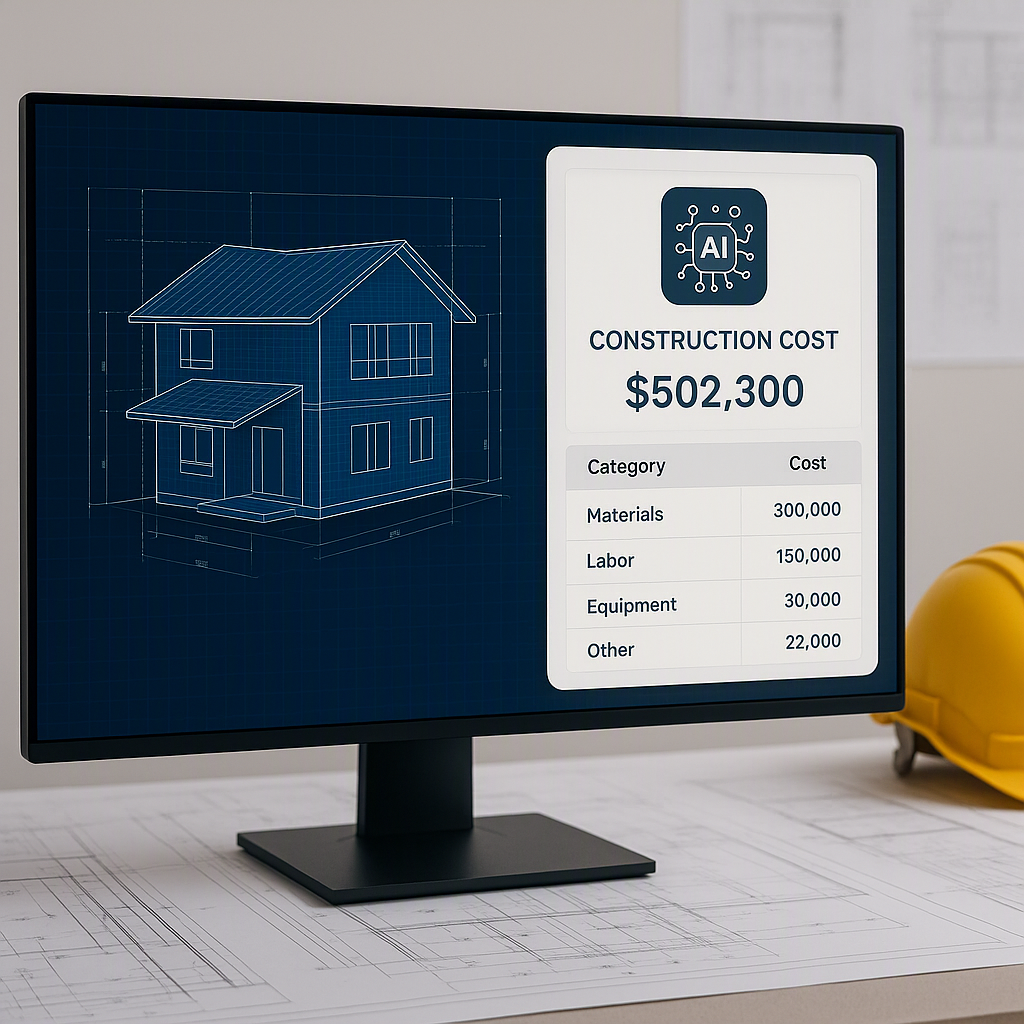
Let’s be honest: preconstruction estimation is painfully slow. Rate lookups, quantity takeoffs, bid comparisons—it’s a grind. If you’re a GC director or an estimator, you’ve had those weeks where every hour feels like firefighting. And the worst part? Most of this work is repetitive.
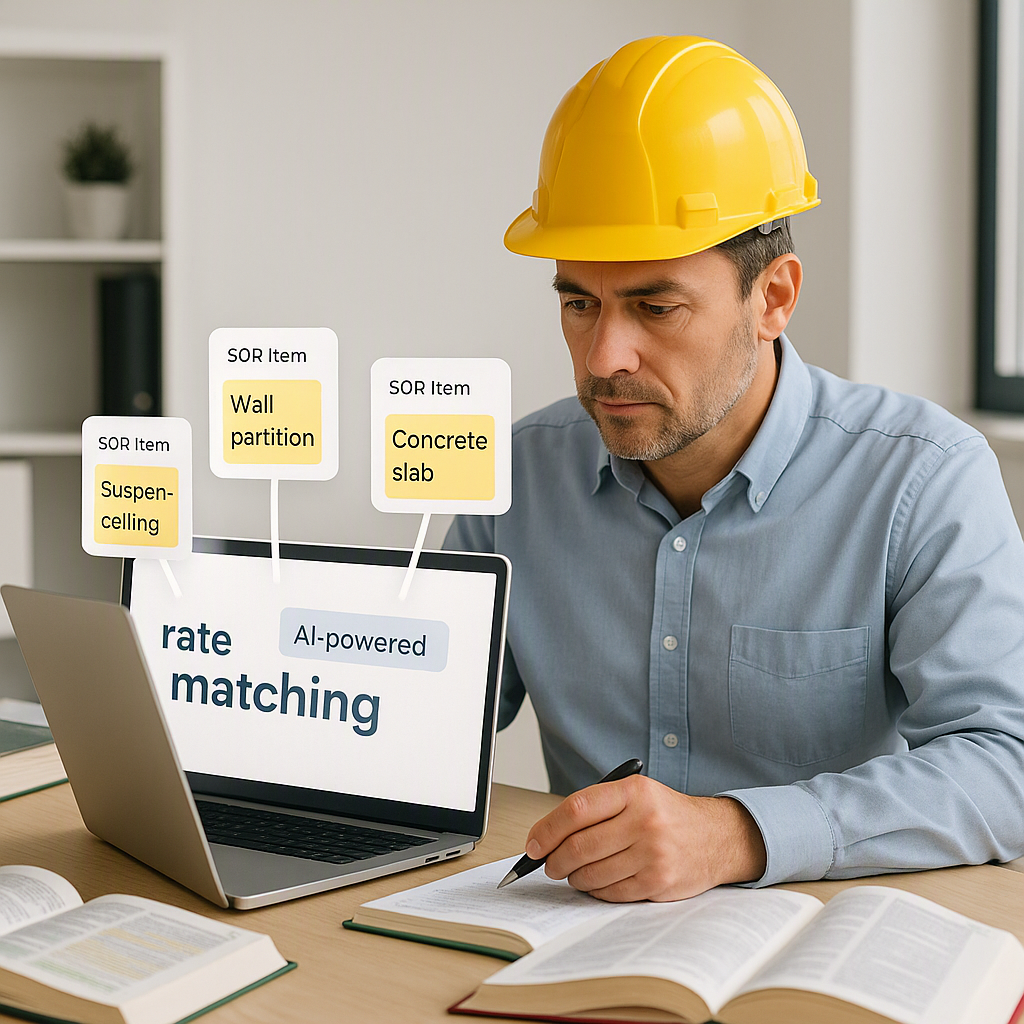
Take rate matching as an example. Flipping through 2,000-page PDFs of RSMeans or CPWD DSR is mind-numbing. Need a rate for a custom item? Good luck. You’ll spend hours searching, cross-checking, and second-guessing. And let’s not even talk about how often Excel formulas break when you try to update a single number.
This isn’t just an annoyance. It’s expensive. A 2023 McKinsey report found that inefficiencies in preconstruction workflows can add 10-20% to project costs. For a $50M project, that’s $5M wasted. Why are we still tolerating this?
The Obvious Fix: AI-Powered Estimation
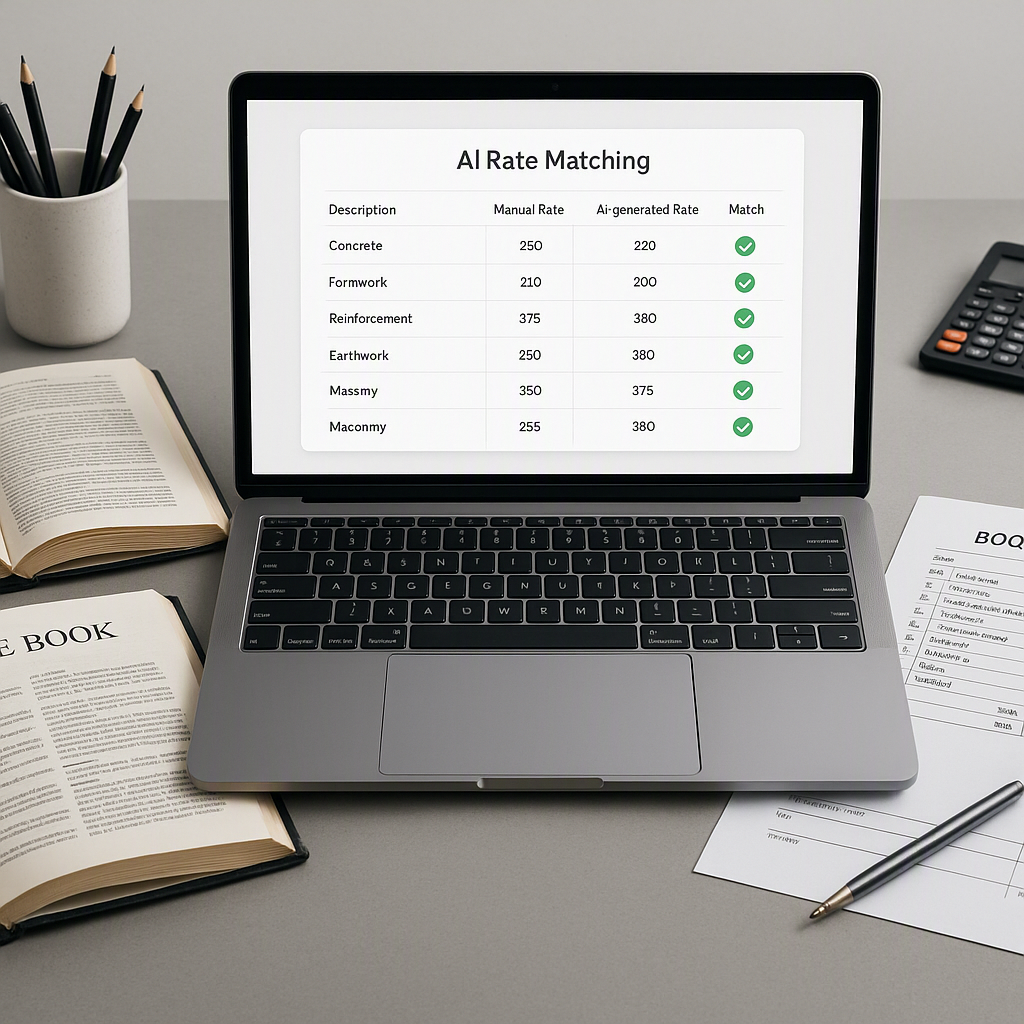
AI tools like EstimateNext are rewriting the rules. Instead of spending hours manually matching rates, AI can sift through tens of thousands of items in seconds. For example, EstimateNext’s semantic search scans 78,000+ SOR items across 135 catalogs. Need the labor rate for installing pre-stressed concrete girders? Just type it in and get a match instantly.
And it’s not just about speed. AI systems get smarter with every project. If your estimator overrides a rate or modifies a catalog item, that feedback loops back into the system. By the third project, accuracy improves dramatically. It’s like having a junior estimator who learns at 10x the speed of a human.
Real-World Example: Time Saved on a High-Rise Project
One mid-sized general contractor shared their experience in a case study. They were bidding on a high-rise project with tight deadlines and a massive BOQ. Manual rate matching would’ve taken them close to 40 hours. Using EstimateNext, they completed the job in under 2 hours. That’s 38 hours saved—nearly a full workweek.
What did they do with that extra time? They used it to:
- Rework their bid strategy to align better with client expectations.
- Negotiate better subcontractor agreements.
- Run multiple what-if scenarios to optimize their pricing and increase competitiveness.
The result? They not only submitted the bid on time but also improved their profit margin by 3%. On a $30M project, that’s nearly $900,000 in additional profit. That’s a direct ROI from using AI tools.
More Examples: Small Contractors Benefit Too
AI isn’t just for giant firms with sprawling teams. A local subcontractor bidding on a $1M school renovation project faced a similar challenge. Their small team used EstimateNext to cut their estimation time from 3 days to 3 hours. This enabled them to respond to three other RFPs in the same week—something they’d never been able to manage before. They won two of those projects, growing their annual revenue by 25%.
You Might Be Thinking: “But AI Can’t Replace My Expertise”
You’re right. AI isn’t a magic wand. It doesn’t replace your judgment or instincts. It can’t read the room in a subcontractor negotiation or decide how much markup is too much for a client.
But here’s the thing: it doesn’t have to. AI handles the grunt work—rate lookups, takeoffs, bid normalization—so you can focus on the stuff that actually requires your expertise. It’s not replacing you. It’s freeing you.
Take, for example, value engineering. AI can help crunch numbers to identify cost-saving opportunities, but you’re the one who decides whether reducing a material’s quality is acceptable for the client’s needs. The tool assists; you lead.
The ROI Math: Why AI Tools Pay for Themselves
Let’s break it down. If you’re paying $99/month for an AI estimation tool, that’s $1,188/year. Now, consider what you’re saving:
- 40 hours saved per estimate: If your team works on 8 GMP pursuits a year, that’s 320 hours saved. At $130/hour, you’re saving $41,600 annually.
- Fewer errors: AI reduces takeoff discrepancies by up to 80%, cutting down on costly rework during construction. A single error on a mid-sized project can cost $50,000–$100,000 to correct.
- More bids submitted: Subs using AI tools report responding to 50% more RFPs, which directly translates to more wins.
In short, the ROI is undeniable. Even if you only save 20 hours per project, you’re still coming out far ahead.
Decision Framework: Is AI Right for Your Firm?
Here’s a quick framework to help decide if AI estimation tools make sense for you:
| Factor | Manual Estimation | AI-Powered Estimation |
|---|---|---|
| Time per estimate | 30-50 hours | 2-5 hours |
| Accuracy | Prone to human error | Significantly fewer errors |
| Cost of mistakes | High (can run into thousands) | Low |
| Team size needed | Larger | Smaller |
| Learning curve | Low | Moderate (1-2 weeks) |
| Scalability | Limited | High |
If you’re consistently bidding on more than five projects per year, or if even a single estimation error has cost you major rework fees, AI tools are worth serious consideration.
What About Smaller Projects?
Some people argue that AI tools only make sense for large-scale projects. That’s not true. Whether you’re bidding on a $1M renovation or a $1B rail bridge, the benefits scale. Smaller contractors, especially those responding to dozens of tenders per year, can use AI to shorten their quote turnaround times from days to hours. That’s a game-changer in competitive markets.
What’s the Catch?
AI tools aren’t perfect. They rely on the quality of your input data. If your BOQ is a mess or your rate catalogs are outdated, the AI won’t magically fix that. Human oversight is still critical. Think of AI as a power tool. It amplifies your efficiency, but you’ve got to know how to use it properly.
And yes, there’s a learning curve. Most teams take 1-2 weeks to get comfortable with platforms like EstimateNext. But once they do, the time savings far outweigh the initial effort.
Final Thoughts
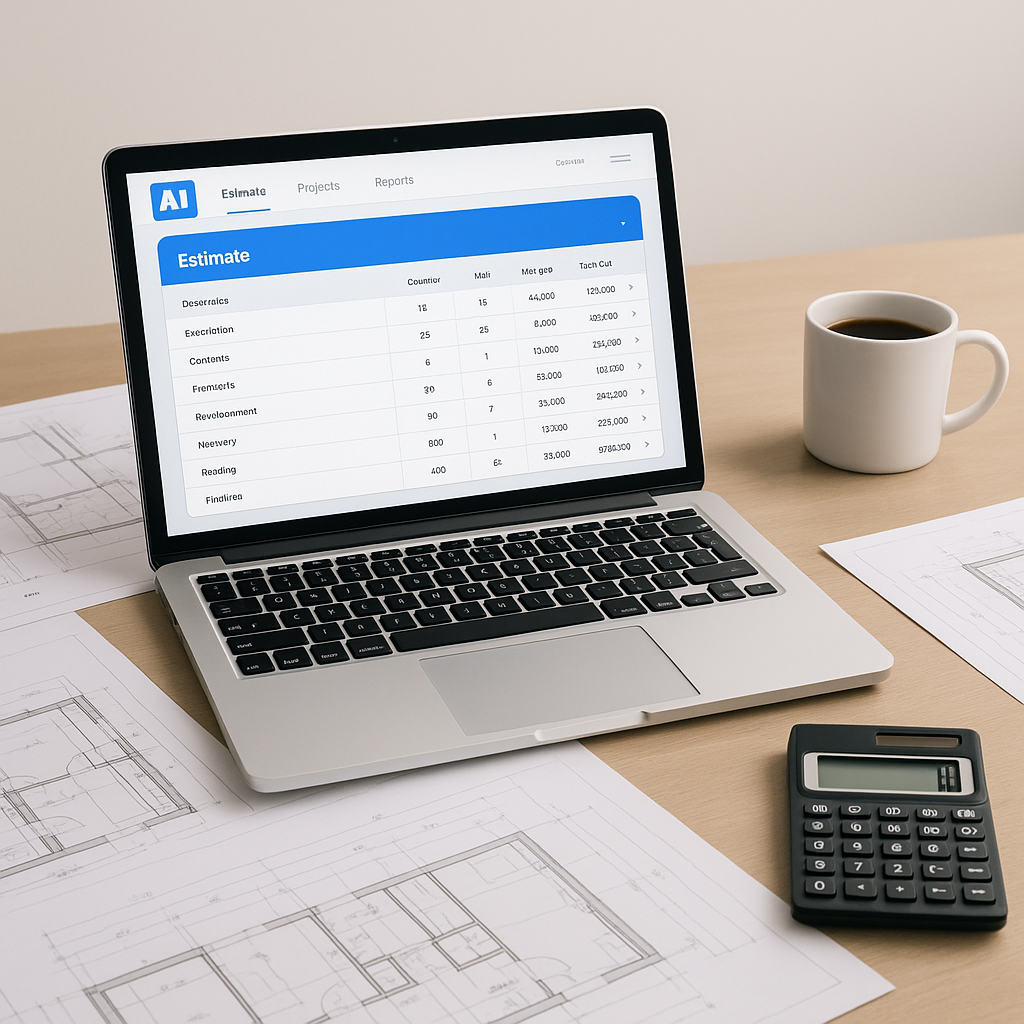
AI-powered preconstruction estimation isn’t just a “nice-to-have” anymore. It’s becoming the standard for teams that want to stay competitive. Whether it’s cutting takeoff times from 40 hours to 10 minutes or eliminating the pain of manual rate lookups, tools like EstimateNext are saving time, reducing errors, and boosting margins.
If you’re still doing everything manually, ask yourself: how much longer can your team afford to work this way?
If you're tired of wasting hours on manual workflows, EstimateNext can help. Upload your first BOQ and get a priced estimate in minutes. Get started free →