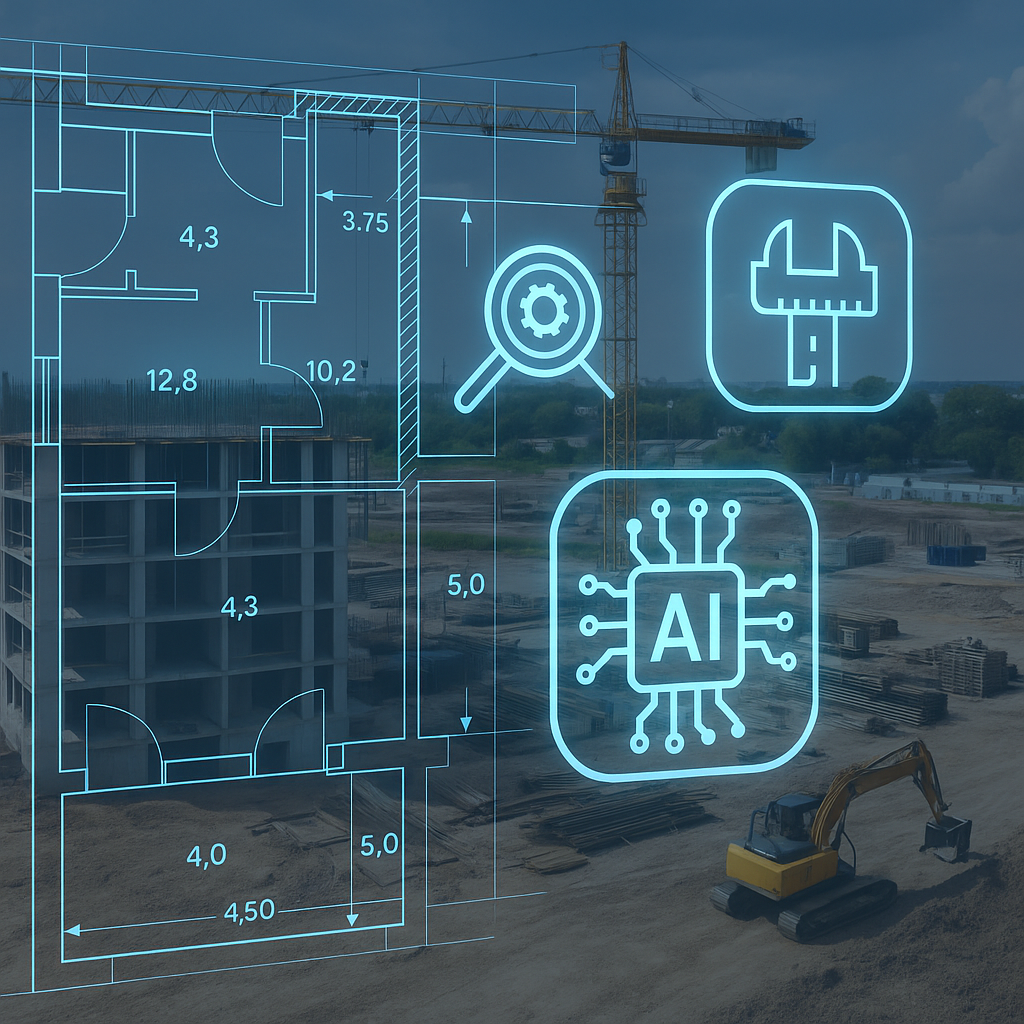
The Problem: Takeoffs Are a Time Sink
If you’ve ever been stuck on manual quantity takeoffs, you know the pain. Two estimators, two full days, tracing lines on drawings and running calculations. It’s tedious. Worse, it eats into time you could spend refining bids or negotiating with subcontractors. For general contractors chasing five GMP pursuits a year, that’s 200 hours gone — per estimator.
Why Manual Takeoffs Still Dominate
Manual workflows persist because most teams think they don’t have a choice. Bluebeam might help with measurements, but you’re still manually pulling quantities and copying them into Excel. Mistakes happen. Revisions? Even worse — you’re back to square one.
But there’s a smarter way. AI-powered tools like EstimateNext’s Vision AI are changing the game.
Vision AI: 40 Hours Reduced to 10 Minutes
Here’s the pitch: Vision AI extracts quantities directly from PDF drawings in minutes. Concrete columns? Room areas? Door/window counts? It’s all automated. You upload the drawings, calibrate dimensions, and let the software do the rest.
A case study from their own notes shared that a mid-sized contractor saved 120 hours on a high-rise bid using Vision AI. That’s two weeks of labor costs avoided. Imagine what your team could do with that time — more bids, better margins, fewer headaches.
Does It Actually Work?
You might think, “Sure, AI is fast, but it can’t understand the nuances of construction.” Fair. AI isn’t perfect, and it won’t replace your expertise. But it handles the grunt work. You still review outputs, recalibrate where necessary, and make judgment calls. It’s a tool, not a replacement.
And it’s designed for flexibility. You can override low-confidence lines, upload revision sets, and compare changes. The learning curve? Minimal. Most teams report reliable results by their third project.
The ROI: Why Speed Matters
Let’s do the math. A senior estimator costs $130/hour. Saving 36 hours on takeoffs means $4,680 freed up — per bid. Multiply that across five pursuits annually, and you’re looking at $23,400 saved. That’s just on time. Factor in fewer errors, faster revisions, and better subcontractor negotiations, and the numbers only get better.
For subcontractors, the impact is even bigger. Faster takeoffs mean faster quotes. Faster quotes mean more bids. More bids mean more wins.
Edge Cases: Where AI Struggles
AI isn’t perfect. If your drawings are inconsistent or poorly labeled, expect some hiccups. And while Vision AI handles most standard measurements, custom architectural details might still require manual input.
But here’s the thing: even with edge cases, you’re still saving hours compared to manual workflows. The software also includes audit trails, so you always know where adjustments were made.
How to Get Started
Test it on smaller projects first. Upload a simple BOQ and a clean set of drawings. Evaluate the accuracy and adjust settings as needed. Once you’re confident, scale up to larger bids.
Importantly, train your team. Pair junior estimators with the software to free up senior staff for high-value tasks. It’s about shifting workloads, not replacing roles.
Call to Action
If manual takeoffs are draining your team’s time, Vision AI is the fix. Save hours, reduce errors, and free up your estimators for what really matters. Get started free →


