The Hidden Cost of Manual Takeoffs
Manual takeoffs can be a significant drain on productivity. Anyone who has spent hours working through drawings knows the challenges: tracing lines, calculating quantities, double-checking dimensions, and ensuring nothing critical is missed. Errors in manual takeoffs can lead to costly project overruns, making accuracy and efficiency critical in the preconstruction phase.
The AI Solution: Vision AI for Takeoffs
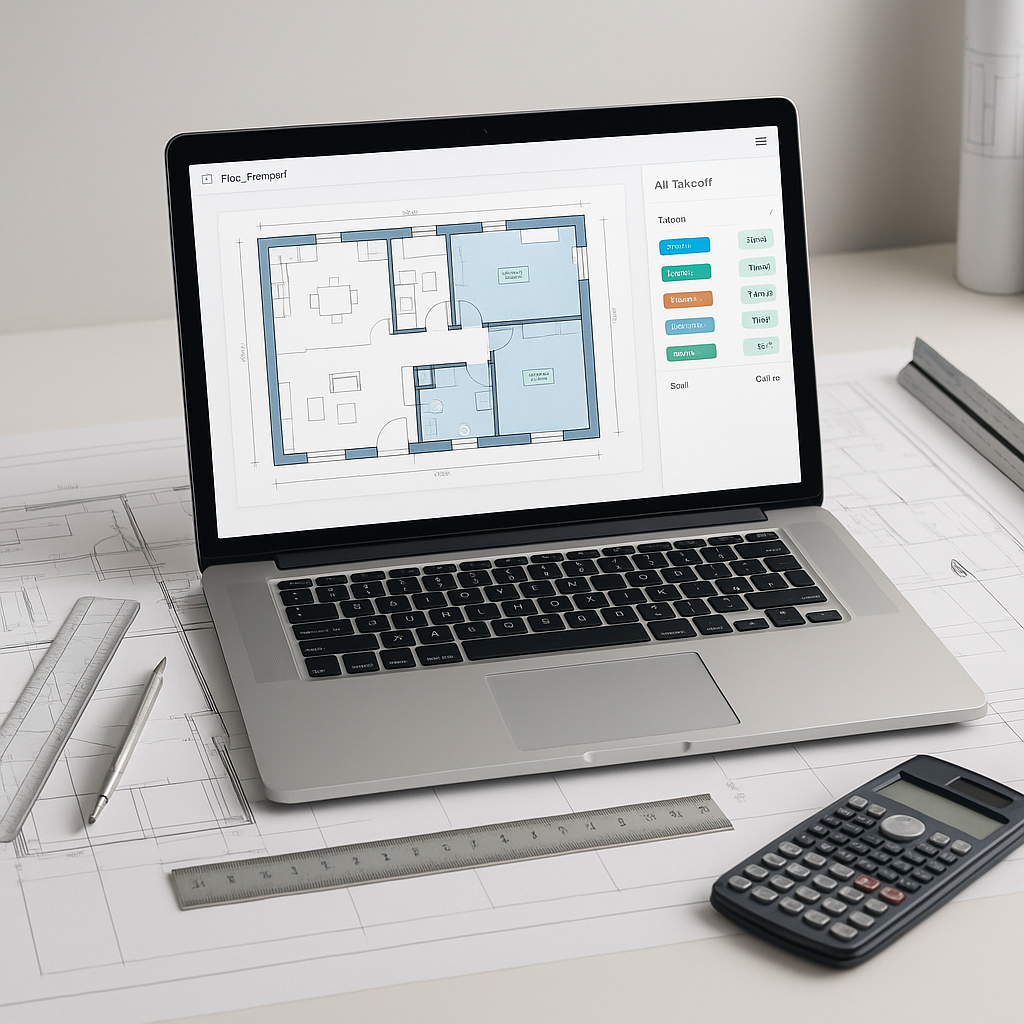
AI-powered tools are transforming the way takeoffs are performed. Vision AI, for example, can extract quantities directly from drawings in a fraction of the time it takes manually. By uploading a PDF or CAD file, the system uses machine learning to identify elements like walls, doors, windows, and flooring areas. This automation reduces the manual workload and allows teams to focus on higher-value tasks.
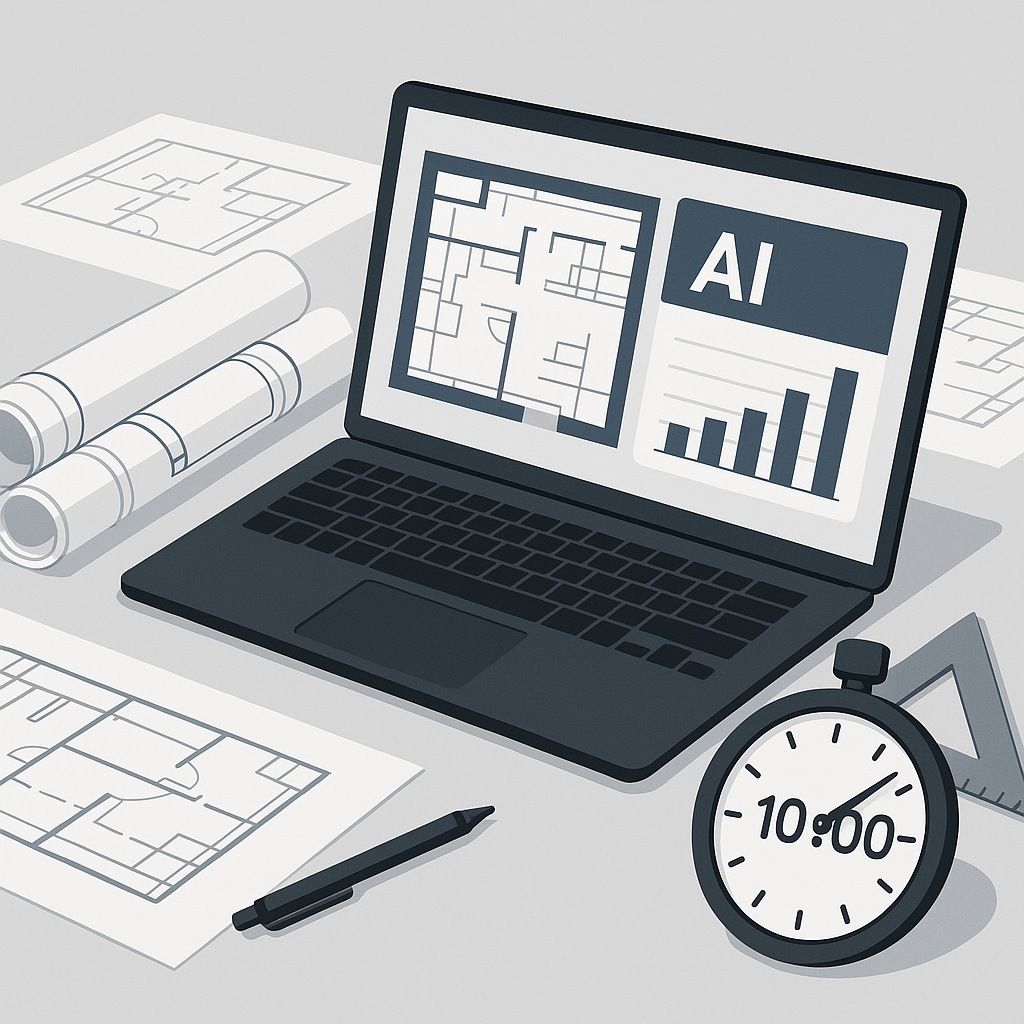
Illustrative example — Consider a scenario where a mid-sized project typically requires significant time for manual takeoffs. By using AI, the process could be completed much faster, enabling teams to allocate their time to other critical activities such as refining bids or planning project execution.
Why It’s a Game-Changer
The primary benefits of AI-powered takeoffs are speed and consistency. Unlike manual processes, which may involve multiple estimators and potential discrepancies, AI processes drawings uniformly, reducing the likelihood of errors. This uniformity ensures that all elements are accounted for and measured consistently.
AI tools also provide features like confidence scoring, which highlight areas that may require additional review. This allows estimators to focus their expertise where it’s needed most, maintaining control over the process while leveraging the efficiency of automation.
Overcoming Skepticism: What If AI Misses Something?
No technology is perfect, and AI is no exception. However, AI tools are designed to work in tandem with human oversight. Many systems allow for manual review and remeasurement of flagged areas, ensuring that critical elements are not overlooked. Additionally, AI systems improve over time through feedback, adapting to the specific preferences and standards of the user.
Common Mistakes When Adopting AI Tools
If you’re considering implementing AI for takeoffs, here are some common pitfalls to avoid:
- Rushing Implementation: Allocate sufficient time for training and onboarding to ensure your team is comfortable with the tool.
- Ignoring Data Quality: The quality of the input drawings significantly impacts the accuracy of AI outputs. Ensure your drawings are clear and complete.
- Over-Reliance on AI: While AI can handle much of the workload, human oversight remains essential, particularly for high-stakes projects.
FAQ: What You Need to Know
Q1: How accurate are AI-powered takeoffs? AI tools can significantly reduce discrepancies compared to manual methods, but human oversight is still necessary to ensure accuracy.
Q2: Can these tools handle complex projects? Yes, AI tools are scalable and can handle projects of varying sizes and complexities.
Q3: What if my drawings are inconsistent or messy? While AI tools are robust and can handle many inconsistencies, clean and well-organized drawings yield the best results.
Final Thoughts
AI-powered takeoffs are revolutionizing preconstruction estimation by saving time, reducing errors, and improving accuracy. By adopting these tools, teams can focus on strategic tasks like winning bids and executing projects effectively. If you’re ready to explore the benefits of AI in your estimation process, consider starting with a trusted tool to see how it can enhance your workflows.