Manual Rate Matching: The Hidden Drain on Your Team
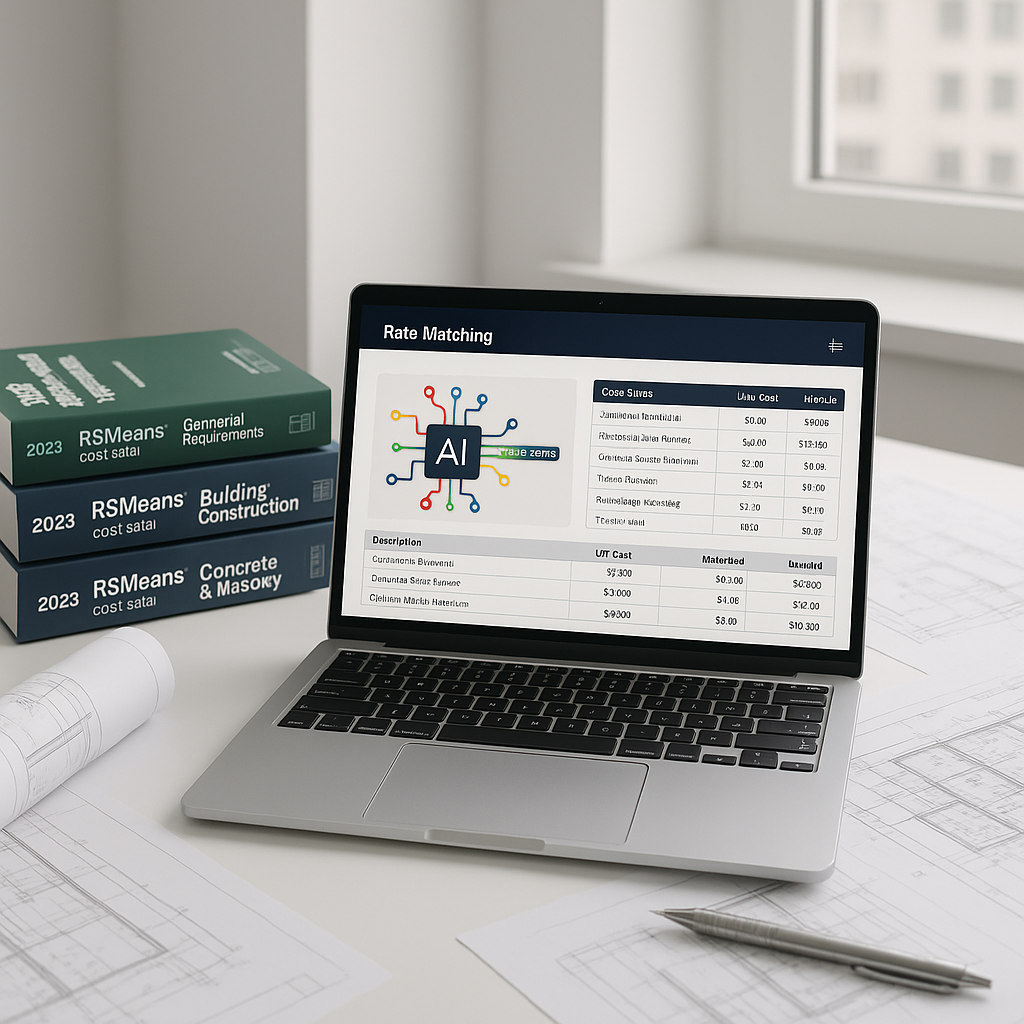
Rate matching might not seem like the biggest bottleneck in construction estimation, but think about it. How much time do your estimators spend flipping through RSMeans books or CPWD DSR PDFs? Multiply that across multiple estimates a month, and it quickly adds up to significant time spent.
The problem gets worse with custom or project-specific rates. For example, estimating labor costs for installing pre-stressed concrete girders requires precision. Errors in rate matching can lead to busted budgets and missed bids.
How AI Fixes Rate Matching
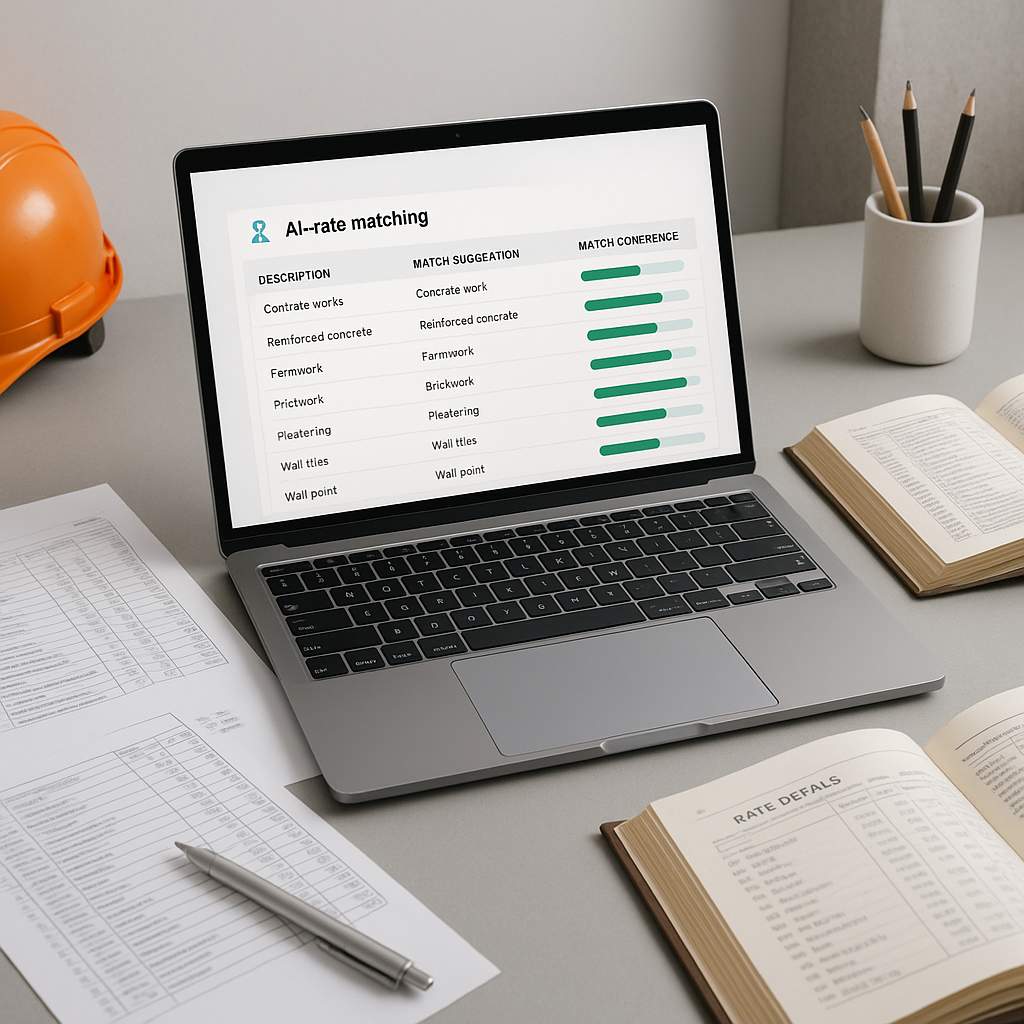
AI-powered tools simplify this process. Instead of manually searching through thousands of line items, you can type in what you need—such as "pre-stressed concrete girder labor"—and the system finds matches quickly. Semantic search algorithms ensure the results are contextually relevant.
AI tools also learn from your adjustments. For instance, if you reject a suggested rate because your project uses locally sourced materials, the system can remember this for future estimates, improving its relevance over time.
Benefits of AI in Rate Matching
- Speed: AI tools can process and match rates much faster than manual methods.
- Accuracy: By learning from user feedback, AI reduces the likelihood of errors.
- Customization: Many tools allow you to upload custom catalogs or define specific rates, ensuring estimates reflect actual costs.
Common Objections to AI Rate Matching
"AI Doesn’t Understand Nuances"
True, AI doesn’t replace your judgment—it complements it. You’re still the one deciding on markup and negotiating with subcontractors. The AI handles the repetitive tasks.
"What About Custom Rates?"
AI tools often allow you to upload your own catalogs or define specific rates for unique items. This ensures your estimates are tailored to your needs.
"It’s Expensive"
While some AI tools may have higher upfront costs, the time savings and error reduction often justify the investment. Evaluate the cost against the potential efficiency gains for your team.
What to Watch for in AI Rate Matching
- Input Quality Matters: Ensure your BOQ uploads are accurate and complete. Poor input data can lead to poor results.
- Feedback Loops: Use the reject/accept step to help the AI learn and improve over time.
- Integration: Check that the AI tool integrates with your existing software stack, such as Excel or Procore.
FAQ
Q: How accurate is AI rate matching?
A: Accuracy improves with user feedback. While AI tools can provide highly relevant matches, human oversight remains important.
Q: Can I use AI for smaller projects?
A: Yes, AI tools are scalable and can be used for projects of any size.
Q: How long does it take to learn these tools?
A: Most AI tools are designed to be intuitive, and training typically takes a short amount of time.
The Bottom Line
Manual rate matching can be a significant bottleneck in construction estimation. AI-powered tools save time, reduce errors, and make your estimates more competitive. If you’re dealing with tedious rate lookup or struggling to meet bid deadlines, consider integrating AI into your workflow.