The Problem: Manual Takeoffs Are Time-Consuming
If you’re an estimator, you know the challenges of manual takeoffs. A single 50-page drawing set can take significant time to process. This time spent on quantity counts is necessary but often detracts from higher-value tasks like improving bid strategy, negotiating with subcontractors, or analyzing risk.
The AI Solution: Vision AI Takeoffs
AI-powered tools are changing the game. Instead of manually tracing every wall, pipe, or beam, AI can read your drawings and extract quantities automatically, significantly reducing the time required for takeoffs.
How It Works
- Upload Your Drawings: Upload your PDF set into the platform. Whether it’s architectural layouts, MEP schematics, or structural details, the AI processes them.
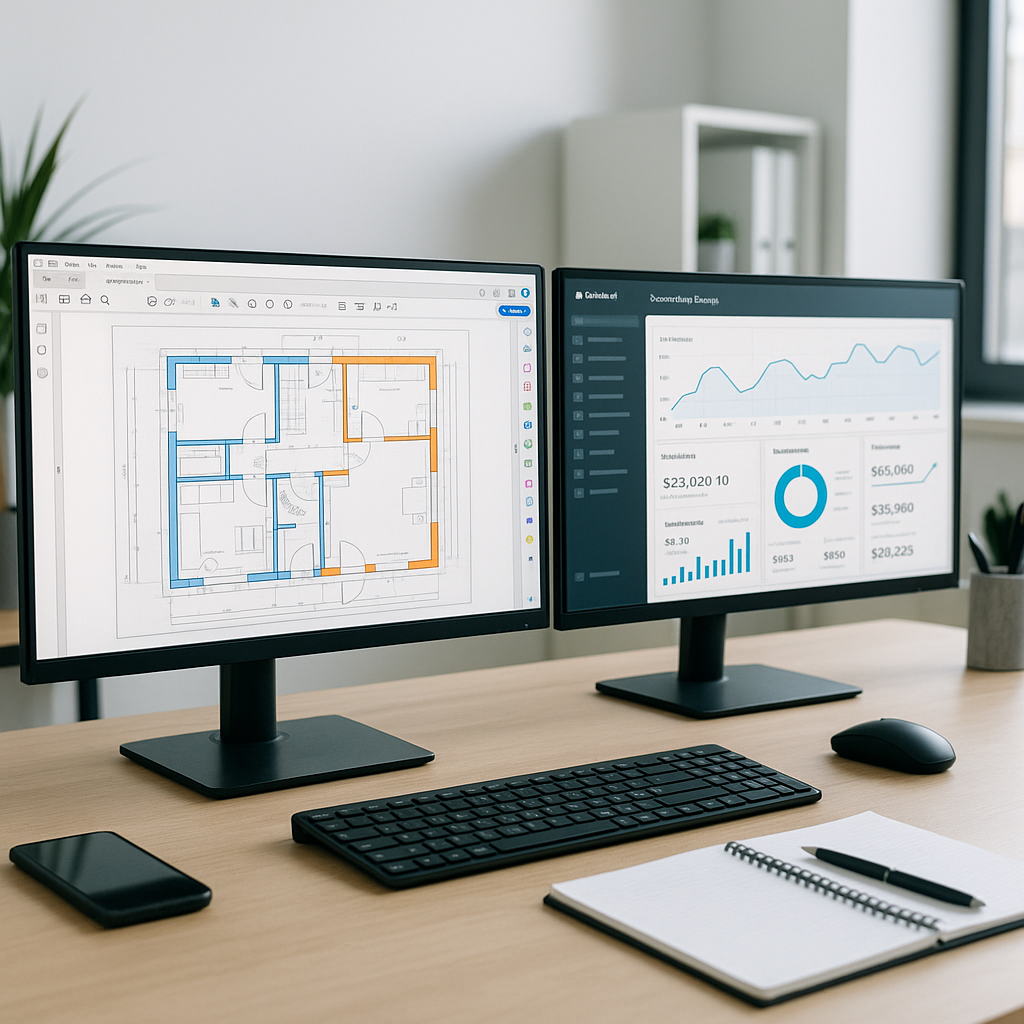
- AI Extraction: The tool scans the drawings for room areas, wall lengths, door counts, and other quantities using machine learning models trained specifically for construction documents.
- Review and Adjust: While AI handles much of the work, flagged areas can be reviewed manually to ensure accuracy.
Why It Matters: Beyond Just Speed
AI takeoffs offer more than just faster results. Here’s why they’re valuable:
- Accuracy: Human errors are common in manual takeoffs. AI tools help reduce discrepancies, though oversight is still necessary.
- Scalability: Whether you’re bidding on a small fit-out or a large commercial project, AI can handle projects of varying sizes efficiently.
- Focus: By automating the counting process, you can focus on strategic tasks like bid preparation and risk analysis.
Common Objections
“AI doesn’t understand my drawings.”
AI tools may require some initial adjustments, but many platforms improve with use, learning your preferences over time.
“We’ve always done it manually. Why change now?”
While manual methods have worked in the past, today’s competitive and complex bidding environment makes AI a valuable tool for staying ahead.
“What about training? My team isn’t tech-savvy.”
AI tools are designed to be user-friendly, with most teams becoming proficient after a short training period.
What to Watch For
- Input Quality: Ensure your drawings are clean and well-labeled for the AI to process effectively.
- Review Process: Use the tool as an assistant, not a replacement. Review flagged areas for accuracy.
- Integration: Choose an AI tool that integrates with your existing software stack, such as Bluebeam, Procore, or Excel, to maintain workflow continuity.
The Bottom Line
AI-powered takeoffs are becoming essential in competitive construction markets. By automating time-intensive tasks, these tools allow you to focus on strategic priorities, leading to more bids, better accuracy, and stronger margins.
Ready to explore AI-powered estimation? Visit your preferred platform to learn more.


