The Estimator’s Time Sink No One Talks About
Manual takeoffs can be a significant drain on time and resources. If you’re a GC preconstruction director or senior estimator, you’ve likely experienced the challenge of flipping through drawings and manually tracing every square foot of drywall or cubic yard of concrete. This process can take considerable time and effort, often leading to stress and potential inaccuracies, especially when bid deadlines are tight or client changes occur.
Here’s the good news: AI-powered tools are transforming this process, significantly reducing the time and effort required for takeoffs. Let’s explore how these tools work and why they’re worth considering.
How AI Takeoffs Work (Without the Fluff)
AI takeoff tools are designed to streamline the estimation process by automating repetitive tasks. Here’s how they typically function:
-
Upload the Drawings: The software can process various file formats, such as PDFs, DWGs, or scanned images, to extract relevant data.
-
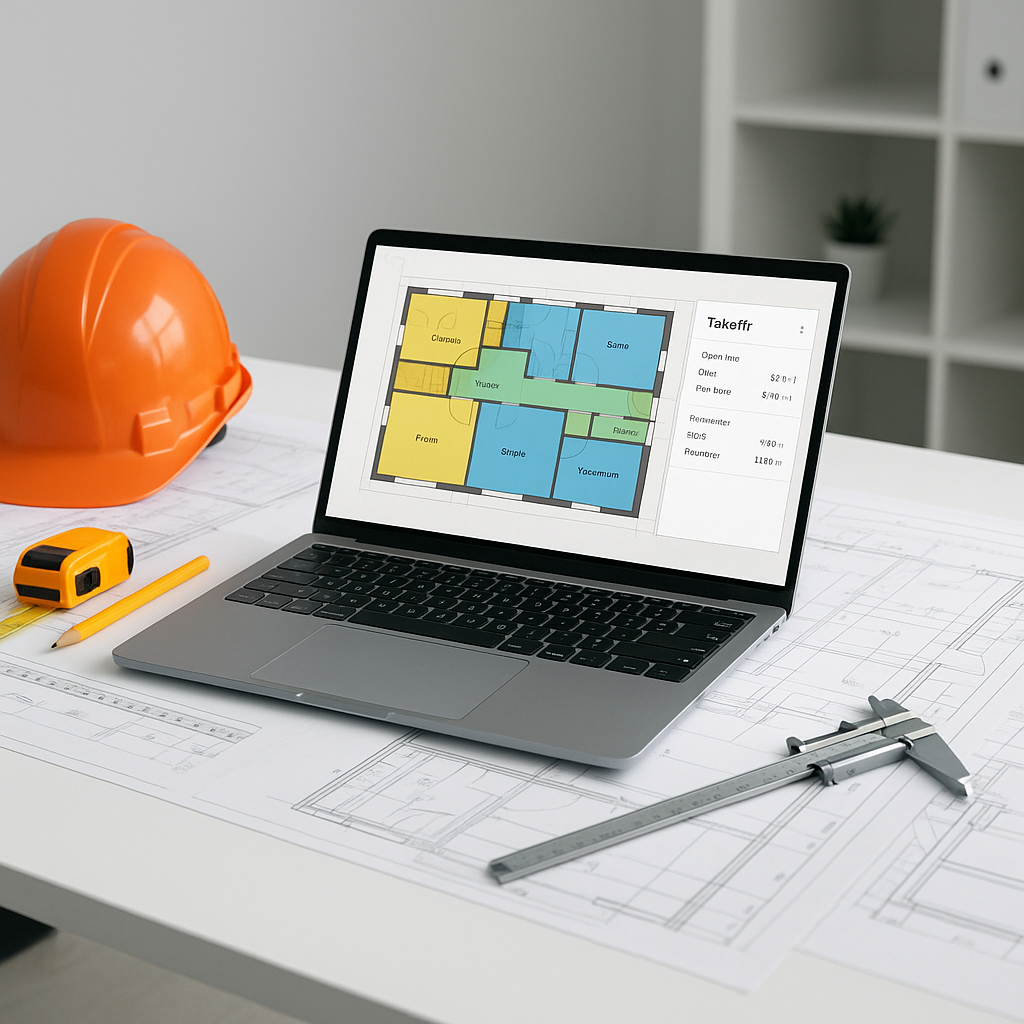
Automated Quantity Extraction: The AI identifies and measures elements like wall lengths, door counts, or slab areas based on the project scope. This automation significantly reduces the time required for manual measurements.
-
Flagging for Review: Areas with low confidence or potential discrepancies are flagged for manual review, ensuring accuracy.
-
Real-Time Updates: When project specifications change, AI tools can quickly update the Bill of Quantities (BOQ), eliminating the need to redo spreadsheets manually.
Why Speed Matters More Than Ever
Deadlines in construction projects are often tight, and the scope of work can expand unexpectedly. Early adopters of AI in construction estimation report significant time savings, allowing teams to focus on more strategic tasks like refining bids or managing multiple projects.
Speed is also a competitive advantage. If your team can deliver accurate estimates faster than competitors, it enhances your credibility and increases the likelihood of winning bids.
What About Accuracy?
A common concern is whether AI tools can match the accuracy of experienced estimators. While AI tools are highly accurate, the quality of input data and human oversight remain critical. Many platforms include features like manual overrides and flagged areas for review, ensuring that estimators can validate and refine the results.
Over time, AI systems improve through user feedback, making them more reliable with continued use. These tools are not intended to replace human expertise but to enhance it by automating repetitive tasks and reducing errors.
Common Mistakes to Avoid
-
Skipping the Review: Always review flagged areas and double-check critical quantities to ensure accuracy.
-
Overloading the System: Organize drawings into logical sections before uploading them to the software for better results.
-
Ignoring Updates: Stay informed about new features and workflows to maximize the benefits of your AI tool.
FAQ
Q: Can AI handle complex projects like rail bridges or high-rises?
Yes, AI tools are designed to handle a wide range of projects, including complex ones. They can extract quantities for various elements, such as concrete columns, beams, and other structural components.
Q: What if my rates are custom or project-specific?
Most AI tools allow you to upload custom rate catalogs or define specific rates to ensure that your estimates align with your actual costs.
Q: How long does it take to train my team?
Many platforms are user-friendly and require minimal training, often taking just a couple of weeks for teams to become comfortable with the software.
The Bottom Line
AI-powered takeoffs are not about replacing your team but about enabling them to focus on higher-value tasks, such as refining bids and building client relationships. By automating repetitive processes, these tools can save time and improve accuracy, helping your team stay competitive in a fast-paced industry.
If you’re still relying on manual takeoffs, it may be time to explore how AI can enhance your preconstruction process.