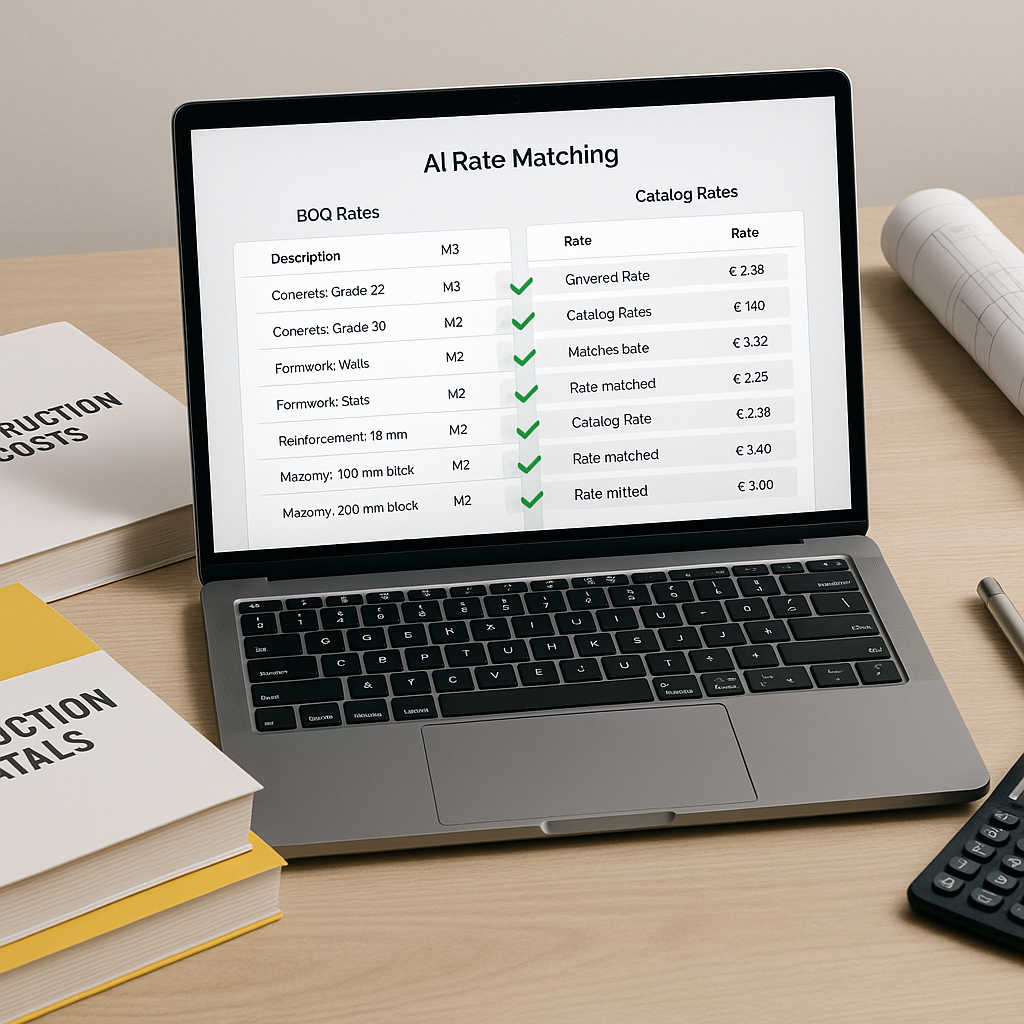
Manual Rate Lookup: Why It's a Challenge
Pricing a bid for a large project often involves processing a Bill of Quantities (BOQ) with hundreds of line items. Each item requires a rate, which traditionally means searching through extensive rate catalogs like RSMeans or CPWD DSR PDFs. This process can be tedious and error-prone, especially for custom finishes or uncommon items. Mistakes in rate assignment can lead to overpricing and losing bids or underpricing and taking on unprofitable projects.
How AI Rate Matching Simplifies the Process
AI-powered tools can transform this process by automating rate matching. Here's how they work:
-
Semantic Search Across Rate Catalogs: The AI scans the BOQ, understands the scope, and matches each line item to relevant rates quickly. This applies to standard labor rates, materials, and even custom items.
-
Custom Catalog Integration: Users can upload unique rates or project-specific adjustments, which the AI learns and integrates for future use, eliminating repetitive data entry.
-
Fallback Matching: For items without direct matches, the AI searches similar items, previous project data, or user-defined parameters to ensure comprehensive coverage.
Addressing Concerns: “But AI Can’t Think Like an Estimator”
While AI doesn’t replace human expertise, it complements it by handling repetitive tasks like rate matching. Estimators still make critical decisions, negotiate with subcontractors, and apply markups. AI tools free up time for these strategic activities by automating the groundwork.
Best Practices for Using AI Rate Matching
-
Ensure Data Accuracy: Errors in the BOQ can lead to incorrect rate matches. Always review input data before uploading.
-
Update Custom Rates: Regularly update your custom catalogs to improve accuracy and relevance.
-
Leverage Manual Overrides: Use manual override options for edge cases where the AI's suggestions may not align perfectly.
Conclusion
AI-powered tools for preconstruction estimation streamline the rate matching process, saving time and reducing errors. By automating repetitive tasks, these tools allow estimators to focus on strategic decision-making. If you're looking to enhance your estimation process, consider exploring AI solutions tailored to your needs.


