The Takeoff Problem: Manual Effort and Errors
If you’ve ever spent hours manually tracing walls, doors, and windows on drawings, you know how tedious and error-prone takeoffs can be. A missed measurement or miscalculation can lead to inaccurate estimates, affecting project outcomes. Add tight deadlines to the mix, and the process becomes even more challenging.
Manual takeoffs are time-intensive and outdated. They consume valuable hours that could be better spent refining bids, negotiating with subcontractors, or strategizing to win more work. But what’s the alternative? AI-powered tools are emerging as a solution to automate and streamline this process.
How AI-Powered Takeoff Tools Work
AI-powered takeoff tools use advanced automation to simplify the process. Here’s how they typically function:
-
Drawing Upload: You upload your PDF or CAD drawings into the system, eliminating the need for manual file conversions.
-
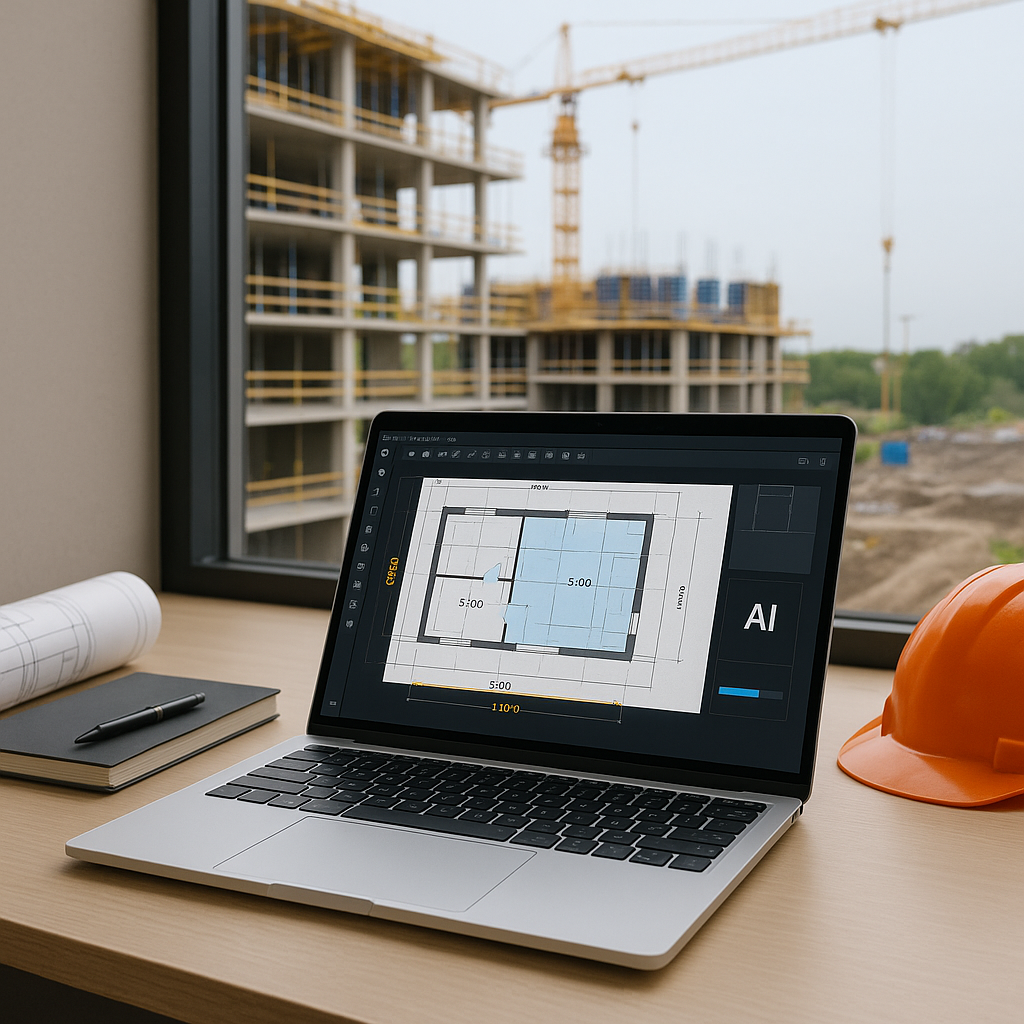
Auto-Extraction: The AI scans the drawings to identify and measure elements like room areas, wall lengths, and door/window counts. These tools are trained on extensive datasets of construction drawings to recognize various elements accurately.
-
Flagging for Review: For unclear or ambiguous areas, the AI flags items for manual review, ensuring you maintain control over critical measurements.
-
Comparison Tools: When dealing with revised drawings, AI tools can compare versions and highlight changes, saving time and reducing errors.
The result is a faster and more efficient takeoff process, allowing you to focus on higher-value tasks.
Potential Benefits of AI in Preconstruction Estimation
By reducing the time spent on manual takeoffs, AI tools free up resources for other critical activities. Here are some ways this can benefit construction professionals:
-
Increased Bid Volume: With time saved, you can respond to more bid requests, potentially increasing your opportunities to win projects.
-
Improved Pricing Strategies: Use the extra time to analyze past bids and refine your pricing for better margins.
-
Enhanced Training: Junior estimators can learn faster by using AI tools, which help maintain accuracy while shortening the learning curve.
Addressing Concerns: “AI Can’t Replace Human Expertise”
It’s true—AI isn’t a replacement for human expertise. It doesn’t understand project-specific nuances like labor availability or regional material preferences. However, it doesn’t need to. AI excels at handling repetitive tasks like takeoffs and rate lookups, allowing estimators to focus on applying their judgment to create competitive, accurate bids.
Think of AI as a tool that enhances your capabilities rather than replacing them. It’s like having an assistant that works tirelessly on the repetitive tasks, so you can concentrate on strategic decision-making.
How to Get Started with AI Takeoffs
If you’re considering adopting AI-powered tools for takeoffs, here’s how to begin:
-
Pick a Test Project: Start with a mid-sized project to compare AI-generated takeoffs against your current manual process.
-
Train Your Team: Allocate time for training to ensure your team understands how to use the tool effectively. Most AI tools are designed to be user-friendly, but proper onboarding is still essential.
-
Integrate with Your Workflow: Many AI tools can export data into platforms like Excel or Procore, making it easy to incorporate them into your existing processes.
-
Review and Adjust: AI tools improve over time as you provide feedback. Regularly review flagged items and refine the system for better accuracy.
Common Mistakes to Avoid
-
Blind Trust: Always review flagged items to ensure accuracy.
-
Skipping Training: Invest time in training your team to maximize the tool’s potential.
-
Not Integrating: Use the tool’s export features to seamlessly integrate it into your workflow for maximum efficiency.
Conclusion
AI-powered takeoff tools offer a promising solution to the challenges of manual preconstruction estimation. By automating repetitive tasks, these tools can save time, reduce errors, and allow construction professionals to focus on strategic activities. If you’re ready to explore how AI can enhance your workflow, consider starting with a small project and gradually integrating it into your processes.


