Why Bid Prep Feels Like a Never-Ending Job
If you’ve ever spent hours flipping through rate books, normalizing sub bids, or rechecking Excel formulas, you know the pain. It’s not just tedious — it’s risky. A missed exclusion or wrong rate can cost you the job or kill your margin.
One general contractor (GC) I worked with lost out on a $20M project because a junior estimator missed a key scope gap in a subcontractor’s bid. The result? They were $1.5M under the next bidder, which put the project out of reach. That’s the kind of mistake AI tools are built to prevent — and why they’re becoming essential in modern cost estimation.
The Problem: Manual Sub Bid Leveling
Let’s zero in on one specific bottleneck: sub bid leveling. If you’re a cost engineer or preconstruction director, you know the drill. You receive seven quotes, all formatted differently. One includes labor, another doesn’t. One lists exclusions in fine print, while another buries them in an email attachment. You’re stuck manually normalizing these bids to figure out who’s actually the lowest responsible bidder.
For the average GC, this process takes 6–8 hours, and sometimes as much as 12–14 hours for more complex or larger projects. And let’s be honest — even after all that effort, how confident are you that you didn’t miss something?
Concrete example: A Florida-based GC managing a $15M healthcare facility bid received 12 subcontractor quotes for mechanical systems. Each quote had different formats, exclusions, and line item structures. It took their lead estimator nearly two full days to normalize and compare the bids, only to find out later they had overlooked a $50K exclusion hidden in the fine print. That mistake wiped out almost half of their margin on the project.
The AI Fix: Sub Bid Leveling in 30 Minutes
This is where tools like EstimateNext shine. Instead of slogging through sub bids manually, AI does the heavy lifting. Here’s how:
-
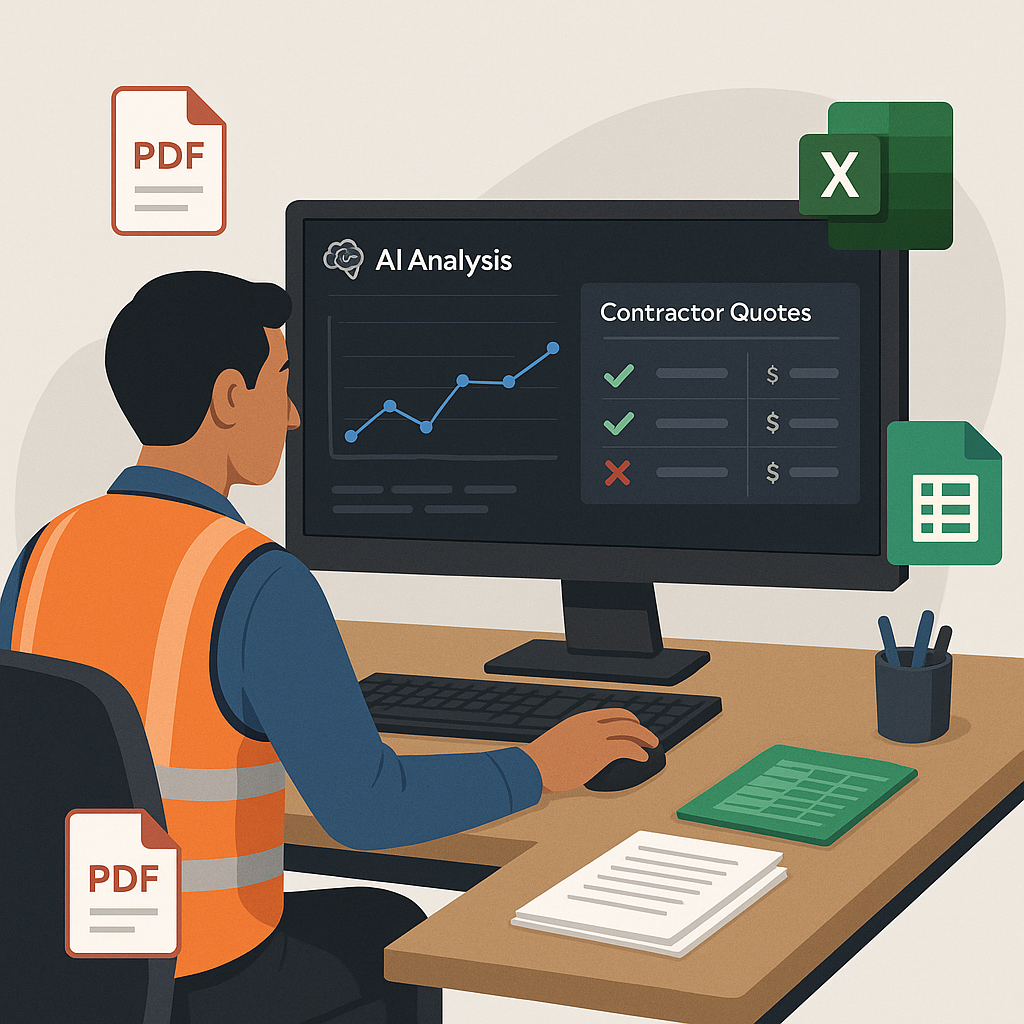
Scope Normalization: Upload sub quotes (PDFs, Excel files, or even scanned documents). The AI extracts scope details, exclusions, and unit rates, then aligns them for apples-to-apples comparison. No more hunting for buried exclusions.
-
L1/L2/L3 Ranking: The system ranks subcontractors by cost while factoring in scope coverage. This ensures you’re not just picking the lowest bidder but the one offering the best value.
-
Anomaly Detection: The AI flags potential issues — like a quote missing demolition costs or one with unusually low labor rates. This ensures red flags are caught early, before they become costly mistakes.
Case Study: Midwest Electrical Contractor
A Midwest electrical contractor managing a $3.5M bid used EstimateNext to handle sub bid leveling. Before adopting the tool, their bid prep process took 6 hours per subcontractor comparison. With AI, they completed the same work in 30 minutes. More importantly, the AI flagged a $120K scope gap in one subcontractor’s bid, preventing them from underpricing the job. The result? They won the project with confidence and protected their margin.
Why This Matters for AACE Members
The Association for the Advancement of Cost Engineering (AACE) sets the gold standard for cost engineering practices. But traditional methods, while thorough, are painfully slow. In today’s market, speed matters as much as accuracy. Deadlines are tighter, and clients expect faster turnaround without sacrificing precision.
Actionable Takeaways for AACE Professionals:
- Adopt Hybrid Workflows: Use AI tools to handle repetitive tasks like sub bid leveling while maintaining manual oversight for final reviews.
- Leverage Audit Trails: Many AI tools, like EstimateNext, provide audit trails that make it easy to track and justify decisions — a key requirement for AACE standard compliance.
- Focus on Value-Added Activities: By automating grunt work, you free up time to refine your bid strategy, improve client presentations, or negotiate better terms with subcontractors.
AI tools bridge the gap between traditional rigor and modern efficiency. They don’t replace your expertise — they amplify it.
Skeptical? Here’s What You Might Be Thinking
“AI sounds great, but what if it misses something?”
Good question. No system is perfect, which is why tools like EstimateNext include manual override and audit trails. If the AI flags a low-confidence item, you can review and adjust it. Think of AI as a second set of eyes — not a replacement for your judgment.
“What about custom formats or weird exclusions?”
AI tools are designed to handle variability. Many, including EstimateNext, let you teach the system by uploading your own templates or catalogs. The more you use it, the smarter it gets, adapting to your specific workflows and preferences.
“Isn’t AI expensive?”
Not anymore. Tools like EstimateNext cost as little as $39–99/month — far less than traditional software like CostX or ProEst. The ROI is undeniable. For GCs, saving 40 hours per estimate translates to $5,200 in labor savings per pursuit (assuming a $130/hour loaded rate for senior estimators).
The Bigger Picture: AI’s Role in Modern Estimation
Sub bid leveling is just one example of how AI is transforming cost engineering. Here are additional ways AI is being applied:
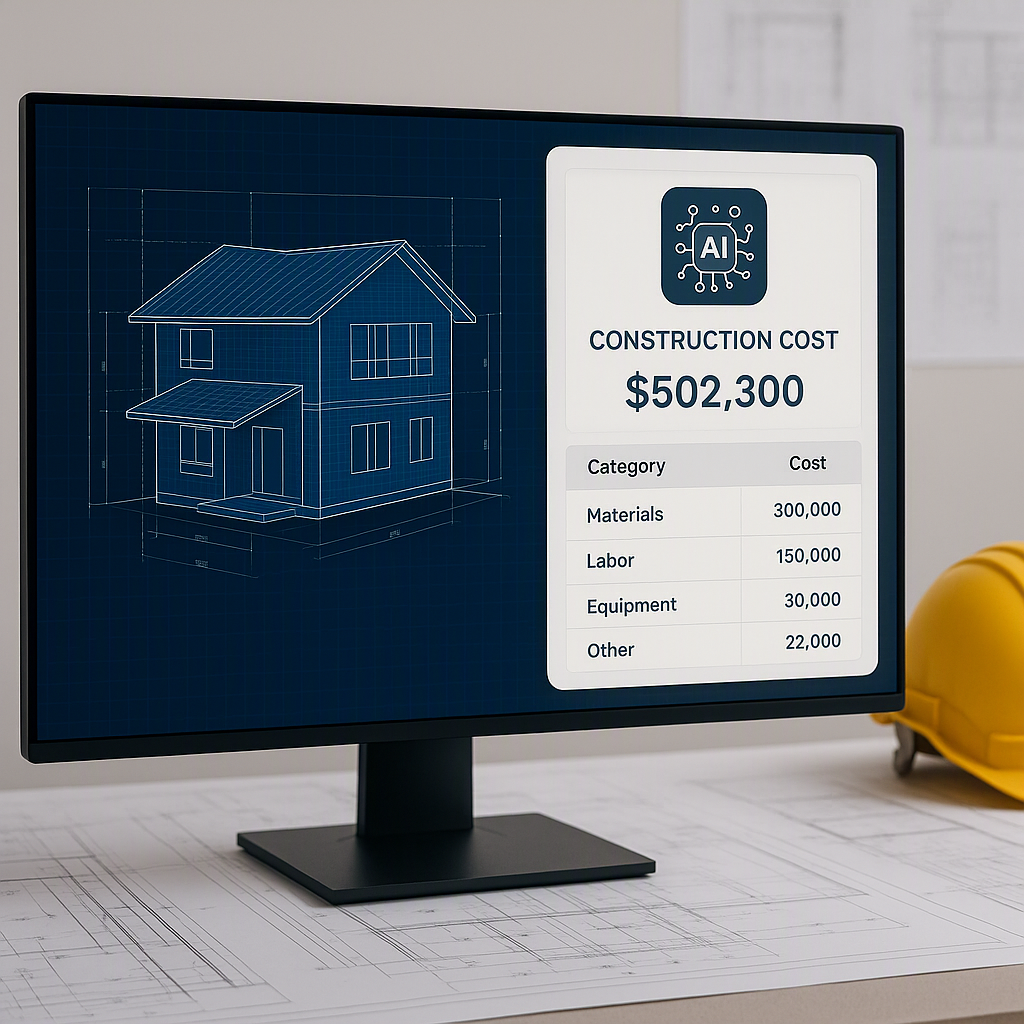
- Vision AI for Takeoffs: AI-powered tools can analyze blueprints and automatically generate quantity takeoffs, cutting hours from the process.
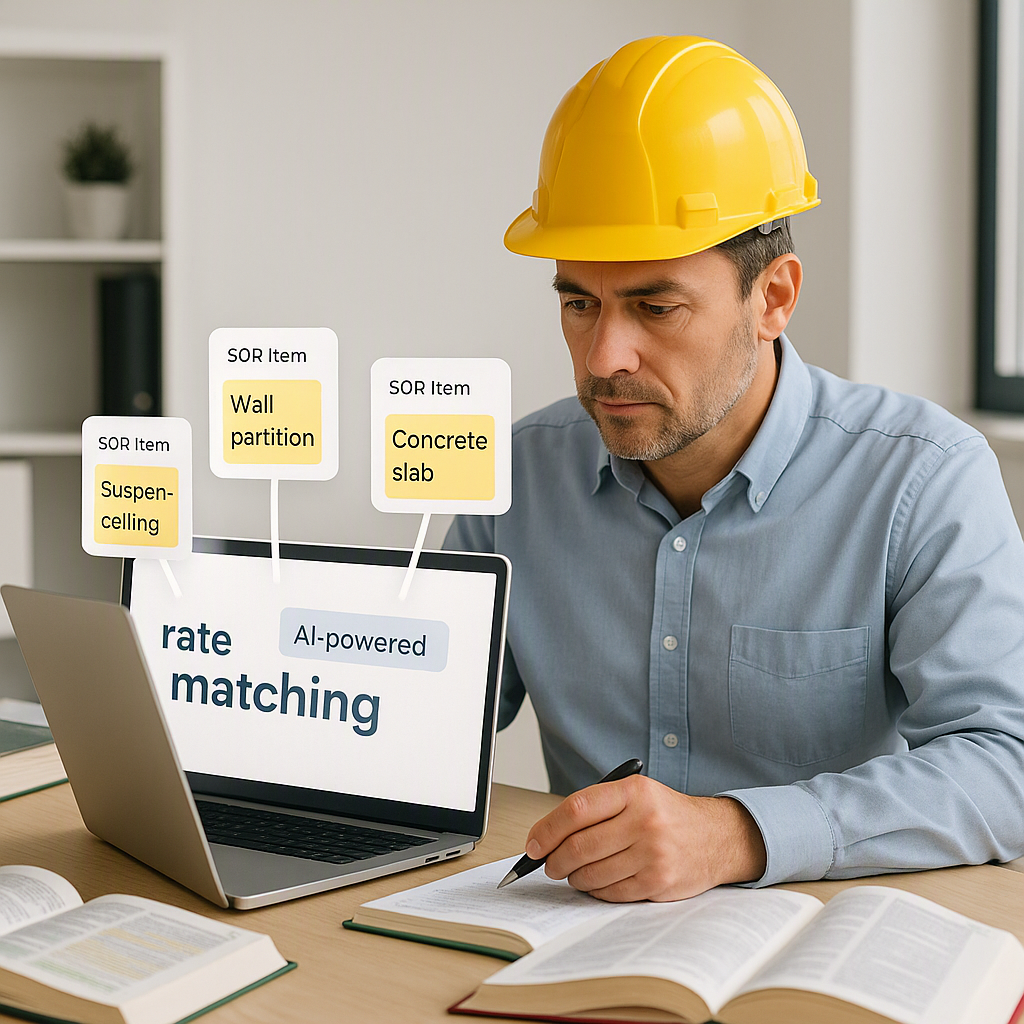
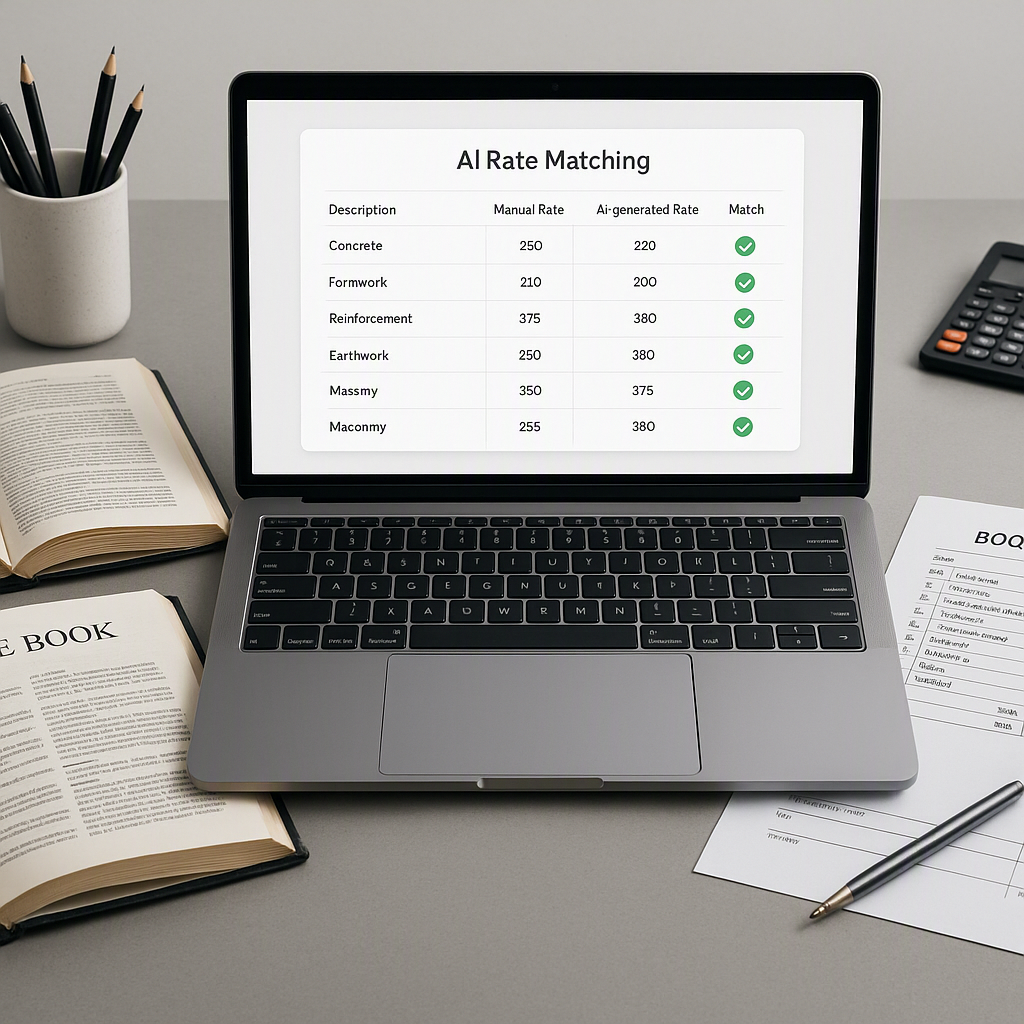
- Real-Time Rate Matching: AI tools integrate with market databases to provide real-time cost updates, ensuring your bids are based on current pricing.
- Change Order Management: AI can flag discrepancies between initial bids and scope changes, preventing costly disputes down the line.
Comparison Table: Traditional vs. AI-Driven Bid Prep
| Feature | Traditional Method | AI-Driven Method |
|---|---|---|
| Sub Bid Leveling Time | 6–8 hours per bid | 30 minutes |
| Error Risk | High (manual oversight only) | Low (anomaly detection + oversight) |
| Adaptability to Formats | Limited | Highly adaptable |
| Cost (Software/Tools) | $5,000+/year (enterprise) | $39–99/month |
| ROI | Moderate | High |