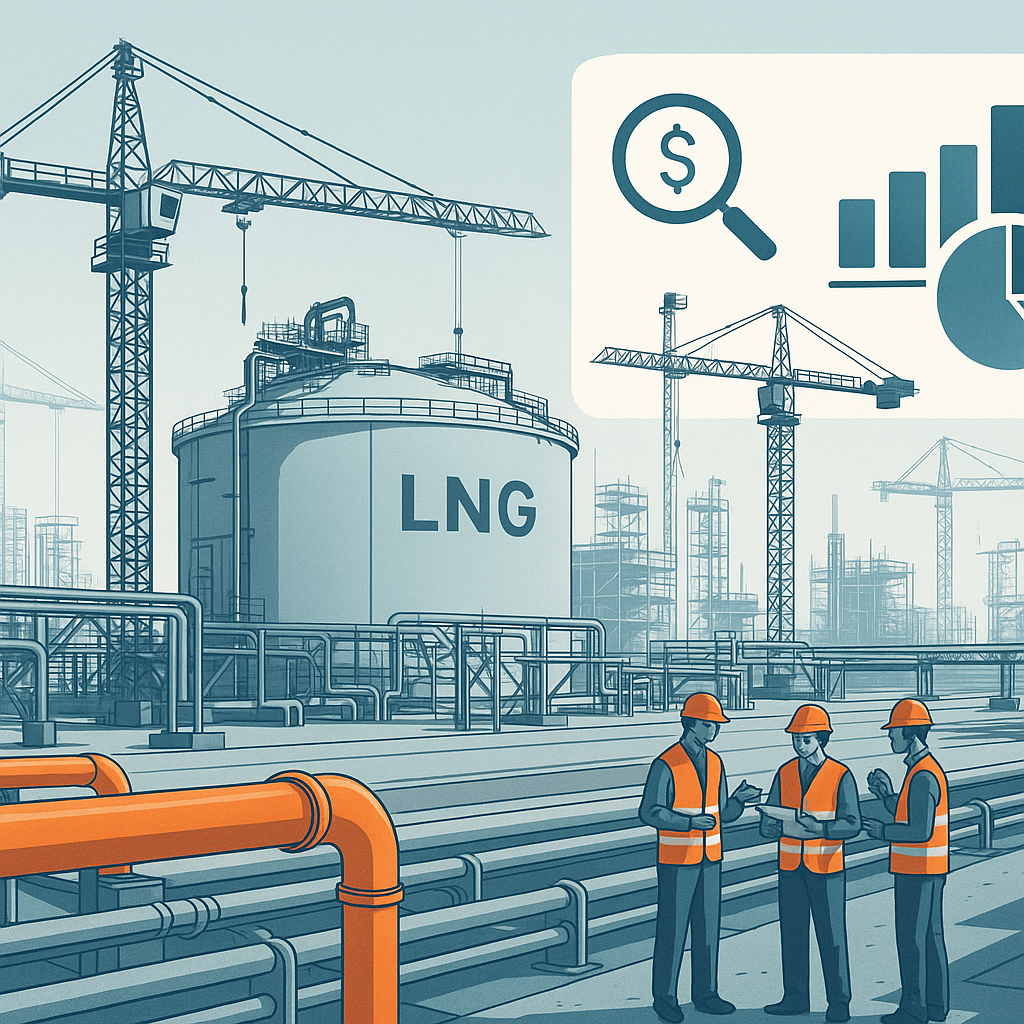
A $4B+ LNG Expansion: A Cost Engineering Reality Check
A multi-billion-dollar LNG capacity expansion, awarded to a major EPC contractor, is the kind of project aimed at boosting output to meet rising global demand. For the energy owner, this investment is critical for maintaining its competitive edge in a tight energy market. For the contractor, the challenge isn’t just technical—it’s about delivering on budget and on time in one of the most cost-sensitive industries.
But here’s what the press releases don’t spotlight: the preconstruction grind. Massive EPC (Engineering, Procurement, and Construction) projects like this require juggling countless moving parts, including multi-trade coordination, vendor selection, and inflation risk management. One misstep—whether it’s missing a bid deadline or underestimating material price hikes—and profitability can vanish.
This isn’t a first-of-its-kind LNG megaproject, but even seasoned contractors face hurdles that demand smarter tools and processes. Understanding what’s at stake here is essential for anyone in the EPC space.
The Problem: Vendor Rate Normalization Eats Days
A major bottleneck in projects like this is vendor bid normalization. When you’re managing dozens of vendors across trades—civil, mechanical, electrical, piping, and more—you’ll inevitably encounter wildly different bid formats, exclusions, and assumptions. Sub bid leveling becomes an exhausting exercise in manual reconciliation.
Let’s break it down. Normalizing 5-7 vendor bids for a single trade can take 6-8 hours. Multiply that across 10 trades on a megaproject like this, and you’re looking at 60+ hours just to determine which vendors to award contracts to. This assumes no errors or missed critical details, like differing assumptions about labor rates or material exclusions.
Case Study: A similar LNG project in Australia, managed by another major EPC contractor, had issues with vendor bid normalization. A key vendor failed to disclose exclusions for site preparation, leading to a $16M change order mid-project. This kind of oversight is all too common when bid leveling relies on manual processes.
Actionable Steps to Address Vendor Bid Normalization
- Standardize Bid Templates: Require vendors to submit bids in pre-defined formats to reduce variability.
- Invest in AI-Powered Tools: Platforms like EstimateNext can automate bid normalization, flagging mismatches in scope and exclusions.
- Conduct Regular Vendor Audits: Build historical performance data to better evaluate proposals based on past reliability.
The Solution: AI-Powered Sub Bid Leveling
Tools like EstimateNext are changing the game for preconstruction workflows. Their AI-powered sub bid leveling feature cuts down the time required to normalize vendor bids from hours to minutes. Here’s how it works:
- Upload Vendor Quotes: You can upload PDFs, Excel sheets, or even handwritten bids. The platform’s AI extracts key data—scope items, exclusions, rates, and more—into a standardized database.
- AI Scope Normalization: The system automatically flags mismatches between vendor assumptions. For instance, Vendor A might exclude site preparation, while Vendor B includes it. These discrepancies are highlighted for review.
- Ranking and Recommendations: Vendors are ranked (e.g., L1, L2, L3) based on price, scope completeness, and historical performance, enabling data-driven decision-making.
Example: On a mid-sized $300M power plant project, one contractor used EstimateNext for sub bid leveling. The tool reduced bid normalization time by 85%, saving over 40 hours during preconstruction.
Comparison: Manual vs. AI-Driven Bid Leveling
| Aspect | Manual Process | AI-Driven Process |
|---|---|---|
| Time Spent | 6-8 hours per trade | 30 minutes per trade |
| Risk of Errors | High | Low (AI flags mismatches) |
| Scalability | Limited | Scales easily for large projects |
| Decision Transparency | Relies on human judgment | Provides audit trails |
Inflation and Long-Lead Items: Another Hidden Risk
Large LNG projects are notorious for their long procurement cycles. Equipment such as cryogenic heat exchangers, turbines, and compressors can take 18-24 months to deliver. Factor in inflation and commodity price volatility, and you’ve got a major risk to your bottom line.
Traditionally, estimators rely on static rate books like RSMeans, CPWD DSR, or similar resources for pricing. These rate books often fail to account for dynamic changes in commodity prices or inflation trends. EstimateNext’s inflation uplift feature mitigates this by using real-time CPI adjustments to update material, labor, and equipment costs.
Example: Steel prices surged by 12% mid-project on an LNG terminal in Qatar, forcing a $25M budget revision. With EstimateNext, the EPC firm recalculated the impact instantly, avoiding surprises during procurement.
Action Plan for Inflation Management
- Monitor Commodity Trends: Subscribe to reputable industry reports to stay ahead of price fluctuations.
- Use Dynamic Pricing Tools: AI platforms like EstimateNext auto-update costs based on real-time CPI data.
- Negotiate Fixed-Price Contracts: Lock in rates with vendors for critical long-lead items to mitigate inflation risk.
Lessons for EPC Contractors from Megaprojects Like This
- Speed Wins Deals: In competitive tender environments, the faster you respond to RFQs, the better your chances of landing contracts. Cutting a 72-hour bid cycle down to 4 hours with AI tools can be game-changing.
- Data Accuracy Prevents Margin Erosion: Errors in sub bid leveling or rate assumptions can quickly erode margins. AI-powered tools ensure estimates are precise.
- Real-Time Adjustments Matter: Relying on static rate books is a recipe for disaster in high-inflation periods. Dynamic tools are the way forward.
Call to Action
If the challenges of preconstruction—vendor normalization, inflation risks, and bid delays—sound familiar, tools like EstimateNext can help. Get started for free →


