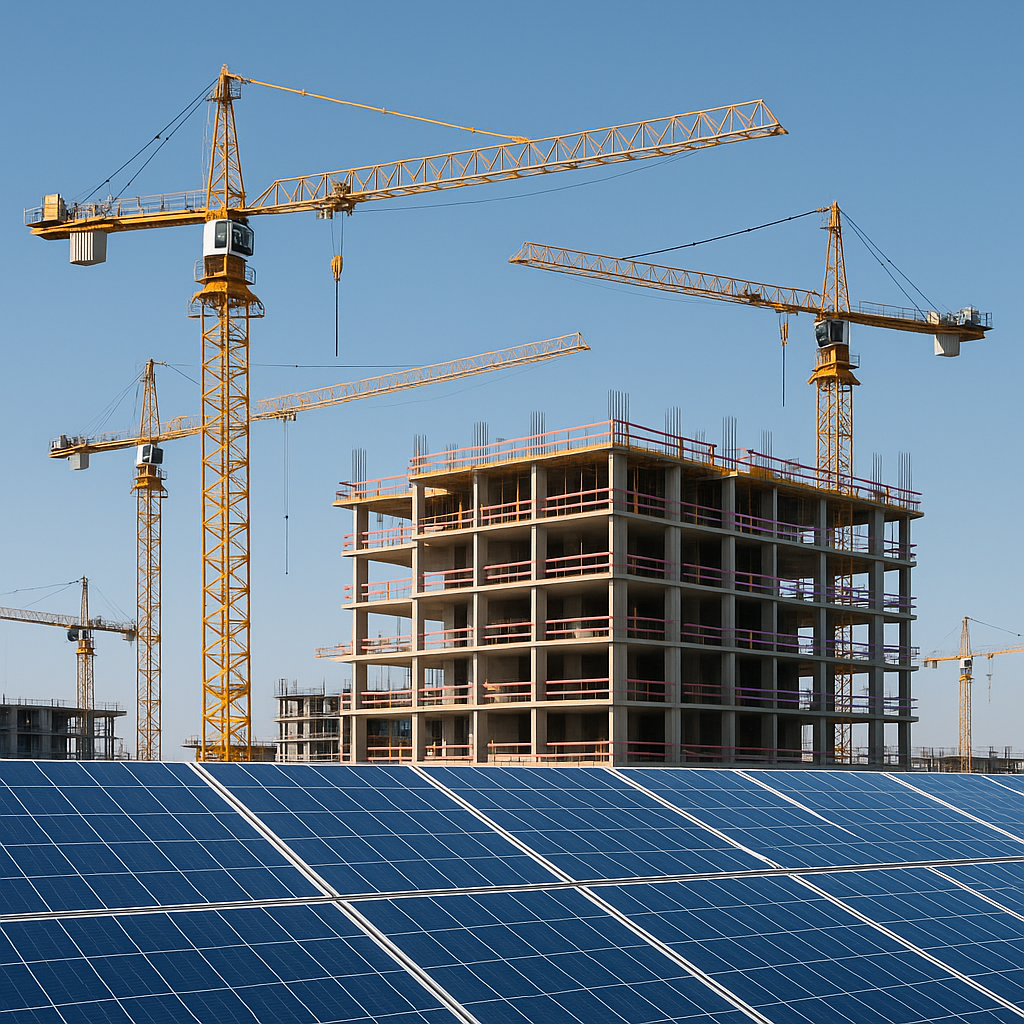
Construction Keeps Growing, but at What Cost?
The construction industry is booming, but general contractors (GCs) are feeling the squeeze. Rising material costs, labor shortages, and skyrocketing energy prices are cutting into margins. According to a Reuters report, global construction material prices have seen significant increases. Add power concerns—like grid instability or diesel costs—and it’s clear why many GCs are struggling to keep bids competitive.
If you’re managing preconstruction, you’ve probably felt this pain. Clients still expect fast, accurate bids, even as your inputs keep changing. And when delays stack up, you’re left scrambling to hit deadlines—or worse, losing bids altogether.
So, how do you adapt? The answer isn’t more manpower—it’s smarter workflows.
The Hidden Time Sink: Preconstruction Bottlenecks
Let’s be honest: preconstruction is where most GCs lose time. Takeoffs, rate lookups, and bid leveling are deeply manual processes. For instance, normalizing quotes from multiple subcontractors can take hours. That’s before you even talk to the client.
Why does this matter now? Because project timelines are shrinking. Data center construction, for example, is growing rapidly. These projects demand fast bid turnarounds, massive BOQs, and constant scope changes. According to JLL Research, data centers alone will account for billions in global construction by 2027.
If you’re still relying on Excel and PDF rate books, you’re at a serious disadvantage.
AI-Powered Estimation: A Practical Fix
Modern estimation tools can significantly streamline preconstruction workflows. Instead of spending hours on manual drawing takeoffs, AI-powered tools can extract quantities from PDFs in minutes. This reduces the time spent on repetitive tasks and allows teams to focus on higher-value activities.
One specific pain point is subcontractor bid leveling. Normally, you’d spend hours comparing quotes, flagging scope gaps, and tweaking rates. With AI, this process can be automated to a large extent, normalizing scope, highlighting exclusions, and ranking bids for easier decision-making.
Power Concerns? Bid Smarter, Not Harder
Energy costs are another headache. Whether it’s diesel for site generators or grid power increases, you’re dealing with unpredictable expenses. Modern estimation tools can help by allowing you to apply inflation uplifts or energy-specific overheads across your BOQ quickly. This eliminates the need to rebuild your entire workbook every time a rate changes.
For example, if a client requests a sustainability-focused bid with energy-efficient materials, these tools can suggest alternatives—like recycled steel or high-efficiency HVAC systems—and calculate their impact on both upfront and lifecycle costs. This can be particularly advantageous when bidding on green projects.
Common Questions (FAQ)
Q: What if my subs don’t provide uniform quotes?
A: Modern estimation tools can normalize scope, flag missing line items, mismatched quantities, and exclusions automatically.
Q: How does it handle inflation or volatile material costs?
A: Many platforms include compound inflation adjustments, allowing you to apply per-catalog CPI rates or custom percentages.
Q: Can it help with sustainable project bids?
A: Yes. AI-powered tools can suggest eco-friendly material swaps and calculate their impact on both upfront and lifecycle costs.
Q: Is this only for big GCs?
A: Not at all. Smaller regional GCs and subcontractors can benefit just as much, especially when competing with larger players who already use advanced tools.
Final Thoughts
The construction market isn’t slowing down, but the challenges are real. Rising costs and power concerns are testing every GC’s ability to stay competitive. The good news? Modern tools make it possible to bid faster, smarter, and with less risk.
If you're ready to modernize your preconstruction workflow, explore the latest estimation technologies to stay ahead in the industry.


