Still Flipping Through CPWD PDFs? Stop.
If you've ever worked on public projects in India, you know the pain of dealing with CPWD (Central Public Works Department) rates. The Cost Index (CI) updates are critical—miss them, and your bid is instantly outdated. But keeping up? That’s a full-time job.
Here’s the reality: CPWD releases updates through circulars. These updates adjust the DSR (Delhi Schedule of Rates) to account for inflation and market changes. Sounds simple, right? But with 19 catalogs covering thousands of items, every minor revision can mean hours of manual recalculations. You’re probably flipping through PDFs, cross-checking rates, and manually reworking Excel sheets.
It’s an outdated process that’s costing you time—and money.
The CPWD Cost Index Problem
Let’s break it down. When the CPWD issues a Cost Index circular, it includes percentage adjustments for labor, materials, and equipment. You’re expected to:
- Find the relevant circular (good luck if it’s buried on the CPWD site).
- Apply the adjustment manually to each item in your BOQ (Bill of Quantities).
- Redo your rate analysis for every single estimate.
For a typical mid-sized project, this can take 12-16 hours. And that’s assuming you already know where to find the latest circulars.
Real-Life Scenario: The Manual Process
Imagine you’re bidding on a ₹10-crore CPWD project. The tender requires you to submit an updated BOQ in compliance with the latest Cost Index. Here’s what happens:
- You spend hours digging through the CPWD website, searching for the relevant circulars.
- After finding the circular, you manually calculate the percentage changes for labor, materials, and equipment.
- You apply these changes to hundreds (or thousands) of line items in your Excel sheet.
- You double-check every formula to ensure accuracy. A single mistake could cost you the bid—or worse, your margins.
What happens if you skip this step? Your estimate goes out with outdated rates. In competitive tenders, that’s a guaranteed loss.
AI to the Rescue: Faster Updates, Fewer Errors
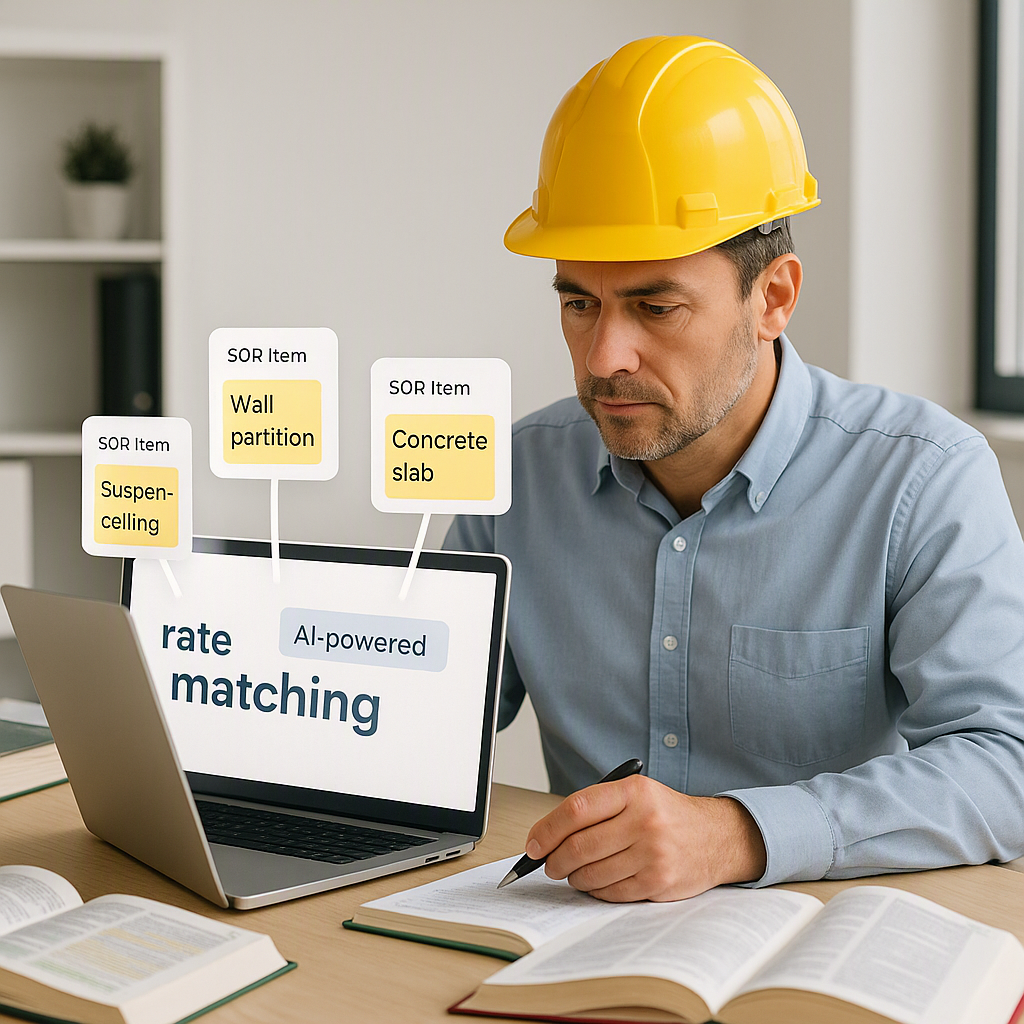
Here’s where tools like EstimateNext change the game. Instead of wasting hours on manual updates, AI-powered platforms automate the process. Let’s break down how this works and why it’s a game-changer for contractors.
1. Semantic Search Across Circulars
The platform scans CPWD circulars for the latest Cost Index updates. No more hunting through government websites—just type what you need, and it pulls the exact percentage adjustment in seconds.
- Example: A contractor in Rajasthan searches for the latest Cost Index for Jaipur. EstimateNext instantly retrieves the relevant circular, saving hours of manual effort.
2. Automated Inflation Uplifts
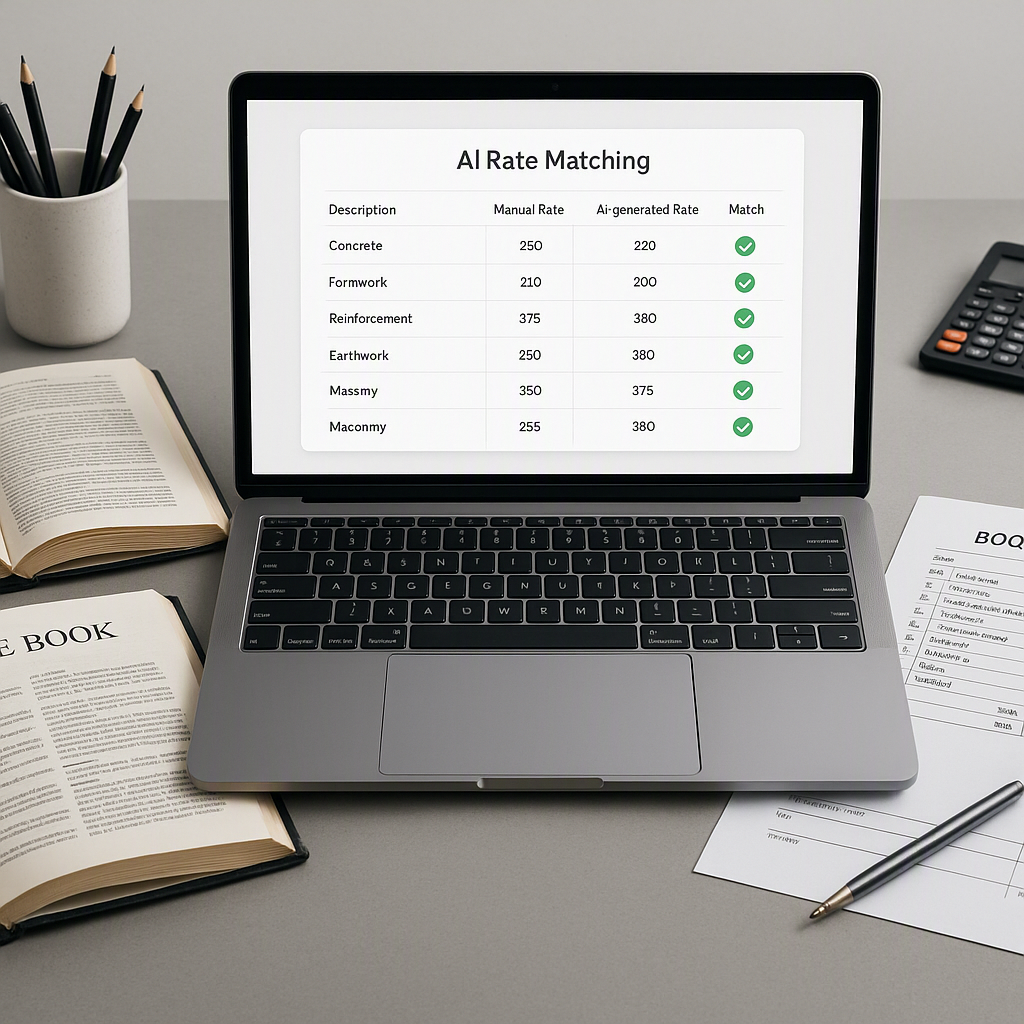
Once the Cost Index is identified, the AI applies it across your entire BOQ. For example:
-
The CI increases labor costs by 5% and materials by 3%.
-
EstimateNext recalculates rates for all 78,000+ SOR (Schedule of Rates) items in your catalog automatically.
-
Concrete Example: A ₹20-crore road construction project involves 1,200 BOQ items. Manually updating the rates would take two full workdays. With EstimateNext, this task is completed in under 10 minutes.
3. Audit Trail for Compliance
Every adjustment is logged with a clear audit trail. Need to show how you applied the CI for tender compliance? No problem. The system generates a detailed report that auditors love.
Real Example: 12 Hours Saved Per Estimate
Take a regional contractor bidding on CPWD projects. Before AI tools, their lead estimator spent two days updating DSR rates every time a new circular dropped. With EstimateNext? That same process now takes 10 minutes.
Let’s break this down further:
| Metric | Manual Process | With EstimateNext |
|---|---|---|
| Time per estimate | 12-16 hours | 10 minutes |
| Tenders submitted yearly | 30 tenders | 30 tenders |
| Total time spent annually | 360-480 hours | 5 hours |
| Productivity reclaimed | None | 355-475 hours |
Think about that: 12+ hours saved per bid. Multiply that by 30 tenders a year, and you’re looking at 360+ hours of reclaimed productivity. That’s time you can spend on more strategic tasks, like optimizing your bids or expanding your project pipeline.
What About Accuracy?
You might be thinking, "Sure, it’s faster. But can I trust AI with something this critical?" Fair question. Here’s why AI tools like EstimateNext are reliable:
- Source-Driven Adjustments: The AI doesn’t “guess.” It uses CPWD’s official circulars as the source of truth.
- Audit-Ready Documentation: Every rate adjustment is tied back to the original circular, so you can double-check if needed.
- Conflict Alerts: If the AI encounters conflicting or ambiguous data, it flags it for manual review. No black-box magic—just smarter workflows.
Case Study: Eliminating Errors
A mid-sized construction firm in Gujarat adopted EstimateNext after losing a bid due to outdated rates. In their first tender submission with the tool, they noticed a 0.5% margin improvement—thanks to accurate, real-time rate updates. Across a ₹50-crore project, that’s an additional ₹25 lakhs in profit.
Why This Matters for Indian Contractors
Time isn’t the only factor. Accuracy and compliance are just as important, especially for government tenders. Here’s what you gain:
- Faster Bid Turnaround: Submit more tenders before deadlines.
- Better Margins: Avoid underpricing due to outdated rates.
- Compliance Confidence: Never worry about failing an audit.
For contractors, these benefits translate directly into increased revenue and reduced operational stress.
FAQ: Common Questions About CPWD Cost Index Updates
Q: How often does CPWD update the Cost Index?
A: CPWD typically updates the Cost Index once or twice a year. However, updates can vary depending on market conditions. Keeping track manually can be tricky, which is where tools like EstimateNext help.
Q: Can AI handle regional SORs?
A: Yes. Tools like EstimateNext cover 26 state SOR catalogs in addition to CPWD. Whether you’re working on a project in Maharashtra or Tamil Nadu, the platform ensures your estimates are updated.
Q: What if I need to customize rates?
A: You can override AI-calculated rates manually. The system tracks all changes, ensuring you have a clear audit trail for compliance.
Q: Is this only for large contractors?
A: No. Even small firms bidding on public works can benefit. EstimateNext offers pricing plans starting at just ₹1,999/month, making it accessible for businesses of all sizes.
Q: What happens if the AI makes a mistake?
A: The system is designed to minimize errors by sourcing data directly from official circulars. In case of conflicting information, it flags the issue for manual review, ensuring accuracy.
Decision Framework: Should You Automate CPWD Rate Updates?
| Question | If Yes… | If No… |
|---|---|---|
| Do you spend 10+ hours per estimate? | Automation can save you significant time. | Evaluate if manual processes are sustainable. |
| Are you losing bids due to outdated rates? | AI tools ensure compliance with the latest rates. | Manual tracking may lead to missed opportunities. |
| Do you manage multiple tenders annually? | Automation scales easily across projects. | Manual work becomes increasingly inefficient. |
| Do you need audit-ready documentation? | AI generates detailed, compliant reports. | Manual records may be harder to verify. |
Ready to Save Hundreds of Hours?
If you’re tired of wasting time on manual CPWD updates, it’s time to make a change. EstimateNext automates rate adjustments, so you can focus on pricing smarter, not working harder. Get started free →