Energy Savings Performance Contracts: A Pragmatic Fix for Tight Budgets
City budgets are almost always stretched thin. Whether it’s infrastructure repairs, expanding public services, or upgrading aging buildings, there’s never quite enough money to go around. So how do municipalities afford energy-efficient upgrades without breaking the bank? Enter Energy Savings Performance Contracts (ESPCs).
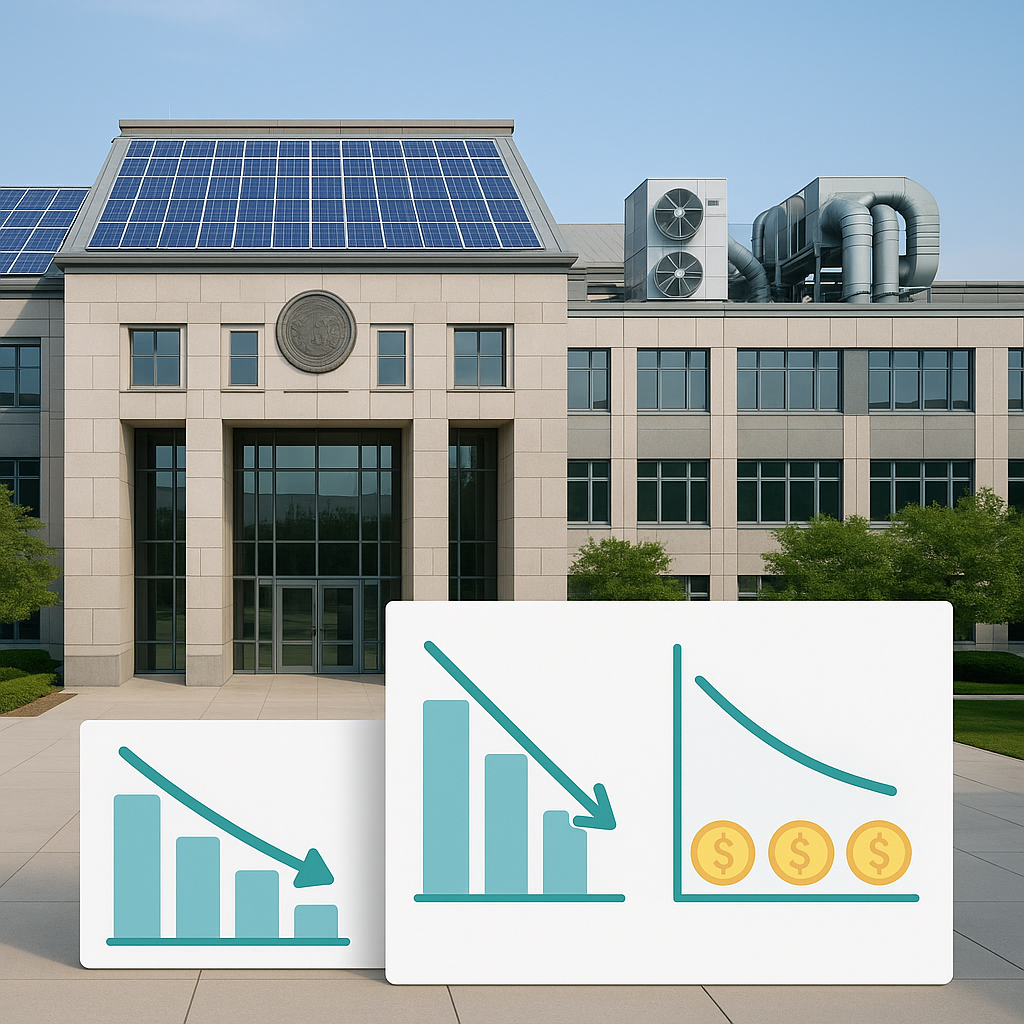
ESPCs are simple on paper: A contractor installs energy-efficient systems—think HVAC retrofits, LED lighting, or solar panels—and guarantees future energy savings that cover the upfront cost. The catch? Calculating those savings accurately and planning upgrades that truly pay off can get messy fast.
The Real Problem: Estimation Bottlenecks
Most ESPCs live or die based on preconstruction estimates. Misjudge the savings potential, and suddenly the “cost-neutral” promise turns into a budget nightmare. For example, let’s say you’re retrofitting an old municipal office building. You need to evaluate the costs of three HVAC systems: a standard unit, a high-efficiency model, and a geothermal system. The high-efficiency unit might cost 20% more upfront, but if it reduces operating costs by 15% annually, it’s clearly the better choice. But manually crunching these numbers—even with advanced spreadsheets—can take days.
To make matters worse, outdated tools often fail to account for real-world variables like fluctuating energy prices, inflation adjustments, and local utility rebates. That’s where advanced AI-based solutions come into play.
How AI Changes the Game
This is where tools like EstimateNext come in. Their specialist HVAC estimator handles ASHRAE compliance, SMACNA duct sizing, and even geothermal load calculations—all built into one platform. Instead of flipping through rate books or calling in consultants for every what-if scenario, you get instant cost projections and lifecycle savings.
Real-World Example
Let’s dive into a practical case study: A contractor was tasked with retrofitting three municipal buildings with energy-efficient systems. Using EstimateNext, they modeled three HVAC upgrade options:
- Standard HVAC System: Lowest upfront cost but highest operating expenses.
- High-Efficiency HVAC System: 20% higher upfront cost but projected to reduce energy bills by 12% annually.
- Geothermal Cooling System: 30% higher upfront cost but projected to reduce energy bills by 15% annually and qualify for $50,000 in local renewable energy rebates.
EstimateNext’s AI identified the geothermal option as the most cost-effective over a 10-year lifecycle, saving the municipality over $150,000 compared to the other options. Without AI, that level of analysis would have required weeks of manual calculations—and probably missed key savings opportunities.
The Hidden Benefits of ESPCs
Beyond the obvious energy savings, ESPCs also unlock indirect benefits:
- Carbon Reduction: Many cities have sustainability goals tied to carbon neutrality. High-efficiency systems directly contribute to these targets by reducing greenhouse gas emissions.
- Better Public Perception: Taxpayers are more likely to support initiatives that are both environmentally friendly and financially sound. Transparency in cost savings builds trust.
- Avoiding Deferred Maintenance Costs: Retrofitting aging systems now prevents bigger repair bills later. For instance, replacing a failing HVAC system today might cost $100,000, but waiting until it breaks could result in emergency repairs costing double.
Actionable Tip: Monitor Carbon Savings
Use AI tools to quantify carbon reductions from ESPC projects. Presenting this data to stakeholders can justify additional sustainability investments and attract federal or state grants tied to climate initiatives.
Common Roadblocks (And Fixes)
You might be thinking, “Sure, AI sounds great, but does it really solve everything?” Here’s the honest answer: Not always. ESPCs still require careful contract structuring and ongoing monitoring. However, AI-based estimation tools simplify the upfront planning process, which is often the hardest part.
Roadblock 1: Poor Data
Many municipalities rely on outdated energy consumption data. Without accurate baselines, predicting savings is guesswork.
- Fix: Use AI tools to ingest historical project rates, utility costs, and building-specific consumption data to establish reliable baselines.
Roadblock 2: Vendor Scope Mismatches
ESPC bids often involve multiple trades—mechanical, electrical, plumbing. Normalizing these quotes manually can take days.
- Fix: Platforms like EstimateNext’s sub bid leveling tool flag scope mismatches and rank vendors in minutes, saving time and reducing errors.
Roadblock 3: Inflation Adjustments
Material and labor costs fluctuate constantly. Miscalculating these changes can lead to under-budgeting.
- Fix: AI platforms adjust rates in real time, reducing the risk of underestimating project costs.
ESPCs and AI: A Perfect Match
Imagine this: You’re planning an ESPC for a city library. The HVAC contractor submits a bid using outdated assumptions about duct sizing and airflow. You use EstimateNext’s HVAC specialty tool to validate their proposal, flagging a $10,000 mistake before it turns into a $250,000 rework. This isn’t hypothetical—it’s the kind of efficiency AI delivers daily.
Comparison Table: Manual vs. AI-Driven ESPC Estimation
| Feature | Manual Estimation | AI-Driven Estimation |
|---|---|---|
| Time Required | Days to weeks | Minutes |
| Accuracy | Prone to human error | Near-perfect calculations |
| Scope Normalization | Manually compare bids | Automated bid leveling |
| Inflation Adjustment | Requires manual research | Real-time updates |
| Lifecycle Savings Analysis | Limited, often overlooked | Comprehensive and automated |
Call to Action
If you’re planning an ESPC or struggling with estimation bottlenecks, EstimateNext can help. From HVAC modeling to sub bid leveling, it’s built to simplify preconstruction workflows. Get started free →