I Thought AI Couldn’t Replace Human Judgment
If you’d asked me last year, I’d have said AI in construction estimation was a gimmick. Sure, it could crunch numbers fast, but estimation is about experience—knowing when a rate feels wrong, catching mistakes in the BOQ, and dealing with vendors who often miss the mark. How could a machine handle any of that?
I wasn’t alone. Most estimators I know shared the same skepticism. We dismissed AI tools as flashy tech that wouldn’t work for real projects. The manual process might be slow, but it was thorough. And we trusted it.
What Changed? The Efficiency of AI Tools
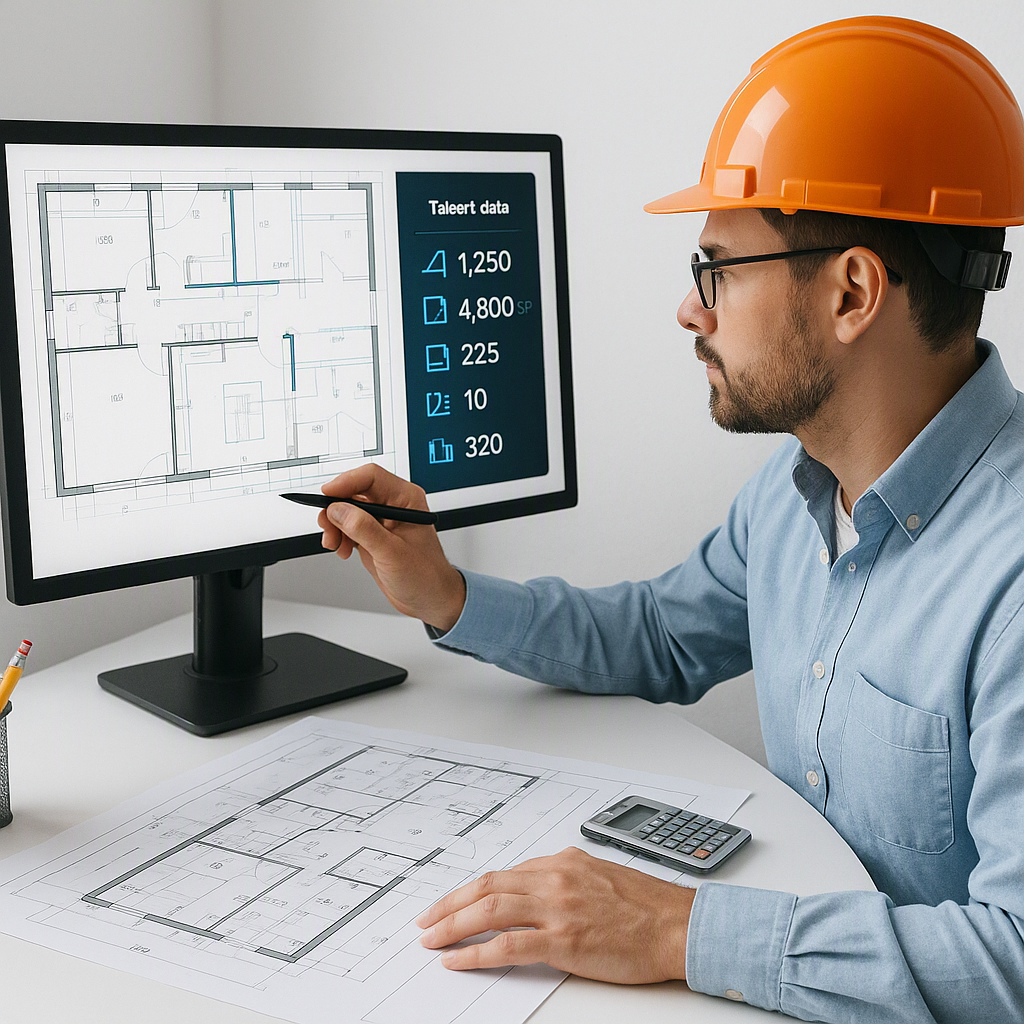
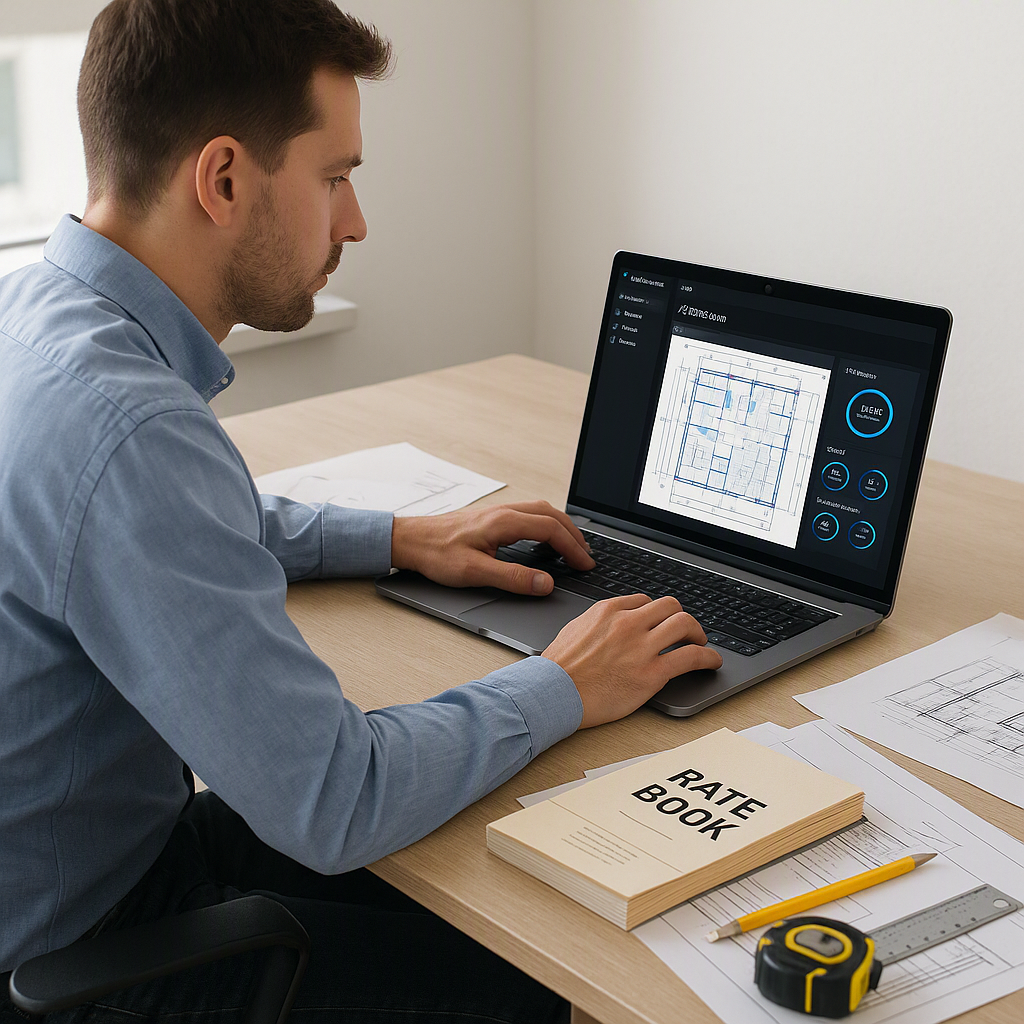
Then I saw it firsthand. A contractor decided to test an AI-powered estimation platform on a high-rise bid. They uploaded their PDF drawings into the platform, skeptical as ever. The result? Vision AI extracted quantities—room areas, wall lengths, door counts—in a fraction of the time it would take manually.
This wasn’t just about speed. The AI flagged low-confidence measurements for review, letting the team focus on fine-tuning instead of tracing every line. The process demonstrated how AI could streamline repetitive tasks while leaving critical decision-making to human experts.
Why Did I Believe the Old Way Was Better?
Honestly, it’s hard to trust what you don’t understand. AI felt too abstract, too automated. And the old way, while tedious, had a track record. We knew how to deal with rate mismatches, adjust for labor fluctuations, and fix scope errors manually. It wasn’t efficient, but it was reliable.
Plus, AI tools seemed designed for tech-savvy users. Many of us worried that onboarding would take months or that the system would spit out generic results that missed project-specific nuances.
What I Do Differently Now
Today, I recommend pairing AI tools with human oversight. That’s the sweet spot. Let AI handle the grunt work—quantity takeoffs, rate matching, normalization—while your team refines the quote, negotiates with subs, and adjusts for edge cases.
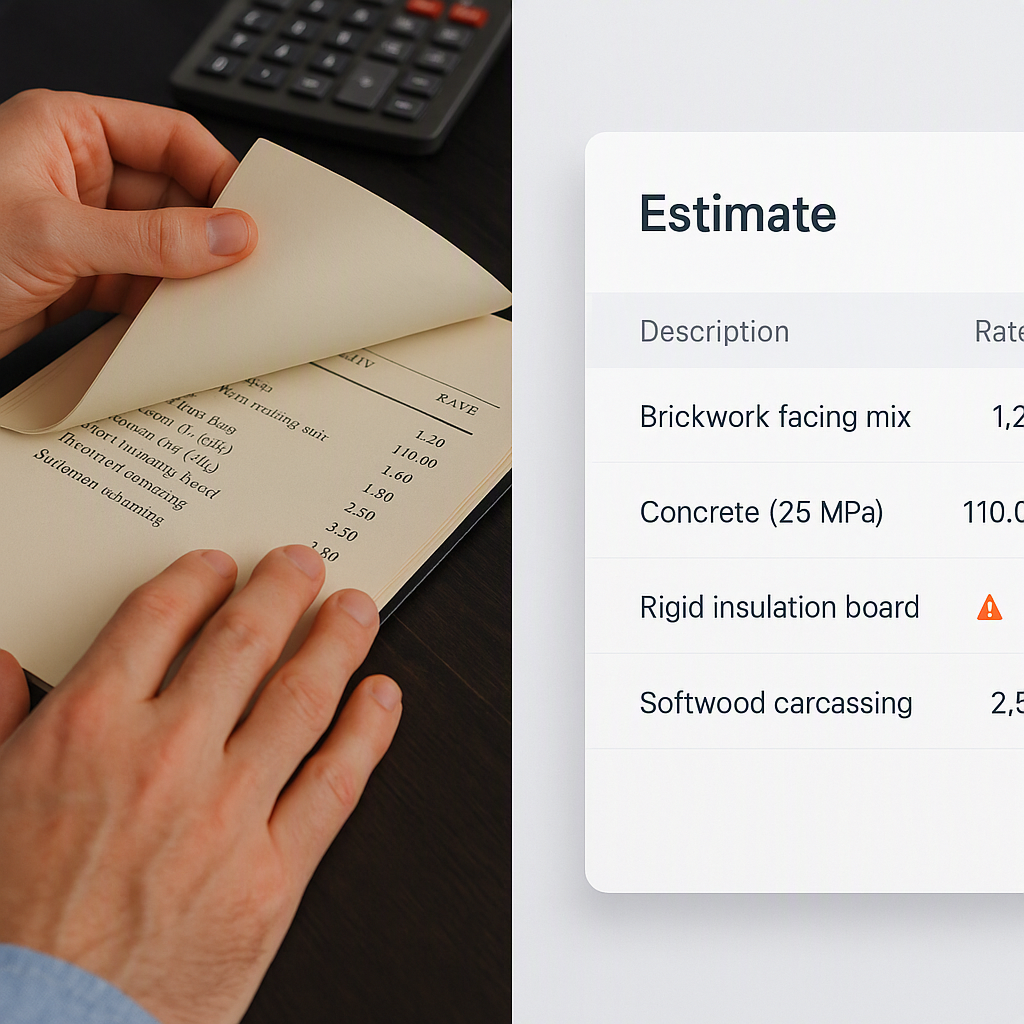
For example, AI-powered rate matching features use semantic search to find the right item across large catalogs of standard rates. Need a labor rate for installing pre-stressed concrete girders? Type it in, and the system can help identify relevant options. But you’re still the one deciding if the rate fits your bid strategy.
I also suggest starting small. Test AI on a smaller project to see how it integrates into your workflow. Many platforms improve with use, learning your preferences and delivering more tailored results over time.
What Being Slow to Adopt AI Cost Me—and What I Still Don’t Know
Being slow to adopt AI cost me time. Projects that could’ve been priced faster sat on my desk for days. Worse, I underestimated how much time my team spent fixing errors, tracing PDFs, and dealing with rate mismatches—all of which AI could’ve handled.
But here’s the thing: I’m still not sure how AI handles complex edge cases. Can it reliably flag scope creep or identify missing items in a vendor quote? That’s where human judgment still matters. And it always will.
If you’re struggling with manual estimation processes, AI-powered tools can help streamline your workflow. Consider testing one on a smaller project to see how it fits your needs.