The Takeoff Time Sink No One Talks About
Manual takeoffs are a common challenge for estimators. You’re handed a stack of drawings—sometimes hundreds of pages thick—and asked to quantify every detail. Wall lengths, door counts, flooring areas, MEP components, and more. The process can be time-consuming and prone to errors.
Even with tools like Bluebeam to assist with measurements, you’re still manually tracing lines, double-checking dimensions, and ensuring you didn’t miss a revision note buried in an update email. It’s a process that hasn’t changed much in decades. Errors in takeoffs can lead to missed bids, reduced margins, or even projects that lose money before construction begins.
Enter AI-Powered Takeoffs
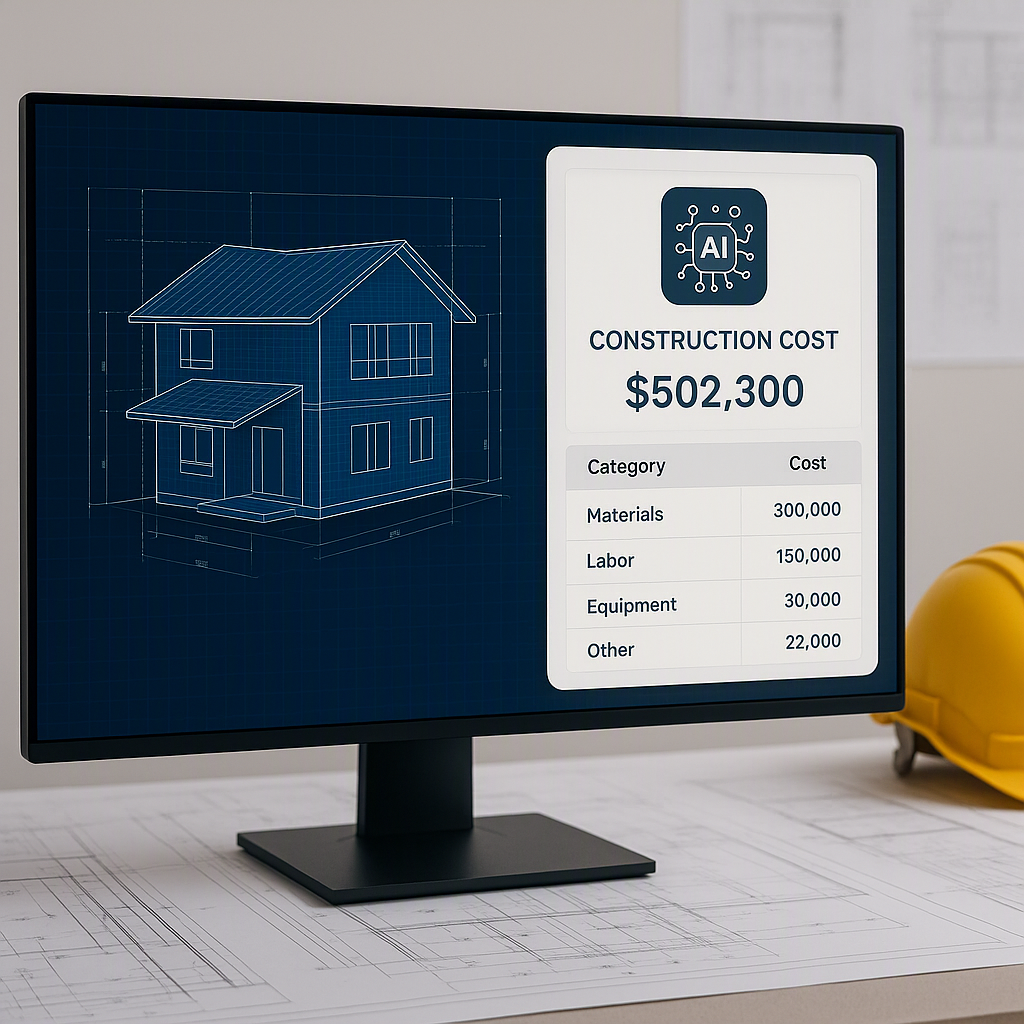
This is where AI-powered tools come into play. These tools leverage advanced algorithms to extract quantities directly from PDF drawings or CAD files, significantly reducing the time spent on manual takeoffs.
Here’s how the process typically works:
- Upload your drawings: Provide the platform with a PDF or CAD file, regardless of its size.
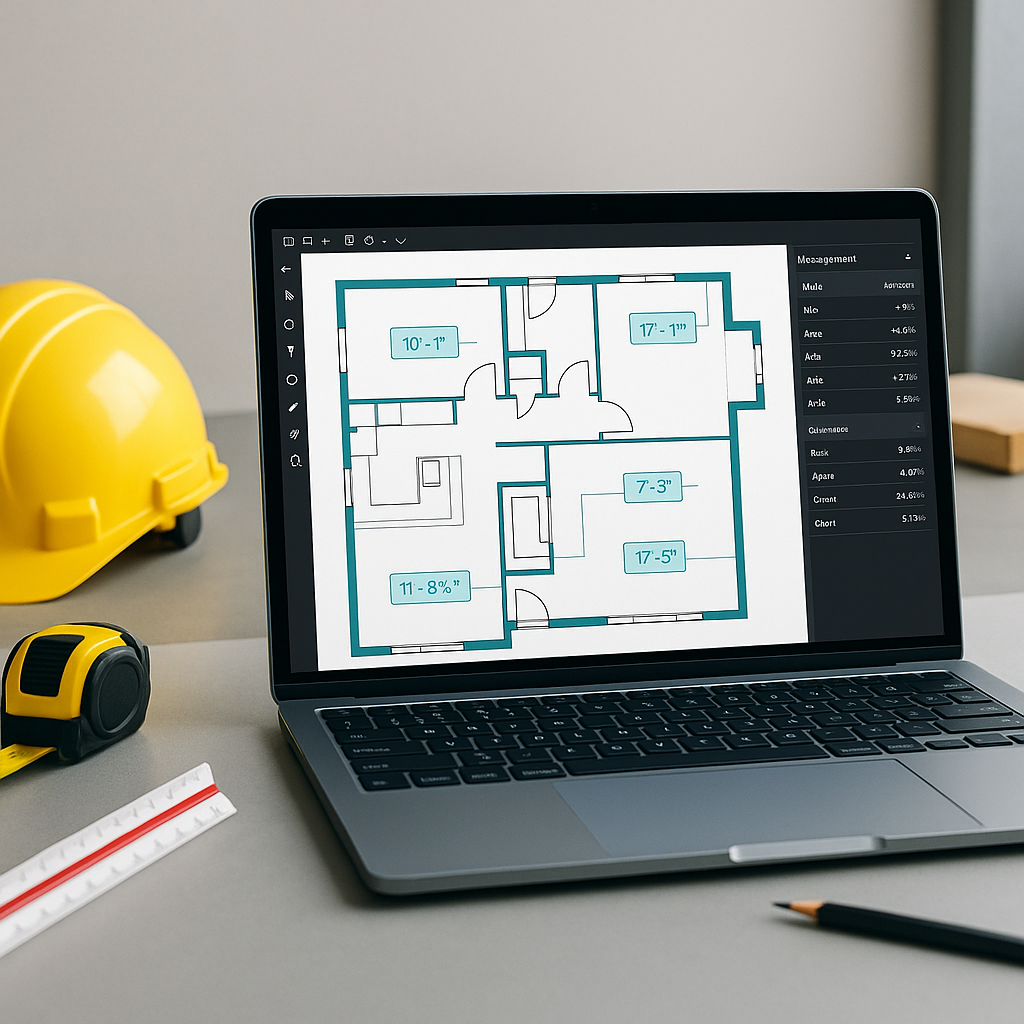
- Let AI do the heavy lifting: The software scans the drawings, identifies elements like walls, doors, and windows, and automatically quantifies them.
- Review and refine: While AI can automate much of the process, human oversight is essential. Many tools include features to flag areas requiring manual review, ensuring accuracy.
By automating repetitive tasks, these tools allow your team to focus on higher-value activities, such as negotiating with subcontractors or refining bid strategies.
Why AI Takeoffs Aren’t Perfect (But That’s Okay)
AI tools are not flawless. They may occasionally miss details or misclassify elements. However, most platforms are designed with built-in checks and manual overrides, ensuring that users remain in control. Estimators’ expertise is still crucial for making judgment calls and validating results.
Think of AI as an assistant that handles the repetitive, time-consuming tasks, freeing you to focus on strategic decisions. Additionally, many AI tools improve over time as they learn from user feedback.
Common Objection: “What About Small Projects?”
A common misconception is that AI tools are only beneficial for large-scale projects. However, these tools can be scaled to suit projects of various sizes, from small office fit-outs to large industrial facilities. Even for smaller projects, the time savings can add up significantly over multiple estimates.
Closing Thoughts
AI-powered takeoffs are transforming the preconstruction process by reducing the time spent on manual tasks and allowing estimators to focus on strategic activities. While the technology isn’t perfect, it continues to improve and offers significant potential for time and cost savings.
If you’re looking to optimize your preconstruction workflow, exploring AI-powered tools could be a valuable step forward.